Flame azalea
Rhododendron calendulaceum. Family Ericaceae. Shrub.
Also called Flame honeysuckle.
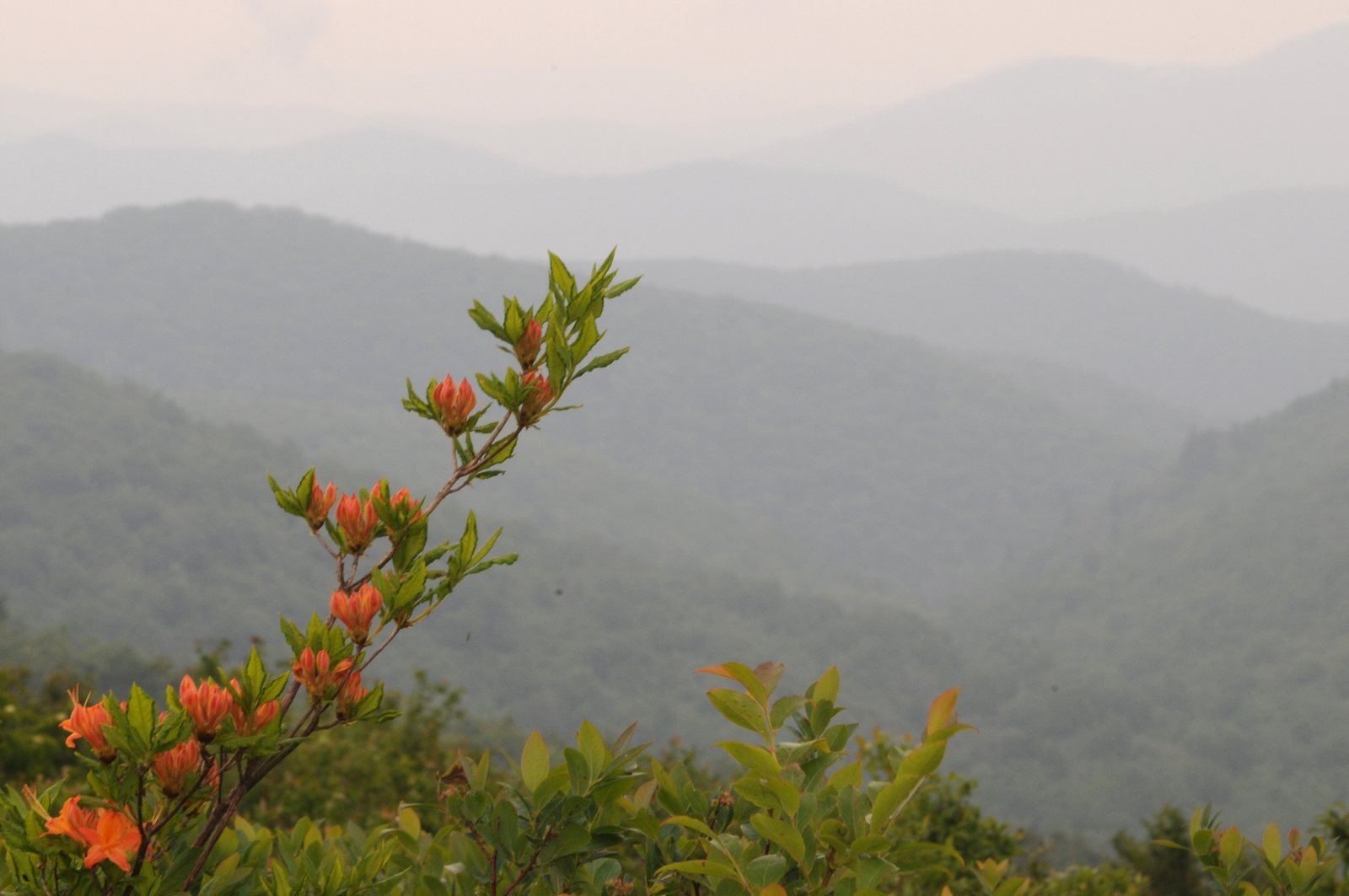
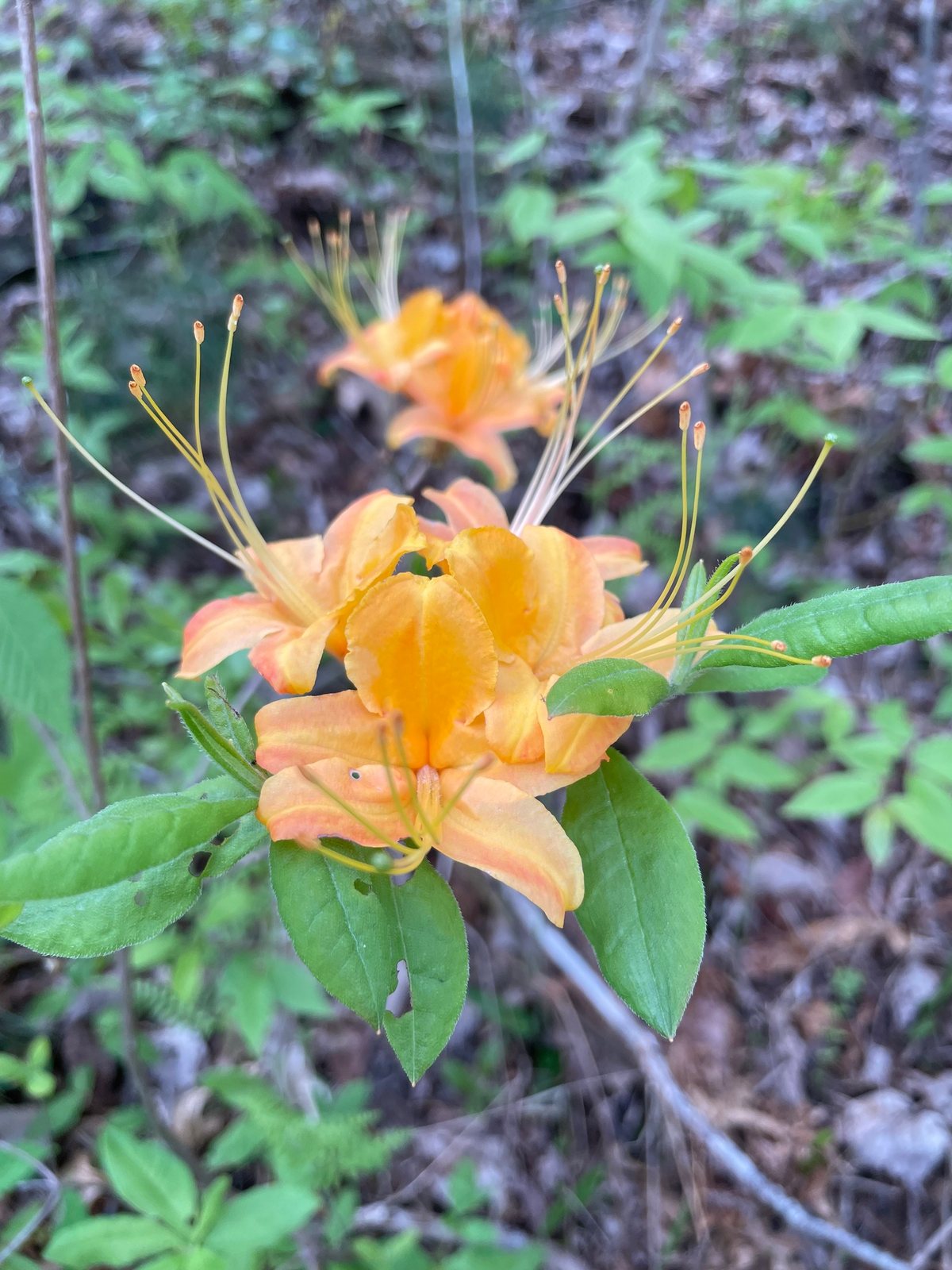
Flame azalea is a deciduous shrub native to the Appalachian region of the eastern United States. Gardeners grow it for large clusters of yellow, orange or orange-red flowers in late spring, often followed by yellow to reddish autumn foliage. It suits cool, moist woodland edges with acidic soil, but struggles in hot, dry or alkaline sites.
At a glance
- Sun
- Partial shade or filtered sunlight; morning sun with afternoon shade is ideal. More sun is suitable where summers are cool and the soil stays moist.
- Water
- Keep evenly moist but never waterlogged; water during dry spells, especially while establishing and during flower-bud formation in summer.
- Soil
- Acidic, humus-rich, well-drained soil, ideally pH 4.5-6.0. Avoid chalky soil and heavy, poorly drained clay.
- Height
- 6-12 ft (1.8-3.7 m)
- Spread
- 6-10 ft (1.8-3 m)
- Flowers
- Late spring to early summer; clusters of yellow, orange, scarlet or orange-red flowers, usually opening as the leaves emerge.
- Foliage
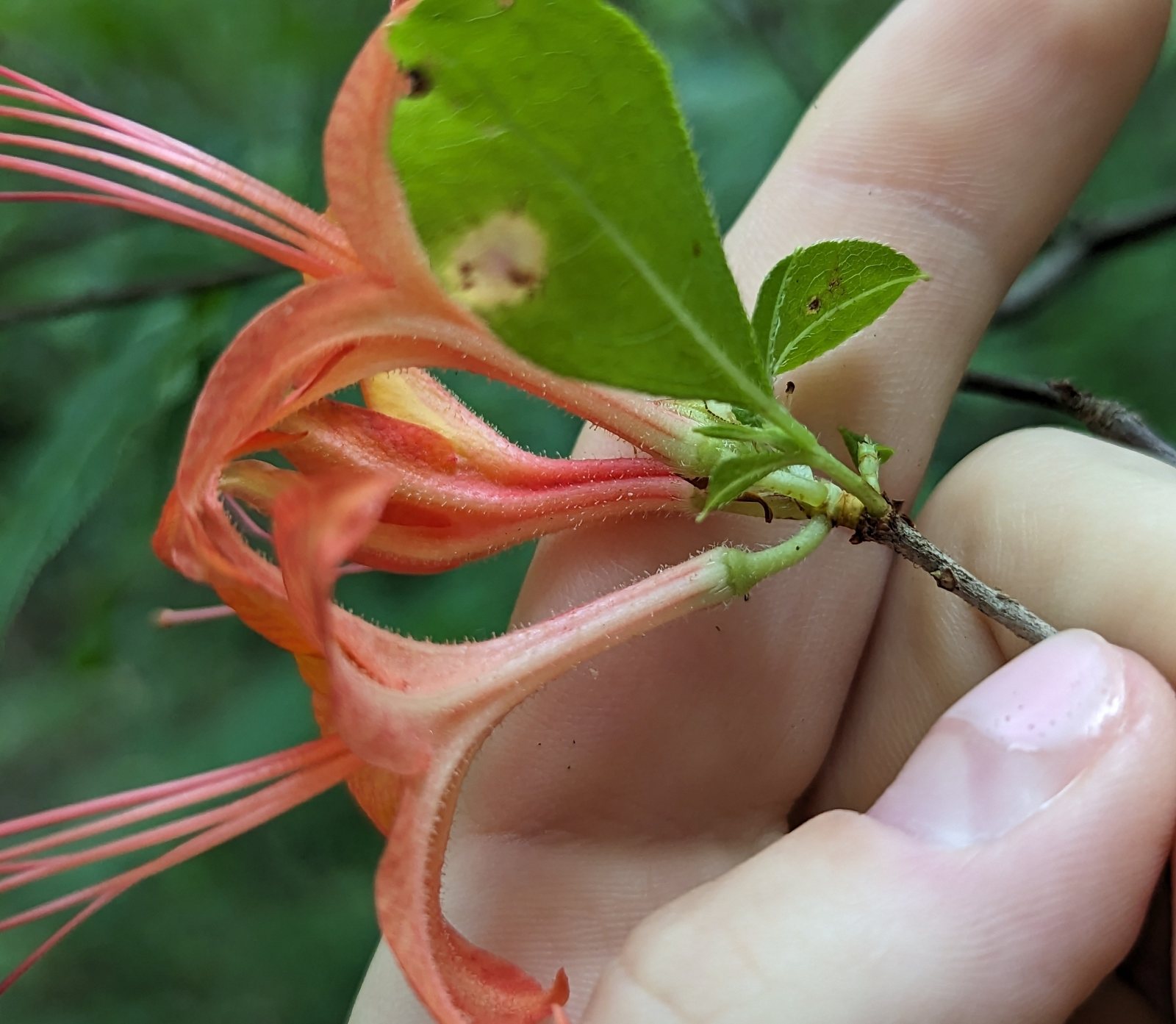
- Soft green, oval leaves with fine hairs, turning yellow, orange or reddish in autumn; autumn colour varies.
- Growth
- Slow to moderate
- Care needed
- Medium
The year at a glance
- Pollinators
- Low allergen
| J | F | M | A | M | J | J | A | S | O | N | D | |
|---|---|---|---|---|---|---|---|---|---|---|---|---|
| Flowers | ||||||||||||
| Plant |
Northern hemisphere months. In Australia, shift them by six.
- Difficulty
- Moderate
- Toughness
- Needs looking after
Will it suit your garden?
Pick your zone, country, light and whether you have pets.
Full sun is 6 or more hours of direct sun a day, part shade 3 to 6 hours, shade under 3.
How it grows
Planting day
1.6 ft (0.5 m)
After 1 year
2.8 ft (0.85 m)
After 2 years
4 ft (1.2 m)
After 3 years
5 ft (1.5 m)
After 5 years
7 ft (2.2 m)
About 7 years to full size.
From a typical nursery size, at an average rate for this kind of plant. A rule of thumb, not a forecast.
Good to know
- Cats and dogs
- Toxic
- Native to
- the US
- Growth rate
- Slow
Care
Jobs through the year
- WaterMar–May, Sep–Oct, every 7 days
- For established shrubs, water if the shallow root zone is drying; young shrubs need closer attention.
- WaterJun–Aug, every 5 days
- During dry weather, soak the shallow root zone; keep moist but never waterlogged.
- FeedMar–Apr
- Apply a light rhododendron feed only if growth is weak; avoid late feeding.
- MulchMar, Oct
- Maintain 5–8 cm of leaf mould or composted bark, leaving the root collar exposed.
- PruneJun
- Immediately after flowering, remove damaged or wayward branches only; avoid shearing.
- ProtectJun–Aug, every 14 days
- Inspect leaf undersides for lace bugs; reduce drought stress and treat damaging infestations if needed.
- ProtectJan–Feb, Nov–Dec
- Guard young shrubs against deer or rabbit browsing where these animals are active.
- Plant with the top of the root ball level with, or slightly above, the surrounding soil; do not bury the root collar.
- Water deeply during dry weather, keeping the shallow root zone moist without leaving it saturated.
- Maintain a 2-3 in (5-8 cm) mulch of leaf mould, pine bark or composted bark, keeping it clear of the stems.
- If growth is weak, apply a light feed formulated for rhododendrons in spring; avoid heavy or late-season feeding.
- Keep cultivation and digging away from the shallow roots; remove nearby weeds by hand.
Pruning. Prune only as needed immediately after flowering, shortening wayward shoots and removing damaged or crossing branches. Avoid routine shearing or late-season pruning, which removes the following year's flower buds.
Through the year
- Early spring
- Check winter damage and soil moisture; apply a light rhododendron feed only if needed.
- Spring
- Plant in workable soil, water thoroughly and mulch without covering the root collar.
- Late spring to early summer
- Enjoy the flowers, then carry out any necessary shaping as soon as flowering finishes.
- Summer
- Water during dry spells and inspect leaf undersides for lace bugs.
- Autumn
- Refresh the organic mulch and water well before winter if the soil is dry.
- Winter
- Check drainage and protect young plants from browsing rabbits or deer where needed.
In the garden
- Plant in loose groups along a woodland edge for a bright late-spring display against green foliage.
- Combine with evergreen rhododendrons to give a mixed shrub border contrasting foliage and seasonal colour.
- Use beside a shaded path with ferns and foamflowers beneath it, allowing room for its open branching habit.
- Include in an eastern North American native garden with mountain laurel and other acid-soil woodland plants.
Garden styles it suits: Woodland, Wildlife garden, Pollinator garden, English country, Mountain lodge and Traditional.
Plant it with: Mountain laurel, Evergreen rhododendrons, Japanese pieris, Christmas fern, Foamflower and Solomon's seal.
Wildlife: Flowers attract bumblebees and butterflies, including swallowtails. Its native range supports specialist insects associated with azaleas; deer may browse the shoots and buds.
Problems to watch for
- Azalea lace bugs cause pale stippling and dark specks beneath leaves. Reduce drought stress, avoid hot exposed sites and treat leaf undersides with insecticidal soap if needed, following the label.
- Phytophthora root rot causes wilting and root decline in wet soil. Improve drainage before planting, keep the root collar exposed and remove badly affected plants.
- Powdery mildew can mark foliage, especially in crowded conditions. Improve air circulation, maintain steady soil moisture and remove fallen affected leaves.
- Yellow leaves with green veins often indicate iron deficiency caused by alkaline soil. Test the soil; use an acidic raised bed or suitable container rather than repeatedly treating unsuitable ground.
Safety
All parts, including leaves, flowers and nectar, contain grayanotoxins and are poisonous to people, cats, dogs and horses if eaten. Poisoning can cause vomiting, weakness, low blood pressure and dangerous heart disturbances; substantial ingestion can be fatal. Seek urgent medical or veterinary advice after suspected ingestion.
Easily confused with
Cumberland azalea (Rhododendron cumberlandense)
Also has orange to red flowers, but generally blooms later, after the leaves have fully expanded, and is usually a smaller shrub.
Florida flame azalea (Rhododendron austrinum)
Usually has fragrant yellow to orange flowers with long, slender tubes, opening before or with the first leaves; flame azalea flowers are generally not fragrant and have broader, showier lobes.
Sweet azalea (Rhododendron arborescens)
Has strongly fragrant white to pinkish flowers with conspicuous red stamens, rather than the yellow, orange or red flowers of flame azalea.
The name
The epithet calendulaceum means resembling Calendula, referring to its marigold-like flower colours, while flame azalea describes the fiery shades of its blooms.
Propagation. Raise from seed surface-sown on a moist, acidic medium with light and gentle warmth; seedlings vary in flower colour and take several years to bloom. Layering low branches is a practical way to preserve a particular plant. Cuttings are possible but can be difficult to root.
Checked against open data
- Accepted botanical name
- Rhododendron calendulaceum
- In the US and Canada
- Native in the lower 48 states.
- Native range
- Alabama, Georgia, Kentucky, New York, North Carolina, Ohio, Pennsylvania, South Carolina, Tennessee, Virginia, West Virginia and Maryland.
Sources: GBIF (CC BY 4.0), USDA PLANTS and Trefle (CC BY 4.0). The care and design notes are LandscapeGPT's own.
See it in your own yard.
Upload a photo of your yard and see it redesigned with plants that suit your climate, each checked against your zone.