Flirt nandina
Nandina domestica 'Murasaki'. Family Berberidaceae. Shrub.
Also called Nandina domestica 'Murasaki', Flirt heavenly bamboo, Dwarf heavenly bamboo.
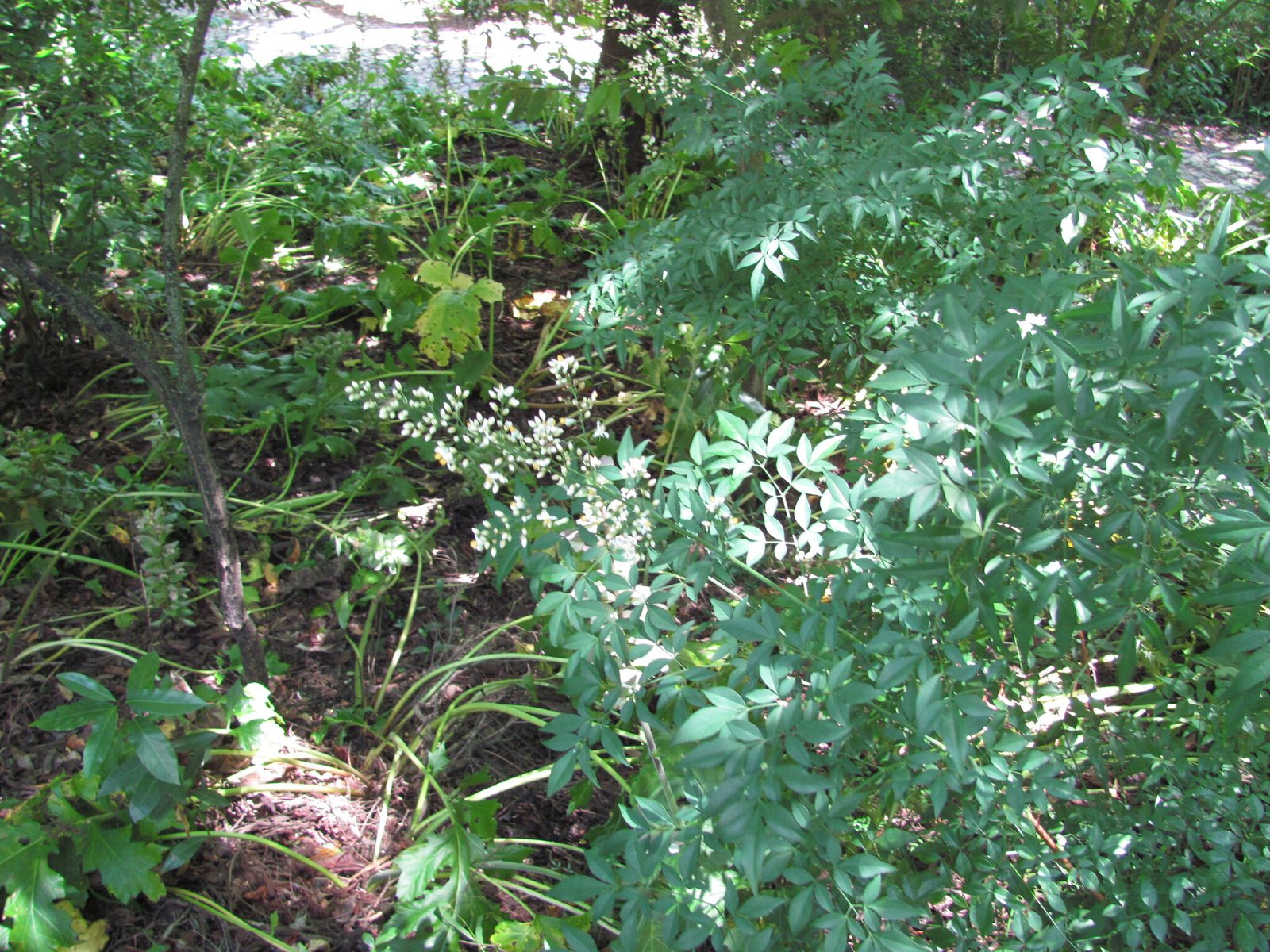
Flirt nandina is a compact, mounding shrub grown for finely divided foliage and persistent burgundy-red young growth. It stays much smaller than ordinary heavenly bamboo and is useful in small borders and containers; it is evergreen in mild climates but may lose leaves during cold winters.
At a glance
- Sun
- Full sun to partial shade; good light produces stronger red colouring. Give afternoon shade in very hot, dry locations.
- Water
- Water regularly during establishment, then during prolonged dry spells. Keep container plants evenly moist but never waterlogged.
- Soil
- Well-drained soil with moderate fertility; slightly acidic to neutral soil is ideal. Avoid persistently wet ground and strongly alkaline soil.
- Height
- 1-2 ft (0.3-0.6 m)
- Spread
- 1.5-2 ft (0.45-0.6 m)
- Foliage
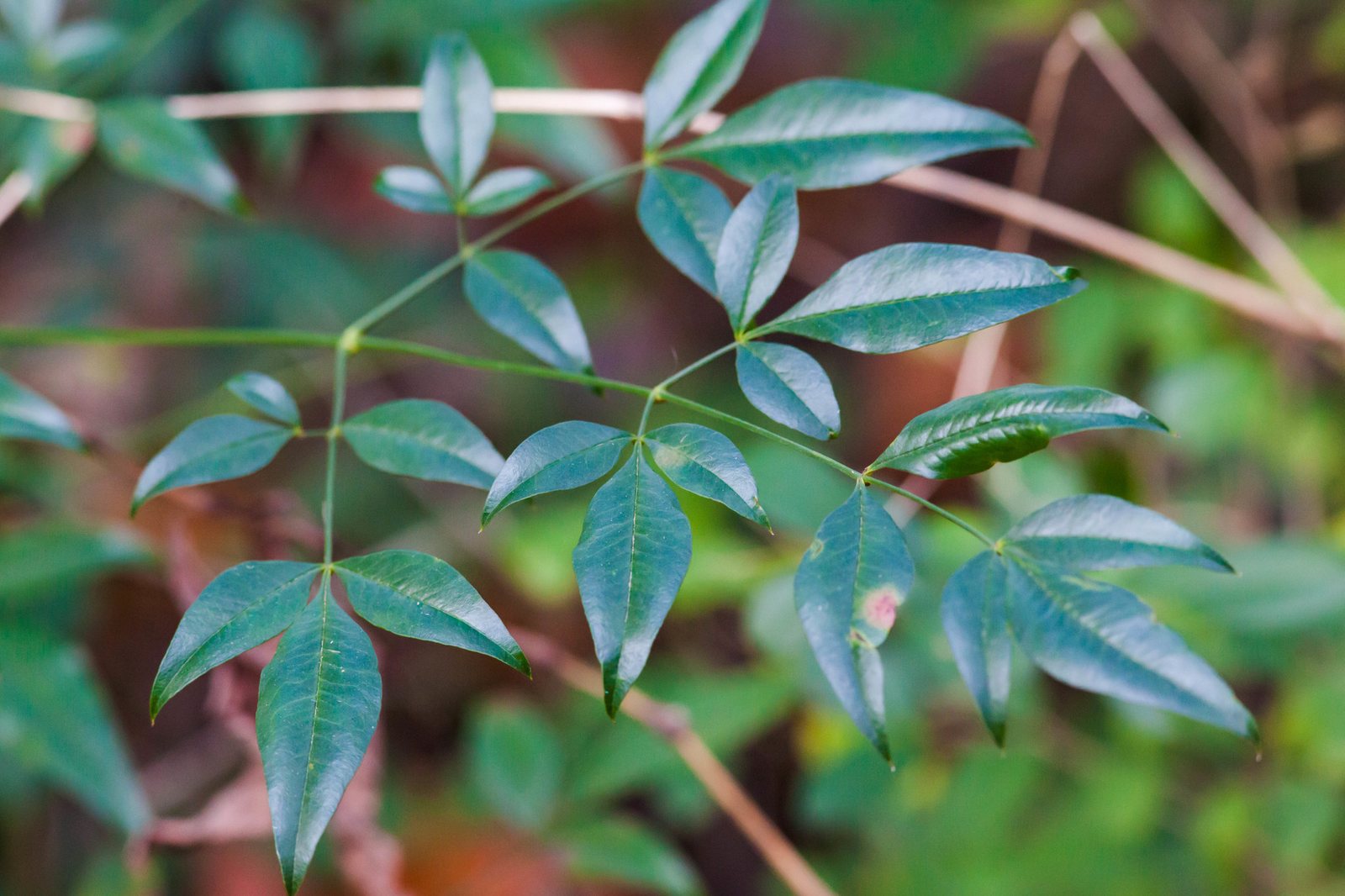
- Evergreen. Small, pointed leaflets form fine-textured, compound leaves. Young growth is deep red to burgundy, contrasting with older green foliage; cool weather can deepen the red colouring.
- Growth
- Slow to moderate
- Care needed
- Low
The year at a glance
- Deer resistant
- Drought tolerant
- Heat tolerant
- Low allergen
| J | F | M | A | M | J | J | A | S | O | N | D | |
|---|---|---|---|---|---|---|---|---|---|---|---|---|
| Plant |
Northern hemisphere months. In Australia, shift them by six.
- Difficulty
- Easy
- Toughness
- Very tough
Will it suit your garden?
Pick your zone, country, light and whether you have pets.
Full sun is 6 or more hours of direct sun a day, part shade 3 to 6 hours, shade under 3.
How it grows
Planting day
1.5 ft (0.45 m)
full size
About 7 years to full size.
From a typical nursery size, at an average rate for this kind of plant. A rule of thumb, not a forecast.
Good to know
- Cats and dogs
- Toxic
- Invasive in
- the US and Australia
- Growth rate
- Slow
Care
Jobs through the year
- WaterApr–May, Sep–Oct, every 14 days
- Water established plants deeply only if soil is dry; young plants need more frequent watering.
- WaterJun–Aug, every 10 days
- Water established plants deeply during prolonged dry spells; skip if soil remains moist.
- FeedApr
- Feed lightly with balanced fertiliser only if growth is weak or soil is poor.
- MulchMar–Apr, Oct
- Maintain about 5 cm of organic mulch without covering the stem bases.
- PruneMar–Apr
- Remove dead or frost-damaged stems once surviving growth is clear; avoid routine shearing.
- PruneSep–Oct
- Remove any unexpected berries before birds can eat them.
- ProtectJan–Feb, Nov–Dec
- Shelter from drying winds and protect container roots during severe or prolonged freezes.
- Water deeply through the first growing season whenever the root zone starts to dry.
- Apply a 2 in (5 cm) organic mulch, keeping it clear of the stems.
- Feed lightly in spring only if growth is weak or the soil is poor.
- Use a container with drainage holes and protect its root ball from severe winter freezing.
- Shelter from drying winter winds near the colder end of its range.
Pruning. In late winter or early spring, remove dead or frost-damaged stems back to healthy growth. This compact cultivar rarely needs shaping; avoid shearing, which spoils its layered foliage.
Through the year
- Early spring
- Check for winter damage and remove dead stems once healthy growth is visible.
- Spring
- Plant in well-drained ground, water thoroughly and apply mulch.
- Late spring
- Check new growth for aphids and feed lightly only if needed.
- Summer
- Water new plantings during dry spells and check containers frequently.
- Autumn
- Refresh mulch without burying the base, and remove any unexpected fruit.
- Winter
- Protect containers from prolonged freezing and avoid pruning during severe cold.
In the garden
- Plant in small groups along a border edge for low, burgundy-and-green foliage.
- Use in courtyard containers with sedges or heucheras for contrasting leaf shapes.
- Combine with compact green shrubs for a restrained, year-round foundation planting.
- Place beside paths or pale paving where its fine foliage and red growth are easy to see.
Garden styles it suits: Japanese, Modern courtyard, Small-space, Low-maintenance, Modern and Winter interest.
Plant it with: Japanese forest grass, Heuchera, Liriope, Dwarf mondo grass, Camellia and Japanese sedge.
Wildlife: This foliage cultivar generally produces little or no flower or fruit, so it offers limited food for pollinators or birds. Nandina berries can poison birds, particularly when eaten in quantity; remove any that appear.
Problems to watch for
- Root rot in waterlogged soil: improve drainage or move the plant to a raised bed; do not leave pots standing in water.
- Yellow leaves with green veins on alkaline soil: check soil pH and grow in a suitable container mix if the ground is strongly alkaline.
- Leaf scorch or winter burn: water during dry periods and provide shelter from harsh afternoon sun or drying winter winds.
- Scale insects or aphids: inspect stems and new shoots; remove small infestations by hand or use an appropriately labelled insecticidal soap.
Safety
Toxic to cats, dogs, horses and people if eaten. Leaves, stems and berries contain cyanogenic compounds, with berries a particular concern; significant ingestion can cause serious poisoning. Keep it away from grazing animals and seek urgent medical or veterinary advice after suspected ingestion.
Where it spreads. The species is invasive in parts of the southeastern United States, including Florida, Georgia and the Carolinas, and is naturalised in parts of eastern Australia. Flirt generally produces little or no fruit and presents a lower seed-spread risk than ordinary nandina, but do not assume it is exempt from local restrictions; check before planting.
Easily confused with
Firepower nandina (Nandina domestica 'Firepower')
Also dwarf, but typically has broader-looking leaflets and its strongest red colouring develops in cool weather; Flirt is selected for persistent burgundy-red young growth.
Heavenly bamboo (Nandina domestica)
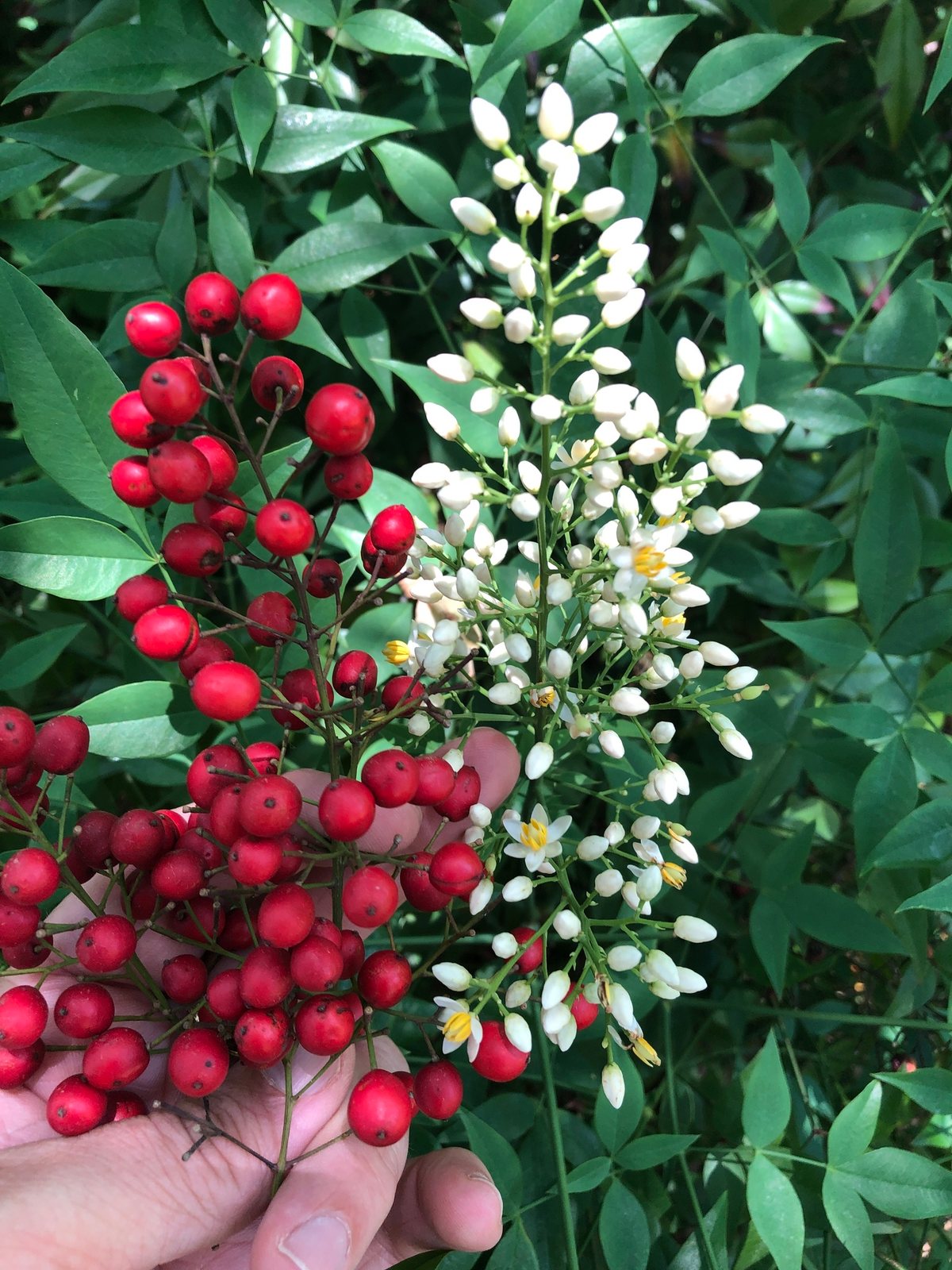
Ordinary plants grow much taller with more obvious upright canes and commonly carry white flower clusters followed by red berries.
Japanese barberry (Berberis thunbergii)
Red-leaved forms can give a similar colour effect, but barberry has simple leaves and thorny stems rather than nandina's finely divided compound leaves.
The name
Nandina derives from the Japanese name nanten, domestica means cultivated or domestic, and the cultivar name Murasaki is Japanese for purple.
Propagation. Propagate from semi-ripe cuttings in summer to retain the cultivar's characteristics. Plants raised from seed will not reliably match it. Check current plant patent or plant breeders' rights restrictions before propagating.
Checked against open data
- Accepted botanical name
- Nandina domestica
- In the US and Canada
- Introduced in the lower 48 states and Pacific Basin.
- Native range
- China North-Central, China South-Central and China Southeast.
- Measured
- Soil pH 4.5 to 6. Average height 244 cm.
Sources: GBIF (CC BY 4.0), USDA PLANTS and Trefle (CC BY 4.0). The care and design notes are LandscapeGPT's own.
See it in your own yard.
Upload a photo of your yard and see it redesigned with plants that suit your climate, each checked against your zone.