Florida anise
Illicium parviflorum. Family Schisandraceae. Shrub.
Also called Yellow anise, Yellow anise-tree, Small-flowered anise.
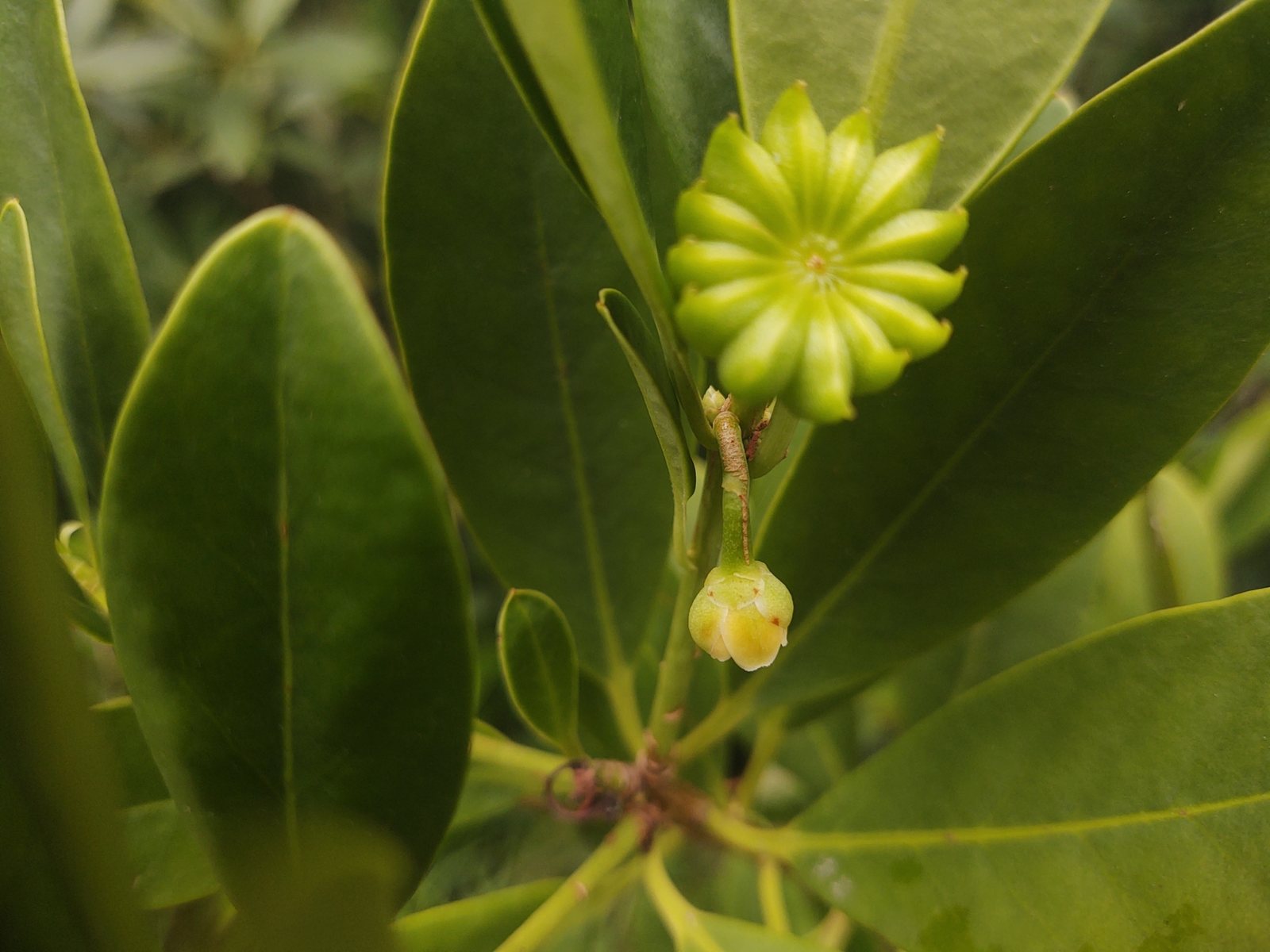
Florida anise is a large evergreen shrub native to Florida, grown for its dense foliage and usefulness as a screen in moist, partly shaded gardens. Its leaves smell of anise when crushed, but they are not edible; the small yellow-green flowers are easily overlooked. It needs room to spread and can form a thicket through suckering.
At a glance
- Sun
- Partial shade is ideal; tolerates full shade and full sun where the soil stays moist.
- Water
- Keep the root zone consistently moist, especially during establishment. Established plants tolerate brief dry periods but grow best with regular moisture.
- Soil
- Moist, humus-rich, acidic soil; tolerates periodically wet ground but avoid permanently stagnant conditions.
- Height
- 15-20 ft (4.6-6.1 m)
- Spread
- 10-15 ft (3-4.6 m), potentially wider through suckering
- Flowers
- Small, inconspicuous yellow-green flowers in spring, sometimes continuing into early summer.
- Foliage
- Evergreen. Leathery, oblong, olive-green leaves with a strong anise scent when crushed.
- Growth
- Moderate to fast in warm conditions with adequate moisture.
- Care needed
- Low
The year at a glance
- Deer resistant
- Heat tolerant
- Wildlife
- Low allergen
- Fragrant
| J | F | M | A | M | J | J | A | S | O | N | D | |
|---|---|---|---|---|---|---|---|---|---|---|---|---|
| Flowers | ||||||||||||
| Plant |
Northern hemisphere months. In Australia, shift them by six.
- Difficulty
- Moderate
- Toughness
- Fairly tough
Will it suit your garden?
Pick your zone, country, light and whether you have pets.
Full sun is 6 or more hours of direct sun a day, part shade 3 to 6 hours, shade under 3.
How it grows
Planting day
2.1 ft (0.64 m)
After 1 year
6 ft (1.8 m)
After 2 years
10 ft (3 m)
After 3 years
14 ft (4.2 m)
After 5 years
18 ft (5.4 m)
full size
About 4 years to full size.
From a typical nursery size, at an average rate for this kind of plant. A rule of thumb, not a forecast.
Good to know
- Cats and dogs
- Toxic
- Growth rate
- Fast
Care
Jobs through the year
- WaterMar–May, Sep–Oct, every 14 days
- Water established shrubs when soil begins drying; check young plants more often for their first two years.
- WaterJun–Aug, every 7 days
- Water deeply during dry weather to maintain consistent moisture, especially in sunny sites.
- MulchMar–Apr
- Apply 5–8 cm of leaf mould or bark, keeping stem bases uncovered.
- FeedApr
- Feed lightly only if growth is weak; avoid heavy fertiliser applications.
- PruneFeb–Mar
- If renovation is needed, remove selected old stems rather than shearing the whole shrub.
- PruneJun–Jul
- After flowering, shorten wayward shoots and remove dead wood once winter damage is clear.
- PruneSep–Oct
- Cut unwanted suckers at ground level to limit spread.
- ProtectJan–Mar, Nov–Dec
- Shelter young shrubs from winter winds; in zone 6, grow in containers and overwinter frost-free.
- Water deeply during the first two growing seasons whenever the root zone begins to dry.
- Apply 2-3 in (5-8 cm) of leaf mould or bark mulch, keeping it clear of the stems.
- Water established plants during prolonged dry spells, particularly in sunny positions.
- Feed lightly in spring only if growth is weak; avoid heavy applications of fertiliser.
- Remove unwanted suckers at ground level to limit the shrub's spread.
Pruning. Prune after flowering to shorten wayward shoots and remove dead or damaged wood. If an older shrub needs renovation, cut back selected old stems in late winter rather than shearing the whole plant repeatedly.
Through the year
- Late winter
- Remove dead or damaged stems and thin selected old stems if renovation is needed.
- Spring
- Plant once the soil is workable, water thoroughly and mulch the root zone.
- Early summer
- After flowering, shorten shoots that obstruct paths or exceed the available space.
- Summer
- Check soil moisture during hot weather and water deeply during dry spells.
- Autumn
- Remove unwanted suckers and replenish mulch without burying the stem bases.
- Winter
- Protect young plants from drying winds near the colder end of their hardiness range.
In the garden
- Use as an informal evergreen screen along a shaded boundary where there is room for its mature width.
- Plant behind ferns and shade-tolerant perennials to provide a dense, year-round backdrop.
- Mass beside a pond or in a moist woodland garden, above any permanently flooded area.
- Combine with camellias and hydrangeas in acidic soil for contrasting leaf shapes and seasonal flowers.
Garden styles it suits: Woodland, Southern, Florida subtropical, Green on green, Low-maintenance and Secret garden.
Plant it with: Sweetspire, Oakleaf hydrangea, Camellia, Royal fern and Christmas fern.
Wildlife: Dense evergreen growth provides shelter for birds and other small wildlife. Deer usually leave the aromatic foliage alone, although no shrub is completely deer-proof.
Problems to watch for
- Leaf scorch or wilting in hot, dry sites: water deeply, mulch and provide afternoon shade.
- Yellow leaves in alkaline soil: check soil pH and, where practical, move the plant to a more acidic site rather than repeatedly feeding it.
- Cold or wind damage: choose a sheltered position and remove dead growth after new spring growth shows what has survived.
- Unwanted suckering: cut out new shoots regularly, or allow enough space for an informal thicket.
Safety
Treat all parts, including leaves and seeds, as poisonous if eaten by people or animals. It is not culinary star anise and must not be used for tea or seasoning. Species-specific toxicity information for cats, dogs and horses is limited, so keep it away from browsing animals and seek medical or veterinary advice after ingestion; poisoning may be serious.
Easily confused with
Florida anise-tree (Illicium floridanum)
Usually has conspicuous dark red, many-petalled flowers rather than the small yellow-green flowers of Illicium parviflorum; its leaves are generally darker green.
Japanese anise (Illicium anisatum)
Has larger, creamy-white flowers with numerous narrow petals. It is also poisonous and is not a substitute for culinary star anise.
Star anise (Illicium verum)
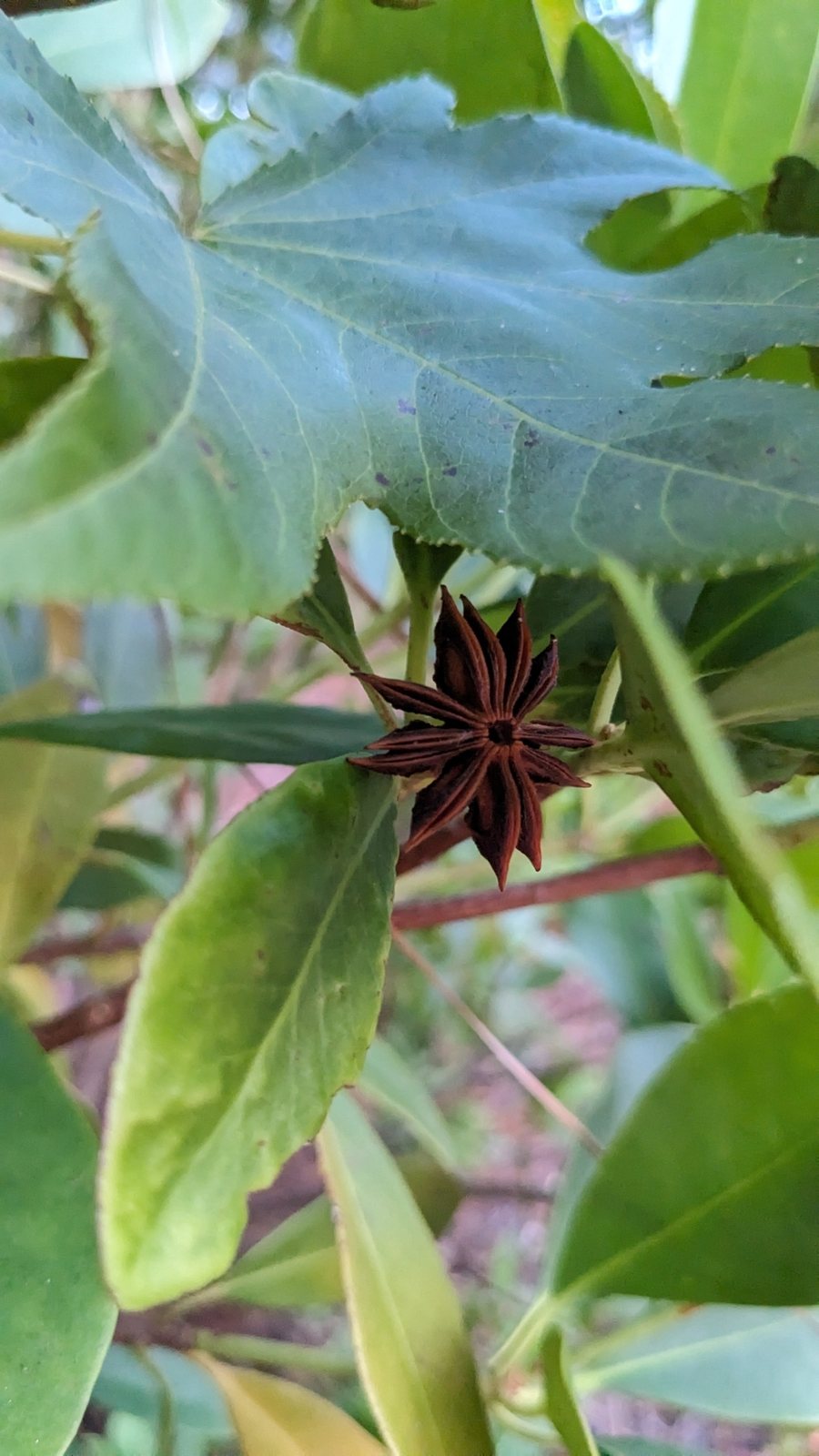
The culinary species has larger flowers, usually pinkish to red, and develops the familiar star-shaped spice fruits; do not identify an edible plant from leaf scent or fruit shape alone.
The name
The epithet parviflorum means small-flowered, while the common name refers to its Florida origin and the anise scent of its crushed leaves.
Propagation. Take semi-ripe cuttings in summer and root them in a humid, sheltered environment. Rooted suckers can also be separated during the dormant season; fresh seed is another option but is slower.
Checked against open data
- Accepted botanical name
- Illicium parviflorum
- Native range
- Dominican Republic and Florida.
Sources: GBIF (CC BY 4.0) and Trefle (CC BY 4.0). The care and design notes are LandscapeGPT's own.
See it in your own yard.
Upload a photo of your yard and see it redesigned with plants that suit your climate, each checked against your zone.