Flowering cherry 'Amanogawa'
Prunus 'Amanogawa'. Family Rosaceae. Tree.
Also called Japanese flagpole cherry, Columnar Japanese cherry, Prunus serrulata 'Amanogawa'.
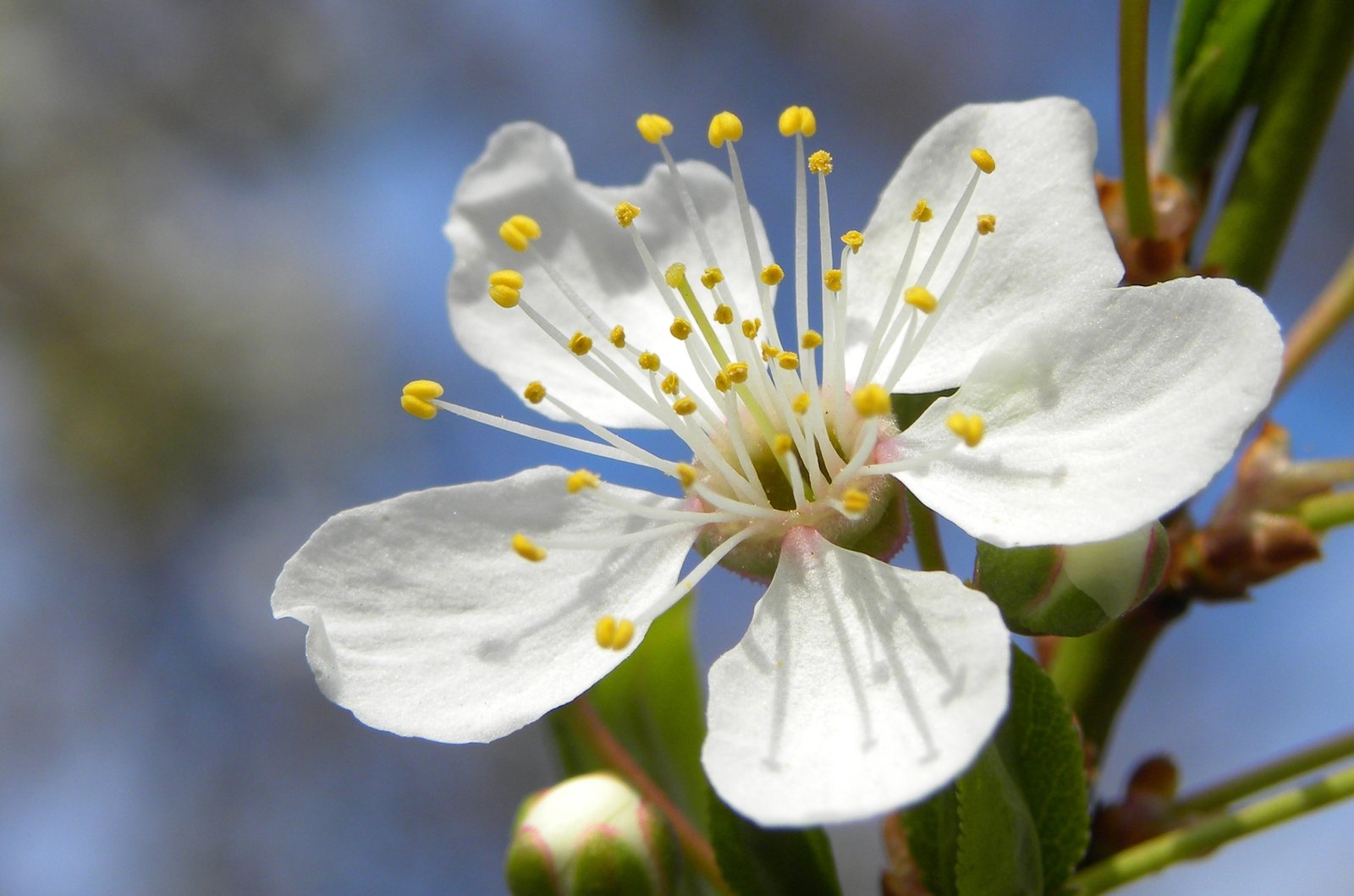
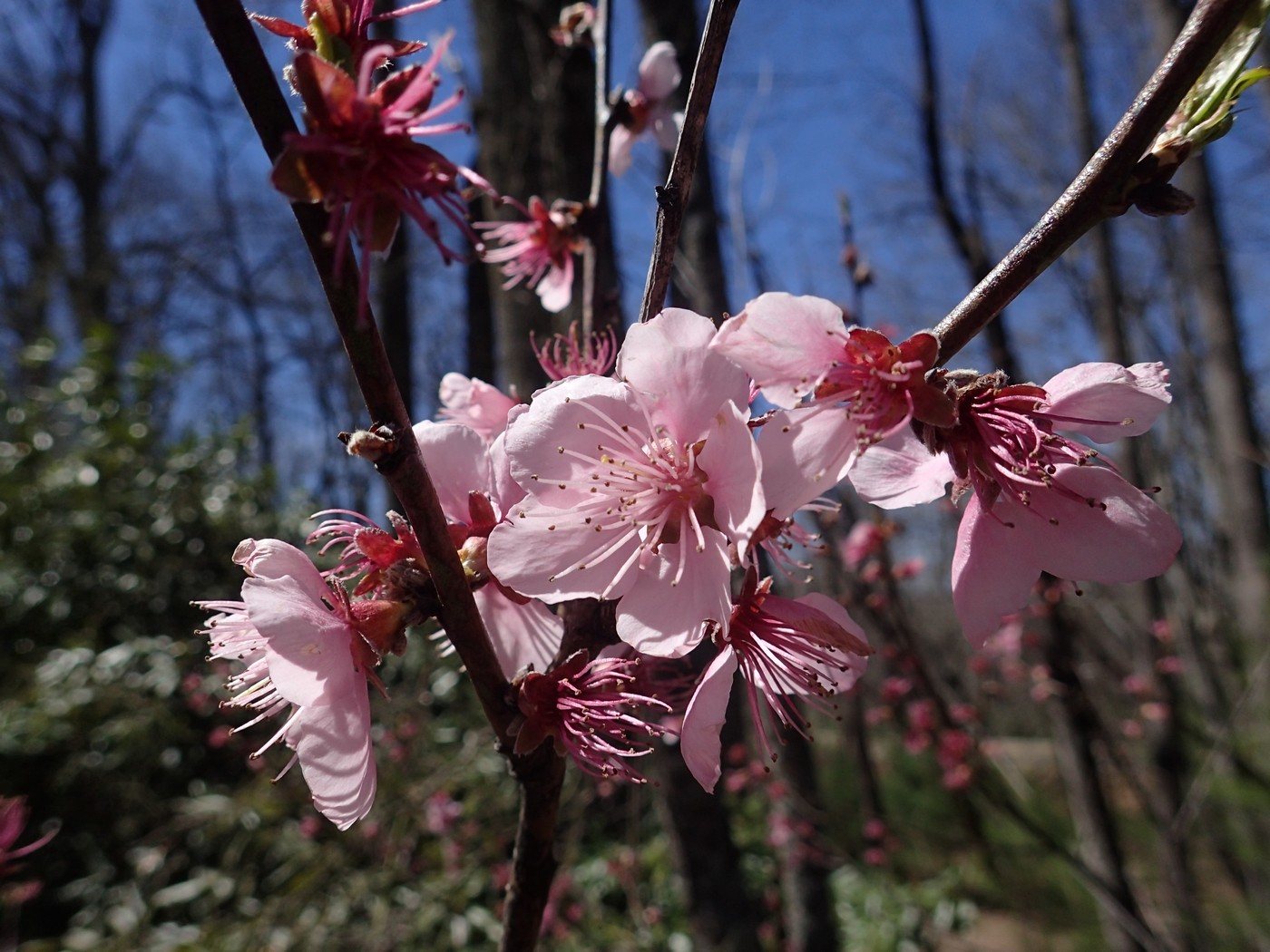
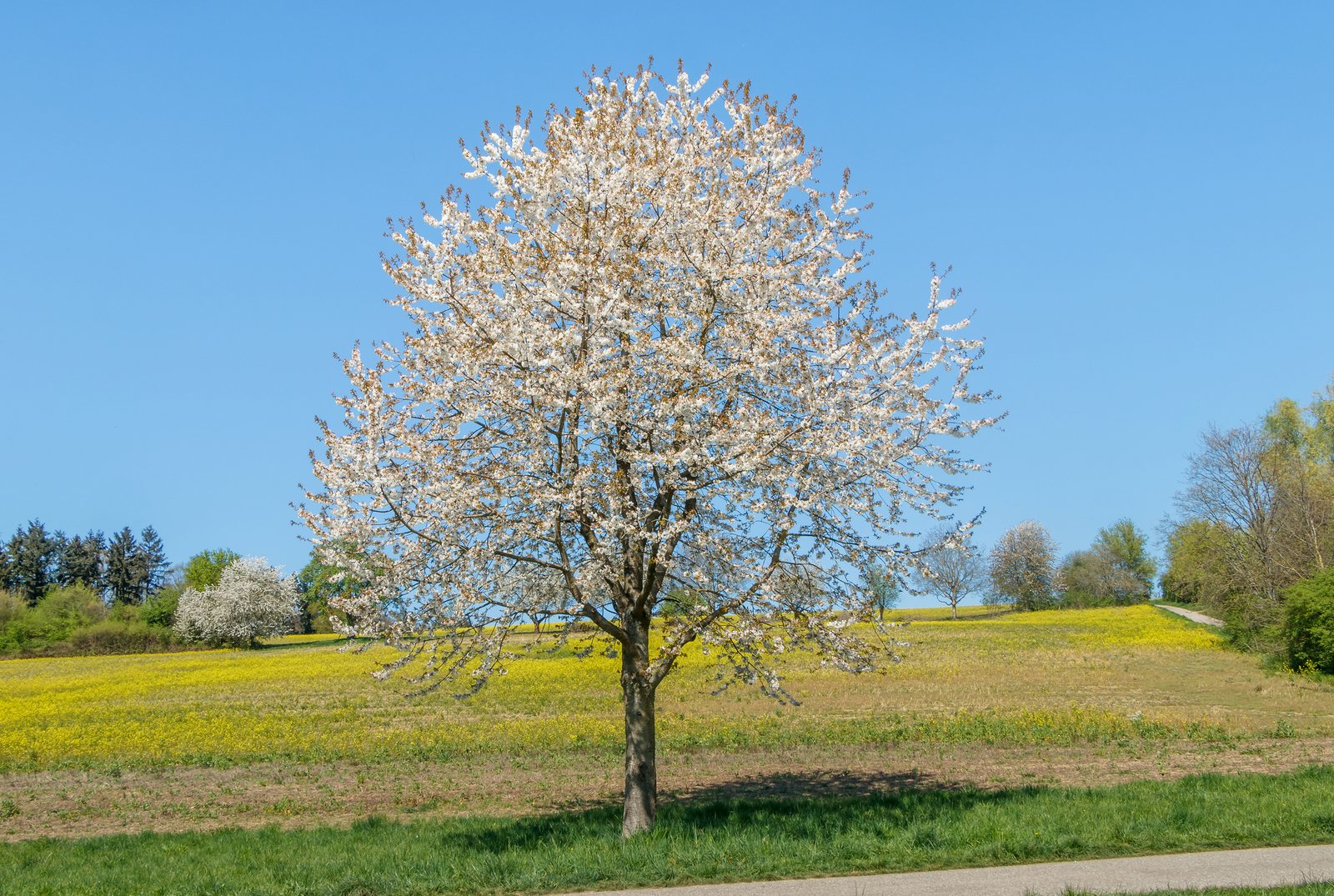
'Amanogawa' is a deciduous flowering cherry with strongly upright branches and a narrow crown. Gardeners grow it for its lightly scented, pale pink spring blossom and its useful shape in small gardens, though the crown gradually broadens with age.
At a glance
- Sun
- Full sun gives the best flowering; tolerates light partial shade.
- Water
- Keep the root zone evenly moist while establishing. Once established, water deeply during prolonged dry spells; avoid waterlogged ground.
- Soil
- Fertile, well-drained soil that retains some moisture. Tolerates chalk and a range of soil pH, but struggles in persistently wet or severely compacted soil.
- Height
- 15-25 ft (4.5-7.5 m)
- Spread
- 4-8 ft (1.2-2.4 m), sometimes widening to 10 ft (3 m) with age
- Flowers
- Mid- to late spring; clusters of lightly scented, semi-double pale pink flowers, fading nearly white.
- Foliage
- Deciduous, toothed leaves emerge bronze-green, become green in summer, and turn yellow, orange or red in autumn.
- Growth
- Moderate
- Care needed
- Medium
The year at a glance
- Pollinators
- Wildlife
- Low allergen
- Fragrant
| J | F | M | A | M | J | J | A | S | O | N | D | |
|---|---|---|---|---|---|---|---|---|---|---|---|---|
| Flowers | ||||||||||||
| Plant |
Northern hemisphere months. In Australia, shift them by six.
- Difficulty
- Moderate
- Toughness
- Fairly tough
Will it suit your garden?
Pick your zone, country, light and whether you have pets.
Full sun is 6 or more hours of direct sun a day, part shade 3 to 6 hours, shade under 3.
How it grows
Planting day
7 ft (2 m)
After 1 year
7 ft (2.2 m)
After 2 years
8 ft (2.4 m)
After 3 years
9 ft (2.6 m)
After 5 years
10 ft (3 m)
About 20 years to full size.
From a typical nursery size, at an average rate for this kind of plant. A rule of thumb, not a forecast.
Good to know
- Cats and dogs
- Toxic
- Growth rate
- Moderate
Care
Jobs through the year
- WaterApr–May, Sep–Oct, every 21 days
- Deep-water established trees only during prolonged dry spells; keep new trees evenly moist for two years.
- WaterJun–Aug, every 14 days
- Soak the root zone of established trees during drought, skipping watering when soil remains moist.
- MulchMar–Apr
- Refresh a 5–8 cm organic mulch over the root area, leaving the trunk clear.
- FeedMar–Apr
- Feed only for poor growth or a confirmed deficiency; avoid excessive nitrogen.
- PruneJun–Aug
- Prune minimally in dry weather, removing damaged or crossing branches and rootstock suckers.
- ProtectJan–Feb, Nov–Dec
- Check young trunks for animal damage and loosen tight stakes or ties.
- Plant with the root flare at soil level and the graft union above the soil.
- Water deeply through dry periods for the first two growing seasons.
- Apply 2-3 in (5-8 cm) of organic mulch over the root area, keeping it away from the trunk.
- Stake only if the root ball moves in wind; use a low, flexible tie and remove it once the tree is anchored.
- Feed in spring only if growth is poor or a soil test shows a deficiency; avoid heavy nitrogen feeding.
- Remove shoots arising from below the graft union or from the roots.
Pruning. Prune as little as possible, preserving the upright framework. If needed, remove dead, damaged or crossing branches in dry weather in summer; avoid routine winter pruning because it increases the risk of silver leaf and bacterial canker.
Through the year
- Autumn
- Plant while the soil is workable and not waterlogged; in very cold climates, wait until spring.
- Early spring
- Check stakes and ties, refresh mulch, and remove any rootstock suckers.
- Spring
- Enjoy the blossom and inspect emerging leaves for aphids.
- Summer
- Water during prolonged drought and carry out any necessary pruning in dry weather.
- Autumn
- Collect fallen leaves if leaf disease has been present.
- Winter
- Check young trunks for animal damage and loosen any tight tree ties; leave routine pruning until summer.
In the garden
- Use as a vertical accent in a small lawn or front garden without the broad canopy of many flowering cherries.
- Plant beside a path or entrance, allowing space for the mature crown rather than placing it tight against a wall.
- Repeat at generous intervals along a boundary for spring blossom and an upright rhythm.
- Underplant with spring bulbs and low perennials that tolerate increasing summer shade.
Garden styles it suits: Japanese, Urban city garden, Small-space, Architectural minimal, Cottage garden and Romantic rose garden.
Plant it with: Snowdrops, Crocuses, Hellebores, Epimediums, Hardy geraniums and Japanese painted ferns.
Wildlife: The flowers can provide pollen and nectar for visiting insects, although semi-double blooms are generally less accessible than single-flowered cherries. Branches offer perching and possible nesting cover; fruit is sparse and unreliable.
Problems to watch for
- Bacterial canker: sunken bark, gum and branch dieback may occur. Prune affected wood back to healthy growth in dry summer weather, disinfect tools between cuts, and avoid unnecessary wounds.
- Silver leaf: silvery foliage and branch dieback need investigation, as other stresses can look similar. Remove affected branches in dry summer weather; badly affected trees may need professional assessment.
- Aphids: curled young leaves and sticky honeydew are common signs. Encourage natural predators and wash off small colonies with water; avoid spraying open flowers.
- Poor drainage: yellowing leaves, weak growth and root decline can follow waterlogging. Improve drainage before planting or choose another site rather than watering more.
Safety
Seeds inside the stones, leaves and bark contain cyanogenic compounds and can poison people, cats, dogs and horses if eaten. Wilted leaves are a particular livestock hazard, and substantial ingestion can be fatal. Do not allow animals to eat fallen branches or prunings.
Easily confused with
Flowering cherry 'Spire' (Prunus 'Spire')
Also upright when young, but develops a broader crown and has single pink flowers rather than the semi-double, very pale pink flowers of 'Amanogawa'.
Flowering cherry 'Kanzan' (Prunus 'Kanzan')
Has much fuller, deeper pink double flowers and a broad, vase-shaped crown rather than a narrow column.
The name
The Japanese cultivar name 'Amanogawa' means 'heavenly river', a name for the Milky Way.
Propagation. Usually propagated by budding or grafting onto a compatible cherry rootstock. Seedlings will not come true to the cultivar, and shoots from below the graft belong to the rootstock.
Checked against open data
- Accepted botanical name
- Prunus
Sources: GBIF (CC BY 4.0). The care and design notes are LandscapeGPT's own.
See it in your own yard.
Upload a photo of your yard and see it redesigned with plants that suit your climate, each checked against your zone.