Flowering quince
Chaenomeles speciosa. Family Rosaceae. Shrub.
Also called Chinese flowering quince, Japanese quince.
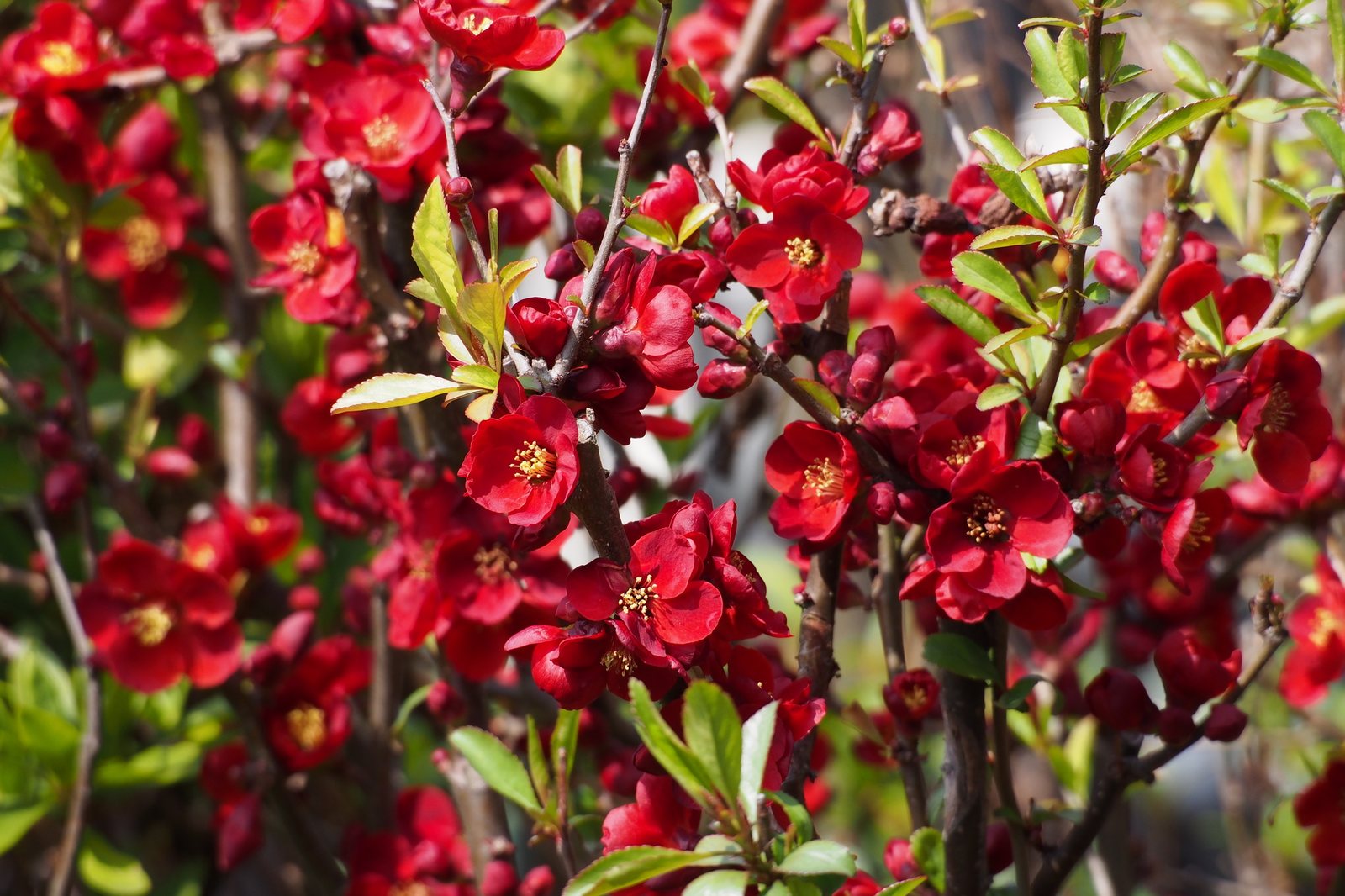
Flowering quince is a thorny, deciduous shrub grown for bright flowers on mostly bare branches in late winter and spring. It makes a tough informal hedge or wall shrub, and its hard, fragrant fruits can be cooked into jelly or preserves.
At a glance
- Sun
- Full sun to partial shade; flowering is best in full sun.
- Water
- Water regularly during establishment; established shrubs tolerate short dry spells but flower and fruit better with occasional deep watering during prolonged drought.
- Soil
- Well-drained loam, clay or sandy soil; prefers slightly acidic to neutral conditions. Waterlogged soil causes root problems, and strongly alkaline soil can yellow the leaves.
- Height
- 6-10 ft (1.8-3 m)
- Spread
- 6-10 ft (1.8-3 m), potentially wider through suckering
- Flowers
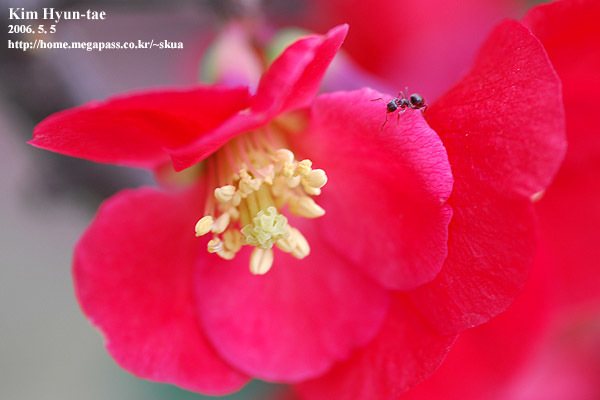
- Late winter to mid-spring, depending on climate; usually scarlet to orange-red in the species, with pink and white forms and cultivars also available.
- Foliage
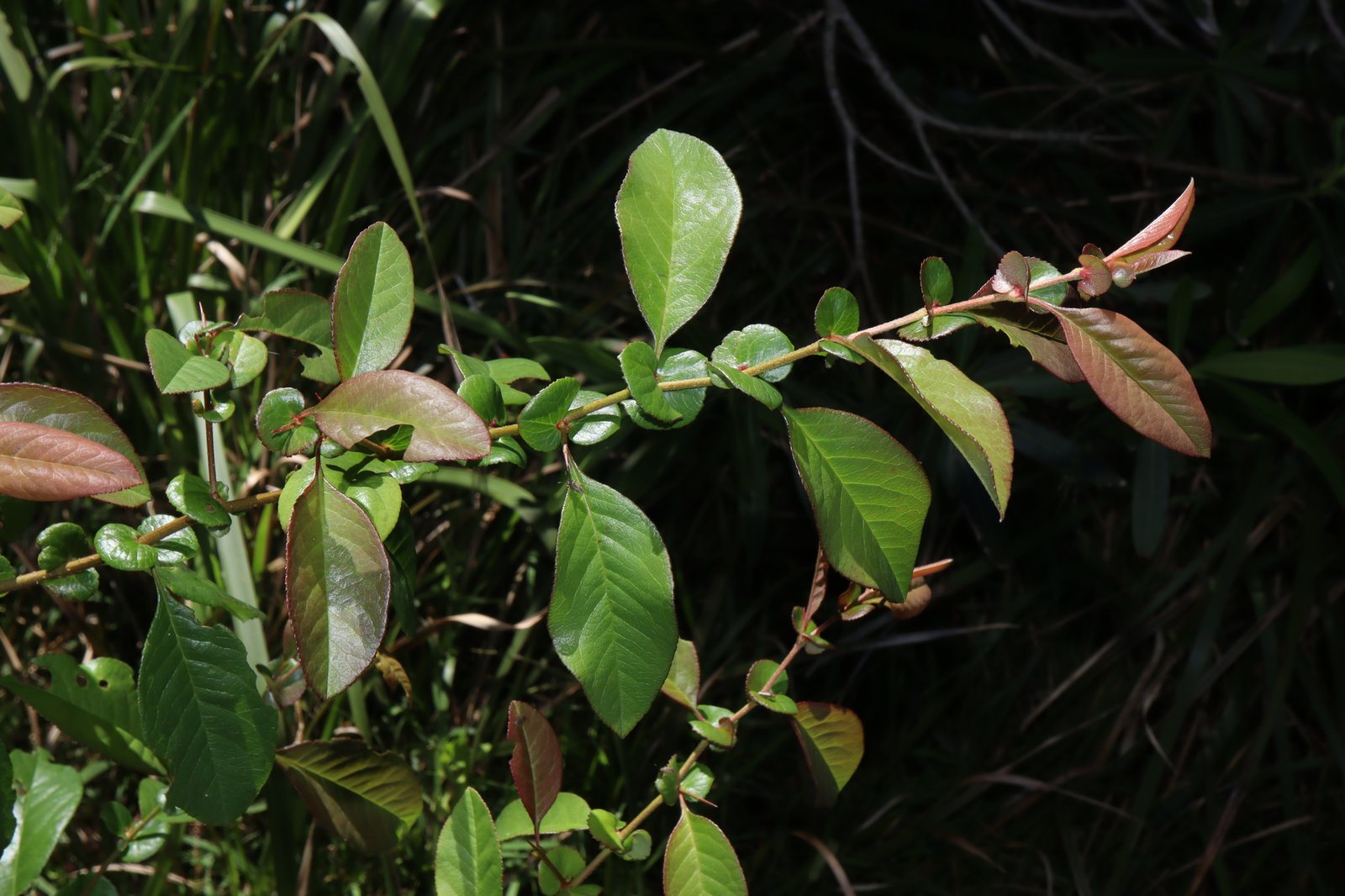
- Glossy, oval, finely toothed green leaves; usually little autumn colour.
- Growth
- Moderate
- Care needed
- Medium
The year at a glance
- Pollinators
- Deer resistant
- Drought tolerant
- Cold hardy
- Wildlife
- Low allergen
| J | F | M | A | M | J | J | A | S | O | N | D | |
|---|---|---|---|---|---|---|---|---|---|---|---|---|
| Flowers | ||||||||||||
| Fruit | ||||||||||||
| Plant |
Northern hemisphere months. In Australia, shift them by six.
- Difficulty
- Easy
- Toughness
- Very tough
Will it suit your garden?
Pick your zone, country, light and whether you have pets.
Full sun is 6 or more hours of direct sun a day, part shade 3 to 6 hours, shade under 3.
How it grows
Planting day
1.6 ft (0.5 m)
After 1 year
2.9 ft (0.88 m)
After 2 years
4 ft (1.3 m)
After 3 years
5 ft (1.6 m)
After 5 years
8 ft (2.4 m)
full size
About 5 years to full size.
From a typical nursery size, at an average rate for this kind of plant. A rule of thumb, not a forecast.
Good to know
- Cats and dogs
- Mildly toxic: may upset a stomach
- Growth rate
- Moderate
Care
Jobs through the year
- WaterApr–May, Sep–Oct, every 21 days
- Water established shrubs only during prolonged dry spells; water new plants more often.
- WaterJun–Aug, every 14 days
- Water deeply during prolonged drought to support flowering and fruiting.
- FeedMar–Apr
- Top-dress with mature compost; avoid high-nitrogen feeding.
- MulchMar–Apr
- Renew a 5–8 cm organic mulch, keeping it away from stems.
- PruneApr–May
- Immediately after flowering, thin old and crossing stems; retain shoots for fruit.
- PruneJun–Aug
- Remove unwanted suckers at their origin; wear thorn-resistant gloves.
- Water deeply through the first growing season whenever the root zone starts to dry.
- Apply a 2-3 in (5-8 cm) layer of organic mulch, keeping it clear of the stems.
- Top-dress with compost in spring; avoid heavy nitrogen feeding, which encourages leafy growth rather than flowers.
- Remove unwanted suckers at their point of origin to keep the shrub within bounds.
- Wear thick gloves when working among the thorny branches.
Pruning. Prune immediately after flowering, removing dead or crossing branches and cutting a few of the oldest stems to ground level. Shorten remaining shoots only as needed; frequent clipping reduces next year's flowers, and pruning off flowering shoots also reduces fruit.
Through the year
- Autumn
- Plant while the soil is workable and moist, or wait until spring in very cold regions.
- Late winter
- Cut a few budding branches for indoor forcing, leaving plenty for the garden display.
- Spring
- After flowering, thin congested stems and shorten growth that obstructs paths.
- Spring
- Apply compost and renew mulch without piling it against the stems.
- Summer
- Water during prolonged drought and remove suckers where they extend beyond the planting.
- Autumn
- Harvest sound, yellow, fragrant fruits for cooking; fruit production varies with the plant and pollination.
In the garden
- Grow as an informal boundary hedge where thorny branches discourage access.
- Train branches against a sunny wall or fence for an early-season flower display.
- Place behind snowdrops, crocuses and hellebores to combine flowers at different heights.
- Use in a mixed shrub border with later-flowering shrubs to extend seasonal interest.
Garden styles it suits: Cottage garden, Traditional, Japanese, Native hedgerow, Winter interest and Edible landscape.
Plant it with: Snowdrops, Crocuses, Hellebores, Daffodils, Spirea and Hardy geraniums.
Wildlife: Open flowers provide early pollen and nectar for bees when weather allows them to forage. Dense, thorny branches offer shelter and potential nesting sites for small birds; very double-flowered cultivars are less useful to pollinators.
Problems to watch for
- Fire blight can blacken shoots and leave hooked tips: prune affected growth well below visible damage in dry weather, disinfect tools between cuts, and avoid excessive nitrogen.
- Leaf spot can cause spotted leaves and early leaf fall: collect fallen leaves, improve airflow and water at soil level.
- Aphids cluster on soft new shoots: wash them off with water and preserve ladybirds and other predators.
- Poor flowering usually follows heavy shade or pruning at the wrong time: provide more sun and prune only just after flowering.
Safety
Not generally considered poisonous to cats, dogs or horses, and the fruit flesh is edible for people, usually after cooking. Seeds contain cyanogenic compounds and should not be eaten or crushed into food; remove seeds and cores when preparing fruit. Significant seed ingestion warrants medical or veterinary advice. Thorns can cause puncture injuries.
Easily confused with
Japanese flowering quince (Chaenomeles japonica)
Usually a lower, spreading shrub around 2-3 ft (0.6-0.9 m) tall, with smaller, more rounded leaves and orange-red flowers. Garden hybrids can be difficult to separate by appearance alone.
Common quince (Cydonia oblonga)
Usually a small, thornless tree with softly hairy leaves and solitary pale pink flowers appearing after the leaves; its fruits are generally much larger.
Chinese quince (Pseudocydonia sinensis)
A thornless small tree with peeling, mottled bark, solitary pink flowers and large oval fruits, rather than a thorny shrub with clustered flowers.
The name
The species name speciosa means showy, referring to its flowers, while flowering quince distinguishes it from quince grown chiefly for fruit.
Propagation. Take semi-ripe cuttings in summer, layer low branches, or lift rooted suckers during dormancy. Seed-grown plants vary and do not reliably retain cultivar characteristics.
Checked against open data
- Accepted botanical name
- Chaenomeles speciosa
- In the US and Canada
- Introduced in the lower 48 states.
- Native range
- China North-Central, China South-Central, China Southeast, Tibet and Xinjiang.
- Measured
- Average height 200 cm.
Sources: GBIF (CC BY 4.0), USDA PLANTS and Trefle (CC BY 4.0). The care and design notes are LandscapeGPT's own.
See it in your own yard.
Upload a photo of your yard and see it redesigned with plants that suit your climate, each checked against your zone.