Forget-me-not
Myosotis sylvatica. Family Boraginaceae. Perennial.
Also called Woodland forget-me-not, Wood forget-me-not.
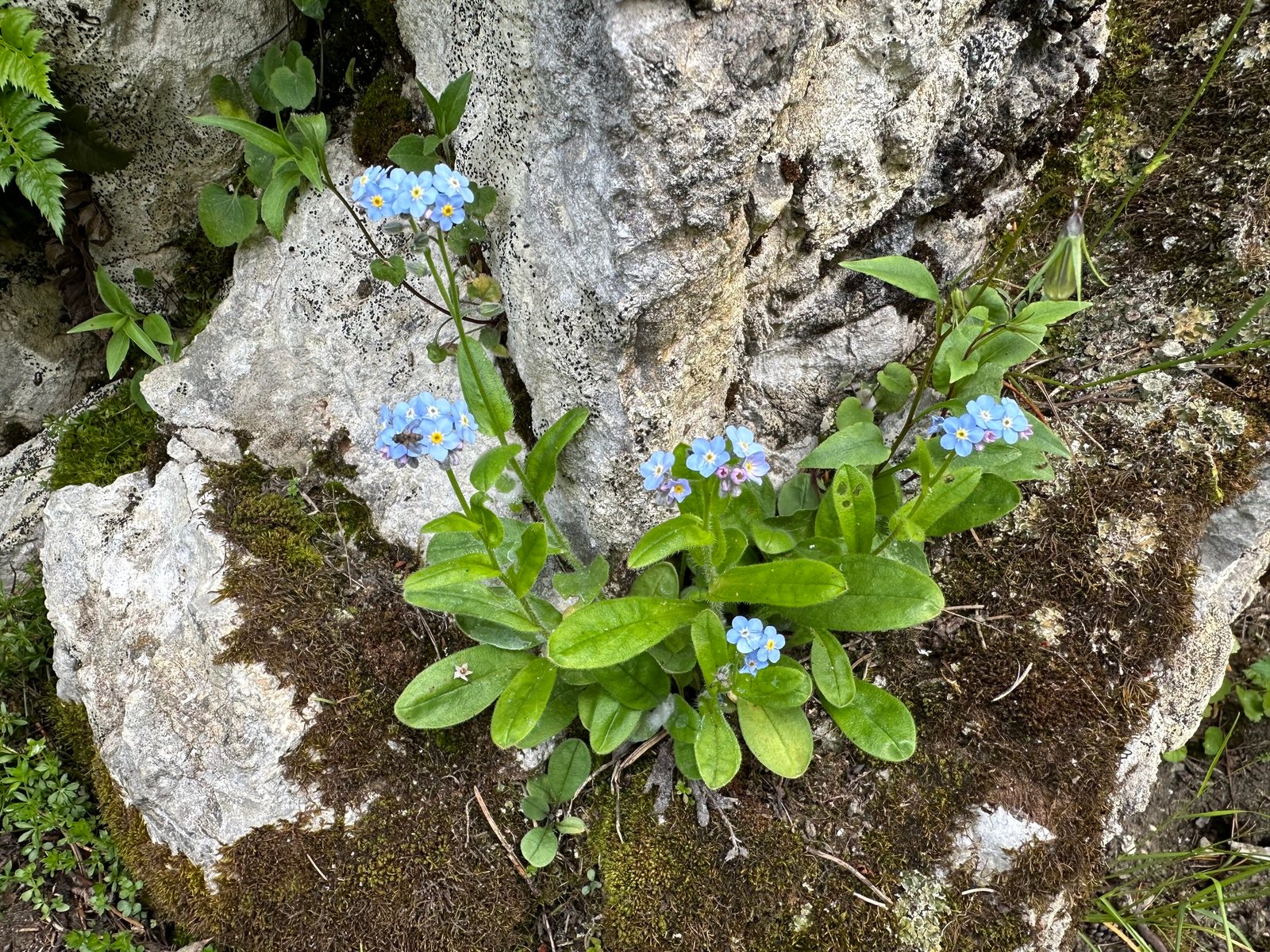
A short-lived perennial, usually grown as a biennial, with loose sprays of tiny blue flowers above soft, hairy leaves. It makes a spring carpet beneath bulbs and deciduous shrubs, renewing itself readily from seed where the soil stays moist.
At a glance
- Sun
- Partial shade; full sun in cool climates if the soil stays moist.
- Water
- Keep evenly moist but not waterlogged. Water during dry spells, especially while plants establish and flower.
- Soil
- Humus-rich, moisture-retentive, well-drained soil; tolerates acidic, neutral and alkaline conditions.
- Height
- 0.5-1 ft (0.15-0.3 m)
- Spread
- 0.5-1 ft (0.15-0.3 m) per plant; seedlings can form much wider patches.
- Flowers
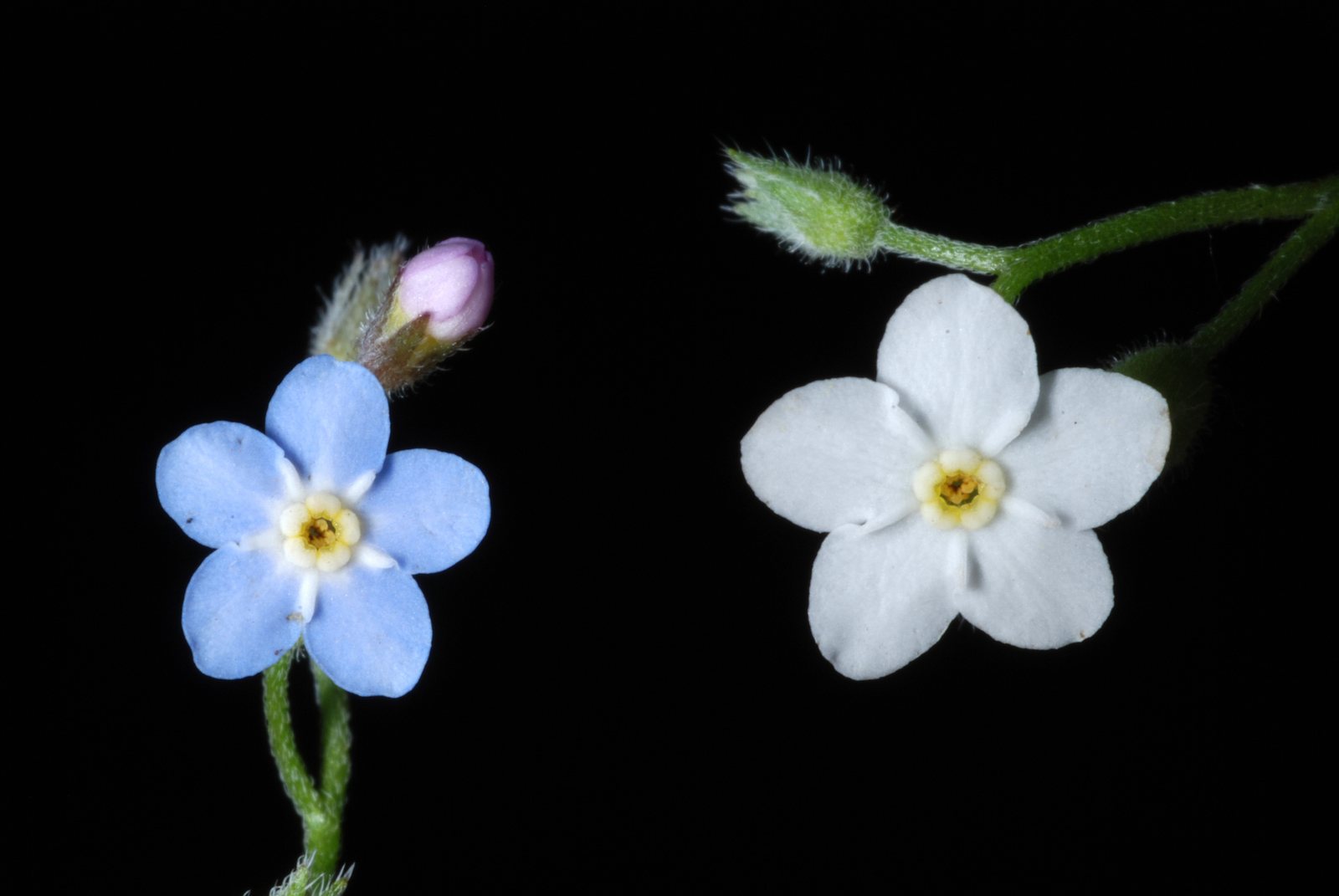
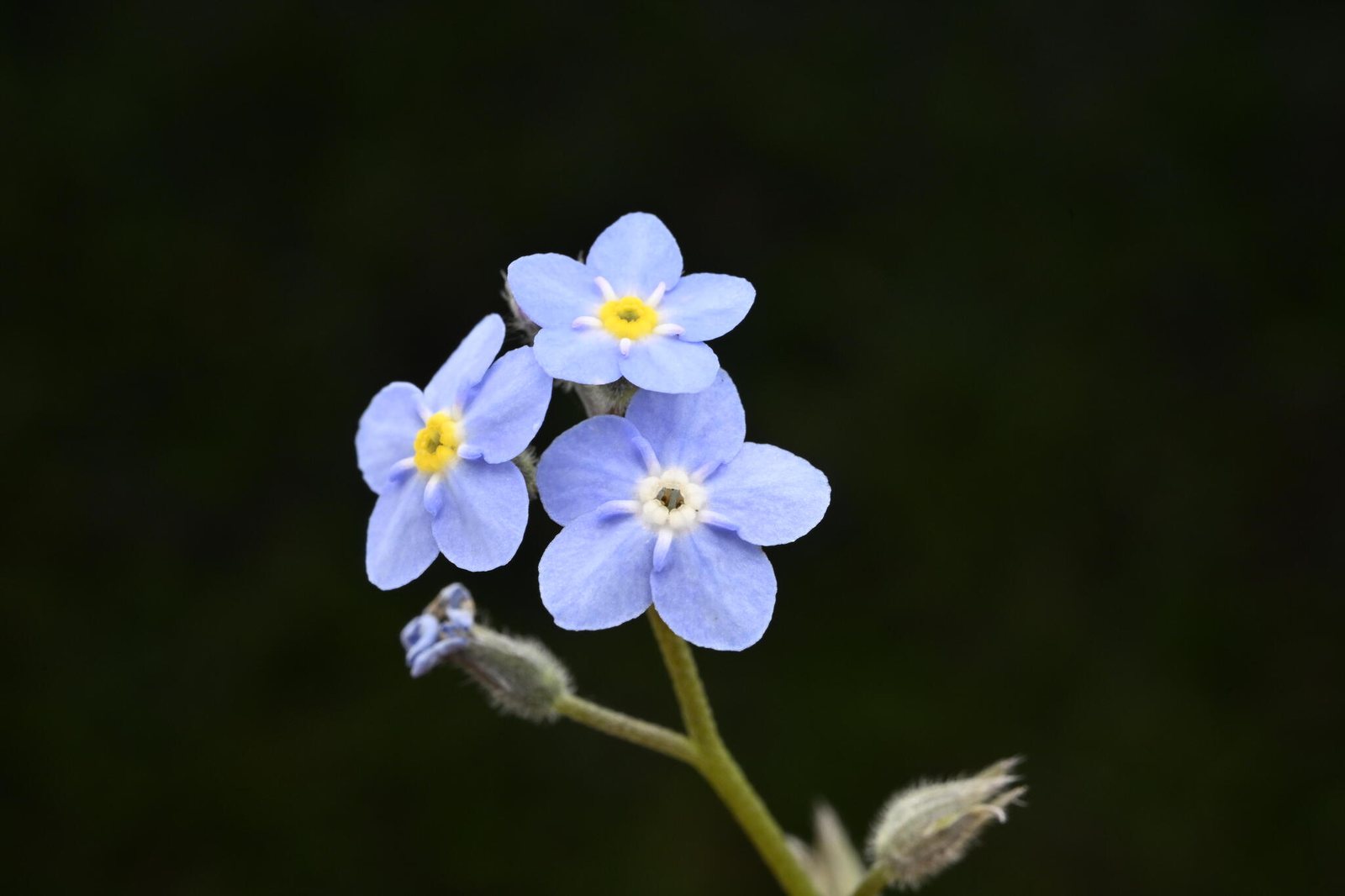
- Spring to early summer; usually sky blue with yellow eyes, with pink and white garden forms also available.
- Foliage
- Soft, hairy, green leaves form low rosettes, with smaller leaves along the flowering stems. Rosettes may remain green through mild winters.
- Growth
- Fast; usually flowers in the spring after sowing.
- Care needed
- Low
The year at a glance
- Pollinators
- Cold hardy
- Low allergen
| J | F | M | A | M | J | J | A | S | O | N | D | |
|---|---|---|---|---|---|---|---|---|---|---|---|---|
| Flowers | ||||||||||||
| Plant |
Northern hemisphere months. In Australia, shift them by six.
- Difficulty
- Easy
- Toughness
- Fairly tough
Will it suit your garden?
Pick your zone, country, light and whether you have pets.
Full sun is 6 or more hours of direct sun a day, part shade 3 to 6 hours, shade under 3.
How it grows
Planting day
0.7 ft (0.22 m)
full size
About 2 years to full size.
From a typical nursery size, at an average rate for this kind of plant. A rule of thumb, not a forecast.
Good to know
- Cats and dogs
- Safe
- Native to
- the UK
- Invasive in
- the US and Australia
- In the garden
- Spreads vigorously: plan to contain it.
- Growth rate
- Fast
Care
Jobs through the year
- WaterMar–May, Sep–Oct, every 7 days
- Water established plants when the surface dries; check newly planted rosettes more often.
- WaterJun–Aug, every 4 days
- Keep surviving plants and young rosettes moist during dry weather without waterlogging.
- MulchMar–Apr
- Apply a thin leaf-mould mulch, keeping crowns uncovered.
- PruneMay–Jun
- Pull spent plants or cut stems to the base before seed ripens; retain a few for self-sowing.
- ProtectMar–Apr, Sep–Oct
- Check young rosettes for slugs and thin crowded seedlings for airflow.
- ProtectApr–Jun
- Remove heavily mildewed plants and water soil rather than foliage.
- Water at soil level when the surface starts to dry; avoid leaving roots in saturated soil.
- Work compost into poor soil before planting; routine feeding is usually unnecessary.
- Space young plants about 6-9 in (15-23 cm) apart for airflow.
- Apply a thin layer of leaf mould around plants to conserve moisture, keeping crowns uncovered.
- Thin self-sown seedlings and remove unwanted plants before they set seed.
Pruning. After flowering, pull out spent plants or cut stems to the base before seeds ripen to limit spread. Leave a few healthy plants to set seed if you want flowers the following spring.
Through the year
- Early spring
- Plant nursery-grown plants and thin crowded overwintered seedlings.
- Spring
- Water during dry spells and remove any plants showing heavy mildew.
- Late spring
- Remove fading flower stems before seed ripens, or retain a few for self-sowing.
- Summer
- Sow seed thinly in trays or a prepared seedbed; keep moist and shaded from strong sun.
- Autumn
- Move young rosettes into their flowering positions while the soil is still workable.
In the garden
- Plant beneath tulips and daffodils to create a blue spring carpet.
- Edge lightly shaded paths with loose, informal drifts.
- Fill gaps beneath deciduous shrubs before their canopy closes.
- Combine with primroses and bleeding hearts in moist woodland borders.
Garden styles it suits: Cottage garden, English country, Woodland, Romantic rose garden, Pastel border and Blues and silvers.
Plant it with: Tulips, Daffodils, Primroses, Bleeding hearts, Hostas and Ferns.
Wildlife: The small, open flowers provide nectar and pollen for small bees, hoverflies and other spring insects.
Problems to watch for
- Powdery mildew: thin crowded plants, water the soil rather than foliage, and remove badly affected plants.
- Slugs and snails: protect young rosettes by hand-picking pests or using an approved iron-phosphate bait according to its label.
- Wilting and early dieback in heat or drought: provide afternoon shade and regular watering; plants often decline naturally after flowering.
- Excessive self-seeding: remove spent plants before seed ripens and weed out surplus seedlings.
Safety
Not generally regarded as toxic to people, cats or dogs, but reliable horse-specific safety information is limited. It is an ornamental rather than a food plant; do not deliberately eat the leaves, flowers or seeds.
Where it spreads. Self-seeds freely and can spread aggressively in cool, moist gardens. It has escaped cultivation in parts of North America, including the northeastern United States and Pacific Northwest, and in southeastern Australia; keep it out of adjoining natural woodland and check local weed guidance.
Easily confused with
Water forget-me-not (Myosotis scorpioides)
Usually grows in wet ground or shallow water, spreads by creeping stems and flowers later and longer into summer.
Siberian bugloss (Brunnera macrophylla)
Has much larger, heart-shaped basal leaves and usually white rather than yellow flower centres.
Chinese forget-me-not (Cynoglossum amabile)
Usually grows taller, flowers mainly in summer and produces conspicuously hooked, burr-like seeds.
The name
Myosotis comes from Greek words meaning 'mouse ear', referring to the small hairy leaves, while sylvatica means 'of woodland'.
Propagation. Grow from seed sown in late spring or summer for flowering the following spring. Move self-sown seedlings while small; named varieties may not come true from collected seed.
Checked against open data
- Accepted botanical name
- Myosotis sylvatica
- In the US and Canada
- Introduced in Canada and the lower 48 states.
- Native range
- Albania, Austria, Baltic States, Belarus, Belgium, Bulgaria, Central European Rus, Cyprus, Czechoslovakia, Denmark, East European Russia and France.
- Measured
- Soil pH 6.5 to 7. Average height 34 cm.
Sources: GBIF (CC BY 4.0), USDA PLANTS and Trefle (CC BY 4.0). The care and design notes are LandscapeGPT's own.
See it in your own yard.
Upload a photo of your yard and see it redesigned with plants that suit your climate, each checked against your zone.