Fortune's holly fern
Cyrtomium fortunei. Family Dryopteridaceae. Fern.
Also called Fortune's cyrtomium, Japanese holly fern.
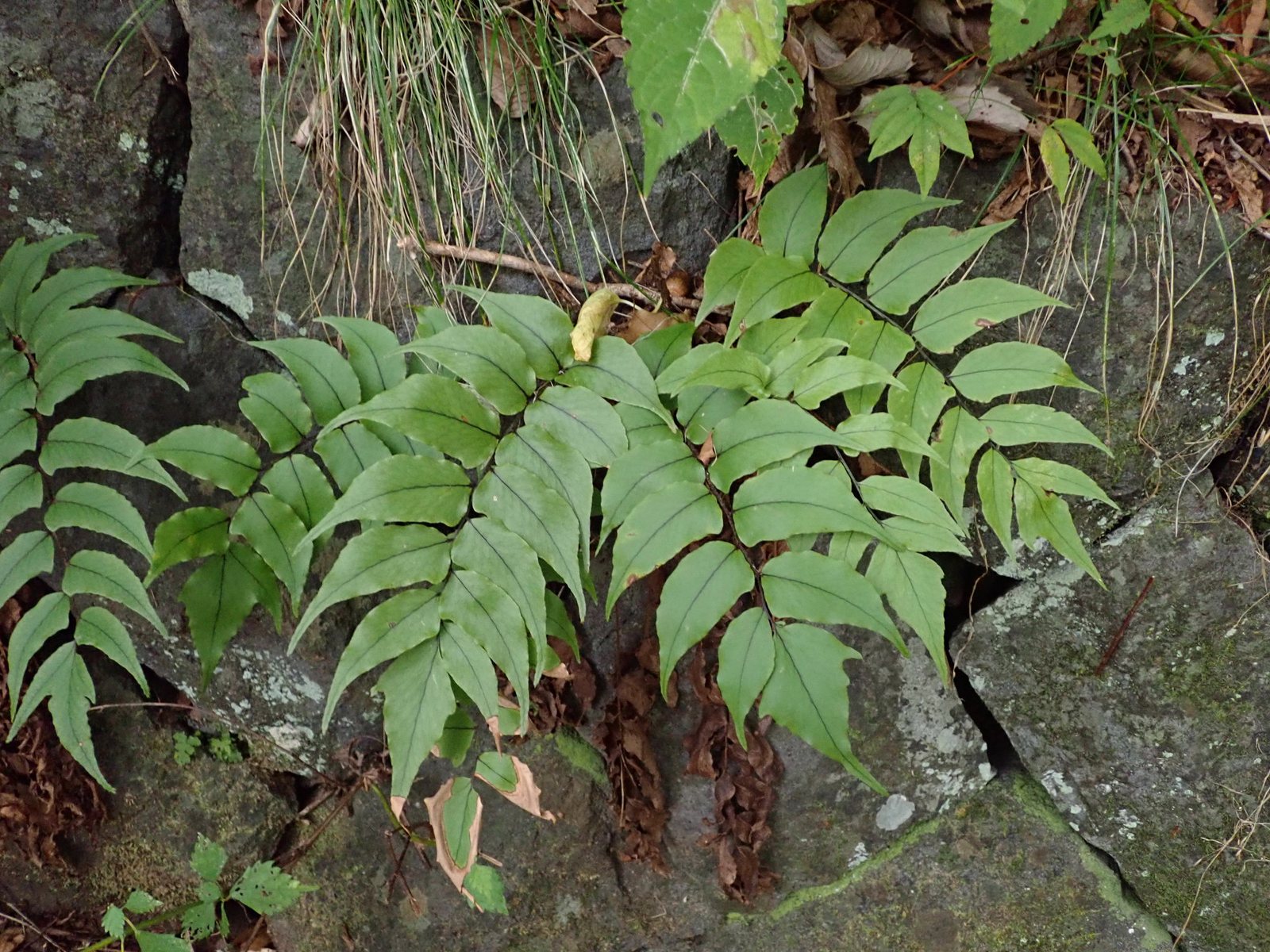
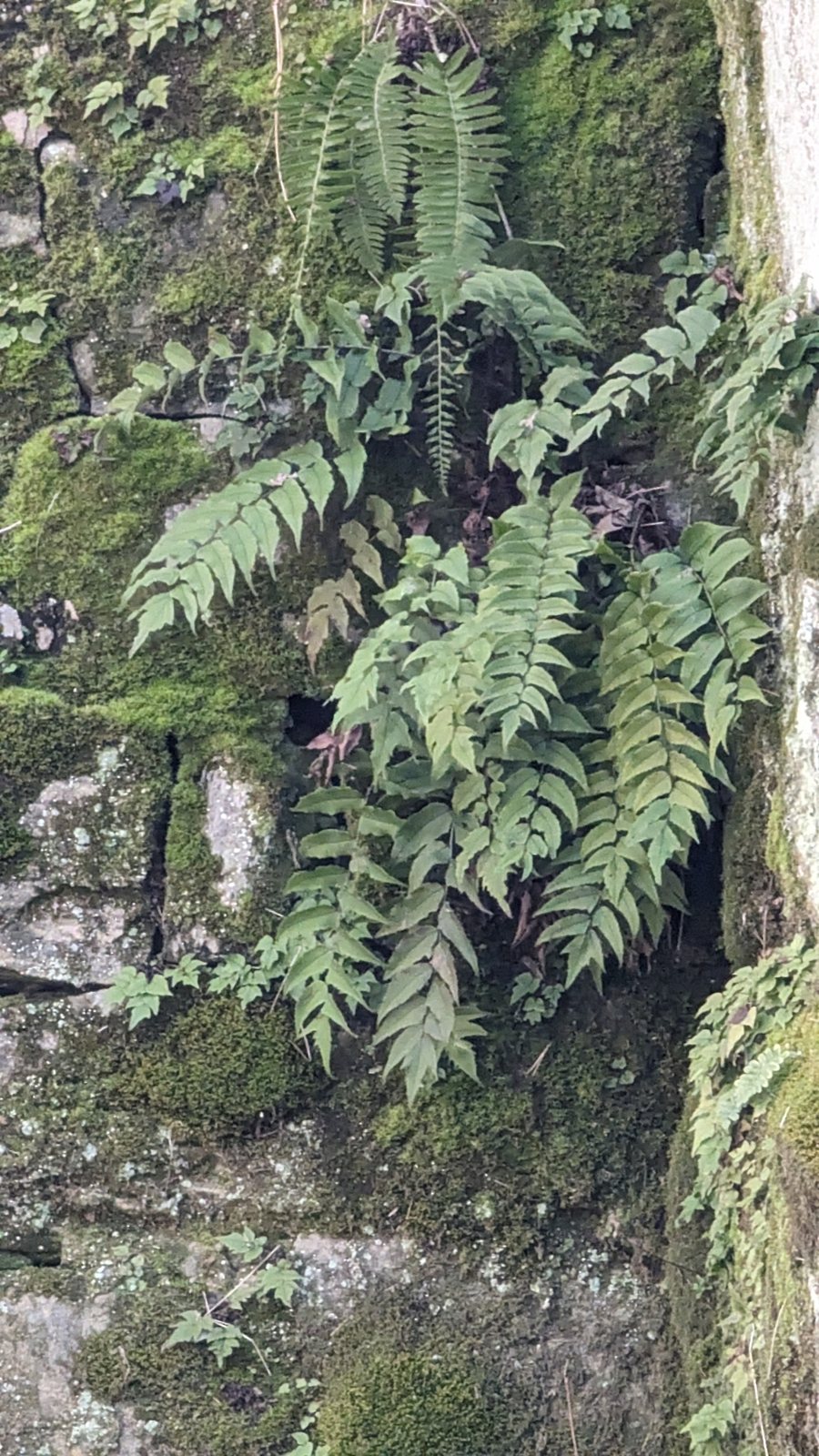
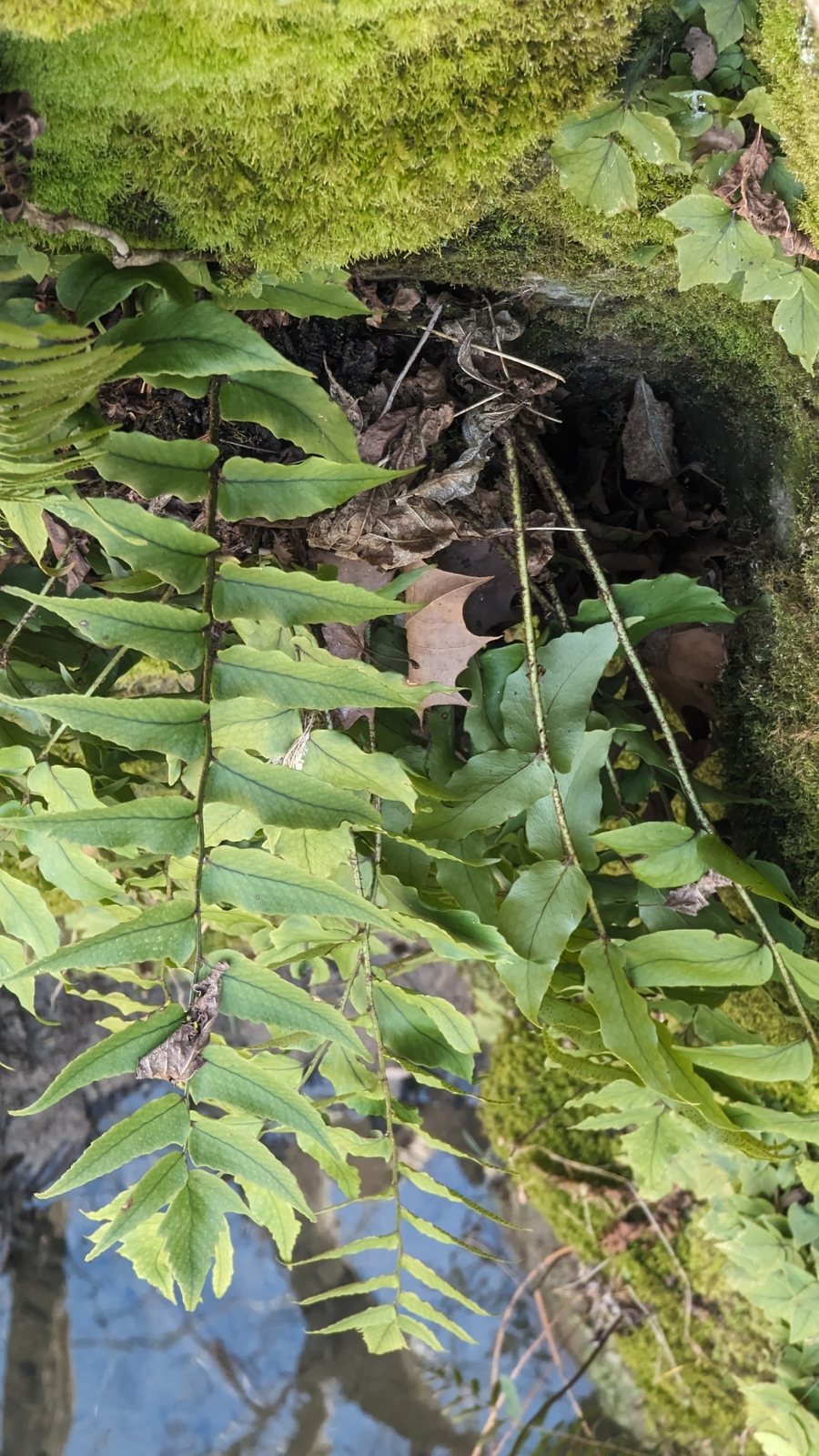
Fortune's holly fern is a clump-forming fern grown for its arching fronds and pointed, holly-like leaflets. It brings lasting structure to shaded borders and sheltered containers, remaining evergreen in mild winters but often losing its foliage in colder areas.
At a glance
- Sun
- Partial to full shade; protect from strong afternoon sun and drying winds.
- Water
- Keep evenly moist while establishing. Established plants tolerate brief dry spells, but prolonged drought causes browning and loss of fronds.
- Soil
- Humus-rich, well-drained soil that retains some moisture; tolerates acidic, neutral and mildly alkaline conditions.
- Height
- 1.5-2 ft (0.45-0.6 m)
- Spread
- 1.5-2.5 ft (0.45-0.75 m)
- Foliage
- Evergreen. Arching, leathery fronds with numerous narrow, pointed, dull to pale green leaflets. Round spore clusters develop beneath mature fronds.
- Growth
- Slow to moderate
- Care needed
- Low
The year at a glance
- Deer resistant
- Heat tolerant
- Wildlife
- Low allergen
| J | F | M | A | M | J | J | A | S | O | N | D | |
|---|---|---|---|---|---|---|---|---|---|---|---|---|
| Plant |
Northern hemisphere months. In Australia, shift them by six.
- Difficulty
- Easy
- Toughness
- Fairly tough
Will it suit your garden?
Pick your zone, country, light and whether you have pets.
Full sun is 6 or more hours of direct sun a day, part shade 3 to 6 hours, shade under 3.
How it grows
Planting day
1 ft (0.3 m)
After 1 year
1.2 ft (0.36 m)
After 2 years
1.4 ft (0.42 m)
After 3 years
1.6 ft (0.47 m)
After 5 years
1.7 ft (0.53 m)
full size
About 4 years to full size.
From a typical nursery size, at an average rate for this kind of plant. A rule of thumb, not a forecast.
Good to know
- Cats and dogs
- Safe
- Growth rate
- Slow
Care
Jobs through the year
- WaterApr–May, Sep–Oct, every 14 days
- Water established clumps during dry spells; keep first-year plants consistently moist.
- WaterJun–Aug, every 7 days
- Water deeply during dry weather, allowing excess water to drain.
- PruneFeb–Mar
- Cut dead and winter-damaged fronds to the base before new growth; retain healthy fronds.
- MulchMar–Apr
- Top-dress with leaf mould or compost, leaving the crown uncovered.
- FeedApr
- Feed lightly only if growth is weak; omit feeding in fertile soil.
- DivideApr
- Divide established multi-crowned clumps only when propagation or size reduction is needed.
- ProtectJan–Feb, Nov–Dec
- Shelter from drying winds, mulch the root zone and keep wet leaf mats off crowns.
- Water during dry spells, especially through the first growing season.
- Apply leaf mould or compost around the clump each spring, keeping the crown uncovered.
- Avoid waterlogged sites and containers without drainage holes.
- Feed lightly in spring only if growth is weak; rich soil usually needs no additional fertiliser.
- Shelter from cold, drying winds and protect the root zone with mulch near its cold-hardiness limit.
Pruning. In late winter or early spring, cut dead and winter-damaged fronds back to their bases before new growth emerges. Leave healthy green fronds in place.
Through the year
- Late winter
- Remove damaged fronds before new fronds begin to unfurl.
- Spring
- Plant or divide established clumps, then water thoroughly.
- Spring
- Refresh the leaf-mould or compost mulch without covering the crown.
- Summer
- Water during dry weather and check tender new growth for slug damage.
- Autumn
- Keep fallen leaves from forming a dense, wet mat over the crown.
- Winter
- Check that containers drain freely and shelter pots from severe frost and drying winds.
In the garden
- Plant beneath deciduous trees with other shade plants for contrasting foliage shapes.
- Repeat small groups along shaded paths to create a low, structured edge.
- Use in sheltered courtyard containers where the arching fronds can be seen close up.
- Combine with hostas, hellebores and epimediums in a layered woodland border.
Garden styles it suits: Woodland, Japanese, Modern courtyard, Green on green, Low-maintenance and Small-space.
Plant it with: Hostas, Hellebores, Epimediums, Brunnera, Japanese forest grass and Snowdrops.
Wildlife: Dense clumps provide shelter for small invertebrates. As a fern, it produces no flowers, nectar or pollen.
Problems to watch for
- Slugs and snails can chew emerging fronds; inspect at dusk, remove pests and use wildlife-conscious controls where needed.
- Brown or bleached fronds usually indicate strong sun, drought or drying wind; improve shelter and water the root zone.
- Crown and root rot can develop in waterlogged soil; improve drainage and keep mulch away from the crown.
- Winter browning occurs in exposed or cold gardens; leave the crown undisturbed and remove dead fronds before spring growth.
Safety
Not known to be toxic to people, cats, dogs or horses, although species-specific safety information is limited. It is not an edible plant; discourage pets and children from eating the fronds or rhizomes.
Where it spreads. Has escaped cultivation and naturalized in parts of the southeastern United States, where spores can establish plants beyond the garden. Check local guidance before planting near natural woodland.
Easily confused with
Japanese holly fern (Cyrtomium falcatum)
Usually has fewer, broader, darker and noticeably glossier leaflets. Fortune's holly fern has more numerous, narrower leaflets with a duller surface.
The name
The species name honours plant collector Robert Fortune, while the common name refers to its pointed, holly-like leaflets.
Propagation. Divide established clumps in spring, keeping a healthy growing point and roots on each division. It can also be raised from spores, but this is slower and requires consistently humid, clean conditions.
Checked against open data
- Accepted botanical name
- Cyrtomium fortunei
- In the US and Canada
- Introduced in the lower 48 states.
- Native range
- Assam, China North-Central, China South-Central, China Southeast, East Himalaya, Japan, Korea, Taiwan, Thailand and Vietnam.
Sources: GBIF (CC BY 4.0), USDA PLANTS and Trefle (CC BY 4.0). The care and design notes are LandscapeGPT's own.
See it in your own yard.
Upload a photo of your yard and see it redesigned with plants that suit your climate, each checked against your zone.