Fragrant sumac
Rhus aromatica. Family Anacardiaceae. Shrub.
Also called Aromatic sumac, Lemon sumac.
Fragrant sumac is a deciduous shrub native to eastern and central North America, grown for its spreading habit, aromatic leaves and orange-to-red autumn colour. It tolerates dry, rocky ground once established and makes useful cover on banks, though its suckering growth needs room.
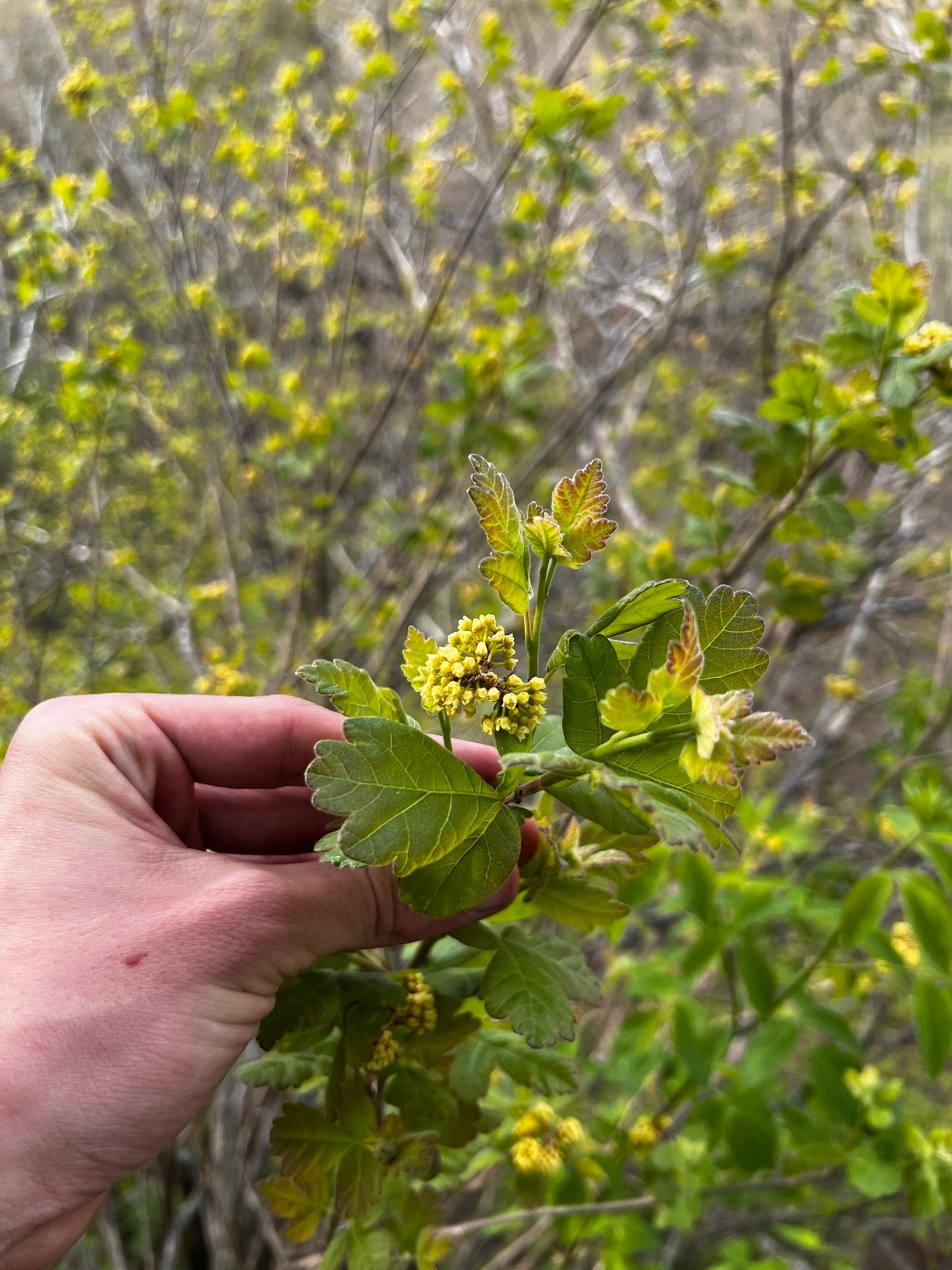
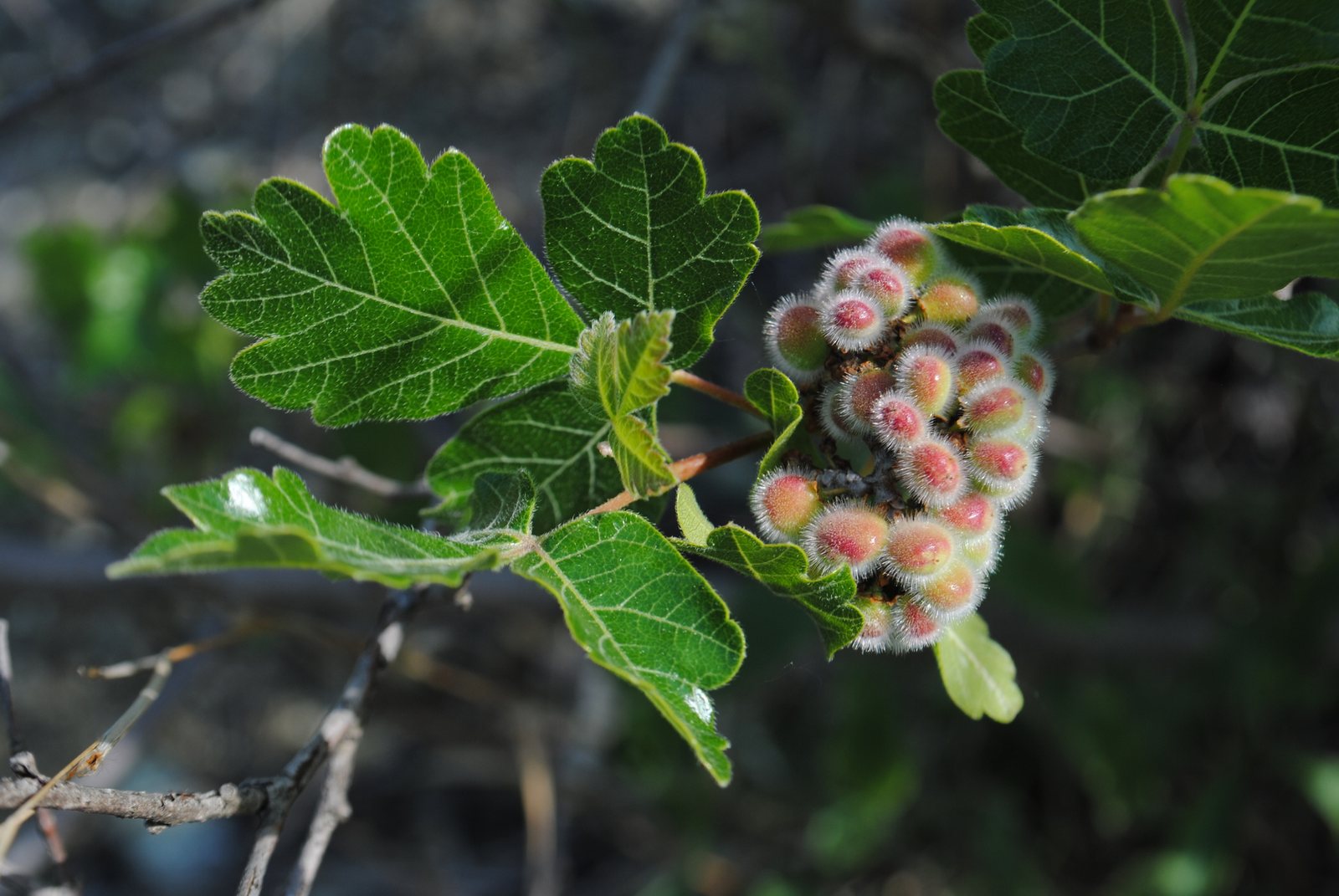
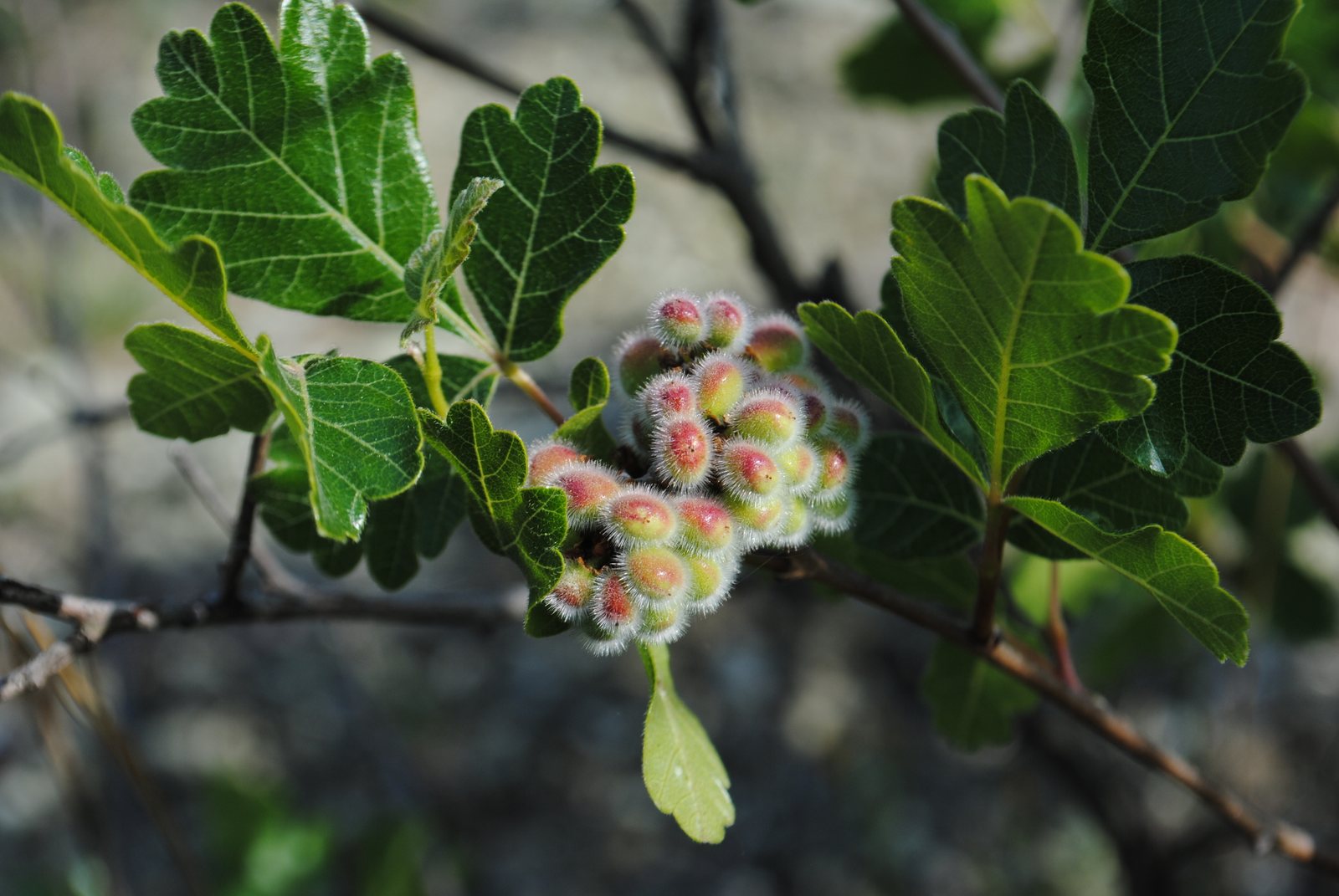
At a glance
- Sun
- Full sun to partial shade; autumn colour and flowering are usually best in full sun.
- Water
- Water regularly during the first growing season; established plants tolerate drought and usually need water only during prolonged dry spells.
- Soil
- Well-drained sandy, loamy, clay or rocky soil; tolerates acidic to alkaline conditions but dislikes persistently wet ground.
- Height
- 2-6 ft (0.6-1.8 m), occasionally taller
- Spread
- 6-10 ft (1.8-3 m), eventually wider through suckering
- Flowers
- Small yellow flowers in early spring, usually before the leaves emerge.
- Foliage
- Green leaves with three toothed leaflets; aromatic when crushed, turning yellow, orange, red or purple in autumn.
- Growth
- Moderate; established plants gradually form broad colonies.
- Care needed
- Low
The year at a glance
- Pollinators
- Deer resistant
- Drought tolerant
- Cold hardy
- Heat tolerant
- Wildlife
- Low allergen
- Fragrant
| J | F | M | A | M | J | J | A | S | O | N | D | |
|---|---|---|---|---|---|---|---|---|---|---|---|---|
| Flowers | ||||||||||||
| Fruit | ||||||||||||
| Plant |
Northern hemisphere months. In Australia, shift them by six.
- Difficulty
- Easy
- Toughness
- Very tough
Will it suit your garden?
Pick your zone, country, light and whether you have pets.
Full sun is 6 or more hours of direct sun a day, part shade 3 to 6 hours, shade under 3.
How it grows
Planting day
1.6 ft (0.5 m)
After 1 year
2.1 ft (0.64 m)
After 2 years
2.6 ft (0.78 m)
After 3 years
3 ft (0.92 m)
After 5 years
4 ft (1.2 m)
full size
About 5 years to full size.
From a typical nursery size, at an average rate for this kind of plant. A rule of thumb, not a forecast.
Good to know
- Cats and dogs
- Safe
- Native to
- the US and Canada
- In the garden
- Spreads vigorously: plan to contain it.
- Growth rate
- Moderate
Care
Jobs through the year
- WaterApr–May, Sep–Oct, every 21 days
- Water established shrubs deeply only during prolonged drought; water new plants more often.
- WaterJun–Aug, every 14 days
- Water established shrubs only if prolonged drought dries the root zone; young plants need more.
- MulchApr–May
- Refresh a light organic mulch, keeping it clear of stems.
- PruneApr–May
- After flowering, remove damaged wood and thin selected old stems at ground level if needed.
- PruneJun–Sep, every 30 days
- Remove unwanted suckers at their origin to contain the colony.
- Water deeply during dry weather in the first growing season, allowing the soil surface to dry between waterings.
- Apply a light mulch over the root area, keeping it clear of the stems.
- Do not routinely fertilise; rich feeding is unnecessary on ordinary garden soil.
- Remove unwanted suckers at their point of origin if you need to limit the colony.
- Avoid sites where water stands after rain.
Pruning. Prune just after flowering, removing dead or damaged wood and cutting selected old stems to ground level. Hard renovation pruning in late winter is possible, but removes that spring's flowers and reduces the following fruit crop.
Through the year
- Late winter
- Remove dead or broken stems; renovate an overgrown plant only if you can forgo flowers and fruit that year.
- Spring
- Plant while the soil is workable and keep new plants watered through dry spells.
- Late spring
- After flowering, thin crowded stems if needed and refresh the mulch.
- Summer
- Check young plants for drought stress and remove suckers spreading beyond the intended area.
- Autumn
- Plant or transplant during mild weather; leave fruit clusters for birds.
In the garden
- Mass on sunny banks to provide low woody cover and help stabilise soil.
- Use along woodland edges where its autumn colour contrasts with evergreen trees.
- Combine with little bluestem and prairie flowers in a dry, naturalistic planting.
- Plant as an informal boundary or broad groundcover where suckers can spread without crowding smaller plants.
Garden styles it suits: Woodland, Wildlife garden, Low-maintenance, Autumn colour, Desert / xeriscape and Rewilded.
Plant it with: Little bluestem, Prairie dropseed, Butterfly weed, Purple coneflower, Black-eyed Susan and Eastern red cedar.
Wildlife: Early flowers provide food for visiting insects. Female plants produce hairy red fruit clusters that are eaten by birds and small mammals, and established colonies provide shelter.
Problems to watch for
- Unwanted spread: suckers can crowd nearby plants; remove them promptly or give the shrub a separate planting area.
- Root decline in wet soil: improve drainage or move the plant to a drier position rather than watering more often.
- Leaf spots or powdery mildew: usually cosmetic; improve airflow, avoid overhead watering and clear heavily affected fallen leaves.
- Few berries: plants usually bear male and female flowers separately, so an isolated female may need a nearby male flowering at the same time.
Safety
Not known to be toxic to people, cats, dogs or horses; no part is recognised as a significant poisoning hazard. Its red fruits have traditional food uses, but only use positively identified plants. Fragrant sumac is not poison sumac, though sensitive people may still experience skin irritation from handling it.
Where it spreads. Can spread vigorously by suckers and form colonies in eastern and central North American gardens, within its native range; allow space or control its edges.
Easily confused with
Poison ivy (Toxicodendron radicans)
Both have three leaflets, but fragrant sumac has a nearly stalkless central leaflet and hairy red fruits. Poison ivy usually has a distinctly stalked central leaflet, pale fruits and often a climbing habit;
Poison sumac (Toxicodendron vernix)
Poison sumac has leaves with 7-13 leaflets, pale fruits and a preference for wet ground. Fragrant sumac has three leaflets, red fruits and usually grows on well-drained sites.
Skunkbush sumac (Rhus trilobata)
A closely related western North American shrub with similar three-part leaves and red fruits. Its leaflets are often smaller and more deeply lobed, but the plants can be difficult to separate without provenance or a reg…
The name
The species name aromatica and the common name fragrant sumac refer to the scent released when its leaves and stems are crushed.
Propagation. Separate rooted suckers during dormancy, or take softwood cuttings in early summer. Seed has a hard coat and dormancy requirements, so nursery propagation usually involves scarification followed by cold stratification.
Checked against open data
- Accepted botanical name
- Rhus aromatica
- In the US and Canada
- Native in Canada and the lower 48 states.
- Native range
- Alabama, Arkansas, Connecticut, District of Columbia, Florida, Georgia, Illinois, Indiana, Iowa, Kansas, Kentucky and Louisiana.
- Measured
- Soil pH 6.5 to 8. Average height 215 cm.
Sources: GBIF (CC BY 4.0), USDA PLANTS and Trefle (CC BY 4.0). The care and design notes are LandscapeGPT's own.
See it in your own yard.
Upload a photo of your yard and see it redesigned with plants that suit your climate, each checked against your zone.