French lavender
Lavandula dentata. Family Lamiaceae. Shrub.
Also called Fringed lavender, Toothed lavender.
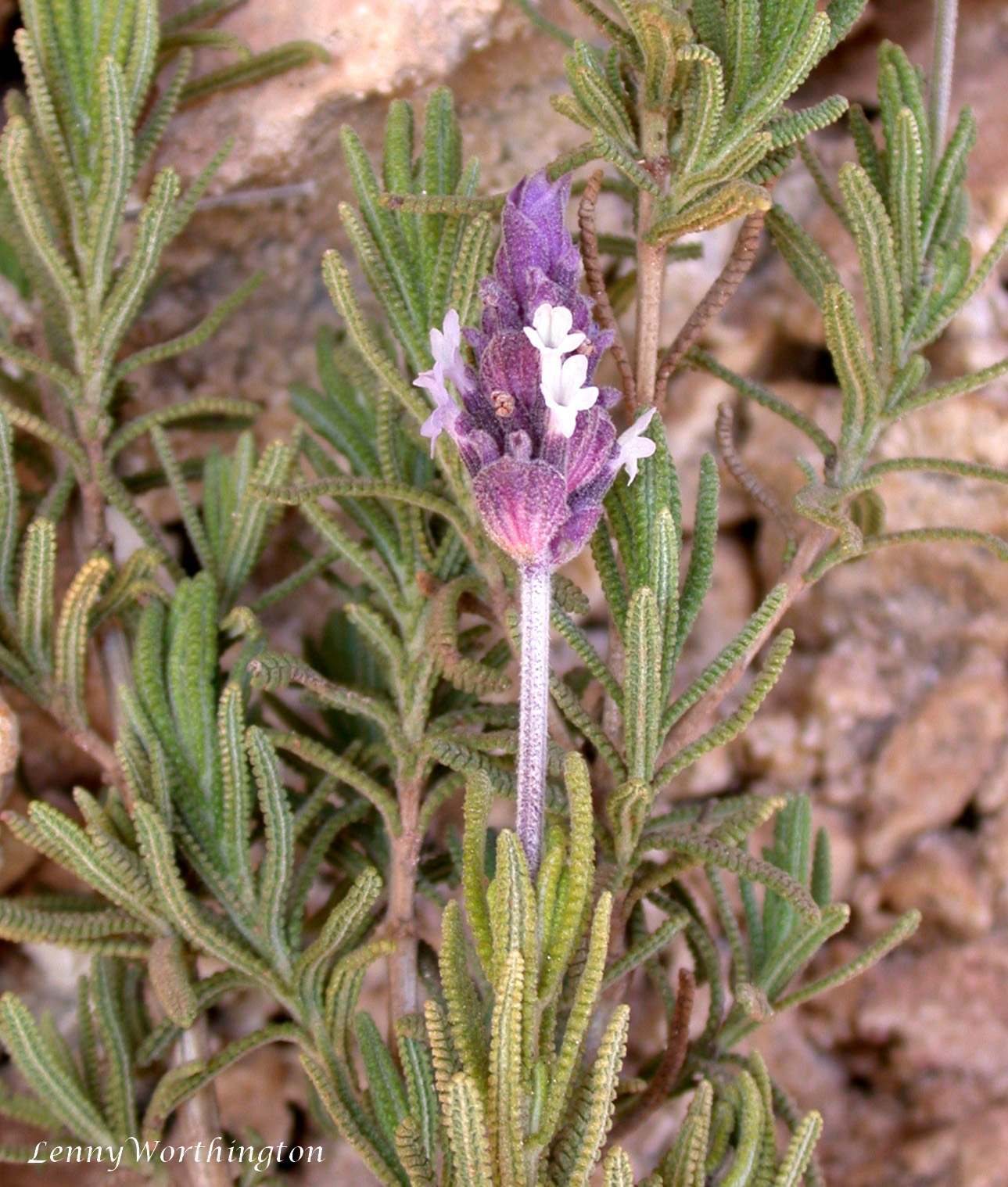
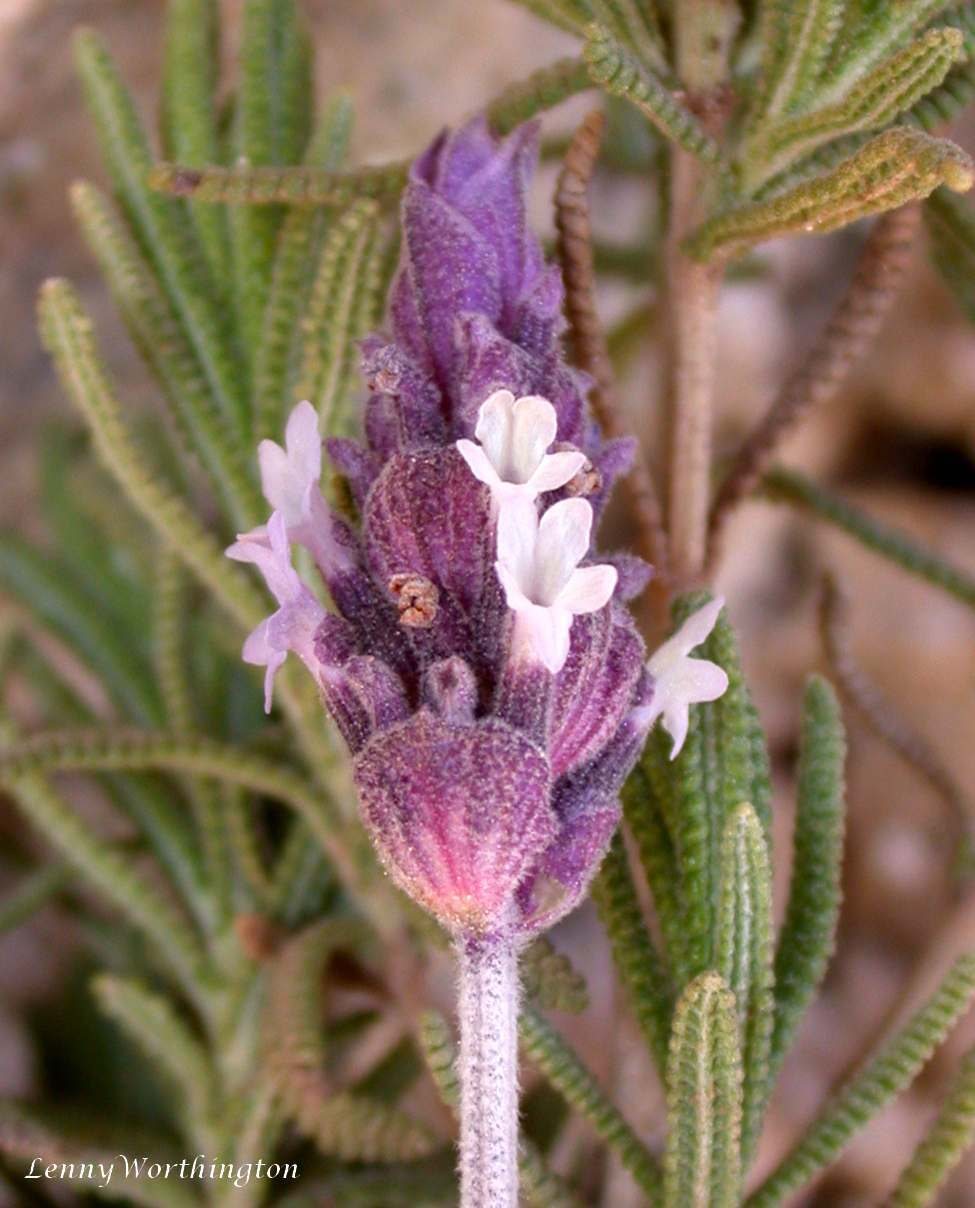
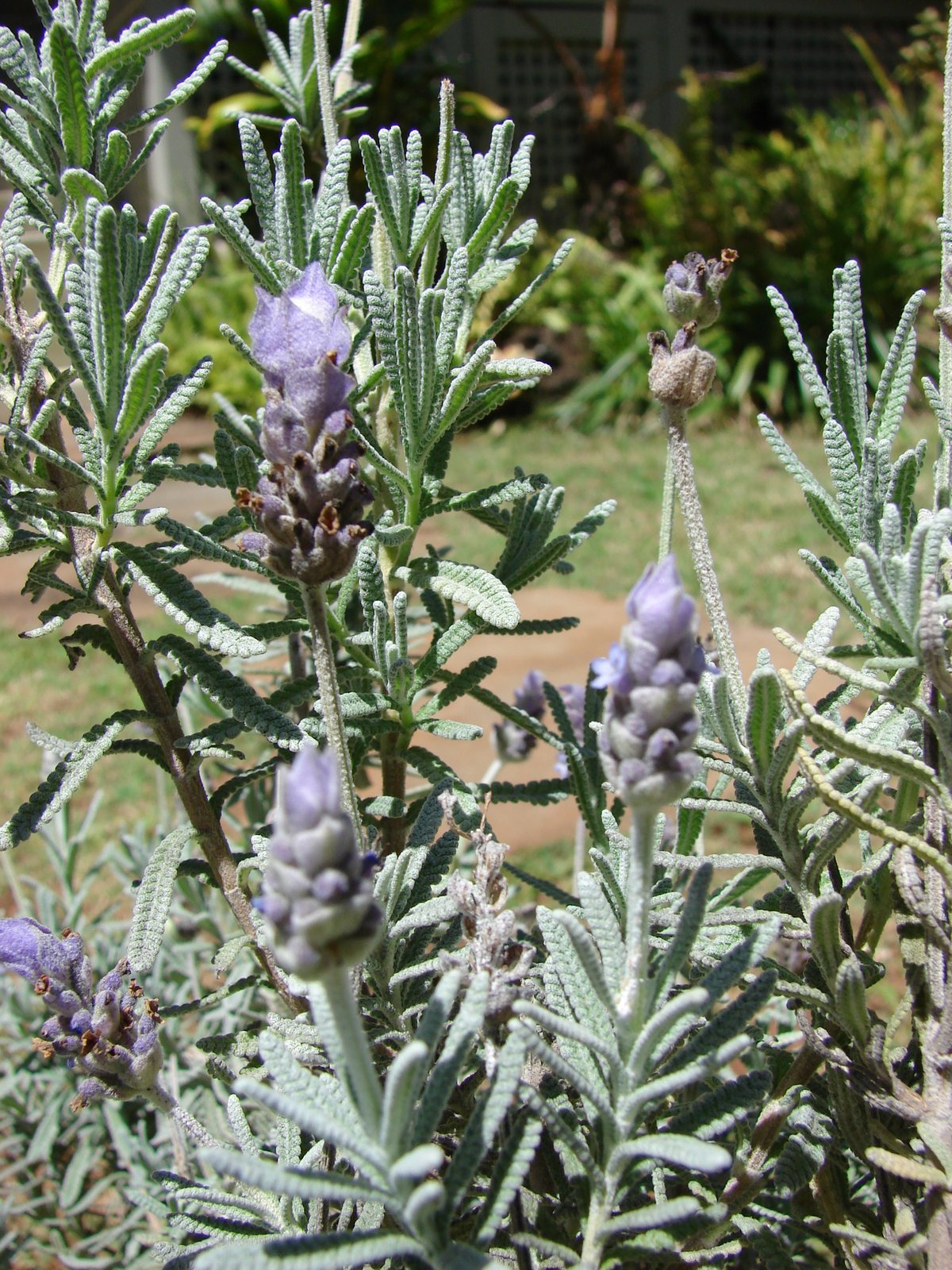
French lavender is a tender evergreen shrub grown for its aromatic, toothed grey-green leaves and lavender-purple flower spikes topped with small purple bracts. It flowers for a long season in warm, sunny gardens but needs protection from frost and wet winters. The name French lavender is also used for Lavandula stoechas, so check the botanical name when buying.
At a glance
- Sun
- Full sun; choose an open position with good air circulation.
- Water
- Water regularly while establishing, then deeply but infrequently, allowing the soil to dry between waterings. Container plants need more frequent checks.
- Soil
- Sharply drained, sandy or gravelly soil of low to moderate fertility; neutral to alkaline conditions suit it well. Avoid heavy, persistently damp soil.
- Height
- 2-3 ft (0.6-0.9 m)
- Spread
- 3-4 ft (0.9-1.2 m)
- Flowers
- Lavender-purple spikes, usually from late spring through autumn; flowering can continue intermittently through winter in frost-free climates.
- Foliage
- Evergreen. Aromatic, narrow grey-green leaves with conspicuously toothed edges.
- Growth
- Moderate
- Care needed
- Low
The year at a glance
- Pollinators
- Deer resistant
- Drought tolerant
- Heat tolerant
- Low allergen
- Fragrant
| J | F | M | A | M | J | J | A | S | O | N | D | |
|---|---|---|---|---|---|---|---|---|---|---|---|---|
| Flowers | ||||||||||||
| Plant |
Northern hemisphere months. In Australia, shift them by six.
- Difficulty
- Moderate
- Toughness
- Fairly tough
Will it suit your garden?
Pick your zone, country, light and whether you have pets.
Full sun is 6 or more hours of direct sun a day, part shade 3 to 6 hours, shade under 3.
How it grows
Planting day
1.6 ft (0.5 m)
After 1 year
1.8 ft (0.55 m)
After 2 years
2 ft (0.6 m)
After 3 years
2.1 ft (0.65 m)
After 5 years
2.5 ft (0.75 m)
full size
About 5 years to full size.
From a typical nursery size, at an average rate for this kind of plant. A rule of thumb, not a forecast.
Good to know
- Cats and dogs
- Toxic
- Growth rate
- Moderate
Care
Jobs through the year
- WaterMay, Sep, every 21 days
- For established ground plants, water deeply only if soil is dry; young plants and pots need more frequent checks.
- WaterJun–Aug, every 14 days
- Water established ground plants only during prolonged dry spells; let soil dry between soakings.
- WaterJan–Apr, Oct–Dec, every 21 days
- Check overwintering pots and water sparingly if nearly dry; never leave them standing in water.
- MulchMay
- Apply a thin gravel mulch, keeping the crown and woody stems clear.
- PruneMay
- Remove dead tips and lightly shape leafy shoots; never cut into bare old wood.
- DeadheadJun–Sep, every 14 days
- Trim faded flower spikes without removing substantial leafy growth.
- ProtectJan–Apr, Oct–Dec
- Not reliably winter-hardy locally; overwinter pots in a bright, cool, frost-free place.
- ProtectMay
- Harden off overwintered pots and return outdoors only after frost risk passes.
- Plant after frost risk has passed, keeping the crown at soil level rather than burying it.
- Let the soil dry between thorough waterings; never leave a pot standing in water.
- Avoid rich manure and routine feeding; give container plants only a light spring feed if growth is weak.
- Use a thin gravel mulch and keep it clear of the woody stems.
- In cold climates, grow it in a pot and overwinter in a bright, cool, frost-free place.
Pruning. Trim lightly after a main flush of flowers to remove spent spikes and keep a rounded shape. In spring, shorten leafy shoots if needed, but do not cut hard into bare old wood, which may not regrow.
Through the year
- Spring
- Once frost risk has passed, plant out or gradually return overwintered pots outdoors.
- Late spring
- Remove dead tips and lightly shape established plants, retaining green leaves below each cut.
- Summer
- Check pots frequently and water when the compost has dried appreciably; water established borders only during prolonged dry spells.
- Summer
- Trim faded flower spikes to encourage further flowering and take non-flowering cuttings.
- Autumn
- Move pots under cover before frost and check that outdoor plants have unobstructed drainage.
- Winter
- Keep sheltered plants in strong light and water sparingly, without allowing the root ball to become completely dry.
In the garden
- Use as a low, informal edging beside sunny paths where its scented foliage is within reach.
- Repeat through gravel gardens with rock roses and ornamental grasses for contrasting foliage and a long flowering season.
- Grow in free-draining pots on sunny terraces, especially where winter shelter is needed.
- Plant in loose groups on warm slopes or raised beds with rosemary and santolina.
Garden styles it suits: Mediterranean, Modern Mediterranean, Dry gravel garden, Modern courtyard, Sensory garden and Pollinator garden.
Plant it with: Rosemary, Santolina, Rock rose, Lamb's ears, Blue fescue and Bearded iris.
Wildlife: Flowers provide nectar for bees and other pollinating insects. Avoid spraying open flowers.
Problems to watch for
- Root and crown rot in wet soil: improve drainage or move to a raised bed or free-draining container; avoid watering against the crown.
- Frost damage: shelter pots before freezing weather and wait until spring growth starts before removing damaged shoots.
- Leggy, bare growth: provide full sun and trim lightly each year; replace badly woody plants rather than cutting into leafless stems.
- Whitefly on sheltered plants: inspect leaf undersides, improve ventilation and use an insecticidal soap labelled for the pest if necessary.
Safety
Lavender is considered toxic to cats, dogs and horses if eaten; leaves and flowers contain aromatic compounds that may cause digestive upset. Concentrated essential oil presents a greater risk and should not be applied to pets. It is not generally considered poisonous to people through normal garden handling, though the oils can irritate sensitive skin; do not ingest essential oil.
Easily confused with
Spanish lavender (Lavandula stoechas)
Also sold as French lavender, but it has smooth-edged leaves and usually much larger, flag-like bracts above compact flower heads.
English lavender (Lavandula angustifolia)
Has narrow, smooth-edged leaves and slender flower spikes without a conspicuous tuft of purple bracts; it is much more cold-hardy.
Fernleaf lavender (Lavandula multifida)
Its leaves are deeply divided into fine, fern-like segments rather than having the simple toothed margins of French lavender.
The name
The species name dentata means toothed, referring to the conspicuous teeth along the leaf edges.
Propagation. Take non-flowering softwood or semi-ripe cuttings in late spring or summer and root in a gritty, free-draining medium. Seed is possible, but named forms may not come true.
Checked against open data
- Accepted botanical name
- Lavandula dentata
- Native range
- Algeria, Baleares, Eritrea, Ethiopia, Morocco, Palestine, Saudi Arabia, Spain and Yemen.
- Measured
- Average height 100 cm.
Sources: GBIF (CC BY 4.0) and Trefle (CC BY 4.0). The care and design notes are LandscapeGPT's own.
See it in your own yard.
Upload a photo of your yard and see it redesigned with plants that suit your climate, each checked against your zone.