French marigold
Tagetes patula. Family Asteraceae. Annual.
Also called Dwarf marigold.
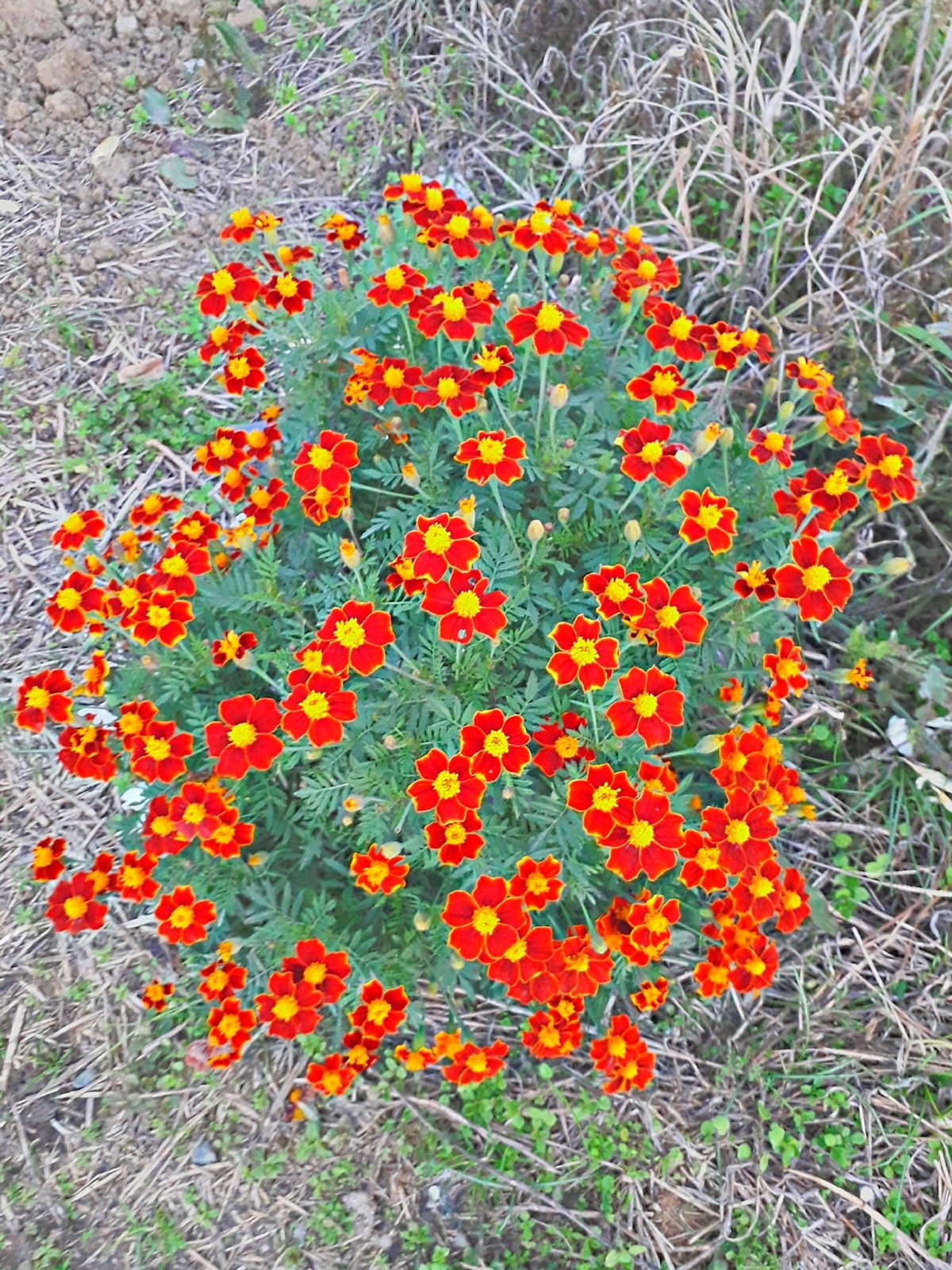
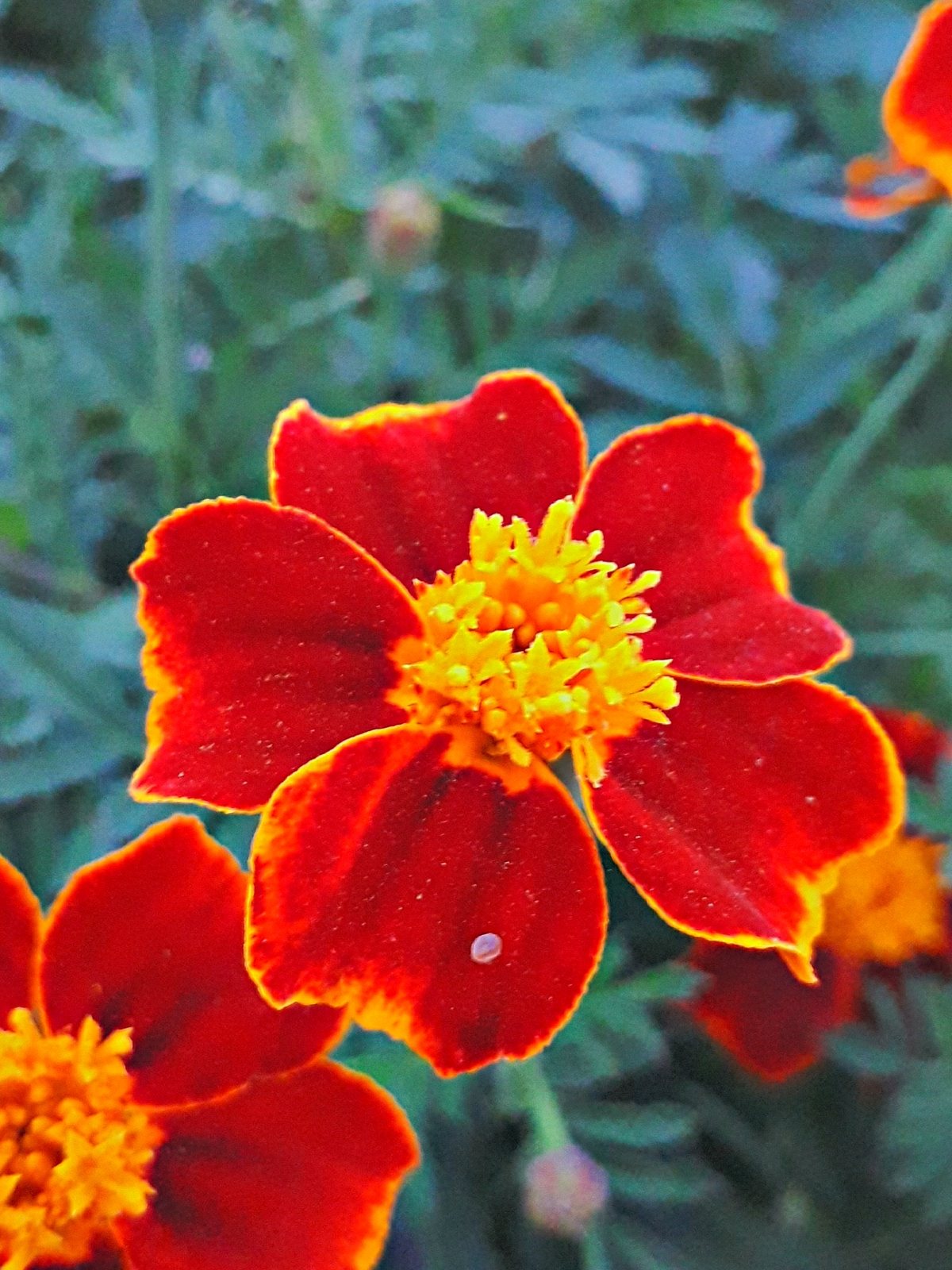
French marigold (Tagetes patula) is a frost-tender plant grown as an annual for its yellow, orange, red and bicoloured flowers. Its compact, branching habit suits border edges, vegetable gardens and containers, with flowers continuing from early summer until frost if spent blooms are removed.
At a glance
- Sun
- Full sun; light afternoon shade is useful in very hot climates, but heavy shade reduces flowering.
- Water
- Moderate; water when the soil surface begins to dry. Established plants tolerate short dry spells, but containers need more frequent watering.
- Soil
- Well-drained soil of average fertility; tolerates sandy or clay-based soil provided it does not stay waterlogged.
- Height
- 0.5-1.5 ft (0.15-0.45 m)
- Spread
- 0.5-1 ft (0.15-0.3 m)
- Flowers
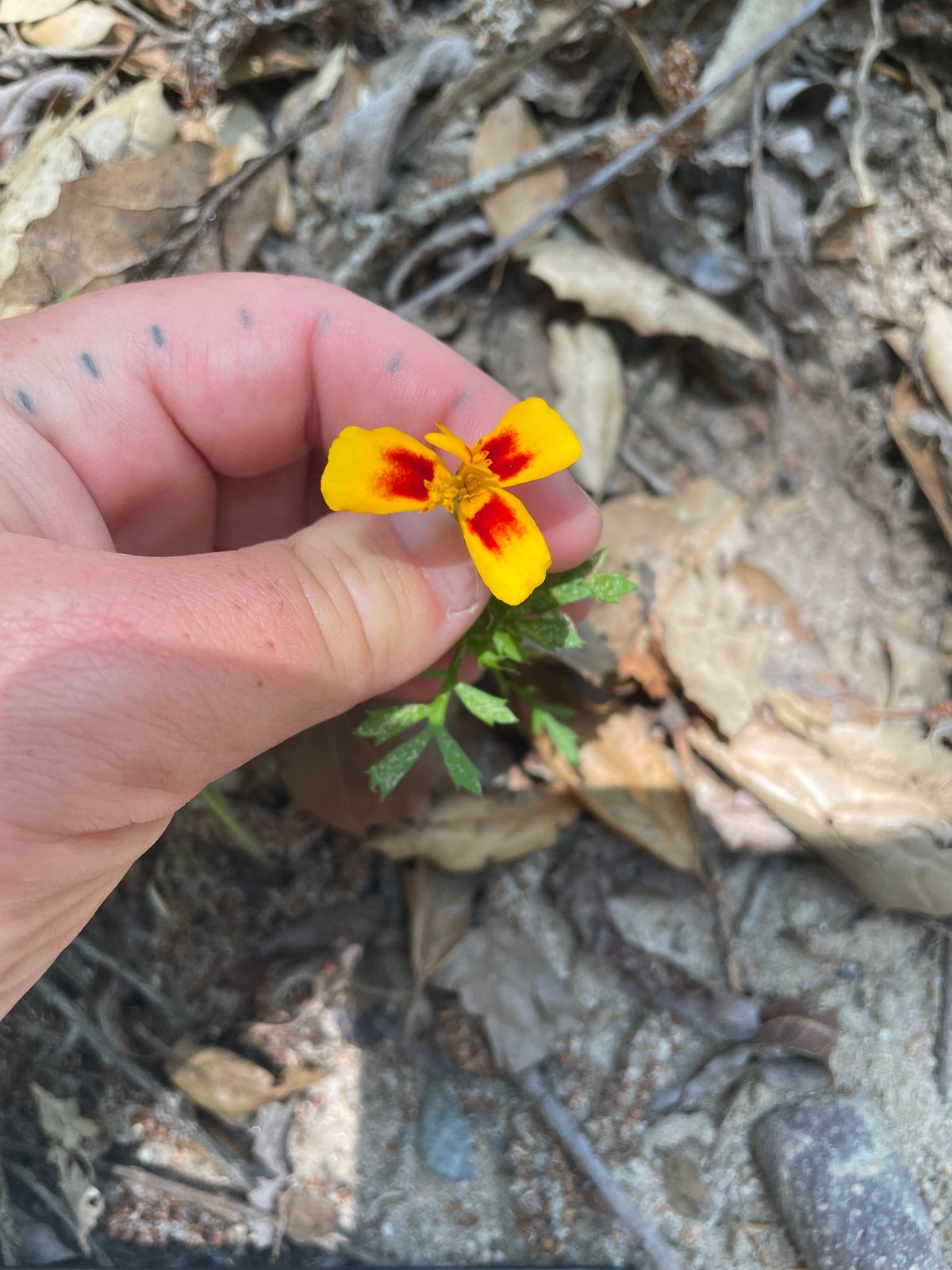
- Early summer to autumn frost; yellow, orange, mahogany-red and bicoloured flowers, with single, semi-double or double forms.
- Foliage
- Finely divided, toothed green leaves with a strong scent when brushed or crushed.
- Growth
- Fast; flowers within one growing season.
- Care needed
- Low
The year at a glance
- Pollinators
- Heat tolerant
- Low allergen
| J | F | M | A | M | J | J | A | S | O | N | D | |
|---|---|---|---|---|---|---|---|---|---|---|---|---|
| Flowers | ||||||||||||
| Fruit | ||||||||||||
| Plant |
Northern hemisphere months. In Australia, shift them by six.
- Difficulty
- Easy
- Toughness
- Fairly tough
Will it suit your garden?
Pick your zone, country, light and whether you have pets.
Full sun is 6 or more hours of direct sun a day, part shade 3 to 6 hours, shade under 3.
How it grows
Planting day
0.5 ft (0.15 m)
After 1 year
1 ft (0.3 m)
full size
Full size in one season.
From a typical nursery size, at an average rate for this kind of plant. A rule of thumb, not a forecast.
Good to know
- Cats and dogs
- Mildly toxic: may upset a stomach
- Growth rate
- Fast
Care
Jobs through the year
- WaterMay, Sep–Oct, every 10 days
- Water established plants if the soil surface has dried; check seedlings and containers more often.
- WaterJun–Aug, every 7 days
- Soak established plants at soil level when dry, skipping after rain; young plants need more frequent checks.
- FeedJun–Aug, every 28 days
- Feed containers lightly with balanced liquid fertilizer; avoid routine feeding of fertile garden soil.
- ProtectMay–Jun
- Check seedlings for slugs and snails and use hand removal or labelled controls if needed.
- DeadheadJun–Oct, every 7 days
- Remove faded flowers to the next leaf; leave a few late heads if dry seed heads are wanted.
- PruneJul–Aug
- Lightly trim straggly plants above healthy leafy growth only if needed.
- Plant outside after the last frost, once the soil has warmed; space plants 0.5-1 ft (0.15-0.3 m) apart.
- Water at soil level, then let the surface begin to dry before watering again.
- Avoid heavy nitrogen feeding, which encourages leaves at the expense of flowers.
- Feed container plants lightly with a balanced liquid fertiliser according to the label.
- Keep mulch away from stems and avoid thick, damp mulch around young plants where slugs are troublesome.
Pruning. Remove faded flowers by cutting or pinching back to the next leaf or side shoot throughout summer. If plants become straggly, trim lightly above leafy growth to encourage branching.
Through the year
- Early spring
- Sow indoors 4-6 weeks before your local last frost, using a warm, bright position.
- Late spring
- Harden off seedlings and plant out after frost risk has passed, or sow directly into warm soil.
- Early summer
- Check young plants for slug damage and water during establishment.
- Summer
- Remove spent flowers regularly and check container soil for dryness.
- Early autumn
- Let a few healthy flower heads dry on the plant if you want to collect seed.
- Late autumn
- Remove plants after frost kills them; compost healthy material and discard diseased plants.
In the garden
- Edge sunny paths and flower beds with compact plants for a continuous band of warm colour.
- Plant in repeated blocks in a vegetable garden to give beds a clear outline and provide flowers for visiting insects.
- Combine with blue salvia or purple petunias in containers for strong colour contrast.
- Use as seasonal edging in formal beds or parterres where an even height and repeated colour are useful.
Garden styles it suits: Cottage garden, Potager (kitchen garden), French parterre, Hot border, Traditional and Small-space.
Plant it with: Salvia, Petunia, Zinnia, Basil, Tomato and Sweet alyssum.
Wildlife: Single and semi-double flowers provide accessible pollen and nectar for bees, hoverflies and butterflies. Densely double flowers are generally less useful to insects.
Problems to watch for
- Slugs and snails can strip seedlings: inspect after dark, remove hiding places and use iron-phosphate bait according to the label if needed.
- Spider mites cause pale, stippled leaves in hot, dry weather: rinse leaf undersides regularly and use an insecticidal soap labelled for the pest if infestation persists.
- Root and stem rots develop in wet soil: improve drainage, avoid overwatering and remove collapsing plants.
- Poor flowering often follows shade or excessive nitrogen: move containers into stronger light and stop high-nitrogen feeding.
Safety
Not generally considered seriously poisonous to people, cats or dogs, but eating leaves or flowers may cause mild stomach upset, and contact with the sap can irritate skin. It is not known to be toxic to horses, although specific safety information is limited. Do not treat ornamental plants as food, especially if they have been sprayed.
Easily confused with
African marigold (Tagetes erecta)
Usually taller and more upright, with larger, often rounded flower heads; French marigolds are generally shorter, more spreading and more often have red or bicoloured flowers.
Signet marigold (Tagetes tenuifolia)
Has much finer, threadlike foliage and many small, simple flowers, usually with five rays, rather than the larger flower heads typical of French marigolds.
Pot marigold (Calendula officinalis)
Has broad, undivided, slightly hairy leaves and daisy-like flowers; French marigold has deeply divided leaves with a strong, distinctive scent.
The name
The botanical epithet patula means spreading, referring to its branching habit; despite its common name, French marigold is native to Mexico and Central America.
Propagation. Grow from seed sown indoors before the last frost or directly outside after frost into warm soil. Save seed from fully dry flower heads; seedlings from hybrids may differ from their parents.
Checked against open data
- Accepted botanical name
- Tagetes erecta Tagetes patula is an older name for Tagetes erecta.
- In the US and Canada
- Introduced in the lower 48 states, Pacific Basin, Puerto Rico and US Virgin Islands.
- Native range
- Guatemala, Mexico Central, Mexico Gulf, Mexico Northeast, Mexico Northwest, Mexico Southeast and Mexico Southwest.
- Measured
- Average height 55 cm.
Sources: GBIF (CC BY 4.0), USDA PLANTS and Trefle (CC BY 4.0). The care and design notes are LandscapeGPT's own.
See it in your own yard.
Upload a photo of your yard and see it redesigned with plants that suit your climate, each checked against your zone.