Fringed bleeding heart
Dicentra eximia. Family Papaveraceae. Perennial.
Also called Wild bleeding heart, Turkey corn.
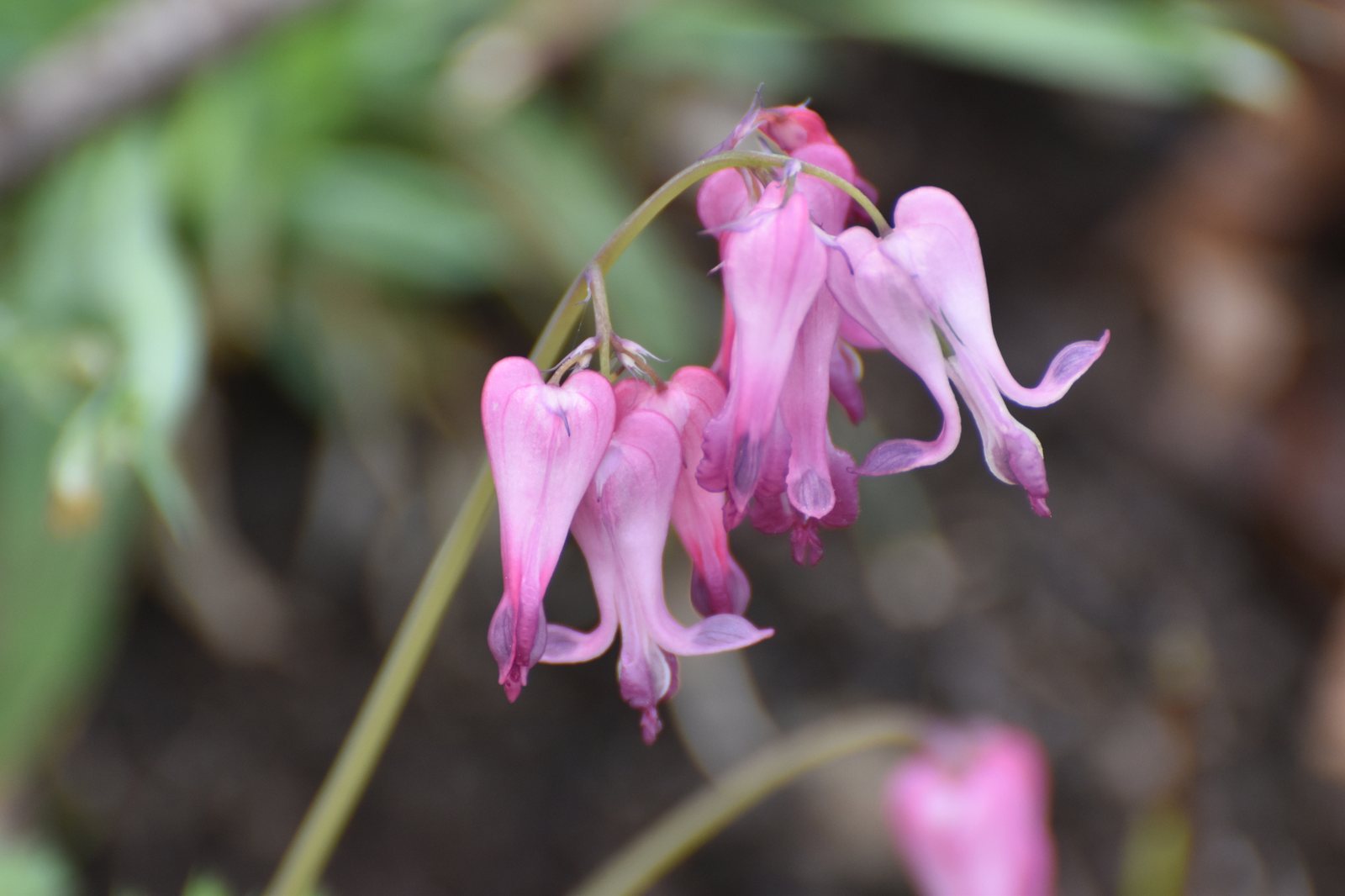
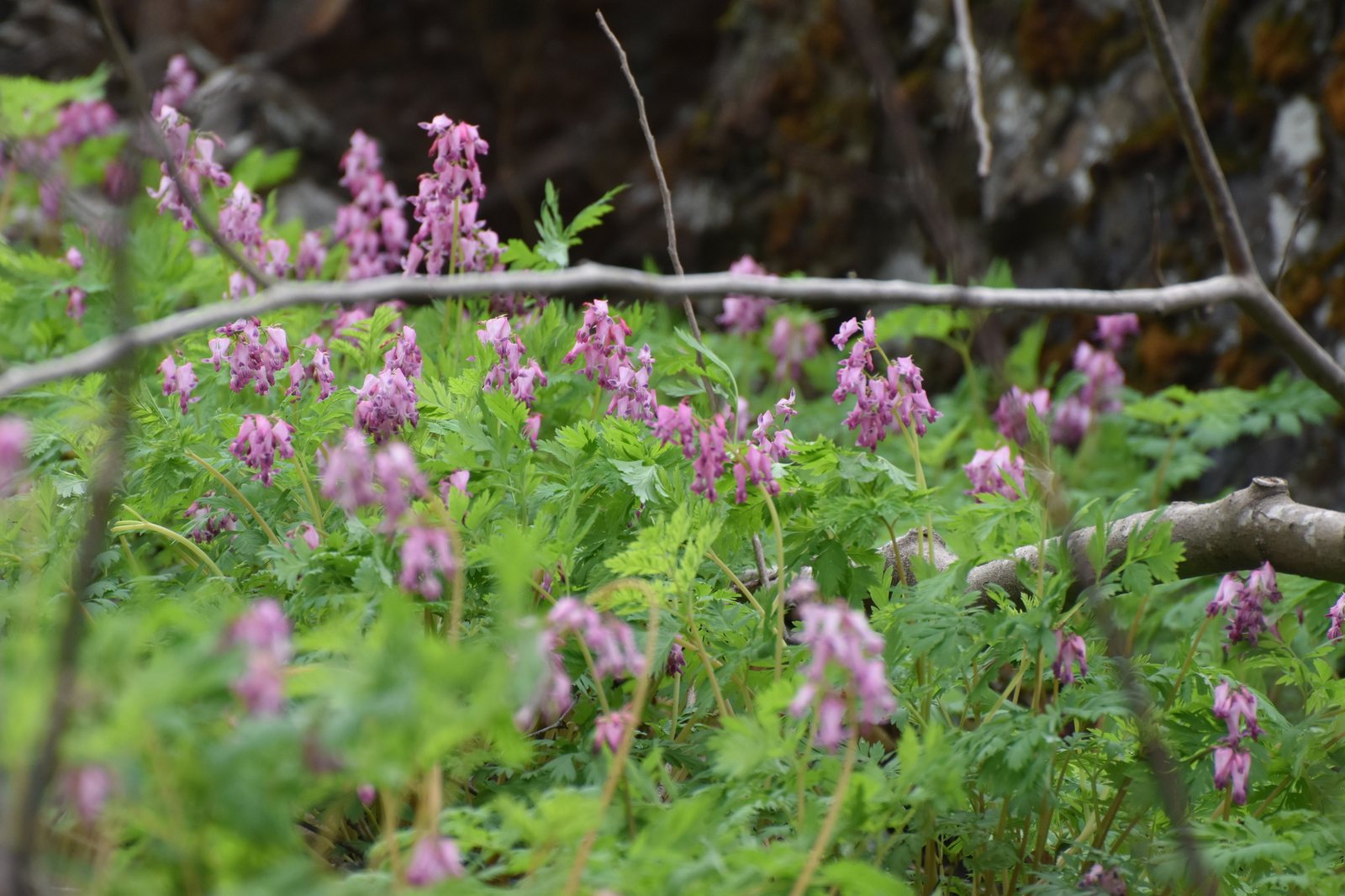
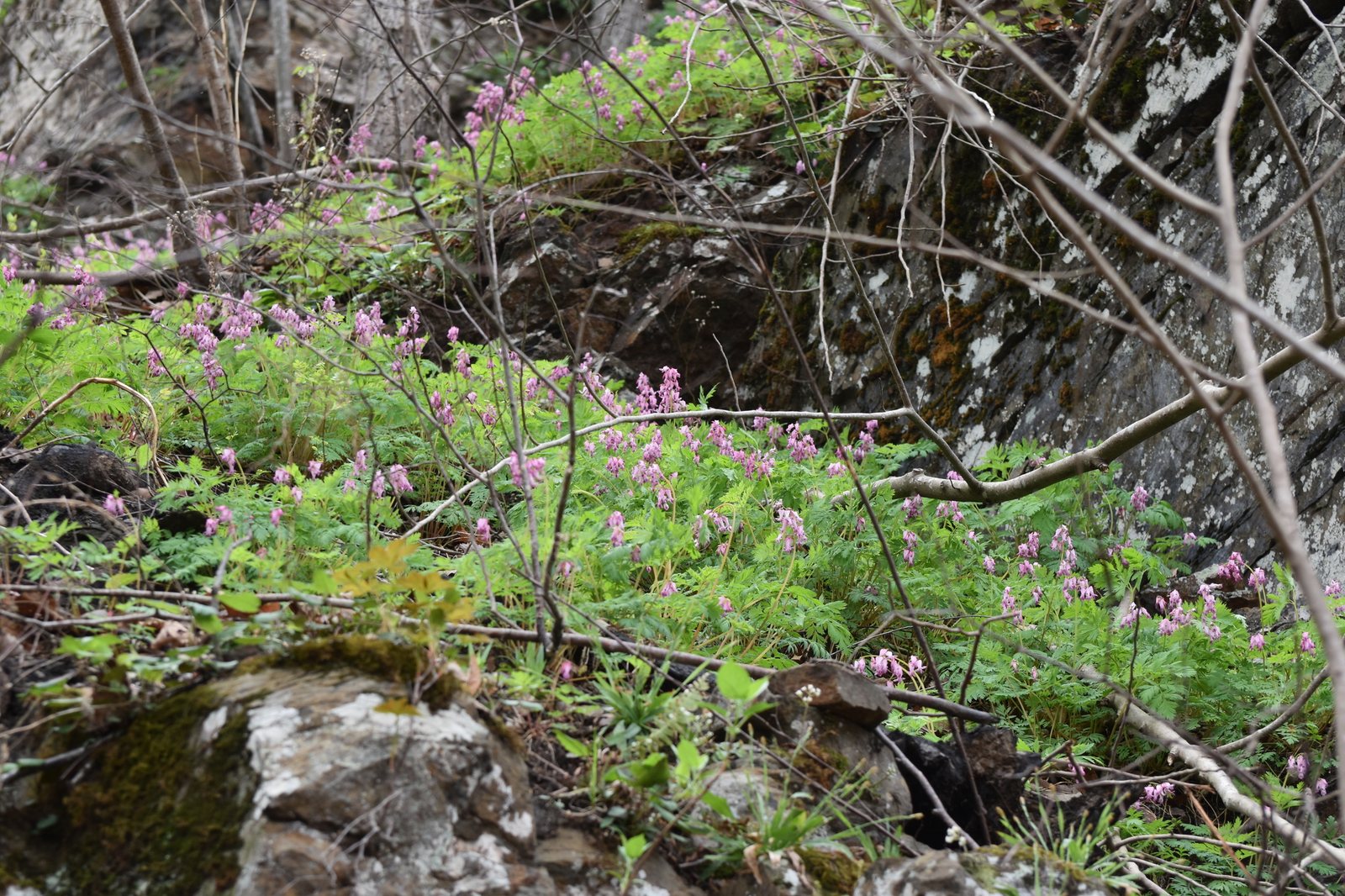
Fringed bleeding heart is a small, clump-forming perennial native to the eastern United States, grown for finely divided foliage and dangling pink, heart-shaped flowers. It suits lightly shaded borders and woodland gardens, often flowering intermittently from spring into autumn where summers are cool and the soil stays moist.
At a glance
- Sun
- Partial shade or dappled shade; tolerates more morning sun in cool climates if the soil stays moist. Avoid hot afternoon sun.
- Water
- Keep evenly moist while establishing and during active growth, but never waterlogged. Established plants tolerate brief dry spells, though flowering may stop.
- Soil
- Humus-rich, well-drained soil; slightly acidic to neutral soil is ideal. Avoid heavy, persistently wet ground.
- Height
- 1-1.5 ft (0.3-0.45 m)
- Spread
- 1-1.5 ft (0.3-0.45 m)
- Flowers
- Rose-pink to purplish-pink flowers from mid-spring into summer, with intermittent flowering into autumn in cool, moist conditions.
- Foliage
- Soft, finely divided, fern-like blue-green leaves; may die back early during heat or drought.
- Growth
- Moderate; slowly expands into a loose clump and may self-seed.
- Care needed
- Low
The year at a glance
- Pollinators
- Deer resistant
- Cold hardy
- Low allergen
| J | F | M | A | M | J | J | A | S | O | N | D | |
|---|---|---|---|---|---|---|---|---|---|---|---|---|
| Flowers | ||||||||||||
| Plant |
Northern hemisphere months. In Australia, shift them by six.
- Difficulty
- Easy
- Toughness
- Fairly tough
Will it suit your garden?
Pick your zone, country, light and whether you have pets.
Full sun is 6 or more hours of direct sun a day, part shade 3 to 6 hours, shade under 3.
How it grows
Planting day
1 ft (0.3 m)
After 1 year
1 ft (0.32 m)
After 2 years
1.1 ft (0.34 m)
After 3 years
1.2 ft (0.36 m)
After 5 years
1.2 ft (0.38 m)
full size
About 4 years to full size.
From a typical nursery size, at an average rate for this kind of plant. A rule of thumb, not a forecast.
Good to know
- Cats and dogs
- Toxic
- Native to
- the US
- Growth rate
- Slow
Care
Jobs through the year
- WaterMar–May, Sep–Oct, every 7 days
- Check established plants and water if soil is drying; keep new divisions lightly moist.
- WaterJun–Aug, every 4 days
- Check moisture during active growth and water as needed without waterlogging; do not force dormant plants with extra water.
- MulchMar–Apr
- Add a thin compost dressing and leaf mould or fine bark, keeping the crown clear.
- DivideMar–Apr, Sep
- Divide only crowded clumps or for propagation, then water thoroughly.
- DeadheadMay–Sep, every 14 days
- Remove spent flower stems if self-sown seedlings are unwanted.
- PruneOct–Nov
- Cut dead foliage to ground level after yellowing and clear wet leaf mats from the crown.
- ProtectMar–May
- Check emerging shoots for slugs and hand-pick or use labelled iron-phosphate bait if needed.
- Water at soil level during dry spells to keep the root zone lightly moist.
- Add a thin layer of compost in spring; avoid heavy feeding.
- Mulch with leaf mould or fine bark, keeping it clear of the crown.
- Divide crowded clumps in early spring or early autumn, then water well.
- Remove unwanted seedlings while small if you want to limit its spread.
Pruning. Remove spent flower stems if you do not want seedlings. Cut dead foliage to ground level after it yellows in autumn, or earlier if summer dormancy leaves it completely brown.
Through the year
- Early spring
- Plant or divide clumps as new growth appears, keeping the crown at its previous soil level.
- Spring
- Top-dress with compost and refresh the mulch without covering emerging shoots.
- Late spring
- Check tender growth for slugs and remove them by hand.
- Summer
- Water during dry weather; remove spent flower stems if seedlings are unwanted.
- Early autumn
- Plant or divide in mild conditions while the soil is still warm, allowing time for roots to establish before frost.
- Late autumn
- Cut away dead foliage and check that fallen leaves are not forming a wet mat over the crown.
In the garden
- Plant along the front of a shaded border, where the small flowers can be seen close up.
- Repeat small groups beneath deciduous trees with ferns and woodland phlox for a soft woodland planting.
- Combine with hostas to contrast finely divided leaves with broad foliage.
- Use beside shaded paths or in small courtyard beds for a long season of delicate flowers.
Garden styles it suits: Woodland, Cottage garden, Romantic rose garden, Secret garden, Wildlife garden and Blues and silvers.
Plant it with: Hostas, Japanese painted fern, Woodland phlox, Foamflower, Siberian bugloss and Solomon's seal.
Wildlife: Flowers attract bumblebees and other suitable pollinators. Ants disperse the seeds by carrying away their fleshy appendages. Deer and rabbits usually leave it alone, but browsing is still possible.
Problems to watch for
- Slugs and snails can eat emerging shoots; hand-pick at dusk, reduce damp hiding places, and use labelled iron-phosphate bait if necessary.
- Crown or root rot can develop in waterlogged soil; improve drainage and discard badly rotted plants.
- Hot sun or drought can scorch leaves and trigger early dormancy; provide afternoon shade, mulch, and water during prolonged dry weather.
- Aphids may cluster on soft growth; rinse them off with water and encourage natural predators.
Safety
All parts, especially the roots, contain toxic alkaloids and should not be eaten by people, cats, dogs or horses. Ingestion can cause vomiting, diarrhoea and, with larger amounts, trembling, weakness or other neurological signs; serious poisoning is possible. Sap may irritate sensitive skin. Seek medical or veterinary advice after ingestion.
Easily confused with
Pacific bleeding heart (Dicentra formosa)
Very similar, with pink flowers and divided foliage, but native to western North America and often more spreading.
Old-fashioned bleeding heart (Lamprocapnos spectabilis)
Usually much taller, with larger heart-shaped flowers hanging in rows along arching stems and broader leaf divisions. It commonly dies back after its spring flowering.
Dutchman's breeches (Dicentra cucullaria)
Has white, yellow-tipped flowers shaped like upside-down trousers rather than pink hearts. It flowers briefly in spring and then becomes dormant.
The name
Dicentra means 'two spurs', referring to the flower's paired projections, while eximia means 'distinguished' or 'exceptional'; 'fringed' describes the finely divided leaves.
Propagation. Divide established clumps in early spring or early autumn. Sow fresh seed promptly outdoors in a sheltered pot or seed bed; germination can be slow and may require a warm period followed by winter cold. Seedlings may differ from named cultivars.
Checked against open data
- Accepted botanical name
- Dicentra eximia
- In the US and Canada
- Native in the lower 48 states.
- Native range
- Kentucky, Maryland, New Jersey, New York, North Carolina, Pennsylvania, Tennessee, Virginia and West Virginia.
Sources: GBIF (CC BY 4.0), USDA PLANTS and Trefle (CC BY 4.0). The care and design notes are LandscapeGPT's own.
See it in your own yard.
Upload a photo of your yard and see it redesigned with plants that suit your climate, each checked against your zone.