Fringed wattle
Acacia fimbriata. Family Fabaceae. Shrub.
Also called Brisbane golden wattle.
Fringed wattle is a fast-growing evergreen shrub or small tree from eastern Australia, grown for its fine foliage and masses of fragrant yellow flowers in late winter and spring. It makes a useful informal screen in mild climates but needs shelter from hard frost; in most of Canada and colder parts of the United States and United Kingdom, it needs frost-free winter protection.
At a glance
- Sun
- Full sun; tolerates light shade, with fewer flowers and a looser shape.
- Water
- Water regularly while establishing. Once established, water deeply during prolonged dry spells; avoid constantly wet soil.
- Soil
- Well-drained sandy or loamy soil, preferably acidic to neutral. Avoid waterlogged ground and strongly alkaline soil.
- Height
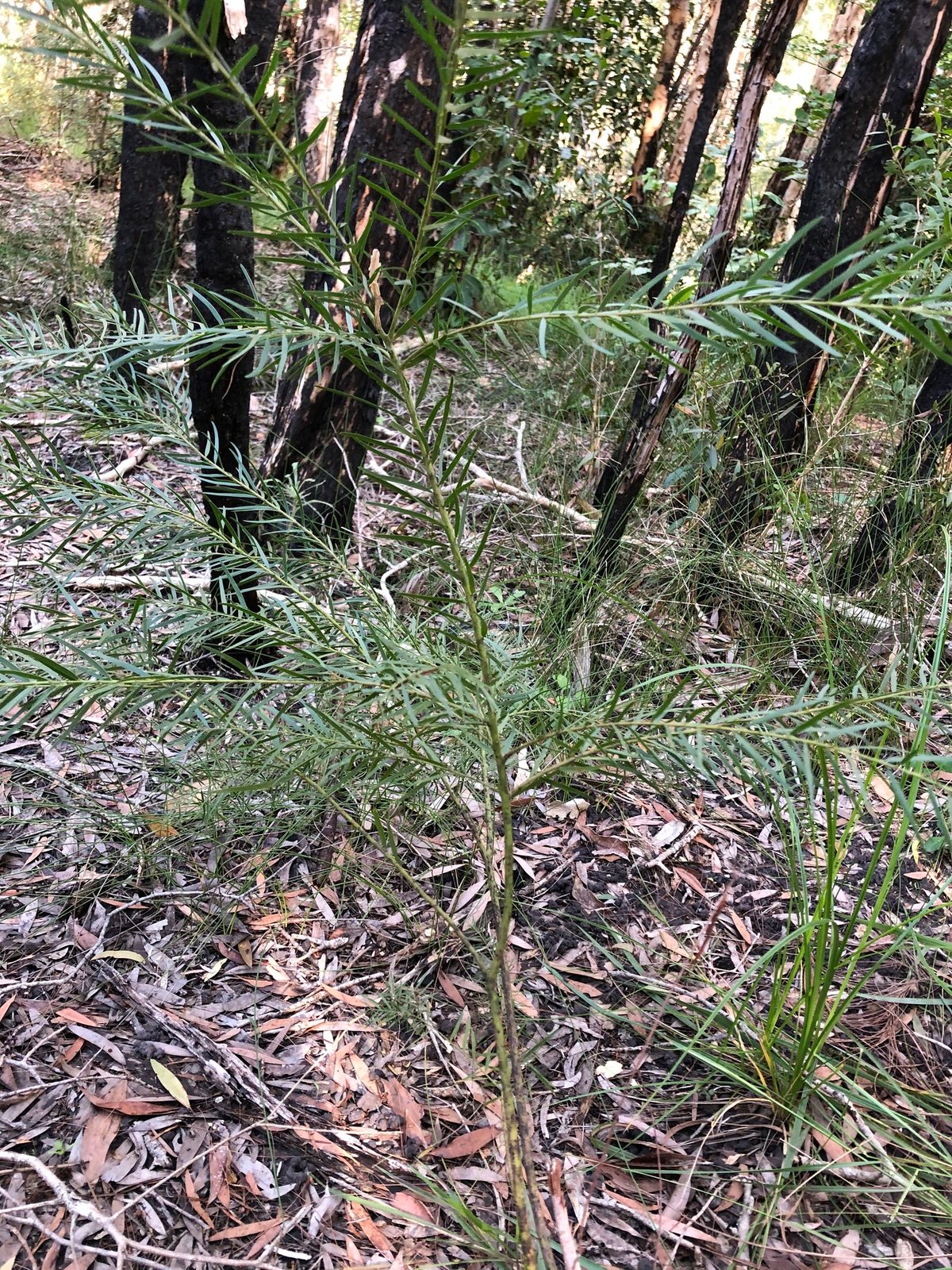
- 13-23 ft (4-7 m)
- Spread
- 10-20 ft (3-6 m)
- Flowers
- Late winter to spring; small, fragrant, golden-yellow flower balls borne in abundant clusters.
- Foliage
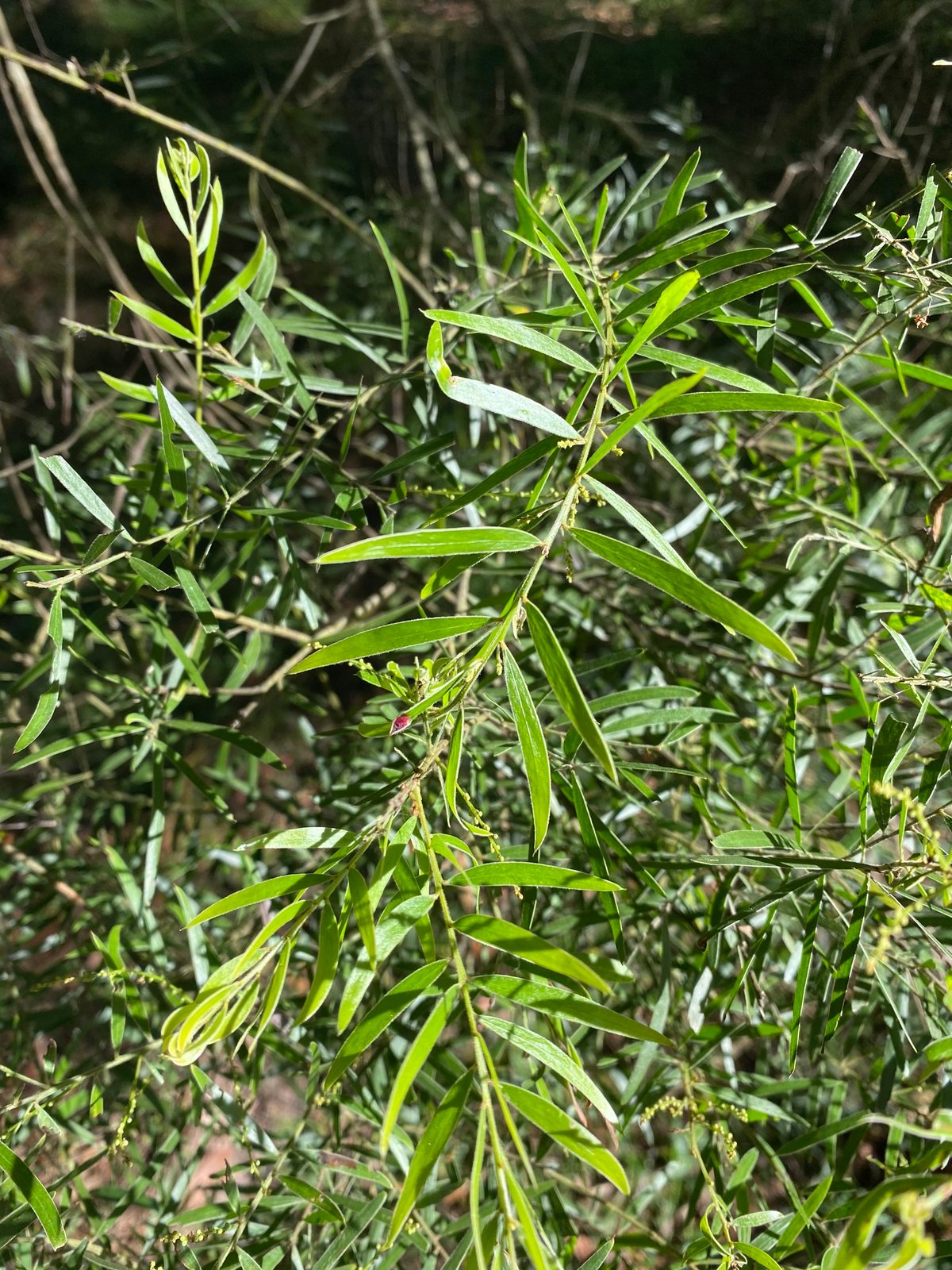
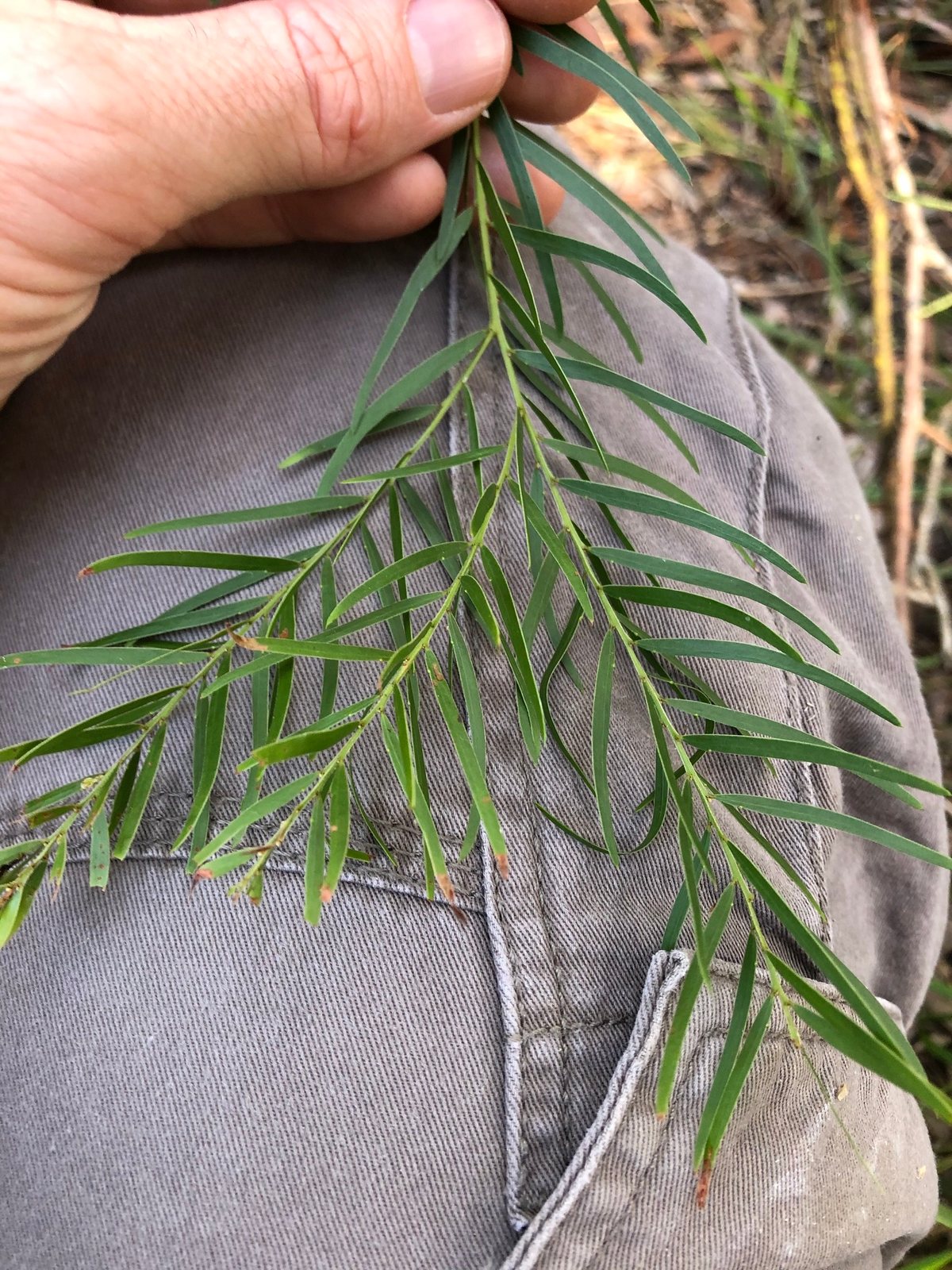
- Evergreen. Narrow green phyllodes, which are flattened leaf stalks rather than true leaves, with fine hairs fringing their edges.
- Growth
- Fast
- Care needed
- Low
The year at a glance
- Pollinators
- Drought tolerant
- Heat tolerant
- Wildlife
- Fragrant
| J | F | M | A | M | J | J | A | S | O | N | D | |
|---|---|---|---|---|---|---|---|---|---|---|---|---|
| Flowers | ||||||||||||
| Fruit | ||||||||||||
| Plant |
Northern hemisphere months. In Australia, shift them by six.
- Difficulty
- Hard
- Toughness
- Fairly tough
Will it suit your garden?
Pick your zone, country, light and whether you have pets.
Full sun is 6 or more hours of direct sun a day, part shade 3 to 6 hours, shade under 3.
How it grows
Planting day
2.2 ft (0.66 m)
After 1 year
7 ft (2.1 m)
After 2 years
12 ft (3.6 m)
After 3 years
17 ft (5.1 m)
After 5 years
18 ft (5.5 m)
full size
About 3 years to full size.
From a typical nursery size, at an average rate for this kind of plant. A rule of thumb, not a forecast.
Good to know
- Cats and dogs
- Safe
- Native to
- Australia
- In the garden
- Spreads vigorously: plan to contain it.
- Growth rate
- Fast
Care
Jobs through the year
- WaterApr–May, Sep–Oct, every 21 days
- Water established ground plants only in prolonged dry weather; water young plants more often.
- WaterJun–Aug, every 14 days
- Deep-water established ground plants during drought; check containers more frequently.
- WaterJan–Mar, Nov–Dec, every 14 days
- Water sheltered pots sparingly without allowing the root ball to dry completely.
- FeedApr–May
- Apply one light low-phosphorus native-plant feed only if growth is poor.
- PruneApr–May
- Lightly shorten leafy shoots after flowering; remove damaged wood without cutting hard into bare branches.
- MulchMay, Oct
- Maintain an organic mulch over the roots, keeping the trunk base clear.
- ProtectJan–Apr, Sep–Dec
- Not reliably hardy in zones 6–7; overwinter container plants in bright frost-free shelter.
- Plant in spring where frost is a concern, or autumn in mild climates, allowing room for the mature canopy.
- Water deeply through the first growing season, letting the surface soil dry between waterings.
- Apply an organic mulch, keeping it clear of the trunk.
- Avoid high-phosphorus fertilisers; use a low-phosphorus native-plant feed only if growth is poor.
- Shelter young plants from cold winds and protect them during frost.
- Stake only if needed in an exposed position, using flexible ties and removing support once roots are secure.
Pruning. Prune lightly immediately after flowering to shorten wayward shoots and encourage a denser canopy. Remove dead or damaged branches, but avoid hard cutting into old, leafless wood.
Through the year
- Late winter
- Enjoy the flowers and protect young plants if frost is forecast.
- Spring
- Plant in frost-prone areas once severe frost has passed.
- Spring
- After flowering, lightly trim long shoots and remove damaged wood.
- Summer
- Water young plants deeply during dry weather and check that ties are not cutting into stems.
- Autumn
- Plant in mild climates and refresh mulch without covering the trunk base.
- Winter
- Keep container plants in a bright, frost-free place in cold climates, watering sparingly without letting the root ball dry out.
In the garden
- Use as an informal evergreen screen where there is room for its broad canopy.
- Plant as a small flowering specimen against a dark fence or evergreen backdrop.
- Combine with bottlebrushes, grevilleas and native grasses in an Australian planting.
- Use at the back of a sunny mixed border for height, fine foliage and early-season colour.
Garden styles it suits: Australian native, Wildlife garden, Pollinator garden, Low-maintenance, Mediterranean and Dry gravel garden.
Plant it with: Crimson bottlebrush, Rosemary grevillea, Coastal rosemary, Spiny-headed mat-rush, Kangaroo paw and Flax lily.
Wildlife: Flowers provide pollen for bees and other insects. Dense branches offer shelter and potential nesting cover for small birds.
Problems to watch for
- Root rot in poorly drained soil: improve drainage before planting and avoid frequent watering of established plants.
- Frost damage to young shoots: choose a sheltered position, cover young plants during cold spells and wait until spring to remove damaged growth.
- Scale insects and associated sooty mould: check stems, encourage beneficial insects and treat accessible infestations with a suitable horticultural oil according to the label.
- Borers in stressed or damaged stems: maintain plant health, avoid trunk injuries and remove badly affected branches; seek arborist advice if the main trunk is affected.
Safety
Not known to be toxic to people, cats, dogs or horses, but species-specific safety information is limited. Do not treat the seeds, pods, foliage or bark as food or livestock feed.
Where it spreads. Listed as invasive in South Africa. It can escape cultivation by seed, so check local restrictions before planting and remove unwanted seedlings.
Easily confused with
White sallow wattle (Acacia floribunda)
Has longer, narrow phyllodes and cream to pale-yellow cylindrical flower spikes, rather than the rounded golden flower heads of fringed wattle.
Sticky wattle (Acacia howittii)
Usually has shorter, broader phyllodes that feel sticky, often on distinctly weeping branches; fringed wattle has narrow phyllodes with finely hairy edges.
The name
The species name fimbriata means fringed, referring to the fine hairs along the edges of the phyllodes.
Propagation. Grow from seed after carefully nicking the hard seed coat, or using a hot-water treatment, then soaking before sowing in a free-draining seed mix. Semi-ripe cuttings are possible but can be less reliable than seed.
Checked against open data
- Accepted botanical name
- Acacia fimbriata
- Native range
- New South Wales and Queensland.
- Measured
- Average height 700 cm.
Sources: GBIF (CC BY 4.0) and Trefle (CC BY 4.0). The care and design notes are LandscapeGPT's own.
See it in your own yard.
Upload a photo of your yard and see it redesigned with plants that suit your climate, each checked against your zone.