Frost grass
Spodiopogon sibiricus. Family Poaceae. Ornamental grass.
Also called Silver spike grass.
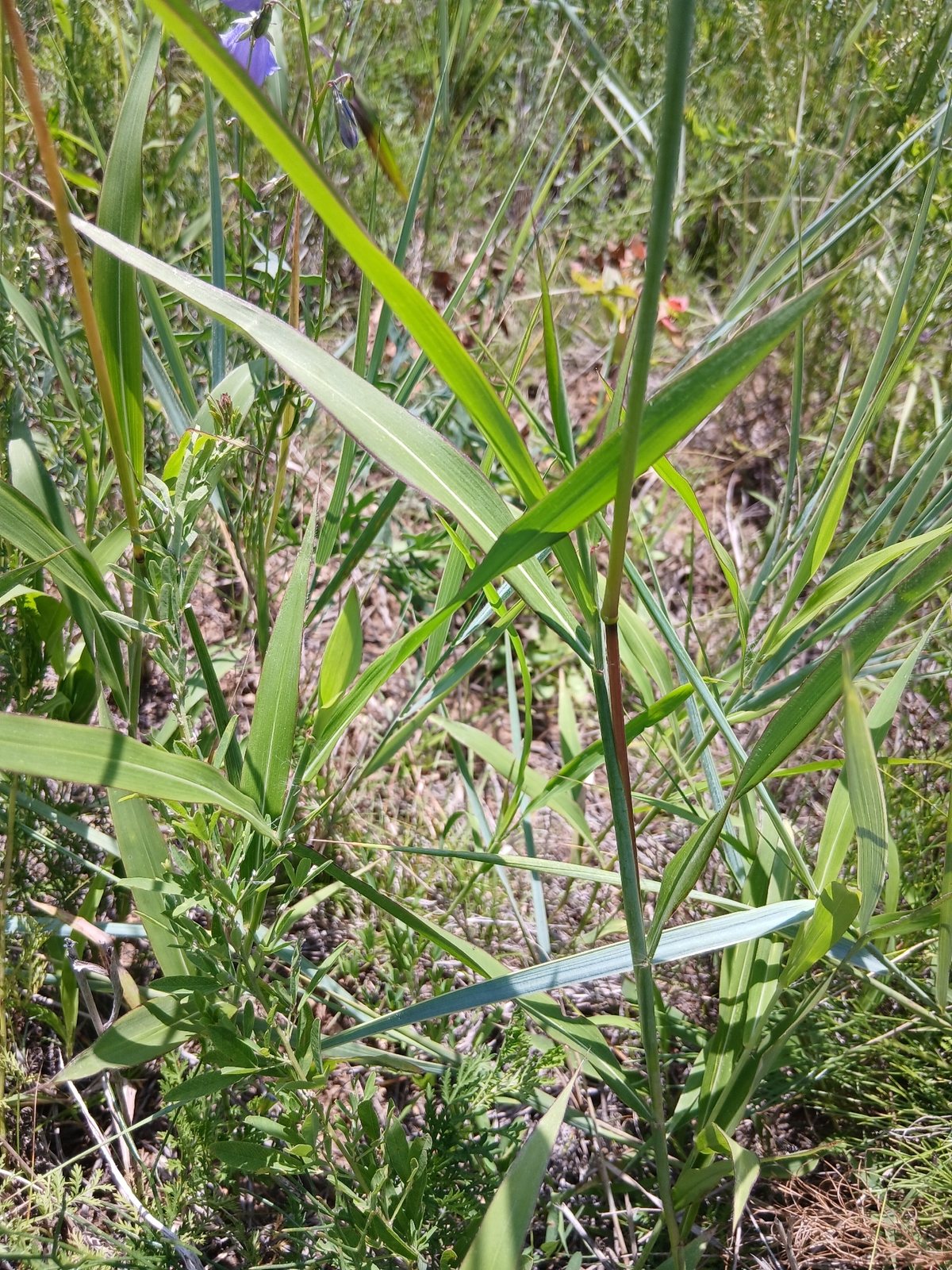
Frost grass is a deciduous, clump-forming grass from eastern Asia, grown for its broad, bamboo-like leaves and airy flower heads. It brings upright structure to borders, with foliage often turning burgundy, purple or orange in autumn.
At a glance
- Sun
- Full sun to partial shade; light afternoon shade is useful in hot summers.
- Water
- Moderate; keep the root zone evenly moist, especially during establishment and summer dry spells.
- Soil
- Moist, well-drained soil enriched with organic matter; tolerates clay provided it does not stay waterlogged.
- Height
- 3-5 ft (0.9-1.5 m), including flowers
- Spread
- 2-3 ft (0.6-0.9 m)
- Flowers
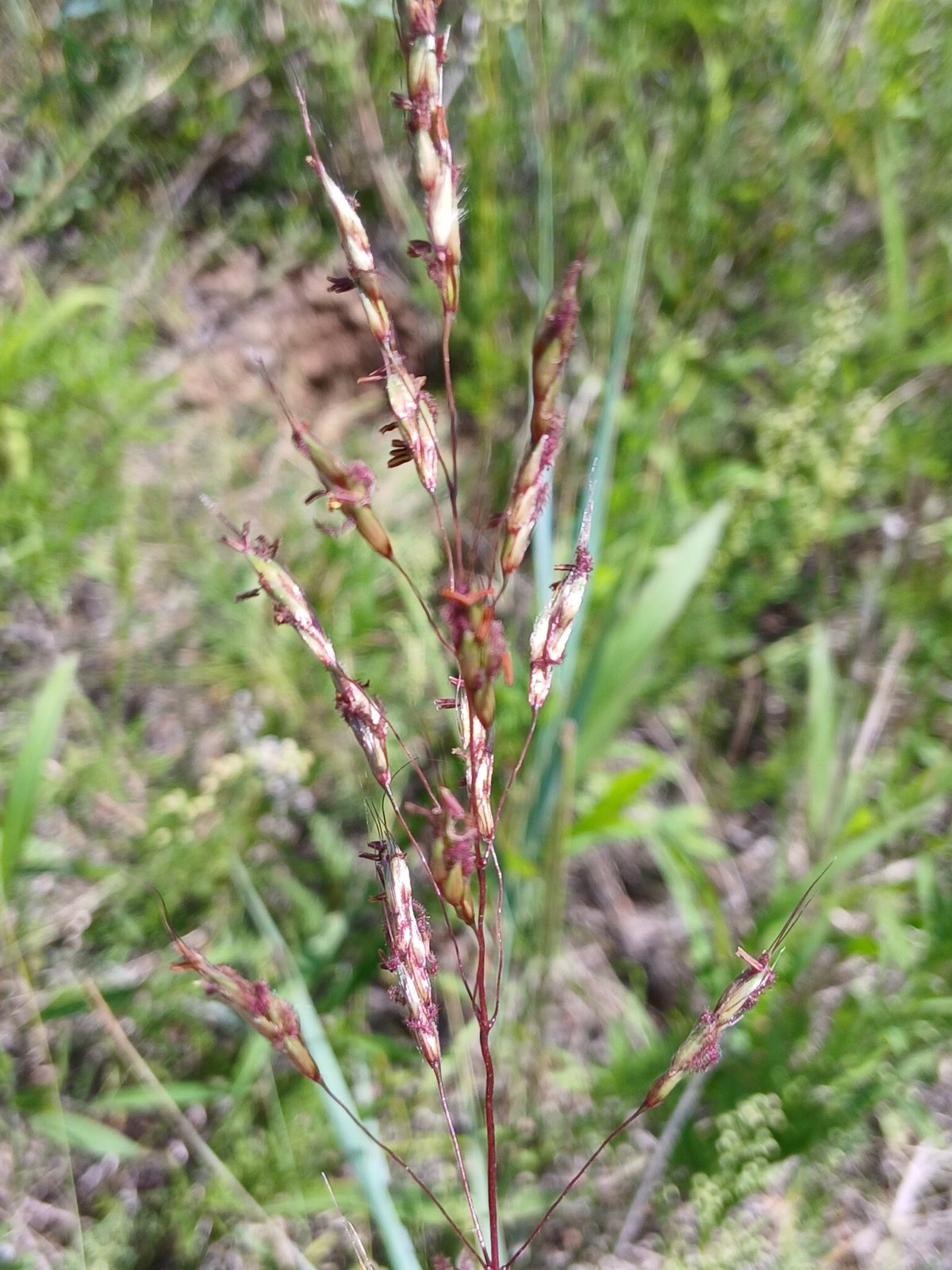
- Late summer into early autumn; airy, purplish flower heads become silvery as they mature.
- Foliage
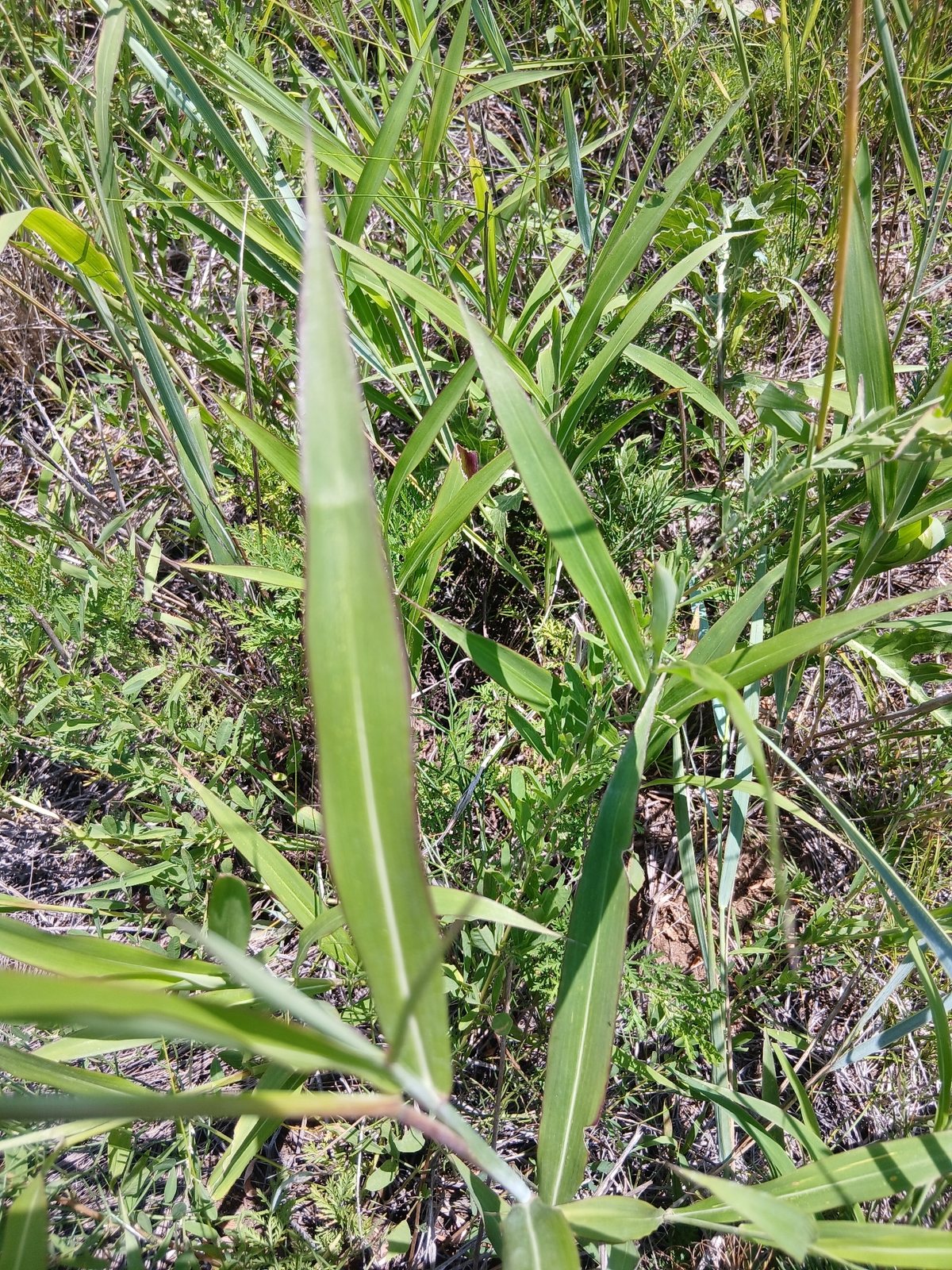
- Broad green blades held almost horizontally along upright stems, giving a bamboo-like appearance; autumn colour varies with climate and growing conditions.
- Growth
- Moderate once established; slow to emerge in spring.
- Care needed
- Low
The year at a glance
- Deer resistant
- Wildlife
| J | F | M | A | M | J | J | A | S | O | N | D | |
|---|---|---|---|---|---|---|---|---|---|---|---|---|
| Flowers | ||||||||||||
| Fruit | ||||||||||||
| Plant |
Northern hemisphere months. In Australia, shift them by six.
- Difficulty
- Easy
- Toughness
- Fairly tough
Will it suit your garden?
Pick your zone, country, light and whether you have pets.
Full sun is 6 or more hours of direct sun a day, part shade 3 to 6 hours, shade under 3.
How it grows
Planting day
1.1 ft (0.35 m)
After 1 year
2 ft (0.61 m)
After 2 years
2.9 ft (0.87 m)
After 3 years
4 ft (1.1 m)
After 5 years
4 ft (1.2 m)
full size
About 3 years to full size.
From a typical nursery size, at an average rate for this kind of plant. A rule of thumb, not a forecast.
Good to know
- Cats and dogs
- Safe
- Growth rate
- Slow
Care
Jobs through the year
- WaterApr–May, Sep–Oct, every 14 days
- Water established clumps deeply when soil begins drying; young plants need more frequent checks.
- WaterJun–Aug, every 7 days
- Water during dry weather to keep the root zone moderately moist and prevent browned leaf edges.
- PruneFeb–Mar
- Cut dead growth to 10-15 cm before new shoots emerge; retain upright stems through winter.
- MulchApr–May
- Apply a thin compost mulch to conserve moisture, keeping it clear of the crown.
- DivideApr–May
- Divide congested clumps as new shoots appear, retaining healthy outer sections.
- Water deeply during dry spells; prolonged drought can brown the leaf edges.
- Apply a thin layer of compost in spring rather than feeding heavily.
- Mulch around the clump to conserve moisture, keeping mulch clear of the crown.
- Divide congested clumps in spring when new shoots begin to appear.
- Avoid deep shade and excessive fertiliser, which encourage weak, leaning growth.
Pruning. Cut dead stems and leaves to 4-6 in (10-15 cm) above ground in late winter or early spring, before new shoots emerge. Remove collapsed stems earlier if they become untidy.
Through the year
- Late winter
- Cut back the previous year's dead growth before new shoots appear.
- Spring
- Plant or divide as growth starts; water well and apply a light compost mulch.
- Late spring
- Check soil moisture around newly planted clumps; do not mistake slow emergence for winter loss.
- Summer
- Water during prolonged dry weather to prevent scorched foliage.
- Autumn
- Leave upright stems for seasonal structure, removing only those that collapse.
In the garden
- Plant in small groups through a mixed border to repeat its upright shape and broad leaf texture.
- Combine with coneflowers and asters in naturalistic planting for late-season flowers and autumn colour.
- Use beside an open woodland edge with hostas and ferns where the soil stays moist.
- Plant as a bamboo-like accent in Japanese-inspired gardens without the running habit of many bamboos.
Garden styles it suits: New perennial (prairie), Japanese, Woodland, Autumn colour, Modern and English country.
Plant it with: Coneflower, Aster, Japanese anemone, Hosta, Astilbe and Lady fern.
Wildlife: Clumps provide shelter for small invertebrates. The flowers are wind-pollinated rather than a significant nectar source.
Problems to watch for
- Brown leaf edges in hot, dry weather: water deeply and mulch; provide afternoon shade in hot climates.
- Flopping stems in shade or rich soil: increase light and stop high-nitrogen feeding.
- Crown rot in waterlogged soil: improve drainage or move the plant to a better-drained position.
- A thinning or dead centre in an older clump: lift and divide in spring, replanting healthy outer sections.
Safety
Not known to be toxic to people, cats, dogs or horses, and no part is recognised as poisonous. Species-specific safety information is limited; it is an ornamental grass, not a food or forage recommendation.
Easily confused with
Chinese silver grass (Miscanthus sinensis)
Usually has longer, narrower, arching leaves with a conspicuous pale midrib and larger, more feathery plumes; frost grass has broader leaves held more horizontally.
Japanese forest grass (Hakonechloa macra)
Forms a much shorter, cascading mound with arching stems, rather than the tall, upright stems of frost grass.
The name
The species name sibiricus means 'Siberian', referring to part of its native range.
Propagation. Divide established clumps in spring as new growth begins, retaining several shoots and a healthy root system in each division. The species can also be raised from seed, though seedlings take longer to form substantial clumps.
Checked against open data
- Accepted botanical name
- Spodiopogon sibiricus
- Native range
- Amur, Buryatiya, China North-Central, China South-Central, China Southeast, Chita, Hainan, Inner Mongolia, Irkutsk, Japan, Khabarovsk and Korea.
Sources: GBIF (CC BY 4.0) and Trefle (CC BY 4.0). The care and design notes are LandscapeGPT's own.
See it in your own yard.
Upload a photo of your yard and see it redesigned with plants that suit your climate, each checked against your zone.