Garlic
Allium sativum. Family Amaryllidaceae. Bulb.
Also called Cultivated garlic.
Garlic is a hardy bulb grown as an annual crop for its edible cloves; hardneck types also produce edible flower stalks called scapes. Plant it in a sunny, well-drained bed, choosing a variety suited to your local winter temperatures and summer day length.
At a glance
- Sun
- Full sun, ideally at least 6 hours of direct sunlight daily.
- Water
- Water regularly during active growth, allowing the surface to dry slightly between waterings. Reduce watering as the leaves yellow before harvest.
- Soil
- Fertile, loose, well-drained soil, ideally pH 6.0-7.5. Use raised beds where winter soil stays wet.
- Height
- 1-3 ft (0.3-0.9 m), including scapes
- Spread
- 0.3-0.5 ft (0.1-0.15 m)
- Flowers
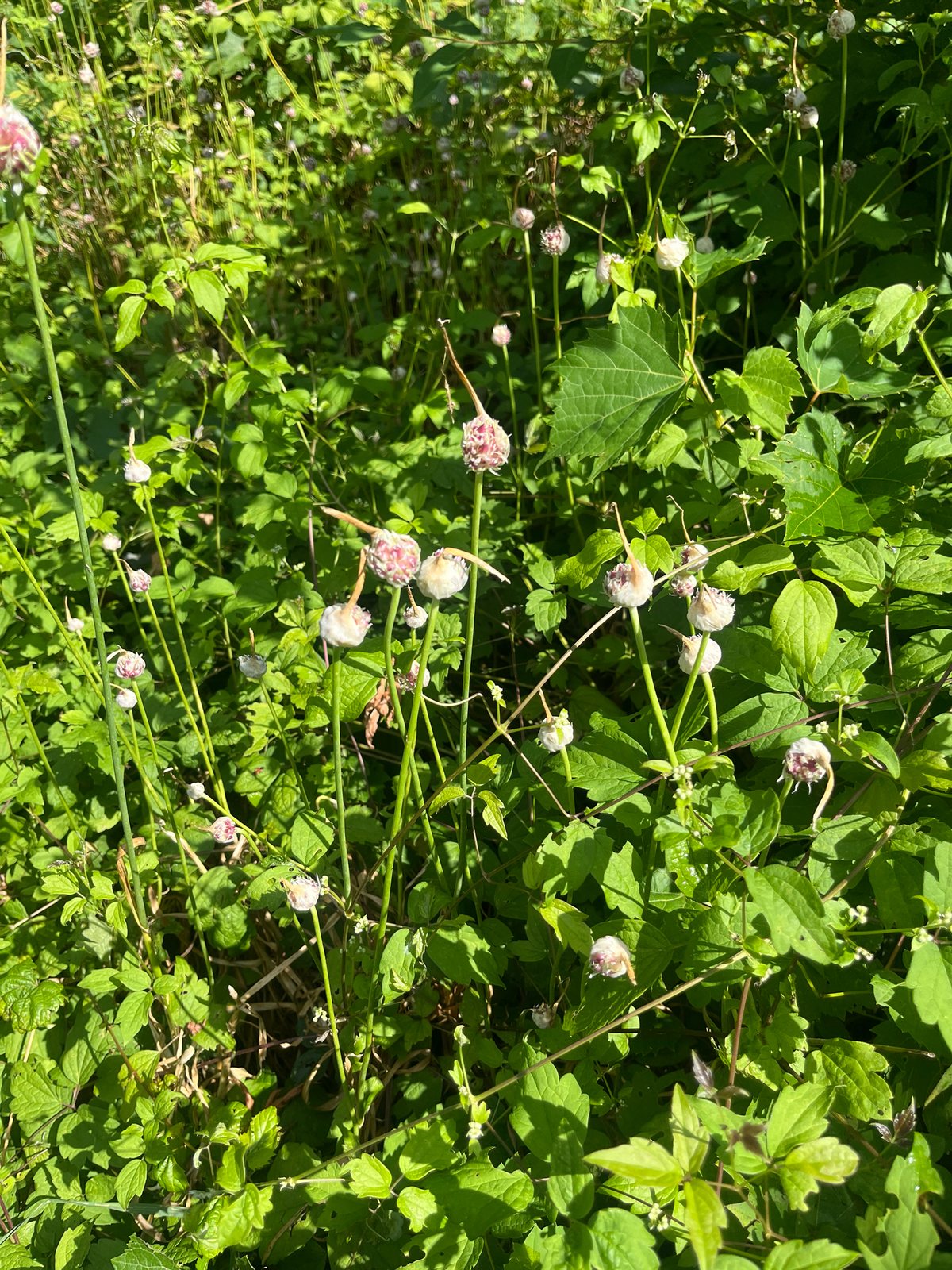
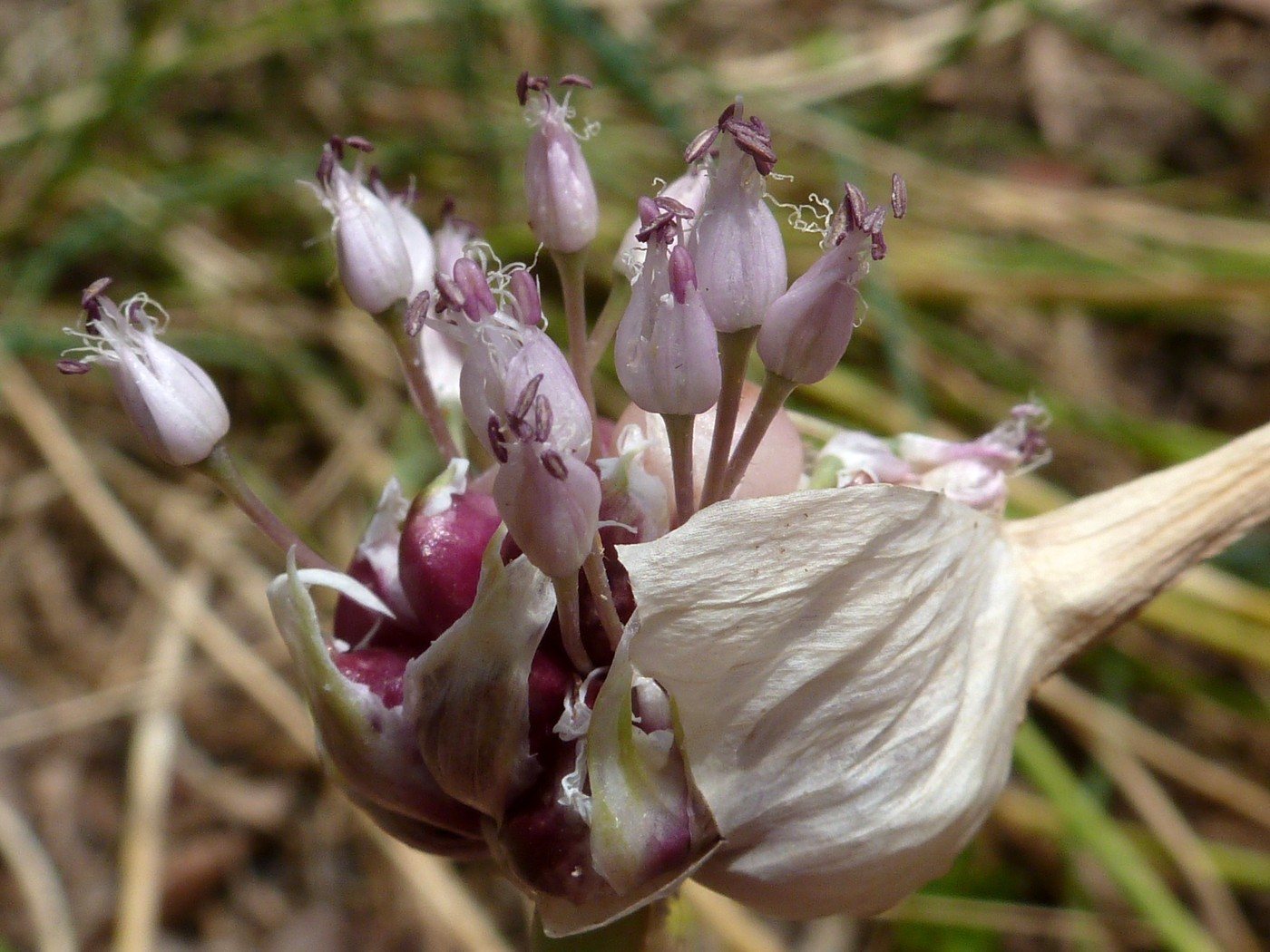
- Early to midsummer; hardneck types may produce small whitish or pinkish flowers mixed with bulbils in a rounded head. Many cultivated types rarely flower.
- Foliage
- Upright, flat, narrow, green to grey-green leaves that yellow and die back as the bulbs mature.
- Growth
- Moderate; usually harvested 7-9 months after autumn planting, sooner from spring planting.
- Care needed
- Medium
The year at a glance
- Deer resistant
- Cold hardy
- Low allergen
- Edible
| J | F | M | A | M | J | J | A | S | O | N | D | |
|---|---|---|---|---|---|---|---|---|---|---|---|---|
| Flowers | ||||||||||||
| Fruit | ||||||||||||
| Plant |
Northern hemisphere months. In Australia, shift them by six.
- Difficulty
- Moderate
- Toughness
- Fairly tough
Will it suit your garden?
Pick your zone, country, light and whether you have pets.
Full sun is 6 or more hours of direct sun a day, part shade 3 to 6 hours, shade under 3.
How it grows
Planting day
0.5 ft (0.15 m)
After 1 year
2 ft (0.6 m)
full size
About 1 years to full size.
From a typical nursery size, at an average rate for this kind of plant. A rule of thumb, not a forecast.
Good to know
- Cats and dogs
- Toxic
- Growth rate
- Moderate
Care
Jobs through the year
- WaterMar–Apr, every 14 days
- Water growing plants if soil is drying and rain is insufficient; avoid waterlogging.
- WaterMay–Jun, every 7 days
- Keep soil evenly moist during bulb swelling, allowing the surface to dry slightly; reduce as leaves yellow.
- FeedMar–Apr
- Feed lightly with nitrogen-rich fertilizer in early spring; stop when bulbs begin swelling.
- MulchOct–Nov
- After autumn planting, add loose straw in cold areas; thin it if soil stays excessively wet.
- ProtectMar–Apr, Sep–Oct
- Where allium leaf miner occurs, cover with fine insect mesh before local adult flight periods.
- HarvestJun, every 7 days
- On hardneck types, cut tender scapes as they begin to curl; this usually prevents flowering.
- HarvestJul–Aug
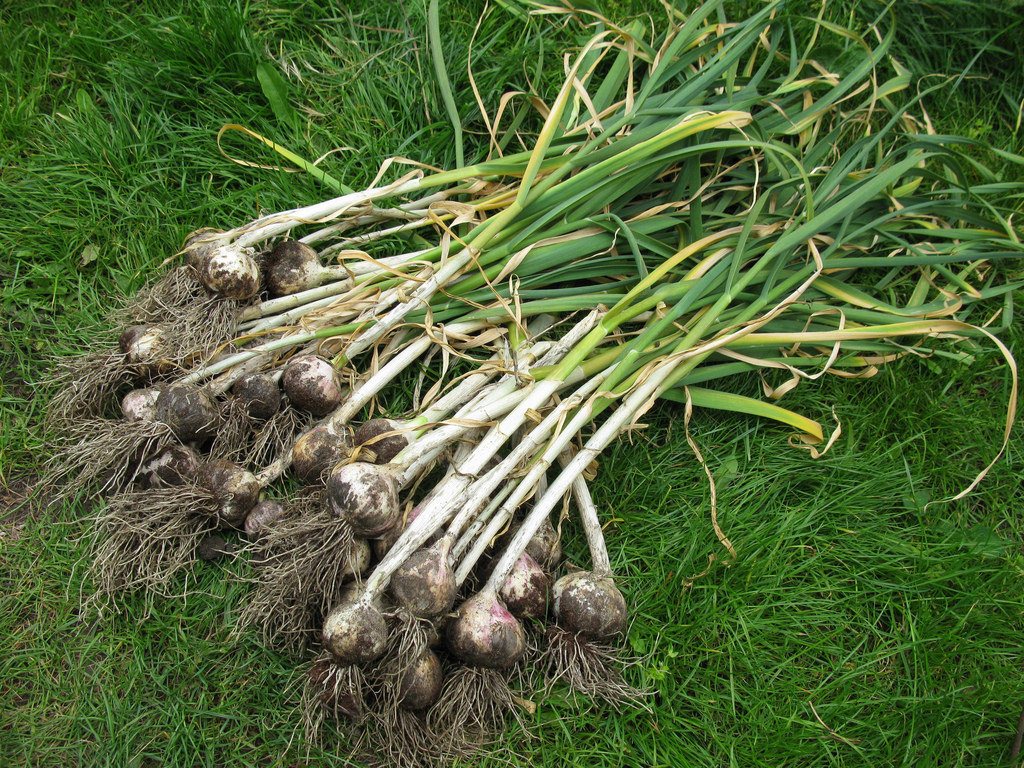
- Lift bulbs when the lowest three or four leaves brown; cure in dry, shaded airflow for 2–4 weeks.
- Plant healthy seed cloves pointed end up, about 6 in (15 cm) apart, with their tips roughly 1-2 in (2.5-5 cm) below the surface.
- Choose locally adapted stock: hardneck types generally suit cold winters, while suitable softneck types perform better in mild-winter districts.
- Keep soil evenly moist during leaf growth and bulb swelling, but never waterlogged.
- Work compost into the bed before planting; feed lightly with a nitrogen-rich fertiliser in early spring, stopping as bulbs begin to swell.
- Weed by hand to avoid damaging shallow roots, and mulch with clean straw in cold climates; thin the mulch if it keeps soil excessively wet.
Pruning. Cut hardneck scapes while they are young and tender, after they begin to curl, to favour bulb development. Leave healthy leaves intact until harvest, then trim the dried tops after curing.
Harvest
Cut hardneck garlic’s flower stalks (scapes) while tender, when they begin to curl, usually a few weeks before the bulbs are ready. Harvest bulbs, usually in summer, when the lower three or four leaves have browned but several upper leaves remain green; check one bulb for plump cloves and intact papery skins.
Through the year
- Early autumn
- Prepare a sunny, well-drained bed and obtain disease-free seed garlic suited to your climate.
- Mid to late autumn
- Plant cloves before the ground freezes; add a loose straw mulch in cold-winter areas.
- Late winter to early spring
- Plant spring-suitable varieties if autumn planting was missed, as soon as the soil is workable.
- Spring
- Weed, feed lightly and water during dry spells; loosen heavy mulch around emerging shoots.
- Early summer
- Harvest tender scapes from hardneck plants and stop nitrogen feeding as bulbs swell.
- Mid to late summer
- Lift a sample bulb when the lower leaves brown but several upper leaves remain green. Harvest mature bulbs and cure them in a dry, shaded, well-ventilated place for 2-4 weeks.
In the garden
- Plant in straight rows in a potager for an orderly, upright contrast to leafy vegetables.
- Use small blocks among lettuce and beetroot in edible beds, leaving room to lift the bulbs without disturbing neighbouring plants.
- Grow in deep containers or raised beds on sunny patios where drainage can be controlled.
- Repeat short rows through herb beds for seasonal vertical foliage, with another crop ready to fill the gaps after harvest.
Garden styles it suits: Potager (kitchen garden), Edible landscape, Homestead, Cottage garden, Herb parterre and Small-space.
Plant it with: Lettuce, Beetroot, Carrots and Calendula.
Wildlife: Flowers, when present, can attract bees and other insects, but garlic is normally harvested or has its scapes removed before flowering. It is not a dependable flowering resource for pollinators.
Problems to watch for
- White rot: yellowing leaves and rotting bulbs with white fungal growth and tiny black resting bodies. Remove affected plants and surrounding soil carefully; do not compost them or grow alliums in contaminated ground, where the fungus can persist for many years.
- Leek rust: orange pustules on leaves, especially in damp weather. Improve spacing, avoid excess nitrogen and remove badly affected foliage; choose resistant varieties where available.
- Allium leaf miner: larvae tunnel through leaves and bulbs in affected regions. Use fine insect mesh before adult flies arrive and remove infested crop debris.
- Small or poorly divided bulbs: often caused by unsuitable varieties, late planting, crowding or insufficient winter chilling. Use locally proven stock, plant at the recommended season and maintain adequate spacing.
Safety
All parts, including bulbs, leaves and scapes, are toxic to cats, dogs and horses, whether raw, cooked or dried; ingestion can damage red blood cells and cause serious anaemia. Contact a veterinarian if a pet eats garlic. Garlic is not considered toxic to people in normal food amounts, though it can cause digestive irritation or allergic reactions.
Easily confused with
Elephant garlic (Allium ampeloprasum)
A leek relative with much broader leaves, very large cloves and a milder flavour; it often forms small, hard cormels around the bulb base.
Onion (Allium cepa)
Usually has hollow, tubular leaves and a layered bulb rather than garlic's flat leaves and bulb divided into cloves.
Garlic chives (Allium tuberosum)
Forms persistent clumps of narrow, flat leaves with white, star-shaped flowers in late summer, rather than a substantial bulb divided into cloves.
The name
Allium is the Latin name for garlic, sativum means cultivated or sown, and garlic comes from Old English words meaning spear-leek.
Propagation. Separate a healthy bulb into cloves shortly before planting, keeping each clove's papery skin intact. Save only sound bulbs from healthy plants; bulbils from some hardneck types can also be planted but usually need more than one growing season to produce a useful divided bulb.
Checked against open data
- Accepted botanical name
- Allium sativum
- In the US and Canada
- Introduced in Canada and the lower 48 states.
- Native range
- Iran, Kazakhstan, Kirgizstan, Tadzhikistan, Turkmenistan and Uzbekistan.
- Measured
- Soil pH 7.5 to 8. Average height 48 cm.
Sources: GBIF (CC BY 4.0), USDA PLANTS and Trefle (CC BY 4.0). The care and design notes are LandscapeGPT's own.
See it in your own yard.
Upload a photo of your yard and see it redesigned with plants that suit your climate, each checked against your zone.