Garlic chives
Allium tuberosum. Family Amaryllidaceae. Perennial.
Also called Chinese chives, Chinese leek.
Garlic chives form clumps of flat, garlic-flavoured leaves used in cooking, with white flower heads in late summer and autumn. Grow them in a herb bed, border or container for repeated harvests and flowers that attract pollinating insects.
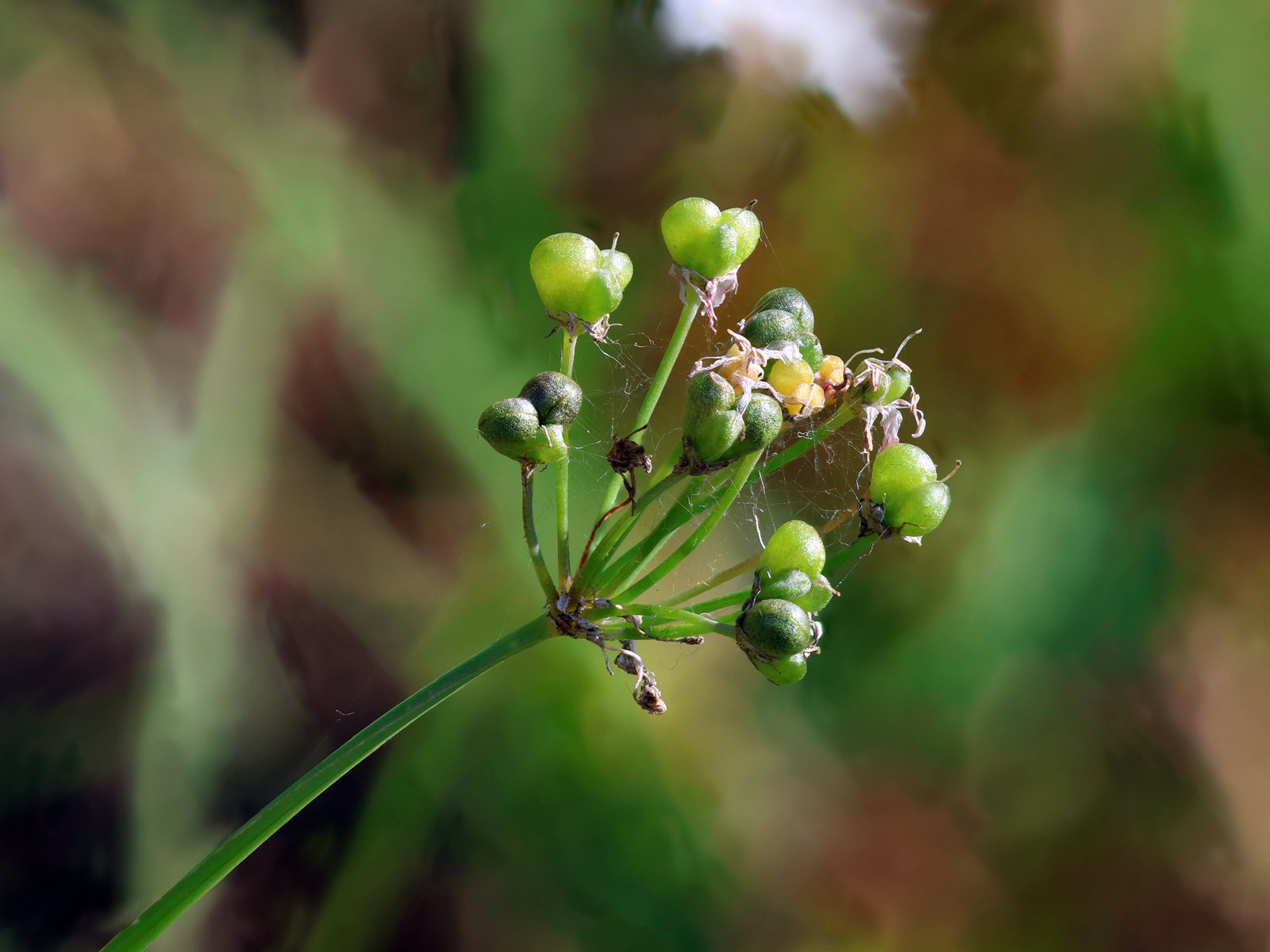
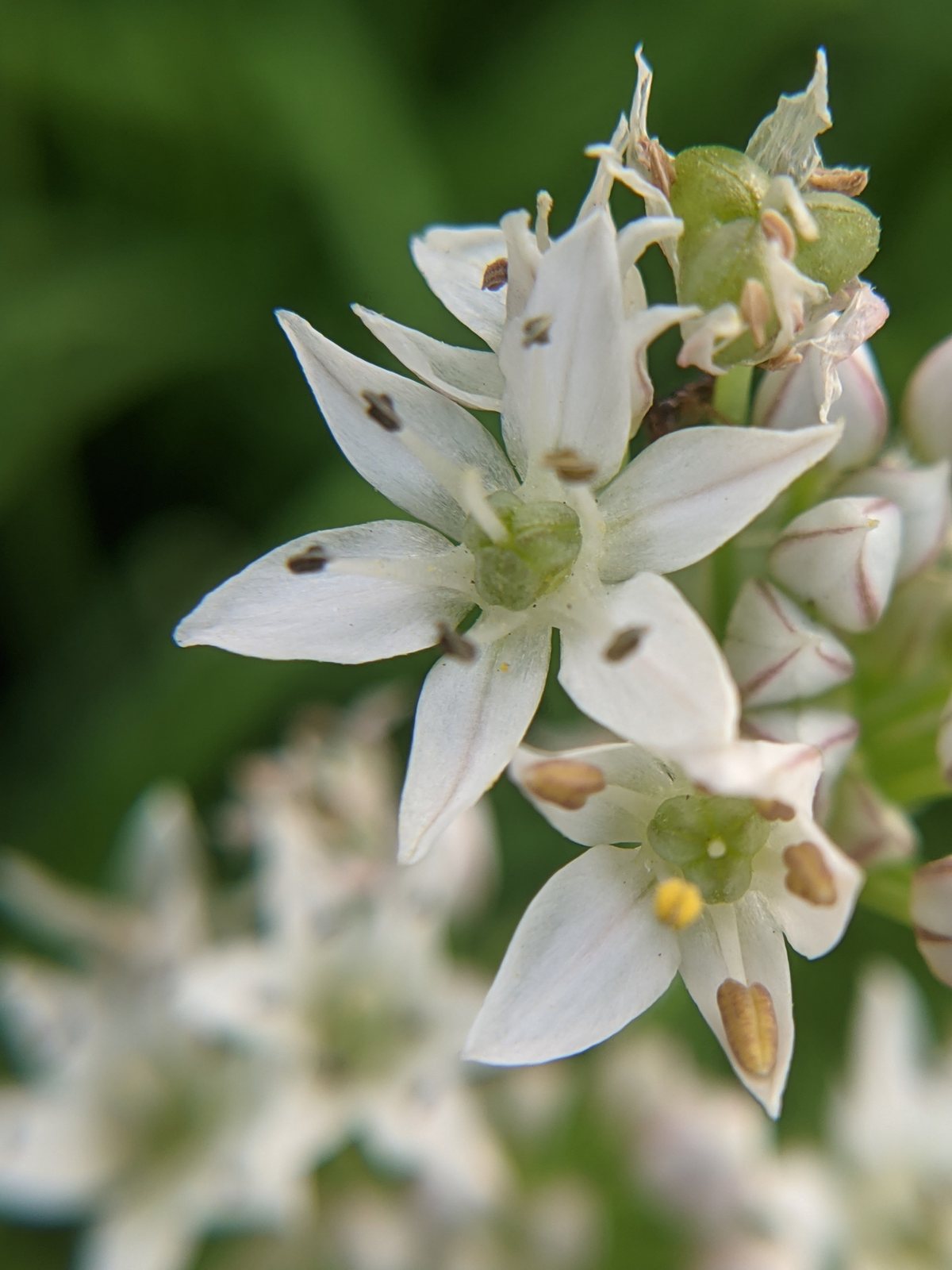
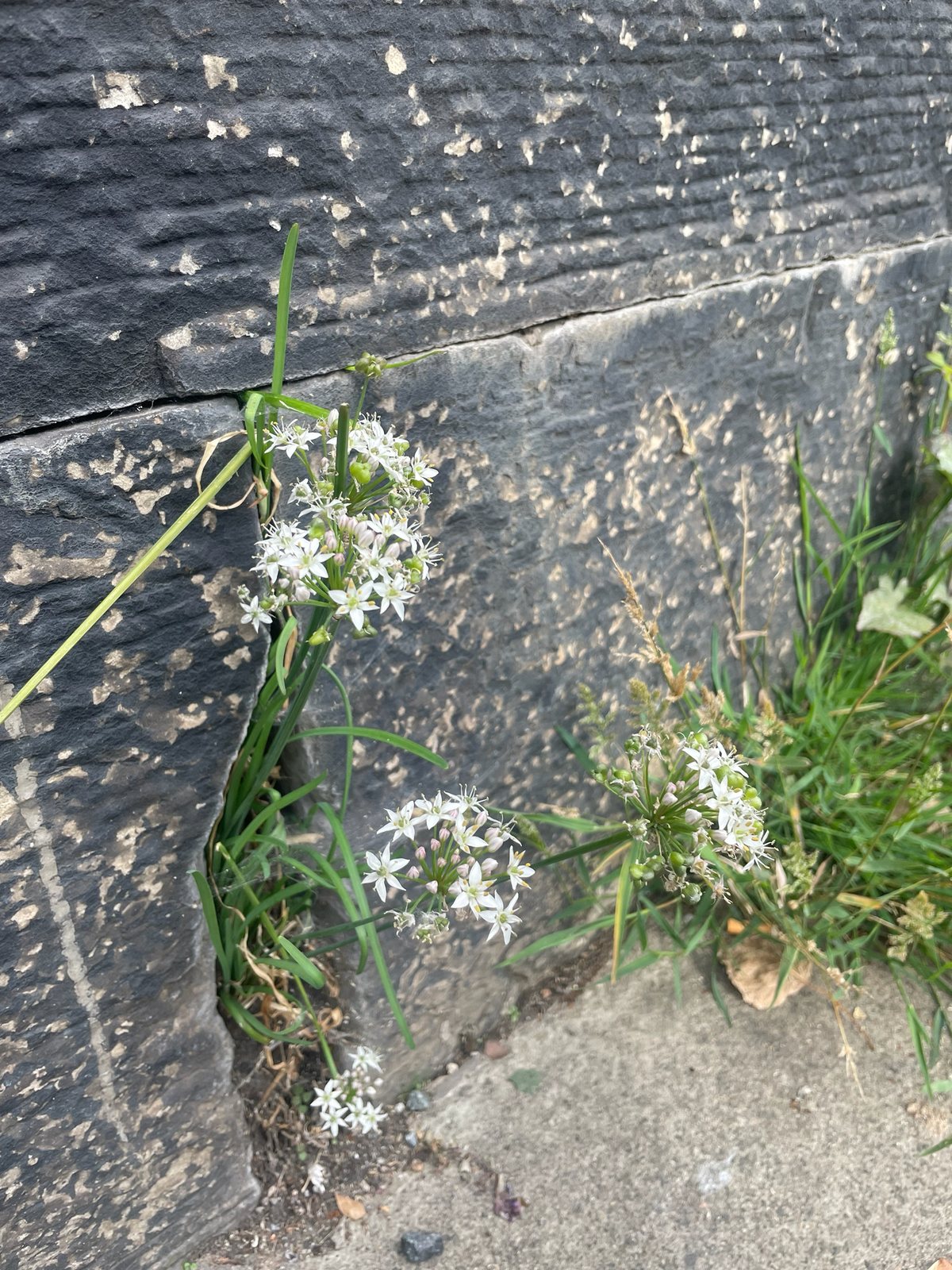
At a glance
- Sun
- Full sun for the best growth and flowering; tolerates partial shade.
- Water
- Keep evenly moist while establishing and during repeated harvesting. Established clumps tolerate short dry spells, but leaf production slows.
- Soil
- Well-drained soil enriched with compost; tolerates clay if it does not stay waterlogged.
- Height
- 1-2 ft (0.3-0.6 m), including flower stems
- Spread
- 1-2 ft (0.3-0.6 m) per mature clump
- Flowers
- Late summer to autumn; rounded clusters of small, star-shaped white flowers.
- Foliage
- Narrow, flat, solid green leaves with a distinct garlic smell when crushed; dies back in cold winters.
- Growth
- Moderate; clumps enlarge steadily and can spread widely by seed.
- Care needed
- Low
The year at a glance
- Pollinators
- Deer resistant
- Cold hardy
- Heat tolerant
- Low allergen
- Edible
| J | F | M | A | M | J | J | A | S | O | N | D | |
|---|---|---|---|---|---|---|---|---|---|---|---|---|
| Flowers | ||||||||||||
| Fruit | ||||||||||||
| Plant |
Northern hemisphere months. In Australia, shift them by six.
- Difficulty
- Easy
- Toughness
- Very tough
Will it suit your garden?
Pick your zone, country, light and whether you have pets.
Full sun is 6 or more hours of direct sun a day, part shade 3 to 6 hours, shade under 3.
How it grows
Planting day
1 ft (0.3 m)
After 1 year
1.1 ft (0.35 m)
After 2 years
1.3 ft (0.4 m)
After 3 years
1.5 ft (0.45 m)
full size
About 3 years to full size.
From a typical nursery size, at an average rate for this kind of plant. A rule of thumb, not a forecast.
Good to know
- Cats and dogs
- Toxic
- In the garden
- Spreads vigorously: plan to contain it.
- Growth rate
- Moderate
Care
Jobs through the year
- WaterApr–May, Sep–Oct, every 14 days
- Water established clumps during dry weather; young plants need more frequent watering.
- WaterJun–Aug, every 7 days
- Water when rainfall is insufficient to maintain tender leaves during repeated harvesting.
- MulchMar–Apr
- Apply a thin layer of compost around clumps, keeping crowns clear.
- DivideMar–Apr
- Divide crowded clumps every three or four years and replant healthy sections.
- HarvestApr–Oct, every 14 days
- Cut established leaves near the base at about 15 cm tall, retaining some foliage; buds and flowers are edible.
- DeadheadSep–Oct, every 7 days
- Remove fading flower heads before seed capsules open to prevent unwanted seedlings.
- PruneNov–Dec
- Cut yellowed foliage to ground level once it has died back.
- Water during dry spells to keep leaves tender, allowing excess water to drain away.
- Apply a thin layer of compost in spring; avoid heavy nitrogen feeding.
- Mulch lightly around clumps to conserve moisture, keeping the crowns clear.
- Divide crowded clumps every three or four years in spring.
- Remove fading flower heads before the seed capsules open if you do not want seedlings.
Pruning. Cut yellowed foliage to ground level after it dies back in autumn or winter. Snip off spent flower stems before seed ripens unless you want to collect seed.
Harvest
Pick healthy green leaves once the clump is established and leaves are about 6 in (15 cm) long, cutting near the base and leaving some foliage to support regrowth. Harvest regularly from spring to autumn; young flower stems with unopened buds and freshly opened flowers are also edible.
Through the year
- Early spring
- Clear dead foliage and apply a thin layer of compost as growth resumes.
- Spring
- Sow seed, plant young plants or divide established clumps.
- Late spring
- Begin light harvesting once plants are growing strongly.
- Summer
- Harvest leaves regularly and water during dry spells.
- Late summer
- Pick unopened flower stems for cooking or leave flowers for pollinators.
- Autumn
- Remove flower heads before seed sheds, then cut back foliage once it has died.
In the garden
- Edge vegetable beds with neat, harvestable clumps.
- Plant in a kitchen-door container with parsley and other moisture-loving culinary herbs.
- Repeat through sunny mixed borders for fine-textured foliage and late white flowers.
- Combine with asters and sedums to extend the flowering season for pollinators.
Garden styles it suits: Potager (kitchen garden), Herb parterre, Edible landscape, Cottage garden, Pollinator garden and Small-space.
Plant it with: Parsley, Swiss chard, Lettuce, Calendula, Autumn asters and Sedum.
Wildlife: Flowers provide nectar and pollen for bees, hoverflies and other insects. Deer and rabbits often avoid the strongly scented leaves, though damage is still possible.
Problems to watch for
- Unwanted seedlings: remove flower heads before capsules split and pull seedlings while small.
- Onion thrips can cause silvery streaks and weak leaves: rinse foliage, remove badly damaged leaves and avoid letting plants become drought-stressed.
- Rust can produce orange pustules on leaves: remove affected foliage, improve spacing and avoid wetting leaves when watering.
- Crown or root rot in wet soil: improve drainage, reduce watering and discard rotting clumps.
Safety
Leaves, flower stems and flowers are edible for people in normal culinary quantities. All parts are toxic to cats, dogs and horses if eaten and can damage red blood cells, potentially causing serious anaemia; contact a veterinarian after suspected ingestion.
Where it spreads. Can spread aggressively by self-seeding in gardens in the United States, the United Kingdom, Canada and Australia, especially where summers allow abundant seed to ripen. It has escaped cultivation in parts of the eastern United States; prevent seed set near natural areas.
Easily confused with
Common chives (Allium schoenoprasum)
Common chives have round, hollow leaves and usually pink-purple flowers; garlic chives have flat, solid leaves and white flowers.
Society garlic (Tulbaghia violacea)
Society garlic also has flat, garlic-scented leaves, but its flowers are usually lilac-pink and tubular rather than white and star-shaped.
Star-of-Bethlehem (Ornithogalum umbellatum)
This poisonous bulb usually flowers in spring and has leaves with a pale central stripe and no garlic scent. Do not eat unidentified bulbs or rely on smell alone for identification.
The name
The common name refers to its garlic-flavoured leaves, while the botanical epithet tuberosum means tuberous.
Propagation. Divide established clumps in spring, replanting sections with healthy roots and several shoots. Alternatively, sow fresh seed shallowly in spring; seedlings take longer than divisions to reach harvesting size.
Checked against open data
- Accepted botanical name
- Allium tuberosum
- Native range
- Assam, China North-Central, Nepal and West Himalaya.
Sources: GBIF (CC BY 4.0) and Trefle (CC BY 4.0). The care and design notes are LandscapeGPT's own.
See it in your own yard.
Upload a photo of your yard and see it redesigned with plants that suit your climate, each checked against your zone.