Garnet penstemon
Penstemon 'Andenken an Friedrich Hahn'. Family Plantaginaceae. Perennial.
Also called Penstemon 'Garnet', Penstemon 'Andenken an Friedrich Hahn', Garnet beardtongue.
Garnet penstemon is a bushy, woody-based perennial grown for its slender spikes of deep wine-red, tubular flowers from summer into autumn. It suits sunny borders with freely draining soil, but winter wet and severe frost can shorten its life.
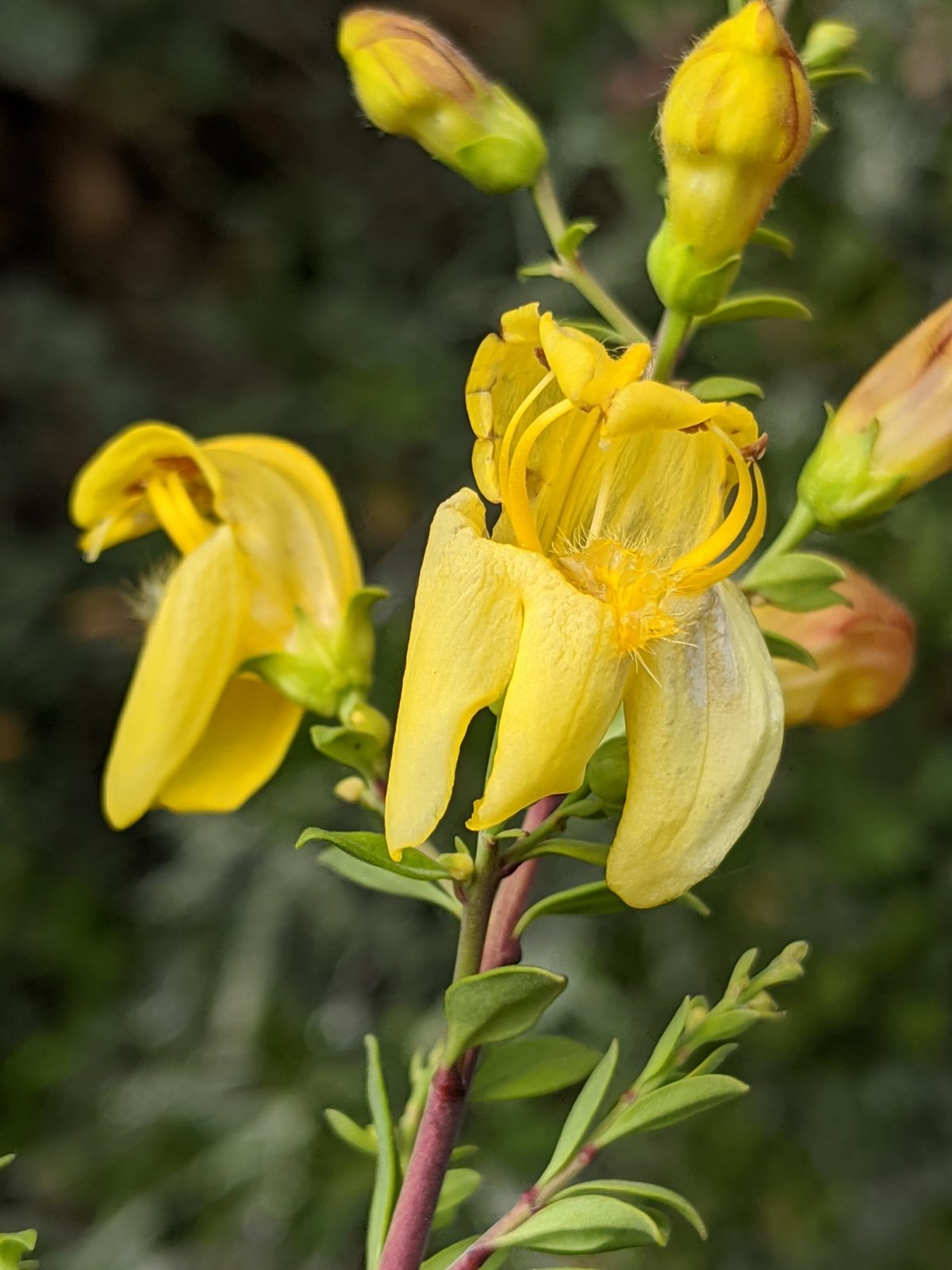
At a glance
- Sun
- Full sun; tolerates light shade, usually with fewer flowers.
- Water
- Water regularly during establishment. Once established, water during prolonged dry spells, allowing the soil surface to dry between waterings.
- Soil
- Well-drained soil of moderate fertility; tolerates chalk, loam and sandy soils. Avoid heavy soil that stays wet through winter.
- Height
- 2-3 ft (0.6-0.9 m)
- Spread
- 1.5-2 ft (0.45-0.6 m)
- Flowers
- Summer to mid-autumn, sometimes until frost; deep garnet-red tubular flowers with paler, streaked throats.
- Foliage
- Narrow, lance-shaped green leaves on upright, branching stems; evergreen in mild winters but partly or fully deciduous in colder conditions.
- Growth
- Moderate
- Care needed
- Medium
The year at a glance
- Pollinators
- Deer resistant
- Drought tolerant
- Heat tolerant
- Low allergen
| J | F | M | A | M | J | J | A | S | O | N | D | |
|---|---|---|---|---|---|---|---|---|---|---|---|---|
| Flowers | ||||||||||||
| Plant |
Northern hemisphere months. In Australia, shift them by six.
- Difficulty
- Moderate
- Toughness
- Fairly tough
Will it suit your garden?
Pick your zone, country, light and whether you have pets.
Full sun is 6 or more hours of direct sun a day, part shade 3 to 6 hours, shade under 3.
How it grows
Planting day
1 ft (0.3 m)
After 1 year
1.5 ft (0.45 m)
After 2 years
2 ft (0.6 m)
After 3 years
2.5 ft (0.75 m)
full size
About 3 years to full size.
From a typical nursery size, at an average rate for this kind of plant. A rule of thumb, not a forecast.
Good to know
- Cats and dogs
- Safe
- Growth rate
- Moderate
Care
Jobs through the year
- WaterApr–May, Sep–Oct, every 14 days
- Water established plants only during prolonged dry spells; water new plants more often without keeping soil soggy.
- WaterJun–Aug, every 7 days
- In extended dry weather, water deeply at soil level and let the surface dry between waterings.
- FeedApr–May
- Apply a light balanced feed only if growth is weak; avoid excess nitrogen.
- MulchApr–May
- Use a light gravel mulch where winter damp is a problem, keeping the crown clear.
- PruneApr–May
- Once strong new shoots appear and severe frost risk has passed, cut old stems back to healthy growth.
- DeadheadJun–Oct, every 7 days
- Remove spent flower spikes just above a leafy side shoot.
- ProtectJan–Mar, Oct–Dec
- Leave stems standing, clear leaves from the crown and protect from winter wet and hard frost; zone 6 needs sheltered overwintering.
- ProtectApr–May
- Inspect new shoots for slugs and snails and use targeted controls if needed.
- Plant in spring in colder districts so roots establish before winter.
- Water at soil level during establishment and extended drought; avoid persistently soggy soil.
- Apply a light dressing of balanced fertiliser in spring only if growth is weak; rich feeding encourages floppy stems.
- Keep mulch away from the crown; use gravel around the base where winter damp is a problem.
- Take summer cuttings as insurance against winter losses and to replace ageing plants.
Pruning. Leave the old stems standing through winter for some frost protection. In spring, once strong new shoots appear near the base, cut old stems back to healthy growth; during flowering, remove spent spikes just above a leafy side shoot.
Through the year
- Early spring
- Check for winter damage, but delay hard pruning until healthy new shoots are visible.
- Mid-spring
- Cut back old stems to new growth and plant young plants after the risk of severe frost has passed.
- Early summer
- Take non-flowering shoot cuttings and water new plantings during dry weather.
- Summer
- Remove faded flower spikes regularly to encourage further flowering.
- Autumn
- Leave healthy stems standing and clear fallen leaves away from the crown.
- Winter
- Keep rooted backup cuttings in a bright, frost-free place and protect outdoor plants from waterlogged conditions.
In the garden
- Plant in small groups through the middle of a sunny mixed border for repeated wine-red colour.
- Combine with silver-leaved plants and ornamental grasses for contrasting foliage and loose, upright structure.
- Use beside paths or terraces where the flowers can be seen closely, allowing room for stems to lean outward.
- Grow in a large, freely draining container for summer and autumn colour; protect the pot from severe winter frost.
Garden styles it suits: Cottage garden, English country, Modern rustic, Pollinator garden, Dry gravel garden and Hot border.
Plant it with: Catmint, Lavender, Yarrow, Salvia, Lamb's ears and Feather reed grass.
Wildlife: Flowers provide nectar for bees and, in North America, hummingbirds. Some bees reach the nectar by biting through the base of the flower tube.
Problems to watch for
- Winter crown or root rot: improve drainage, keep mulch off the crown and avoid planting in low, wet ground.
- Frost damage: leave stems standing until spring, choose a sheltered position and keep backup cuttings under cover in colder districts.
- Slugs and snails on young shoots: inspect new growth and use barriers, hand removal or locally approved controls.
- Aphids on soft tips: wash off small colonies with water and encourage ladybirds and other predators.
Safety
Not known to be toxic to people, cats, dogs or horses, and no particular part is recognised as poisonous. Cultivar-specific safety information is limited; grow it as an ornamental, not as food.
Easily confused with
Raven penstemon (Penstemon 'Raven')
Has very dark purple flowers with contrasting pale throats; Garnet has wine-red rather than purple flowers.
Common foxglove (Digitalis purpurea)
Has broad, softly hairy leaves in a basal rosette and taller spikes of larger, hanging bells; Garnet has narrow leaves along branching stems. Foxglove is highly toxic.
The name
Penstemon comes from Greek words meaning 'five' and 'stamen', referring to the flower's four fertile stamens and one sterile stamen.
Propagation. Root softwood or semi-ripe cuttings from non-flowering shoots in late spring or summer, using a free-draining medium. Keep young plants protected through their first winter; seed will not reliably reproduce this cultivar.
Checked against open data
- Accepted botanical name
- Penstemon
Sources: GBIF (CC BY 4.0). The care and design notes are LandscapeGPT's own.
See it in your own yard.
Upload a photo of your yard and see it redesigned with plants that suit your climate, each checked against your zone.