Georgia Blue speedwell
Veronica peduncularis 'Georgia Blue'. Family Plantaginaceae. Groundcover.
Also called Veronica umbrosa 'Georgia Blue', Creeping speedwell 'Georgia Blue'.
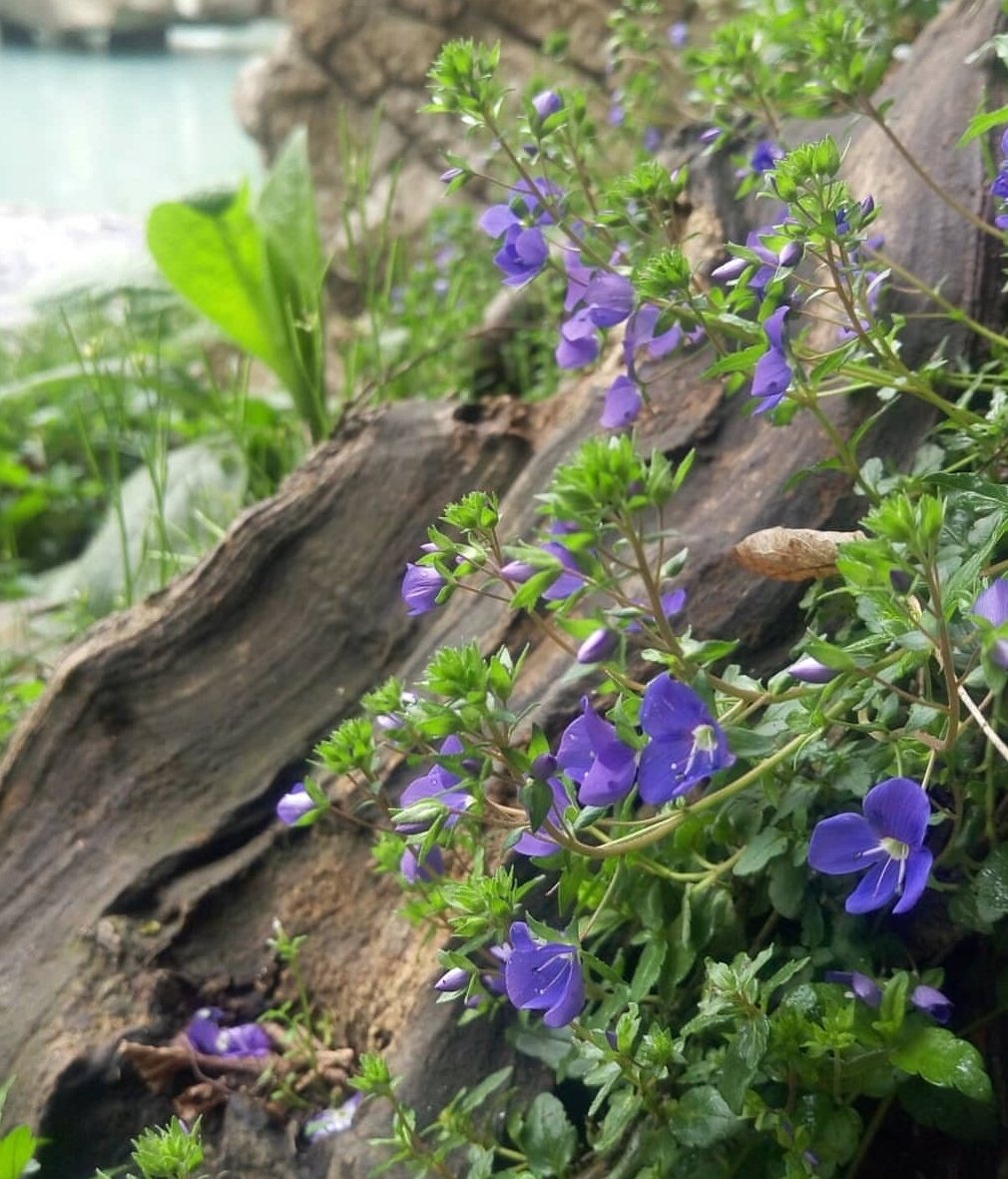
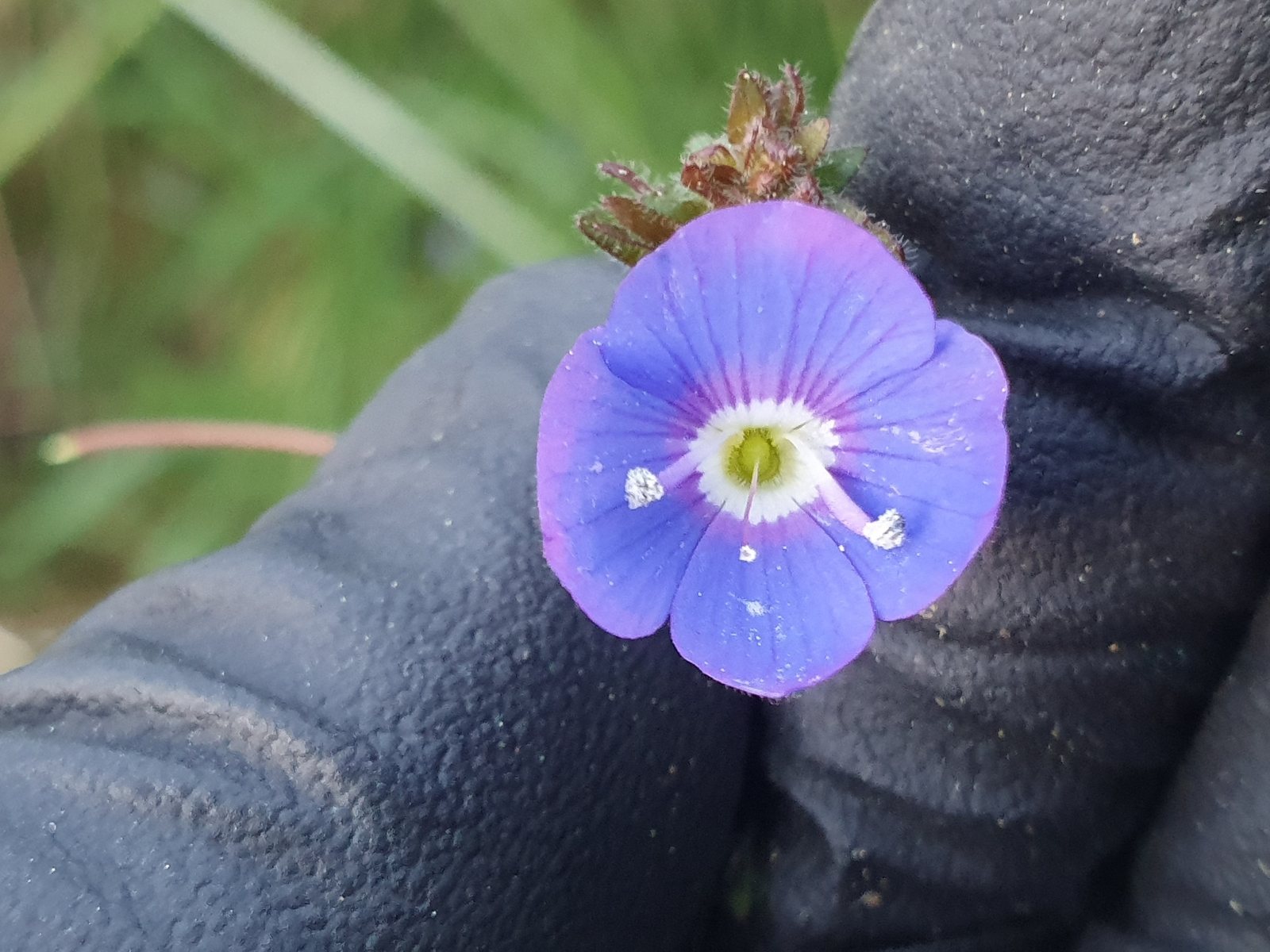
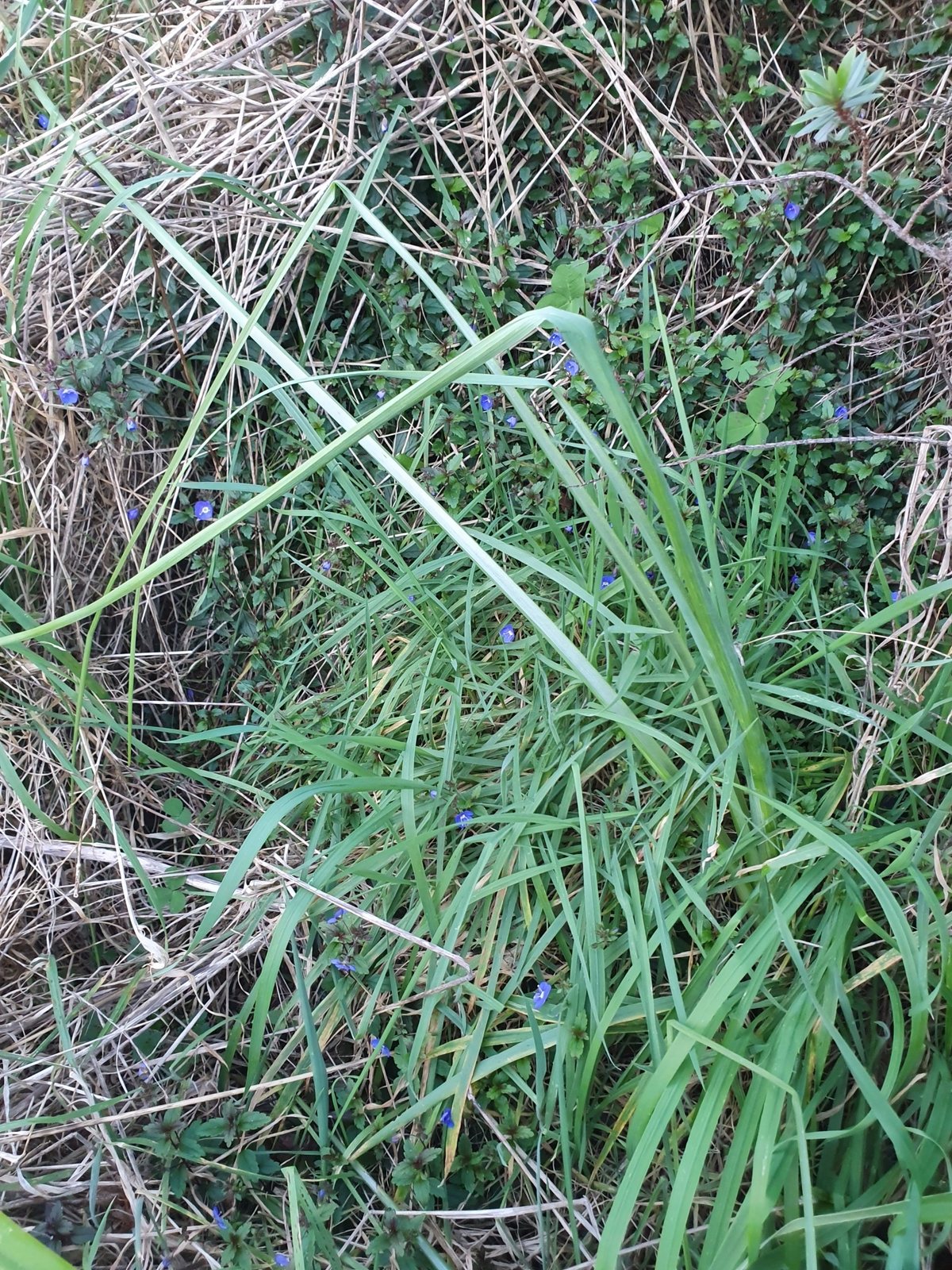
Georgia Blue speedwell is a low, spreading perennial grown for its clear blue spring flowers and small leaves that turn bronze-purple in cold weather. It makes a loose carpet along paths, over low walls and beneath spring bulbs, keeping its foliage in mild winters but sometimes dying back in colder gardens.
At a glance
- Sun
- Full sun to partial shade; afternoon shade helps in hot climates.
- Water
- Water regularly while establishing, then during prolonged dry spells. Established plants tolerate some drought but flower and fill out better with occasional deep watering.
- Soil
- Well-drained soil with average fertility; tolerates sandy, loamy or gritty soils. Avoid ground that stays wet in winter.
- Height
- 0.25-0.5 ft (0.08-0.15 m)
- Spread
- 1-2 ft (0.3-0.6 m)
- Flowers
- Bright blue flowers with small white centres in late winter to spring, sometimes followed by scattered flowers later in the year.
- Foliage
- Small, oval, toothed green leaves on trailing stems; often bronze-purple in winter. Evergreen in mild climates and semi-evergreen or deciduous in colder ones.
- Growth
- Moderate to fast where soil stays lightly moist.
- Care needed
- Low
The year at a glance
- Pollinators
- Drought tolerant
- Heat tolerant
- Low allergen
| J | F | M | A | M | J | J | A | S | O | N | D | |
|---|---|---|---|---|---|---|---|---|---|---|---|---|
| Flowers | ||||||||||||
| Plant |
Northern hemisphere months. In Australia, shift them by six.
- Difficulty
- Easy
- Toughness
- Fairly tough
Will it suit your garden?
Pick your zone, country, light and whether you have pets.
Full sun is 6 or more hours of direct sun a day, part shade 3 to 6 hours, shade under 3.
How it grows
Planting day
0.1 ft (0.03 m)
After 1 year
0.2 ft (0.07 m)
After 2 years
0.4 ft (0.12 m)
full size
About 2 years to full size.
From a typical nursery size, at an average rate for this kind of plant. A rule of thumb, not a forecast.
Good to know
- Cats and dogs
- Safe
- Growth rate
- Fast
Care
Jobs through the year
- WaterMar–May, Sep–Oct, every 14 days
- Water established mats only in prolonged dry weather; water new divisions more often.
- WaterJun–Aug, every 10 days
- Water deeply during extended dry spells without leaving the soil soggy.
- FeedMar
- Apply a thin compost dressing; avoid rich feeding or burying low stems.
- PruneMar
- Remove winter-damaged stems once fresh shoots reveal living growth.
- PruneMay–Jun
- Lightly shear after the main flowering flush and trim wandering stems.
- DivideMar–Apr, Sep
- Divide crowded or thin-centred mats, replanting healthy rooted outer sections.
- ProtectJan–Feb, Nov–Dec
- Keep fallen leaves and heavy mulch off the mat and maintain free drainage.
- Water newly planted clumps whenever the upper soil begins to dry, without leaving the ground soggy.
- Give established plants a deep watering during prolonged drought.
- Apply a thin layer of compost in spring; rich feeding is usually unnecessary.
- Keep fallen leaves and heavy mulch off the low stems, especially in winter.
- Lift and divide crowded or thin-centred patches in spring or early autumn.
Pruning. Lightly shear after the main spring flowering to remove spent flowers and encourage compact growth. Trim back wandering stems and remove winter-damaged growth once new shoots appear.
Through the year
- Late winter
- Clear fallen leaves from the mat and check that water is draining away freely.
- Early spring
- Remove dead stems as fresh growth appears and apply a thin dressing of compost.
- Spring
- Plant or divide clumps, watering regularly until roots establish.
- Late spring
- Lightly shear after the main flush of flowers and trim edges where needed.
- Summer
- Water during extended dry weather and check for mildew in crowded patches.
- Early autumn
- Divide or replant rooted pieces while the soil is still warm; avoid late planting where winters are severe.
In the garden
- Edge sunny or partly shaded paths with a low ribbon of blue spring flowers.
- Plant beneath dwarf daffodils and other spring bulbs to cover bare soil around their stems.
- Let trailing stems spill over low retaining walls or the edges of raised beds.
- Use between rocks or beside stepping stones where drainage is good and foot traffic is minimal.
Garden styles it suits: Cottage garden, English country, Dry gravel garden, Alpine rock garden, Blues and silvers and Low-maintenance.
Plant it with: Dwarf daffodils, Crocuses, Grape hyacinths, Candytuft, Hellebores and Dwarf bearded irises.
Wildlife: The flowers provide early nectar and pollen for visiting bees and other small insects.
Problems to watch for
- Root or crown rot in wet soil: improve drainage or move plants to a raised, gritty bed; discard badly rotted clumps.
- Powdery mildew in crowded or stressed growth: thin the mat, improve airflow and water the soil during drought.
- Sparse flowering in deep shade: move to a brighter position with several hours of direct sun.
- A thin or woody centre as patches age: divide healthy outer sections and replant them.
Safety
Not known to be toxic to people, cats, dogs or horses. No particular plant part is recognised as poisonous, but species-specific safety information is limited and it should not be treated as an edible plant.
Easily confused with
Creeping speedwell (Veronica filiformis)
Has very fine creeping stems, rounder leaves and pale blue flowers held singly on slender stalks; it commonly spreads through lawns.
Prostrate speedwell (Veronica prostrata)
Has narrower leaves and flowers packed into short, upright spikes rather than the loose flower clusters of Georgia Blue.
Germander speedwell (Veronica chamaedrys)
Usually grows taller, with more upright stems bearing two distinct lines of hairs and larger, more deeply toothed leaves.
The name
The cultivar name 'Georgia Blue' refers to its origin in Georgia in the Caucasus, not the US state.
Propagation. Divide established patches in spring or early autumn, or detach rooted stems and pot them up. Softwood cuttings also root readily. Use vegetative propagation to preserve the cultivar; seedlings may differ.
Checked against open data
- Accepted botanical name
- Veronica peduncularis
- Native range
- Krym, North Caucasus, South European Russi, Transcaucasus, Turkey and Ukraine.
- Measured
- Average height 24 cm.
Sources: GBIF (CC BY 4.0) and Trefle (CC BY 4.0). The care and design notes are LandscapeGPT's own.
See it in your own yard.
Upload a photo of your yard and see it redesigned with plants that suit your climate, each checked against your zone.