Geraldton wax
Chamelaucium uncinatum. Family Myrtaceae. Shrub.
Also called Geraldton waxflower, Waxflower.
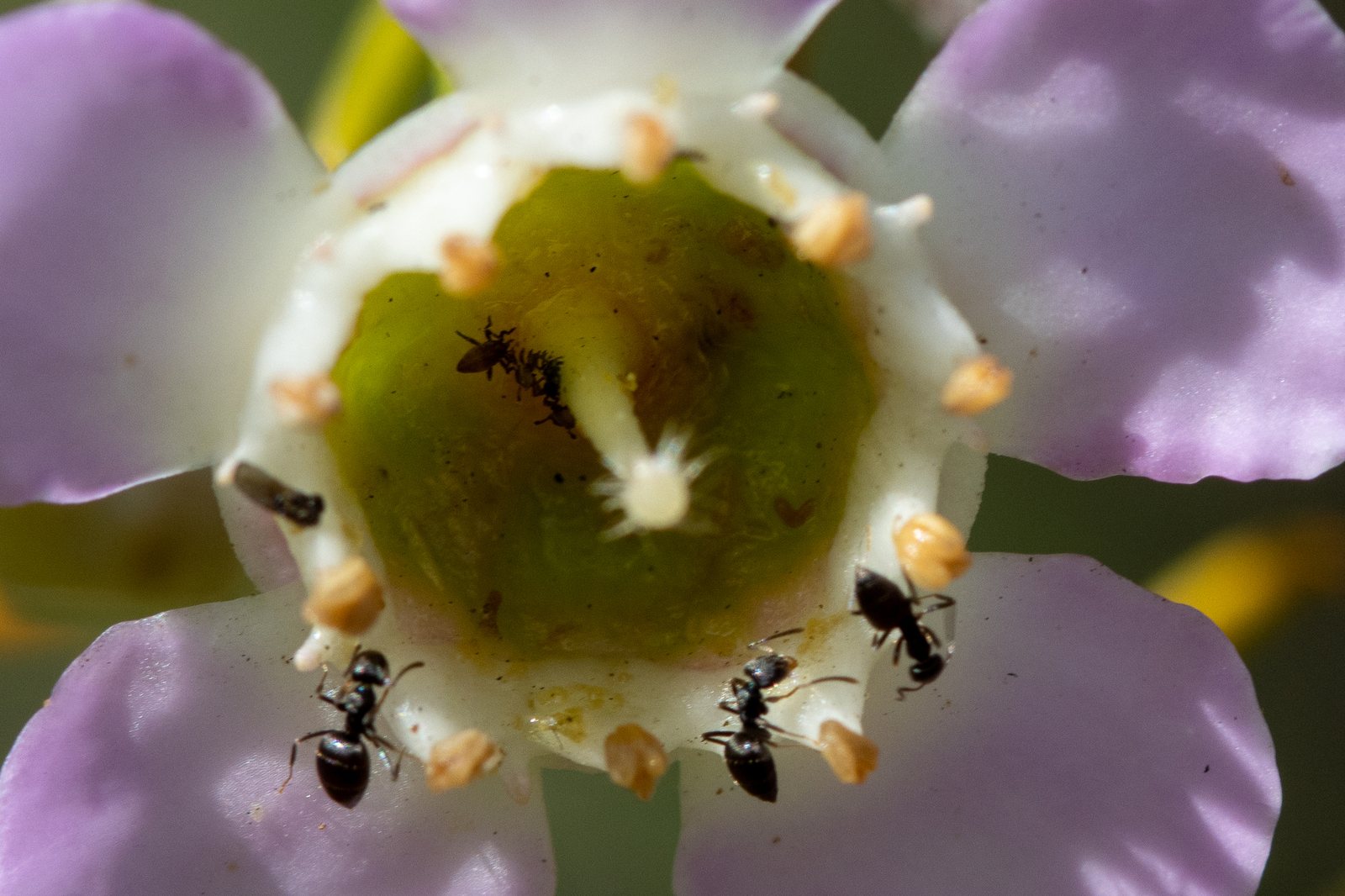
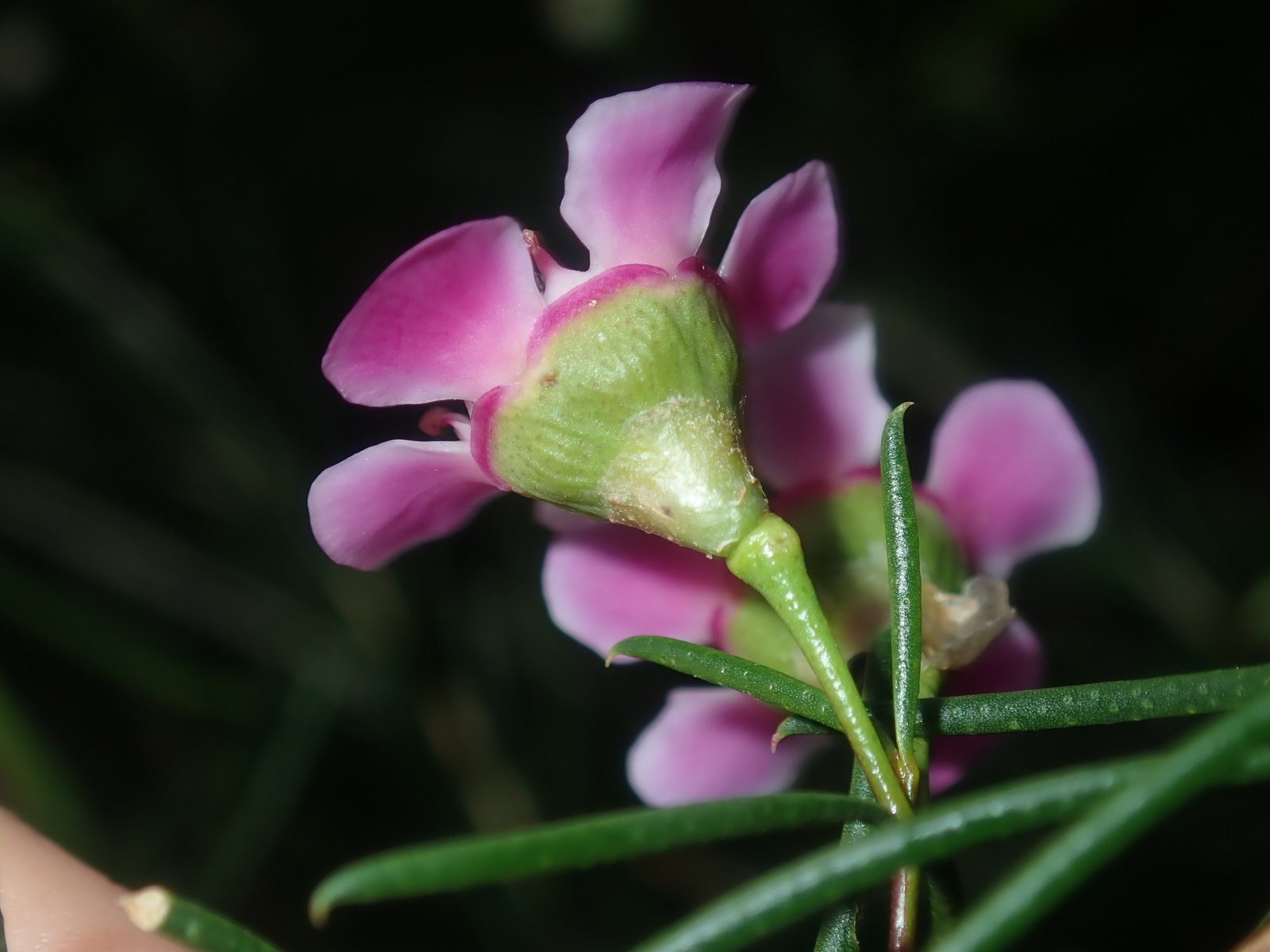
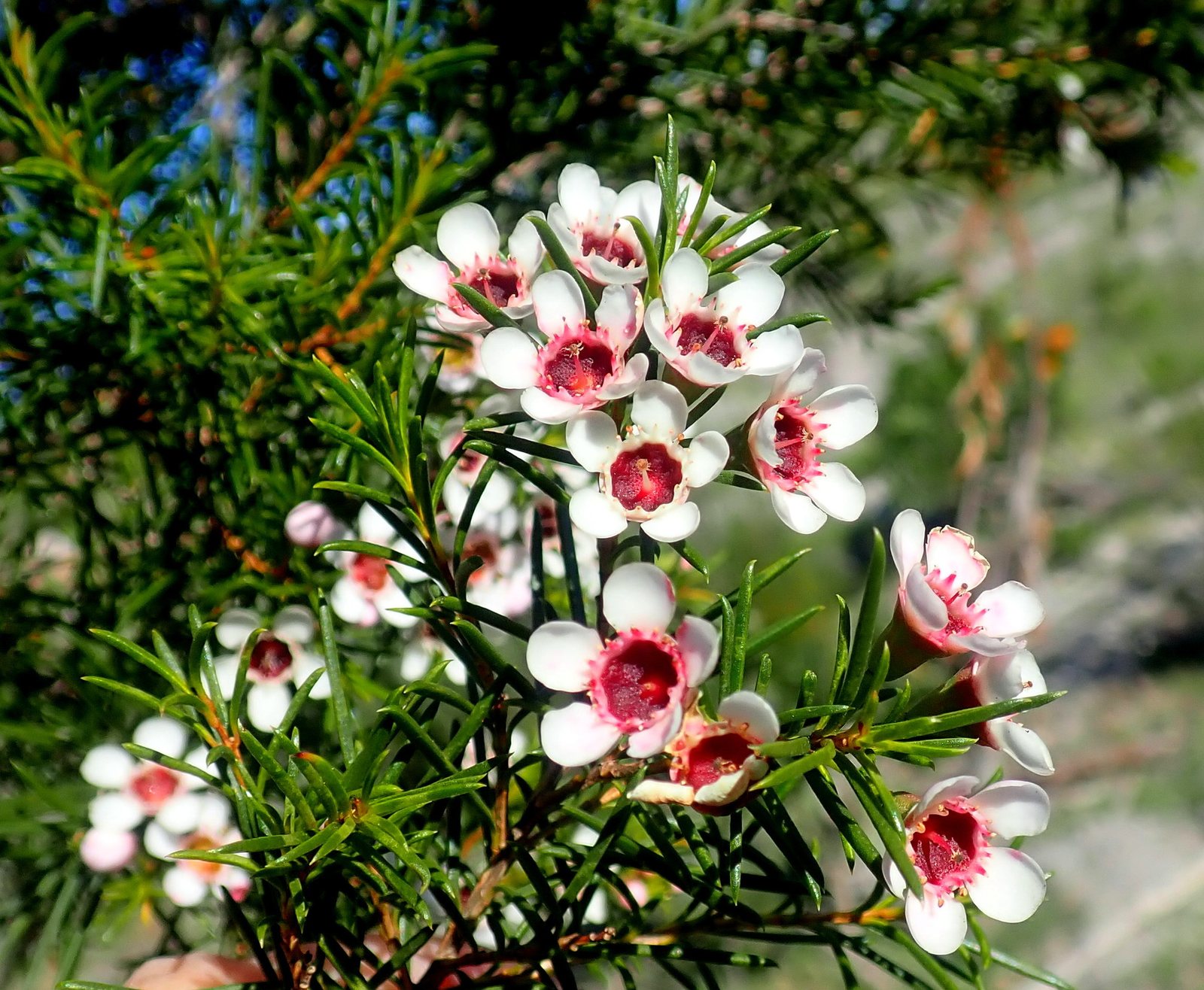
Geraldton wax is an evergreen shrub from Western Australia, grown for its airy, needle-leaved branches and masses of waxy flowers. It makes a useful flowering screen and provides long-lasting cut stems in sunny gardens with excellent drainage. Outside mild-winter areas, grow it in a container that can be moved into bright, frost-free shelter.
At a glance
- Sun
- Full sun; a little light shade is tolerated, but reduces flowering.
- Water
- Water regularly while establishing, then deeply during prolonged dry spells. Established plants tolerate drought; persistently wet roots are a greater risk than brief dryness.
- Soil
- Very well-drained sandy or gravelly soil, preferably slightly acidic to neutral. Avoid heavy, waterlogged ground and rich, heavily fertilised soil.
- Height
- 6-10 ft (1.8-3 m)
- Spread
- 6-10 ft (1.8-3 m)
- Flowers
- Late winter through spring, sometimes extending into early summer; white, pale pink or deeper pink flowers, often with darker centres.
- Foliage
- Fine, narrow, evergreen leaves with hooked tips; aromatic when crushed.
- Growth
- Moderate to fast in suitable conditions.
- Care needed
- Medium
The year at a glance
- Pollinators
- Deer resistant
- Drought tolerant
- Heat tolerant
- Wildlife
- Low allergen
- Fragrant
| J | F | M | A | M | J | J | A | S | O | N | D | |
|---|---|---|---|---|---|---|---|---|---|---|---|---|
| Flowers | ||||||||||||
| Plant |
Northern hemisphere months. In Australia, shift them by six.
- Difficulty
- Hard
- Toughness
- Needs looking after
Will it suit your garden?
Pick your zone, country, light and whether you have pets.
Full sun is 6 or more hours of direct sun a day, part shade 3 to 6 hours, shade under 3.
How it grows
Planting day
1.6 ft (0.5 m)
After 1 year
3 ft (0.98 m)
After 2 years
5 ft (1.5 m)
After 3 years
6 ft (1.9 m)
After 5 years
8 ft (2.4 m)
full size
About 4 years to full size.
From a typical nursery size, at an average rate for this kind of plant. A rule of thumb, not a forecast.
Good to know
- Cats and dogs
- Safe
- Native to
- Australia
- Growth rate
- Fast
Care
Jobs through the year
- WaterApr–May, Sep–Oct, every 21 days
- For established ground plantings, water only when dry; young plants and pots need more.
- WaterJun–Aug, every 14 days
- Water established ground plantings deeply during prolonged drought; check pots more often.
- WaterJan–Mar, Nov–Dec, every 21 days
- For sheltered containers only, check soil and water sparingly without letting roots dry completely.
- FeedMar–Apr
- Feed lightly with low-phosphorus fertiliser if weak or container-grown; avoid manure.
- PruneMay–Jun
- After flowering, shorten leafy shoots by up to one-third; avoid bare old wood.
- MulchMay
- Apply a thin mulch clear of the stem base and keep the crown exposed.
- ProtectJan–Apr, Oct–Dec
- Not reliably hardy in zones 6–7; overwinter in bright, frost-free shelter with excellent drainage.
- Plant in spring where winters are cool; in mild, dry-summer climates, plant in autumn.
- Water the root zone deeply during establishment, allowing the surface soil to dry between waterings.
- Feed lightly in spring with a low-phosphorus fertiliser suitable for Australian native plants; avoid manure and heavy feeding.
- Keep mulch away from the stem base and never bury the crown.
- Use a free-draining potting mix in containers and move plants into bright, frost-free shelter before freezing weather.
Pruning. Prune just after flowering, shortening leafy shoots by up to one-third to keep the shrub bushy. Avoid cutting into bare old wood, which may not reshoot reliably.
Through the year
- Spring
- Plant after frost risk has passed in cooler regions, and water new plants thoroughly.
- Spring
- Apply a light dose of low-phosphorus fertiliser if growth is weak or the plant is container-grown.
- Late spring
- Prune when flowering finishes; adjust the timing if your plant flowers later.
- Summer
- Check young plants and pots during dry weather; water deeply rather than giving frequent small amounts.
- Autumn
- Plant in mild-winter regions and check that winter rain can drain freely from the root zone.
- Winter
- Protect from frost and keep sheltered container plants on the dry side without letting the root ball dry out completely.
In the garden
- Use as a loose flowering screen along a sunny boundary where there is room for its spreading branches.
- Combine with grevilleas and kangaroo paws in a free-draining Australian native border.
- Plant among gravel, rocks and drought-tolerant shrubs for fine texture and a long spring display.
- Grow in a large container beside a sunny terrace, with winter shelter available in colder climates.
Garden styles it suits: Australian native, Mediterranean, Coastal, Dry gravel garden, Desert / xeriscape and Pollinator garden.
Plant it with: Kangaroo paw, Coastal rosemary, Grevillea, Leucadendron and Lavender.
Wildlife: The flowers provide nectar and pollen for bees and other visiting insects. Dense branching can offer shelter for small birds.
Problems to watch for
- Root rot and sudden collapse: avoid waterlogged soil, improve drainage before planting and do not leave pots standing in water.
- Frost damage: choose a sheltered position and protect young plants; overwinter containers under glass where freezes are likely.
- Yellowing leaves: check for poor drainage, alkaline soil or excessive feeding before adding fertiliser; use a low-phosphorus feed only when needed.
- Sparse flowering and straggly growth: provide more sun, avoid high-nitrogen feeding and prune lightly after flowering.
Safety
Not known to be toxic to people, cats, dogs or horses. Species-specific safety information is limited, particularly for horses; it is not a food plant, and eating foliage or flowers should be discouraged.
Where it spreads. Has escaped cultivation in parts of southern Australia, including South Australia and areas of Western Australia outside its natural range. Check local environmental-weed advice before planting near native bushland.
Easily confused with
Tea tree (Leptospermum scoparium)
Tea tree has broader, flat, pointed leaves rather than Geraldton wax's narrow, almost needle-like leaves with hooked tips.
Thryptomene (Thryptomene saxicola)
Thryptomene has much smaller flowers and short, oval leaves rather than long, narrow, hooked leaves.
The name
Geraldton wax refers to the Western Australian city and the flowers' waxy texture, while uncinatum means hooked, describing the leaf tips.
Propagation. Take semi-ripe cuttings from healthy, non-flowering shoots in summer and root them in a free-draining propagation mix under humid conditions. Seed is slower and less predictable; named cultivars should be propagated from cuttings to retain their characteristics.
Checked against open data
- Accepted botanical name
- Chamelaucium uncinatum
- Native range
- Western Australia.
- Measured
- Average height 225 cm.
Sources: GBIF (CC BY 4.0) and Trefle (CC BY 4.0). The care and design notes are LandscapeGPT's own.
See it in your own yard.
Upload a photo of your yard and see it redesigned with plants that suit your climate, each checked against your zone.