Giant coneflower
Rudbeckia maxima. Family Asteraceae. Perennial.
Also called Great coneflower, Cabbage-leaf coneflower.
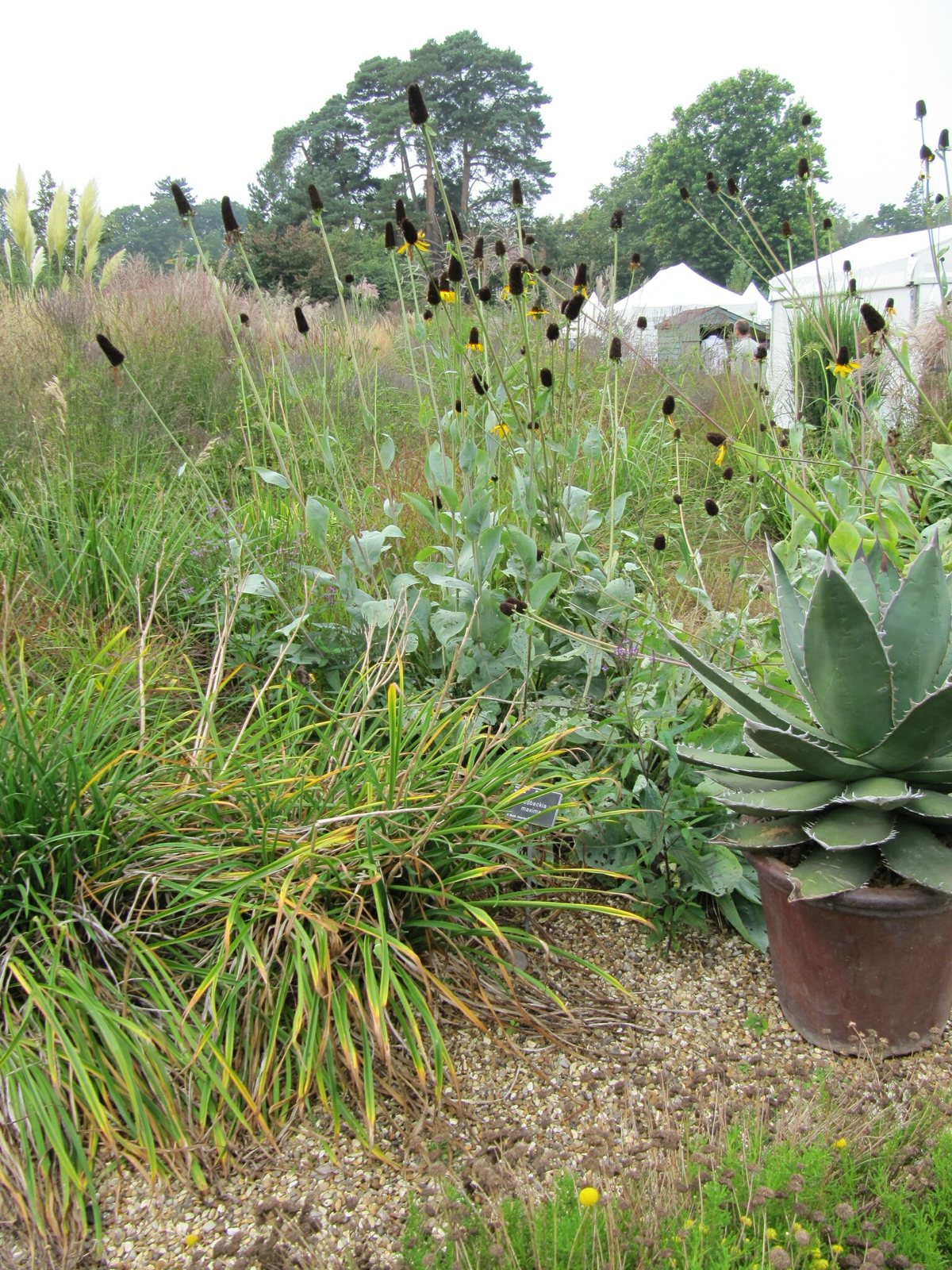
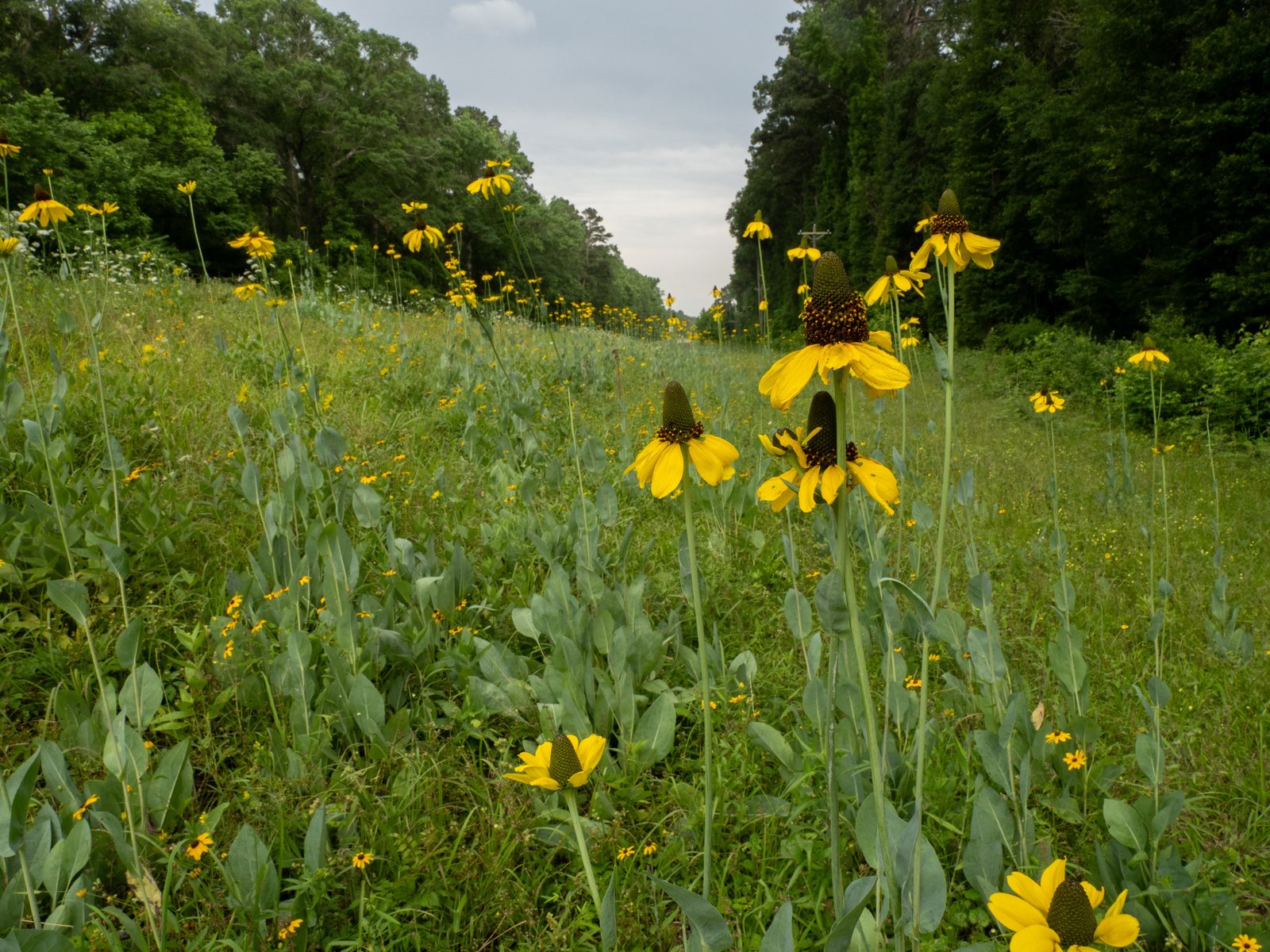
Giant coneflower is a tall, clump-forming perennial native to the south-central United States, grown for its large blue-green leaves and yellow flowers with unusually tall, dark cones. Its mostly bare flowering stems rise well above the foliage, giving borders and prairie-style plantings height without forming a solid screen.
At a glance
- Sun
- Full sun is best; tolerates light shade, but stems may lean and flowering may be reduced.
- Water
- Prefers consistent moisture, especially while establishing and during spring growth. Established clumps tolerate some drought, but prolonged dryness can brown the lower leaves.
- Soil
- Average to rich soil that holds moisture but drains freely; tolerates clay if it is not persistently waterlogged.
- Height
- 5-7 ft (1.5-2.1 m)
- Spread
- 2-3 ft (0.6-0.9 m)
- Flowers
- Early to midsummer, sometimes continuing into late summer; drooping yellow rays surround tall, dark brown cones.
- Foliage
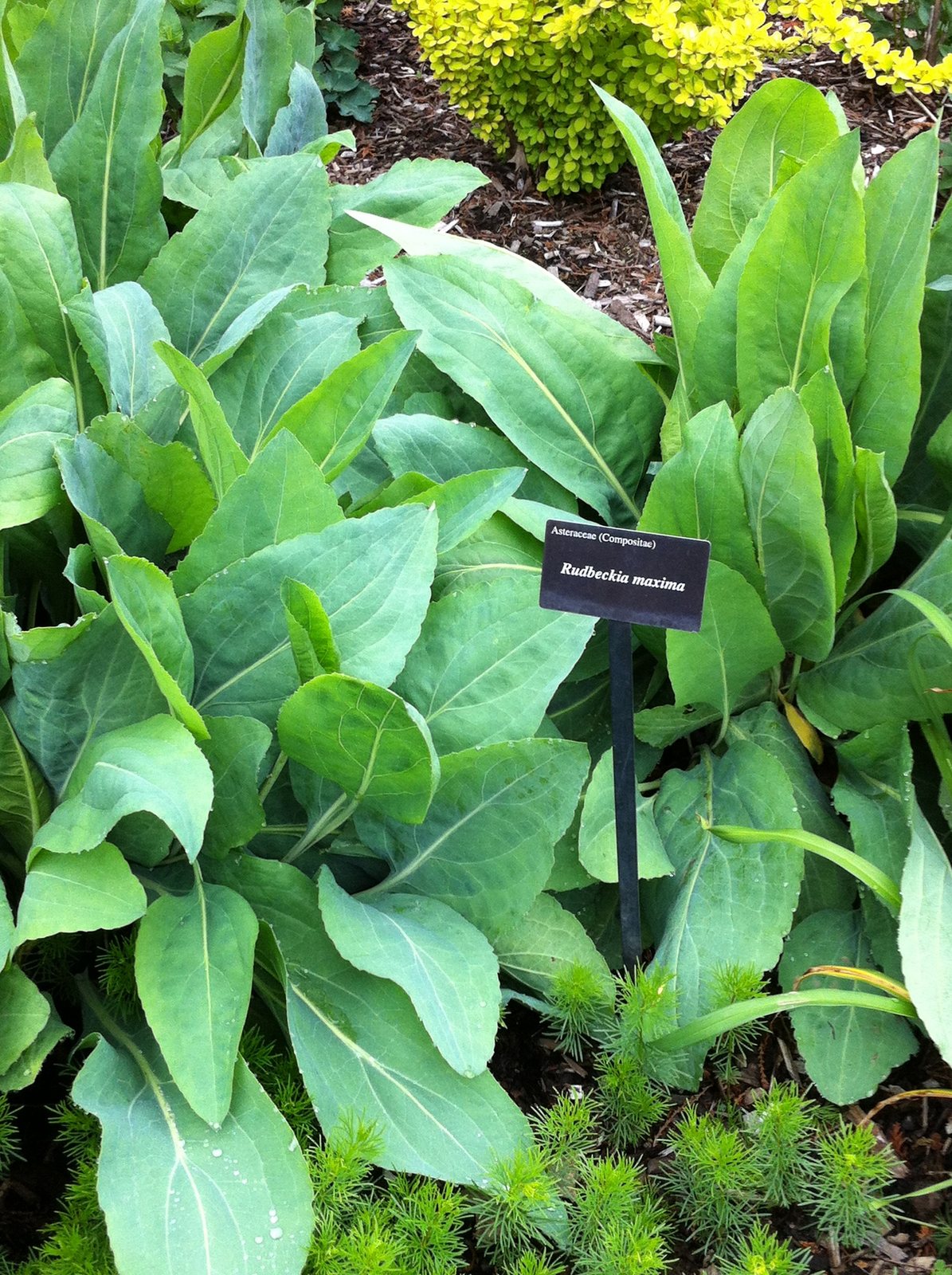
- Large, smooth, waxy blue-green leaves form a bold basal clump, with relatively few leaves on the flowering stems.
- Growth
- Moderate; allow several seasons for a substantial clump.
- Care needed
- Low
The year at a glance
- Pollinators
- Deer resistant
- Cold hardy
- Heat tolerant
- Wildlife
- Low allergen
| J | F | M | A | M | J | J | A | S | O | N | D | |
|---|---|---|---|---|---|---|---|---|---|---|---|---|
| Flowers | ||||||||||||
| Fruit | ||||||||||||
| Plant |
Northern hemisphere months. In Australia, shift them by six.
- Difficulty
- Easy
- Toughness
- Fairly tough
Will it suit your garden?
Pick your zone, country, light and whether you have pets.
Full sun is 6 or more hours of direct sun a day, part shade 3 to 6 hours, shade under 3.
How it grows
Planting day
1 ft (0.3 m)
After 1 year
2.6 ft (0.8 m)
After 2 years
4 ft (1.3 m)
After 3 years
6 ft (1.8 m)
full size
About 3 years to full size.
From a typical nursery size, at an average rate for this kind of plant. A rule of thumb, not a forecast.
Good to know
- Cats and dogs
- Safe
- Native to
- the US
- Growth rate
- Moderate
Care
Jobs through the year
- WaterApr–May, Sep–Oct, every 14 days
- Deep-water established clumps when rain is insufficient; water new plants more often.
- WaterJun–Aug, every 7 days
- Soak during dry weather to maintain moisture and prevent lower leaves browning.
- PruneFeb–Mar
- Cut old flowering stems near ground level without damaging emerging leaves.
- DivideMar–Apr
- Divide congested clumps when growth or flowering declines; water divisions thoroughly.
- MulchMar–Apr
- Top-dress with a thin compost layer and mulch for moisture, keeping the crown clear.
- ProtectMay
- Install discreet supports before flowering in windy or exposed positions.
- Water deeply during the first growing season and during prolonged dry spells.
- Spread a thin layer of compost around the clump in spring; avoid heavy nitrogen feeding.
- Mulch to conserve moisture, keeping mulch clear of the crown.
- Use discreet supports before flowering if the site is windy or stems begin to lean.
- Divide congested clumps in spring when growth or flowering declines.
Pruning. Leave the seedheads standing through autumn and winter for birds and structure. Cut old flowering stems back near ground level in late winter or early spring, taking care not to damage emerging leaves.
Through the year
- Late winter
- Cut down old stems before new growth develops.
- Spring
- Plant or divide clumps, water thoroughly, and apply compost and mulch.
- Late spring
- Install supports in exposed positions before flower stems reach full height.
- Summer
- Water during extended dry weather and check lower leaves for mildew or spotting.
- Autumn
- Leave mature seedheads for birds; collect some seed if you want to raise more plants.
In the garden
- Place at the back of a sunny border, leaving its large basal leaves visible between lower plants.
- Combine with switchgrass and other upright grasses for a loose prairie-style planting.
- Repeat small groups through a large border to create a rhythm of tall flower stems and dark seedheads.
- Use beside a pond or in a moist meadow, above the permanently saturated waterline.
Garden styles it suits: Native meadow, New perennial (prairie), Wildlife garden, Pollinator garden, Architectural minimal and Midwest prairie.
Plant it with: Switchgrass, Little bluestem, Purple coneflower, Blazing star, Bee balm and Joe-Pye weed.
Wildlife: Flowers attract bees, butterflies and other pollinating insects. Goldfinches and other seed-eating birds visit ripe seedheads.
Problems to watch for
- Flopping stems: provide full sun, avoid rich nitrogen feeds, and support plants in windy sites.
- Powdery mildew: allow airflow, water the soil rather than the foliage, and remove badly affected leaves.
- Leaf spots: remove affected debris and avoid overhead watering; established plants usually tolerate minor spotting.
- Crown rot in waterlogged soil: improve drainage or move the plant to a raised position; remove rotting crowns.
Safety
Not known to be toxic to people, cats, dogs or horses. Species-specific safety information is limited; no part is intended as food, and handling may irritate sensitive skin.
Easily confused with
Cutleaf coneflower (Rudbeckia laciniata)
Has deeply divided green leaves and usually greenish-yellow cones, rather than broad, undivided blue-green basal leaves and elongated dark cones.
Black-eyed Susan (Rudbeckia hirta)
Usually much shorter, with hairy green leaves and stems and shorter, rounded flower centres.
Sweet coneflower (Rudbeckia subtomentosa)
Has leafy, branching stems and often lobed lower leaves, rather than the conspicuous blue-green basal leaves and sparsely leafy stems of giant coneflower.
The name
Rudbeckia honours the Swedish botanists Olof Rudbeck the Elder and Younger, while maxima means largest and refers to the plant's imposing size.
Propagation. Divide established clumps in early spring. Sow ripe seed outdoors in autumn, or give spring-sown seed a cold, moist period to improve germination; seedlings may take more than one season to flower.
Checked against open data
- Accepted botanical name
- Rudbeckia maxima
- In the US and Canada
- Native in the lower 48 states.
- Native range
- Arkansas, Louisiana, Oklahoma, South Carolina and Texas.
- Measured
- Soil pH 4 to 7.
Sources: GBIF (CC BY 4.0), USDA PLANTS and Trefle (CC BY 4.0). The care and design notes are LandscapeGPT's own.
See it in your own yard.
Upload a photo of your yard and see it redesigned with plants that suit your climate, each checked against your zone.