Giant feather grass
Celtica gigantea. Family Poaceae. Ornamental grass.
Also called Golden oats, Giant oat grass, Stipa gigantea.
Giant feather grass forms a dense mound of narrow leaves beneath tall, open sprays of oat-like flowers. Gardeners grow it for its golden seed heads, which catch low sunlight and remain attractive well into autumn without blocking views through a border.
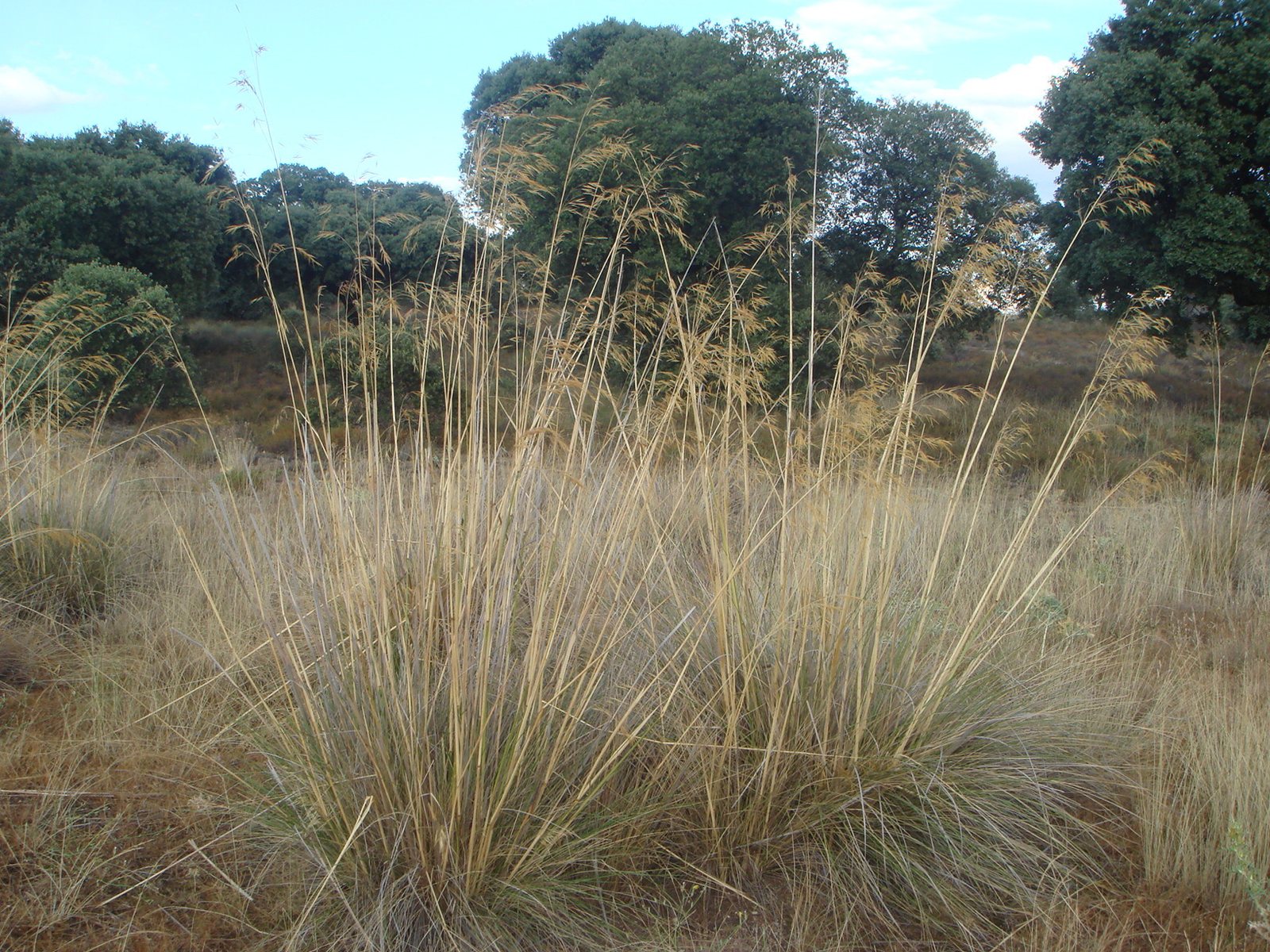
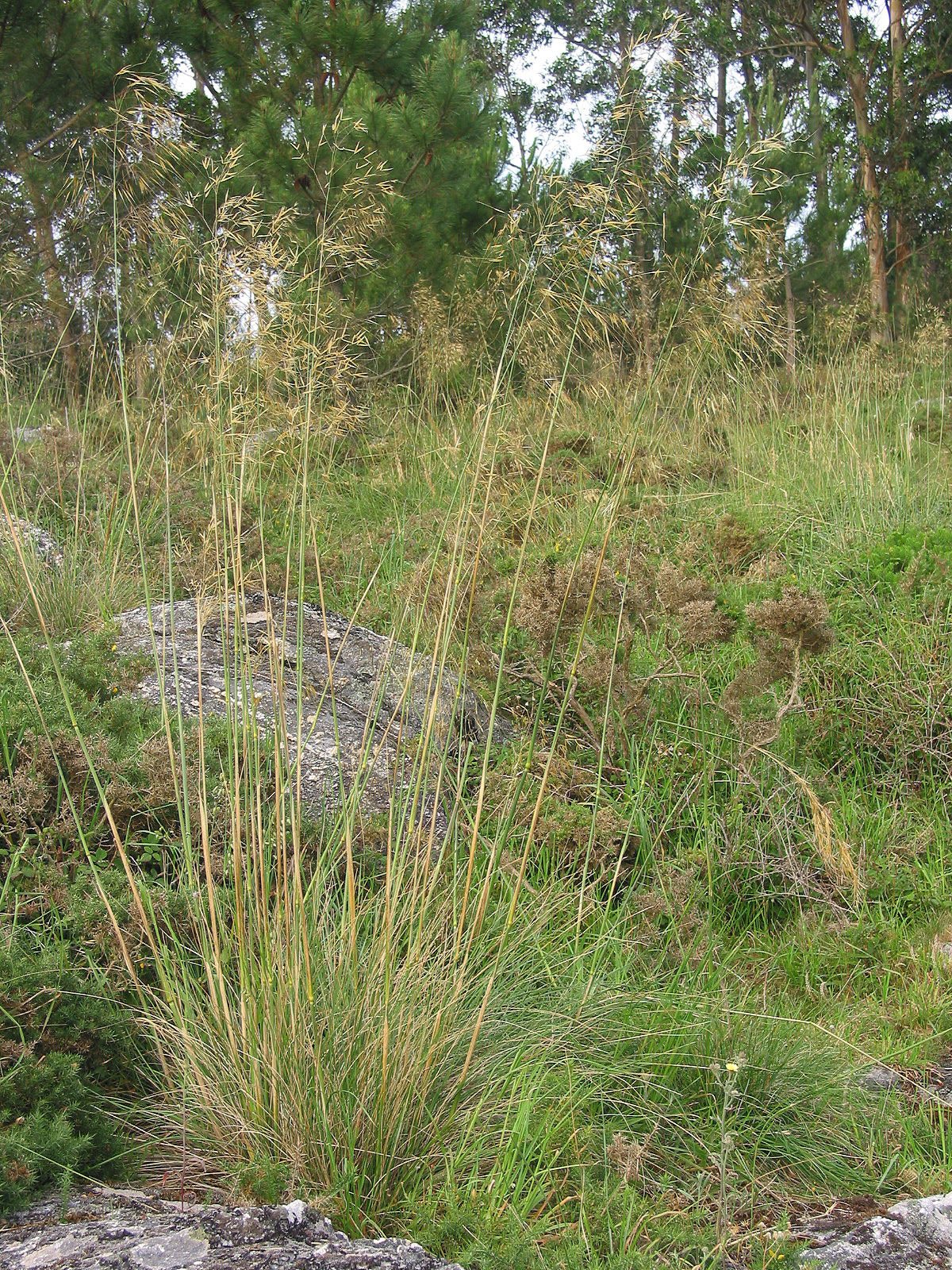
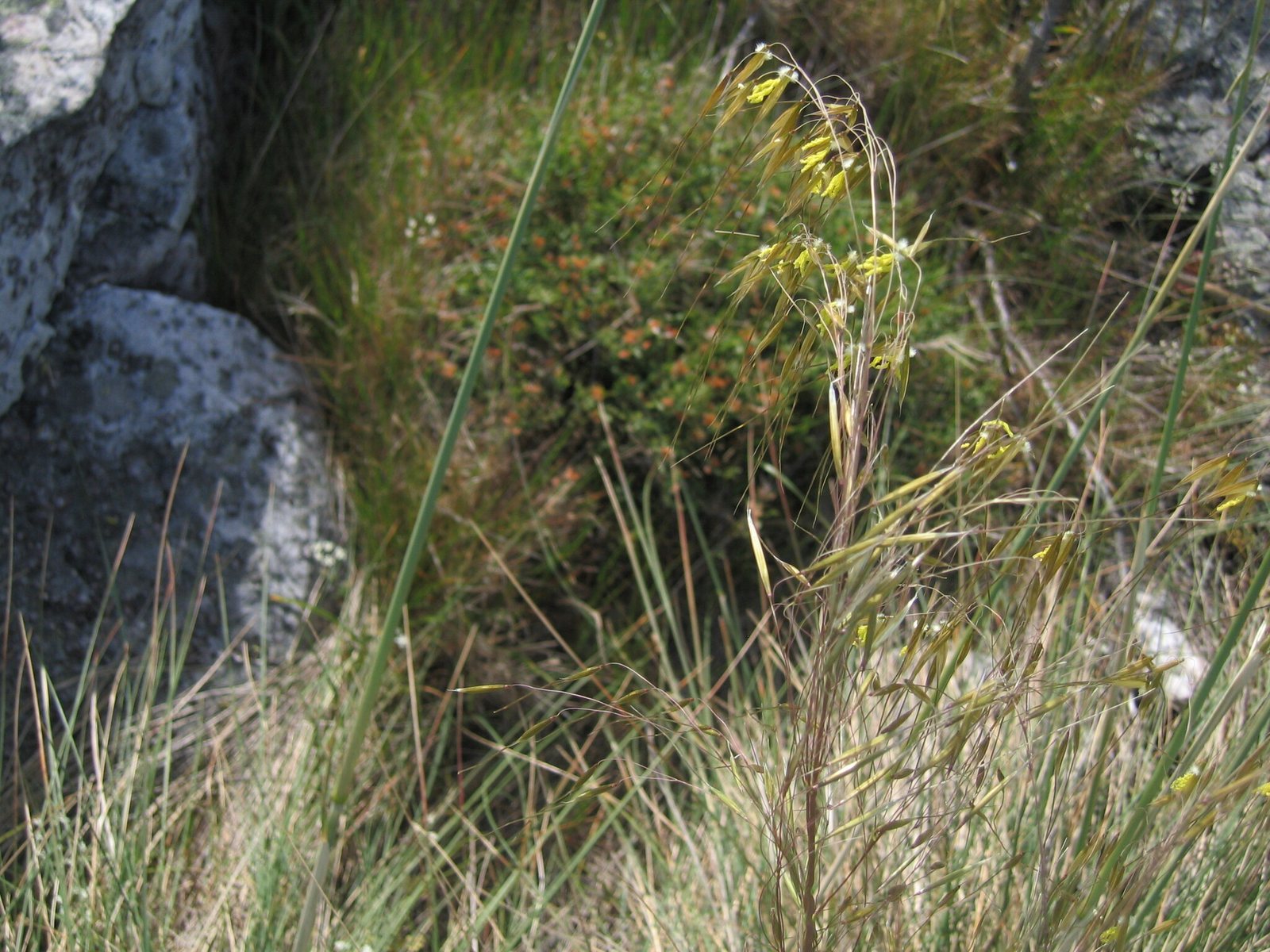
At a glance
- Sun
- Full sun; flowering is weaker and stems may lean in shade.
- Water
- Water regularly during the first growing season, allowing the soil surface to dry between waterings. Established plants tolerate drought and need extra water mainly during prolonged dry spells.
- Soil
- Well-drained soil, including sandy, gravelly or chalky ground. Tolerates a range of pH levels; avoid waterlogged soil, especially in winter.
- Height
- 6-8 ft (1.8-2.4 m) in flower; foliage usually 1.5-2.5 ft (0.45-0.75 m)
- Spread
- 2-4 ft (0.6-1.2 m)
- Flowers
- Late spring to midsummer: airy sprays of oat-like spikelets, initially greenish with purple tones, becoming straw-gold and persisting into autumn.
- Foliage
- Narrow, arching, grey-green leaves form a dense basal mound. Usually evergreen in mild climates, but foliage may brown in cold winters.
- Growth
- Moderate; allow two or three growing seasons for a substantial flowering clump.
- Care needed
- Low
The year at a glance
- Deer resistant
- Drought tolerant
- Heat tolerant
- Wildlife
| J | F | M | A | M | J | J | A | S | O | N | D | |
|---|---|---|---|---|---|---|---|---|---|---|---|---|
| Flowers | ||||||||||||
| Fruit | ||||||||||||
| Plant |
Northern hemisphere months. In Australia, shift them by six.
- Difficulty
- Easy
- Toughness
- Very tough
Will it suit your garden?
Pick your zone, country, light and whether you have pets.
Full sun is 6 or more hours of direct sun a day, part shade 3 to 6 hours, shade under 3.
How it grows
Planting day
1.1 ft (0.35 m)
After 1 year
3 ft (1.1 m)
After 2 years
6 ft (1.8 m)
After 3 years
7 ft (2.1 m)
full size
About 3 years to full size.
From a typical nursery size, at an average rate for this kind of plant. A rule of thumb, not a forecast.
Good to know
- Cats and dogs
- Safe
- Growth rate
- Moderate
Care
Jobs through the year
- WaterApr–May, Sep–Oct, every 21 days
- Water established clumps only if prolonged dryness reaches the roots; water young plants more often.
- WaterJun–Aug, every 14 days
- During prolonged drought, water established clumps deeply; otherwise skip.
- PruneMar–Apr
- Wear gloves, comb out dead leaves and cut old flower stems at the base; do not shear the mound.
- FeedApr
- Give a light balanced feed only on poor soil.
- DivideApr–May
- Divide only congested clumps or those with dead centres, replanting vigorous outer sections.
- ProtectJan–Feb, Nov–Dec
- Clear wet litter from the crown and maintain sharp drainage; zone 6 plants need sheltered overwintering.
- Plant in full sun with the crown at soil level and plenty of room for the arching flower stems.
- Water deeply during establishment, then reduce watering once roots are well developed.
- Avoid rich feeding; on poor soil, give a light application of balanced fertiliser in spring.
- Keep mulch away from the crown and improve drainage before planting in heavy soil.
- Leave established clumps undisturbed unless they become congested or develop a dead centre.
Pruning. In early spring, wear gloves and comb or rake out dead leaves, then cut old flowering stems down near their base. Do not routinely shear the whole evergreen mound to ground level; remove winter-damaged foliage selectively.
Through the year
- Early spring
- Remove dead leaves and old flowering stems before fresh growth becomes crowded.
- Spring
- Plant new specimens or divide congested mature clumps as active growth begins.
- Late spring
- Check newly planted clumps for dry soil and water deeply when needed.
- Summer
- Leave flower sprays to ripen to gold; cut a few for drying if wanted.
- Autumn
- Retain sound seed heads for structure, or remove them before seed falls if unwanted seedlings appear.
- Winter
- Keep the crown free of wet leaf litter and check that surrounding soil drains freely.
In the garden
- Place near the middle or back of a sunny border, where the transparent flower sprays rise above lower perennials.
- Plant where morning or evening sun shines through the golden seed heads.
- Use repeated clumps in gravel gardens with lavender, sage and other drought-tolerant plants.
- Combine with bold flower shapes such as alliums and sea hollies for contrast with its fine stems.
Garden styles it suits: Dry gravel garden, Mediterranean, New perennial (prairie), Architectural minimal, Modern rustic and Low-maintenance.
Plant it with: English lavender, Russian sage, Purpletop vervain, Ornamental onions, Yarrow and Sea holly.
Wildlife: The foliage and retained stems offer shelter for small invertebrates. Flowers are wind-pollinated and are not a useful nectar source for bees.
Problems to watch for
- Crown rot in wet soil: improve drainage or move the plant to a raised, freely draining position; remove badly rotted clumps.
- Few flowers or leaning stems: move to full sun and avoid heavy feeding or excessive watering.
- Winter-browned foliage: leave protective growth in place until spring, then remove damaged leaves without cutting healthy green growth.
- A dead centre in an old clump: divide in spring and replant vigorous outer sections.
Safety
Not known to be toxic to people, cats, dogs or horses. No poisonous part is recognised, but dry, awned seed heads can cause mechanical irritation or lodge in an animal's coat, eyes or mouth.
Easily confused with
Mexican feather grass (Nassella tenuissima)
Much smaller, with extremely fine, hair-like leaves and soft, feathery flower heads rather than tall sprays of distinct oat-like spikelets.
Golden oat grass (Stipa ichu)
Has narrower, more upright, silvery flower plumes rather than the broad, open, golden oat-like sprays of giant feather grass.
Tufted hair grass (Deschampsia cespitosa)
Produces a finer cloud of tiny spikelets, generally on shorter stems, and prefers more moisture than giant feather grass.
The name
The epithet gigantea means giant, referring to the plant's unusually tall flowering stems.
Propagation. Divide established clumps in spring, keeping substantial pieces with healthy roots and shoots; mature clumps can be difficult to split. Alternatively, sow ripe seed in pots of freely draining seed compost; seedlings take time to reach flowering size.
Checked against open data
- Accepted botanical name
- Celtica gigantea
- Native range
- Morocco, Portugal and Spain.
Sources: GBIF (CC BY 4.0) and Trefle (CC BY 4.0). The care and design notes are LandscapeGPT's own.
See it in your own yard.
Upload a photo of your yard and see it redesigned with plants that suit your climate, each checked against your zone.