Giant silver mullein
Verbascum bombyciferum. Family Scrophulariaceae. Perennial.
Also called Silk mullein, Turkish mullein.
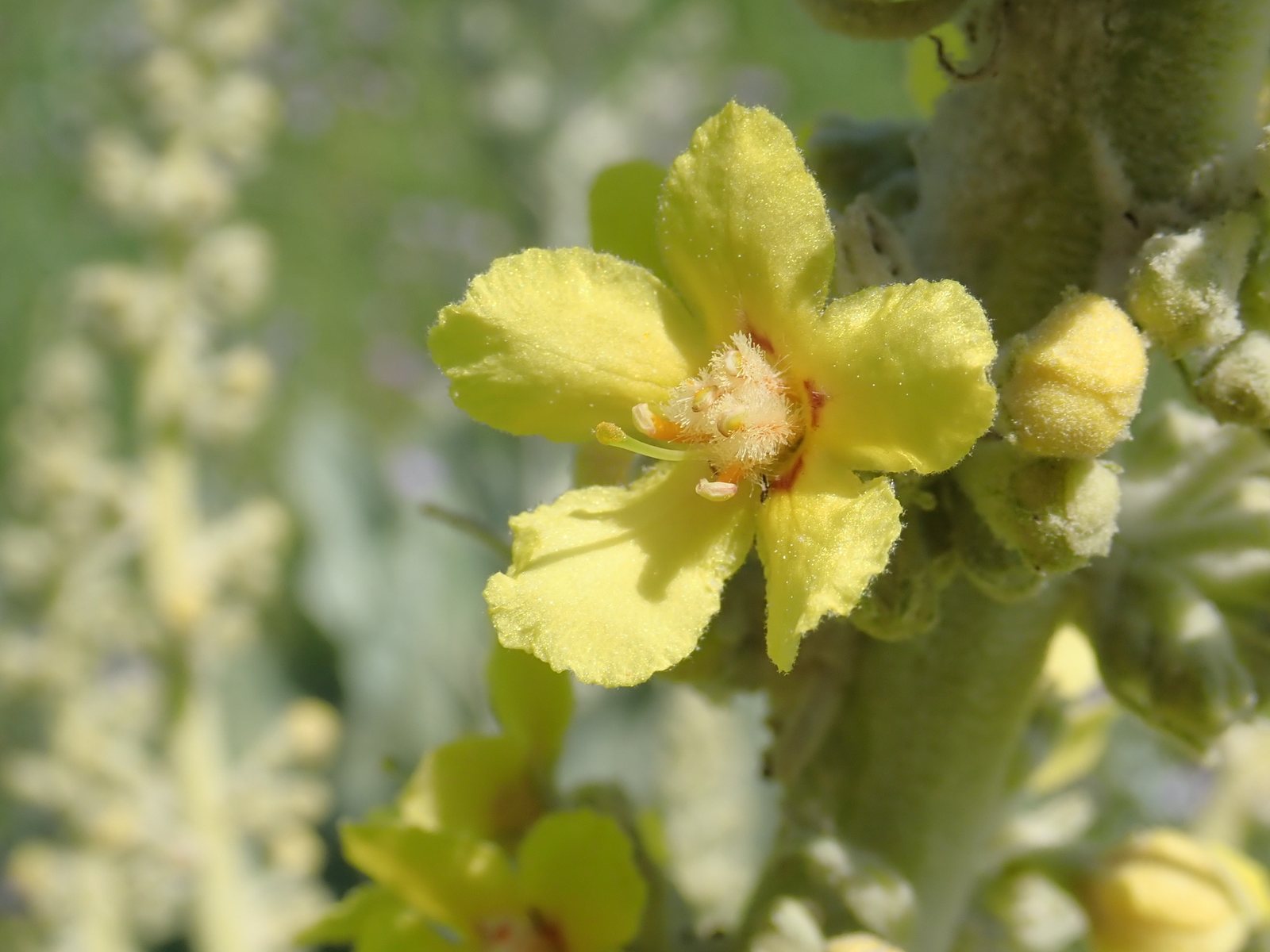
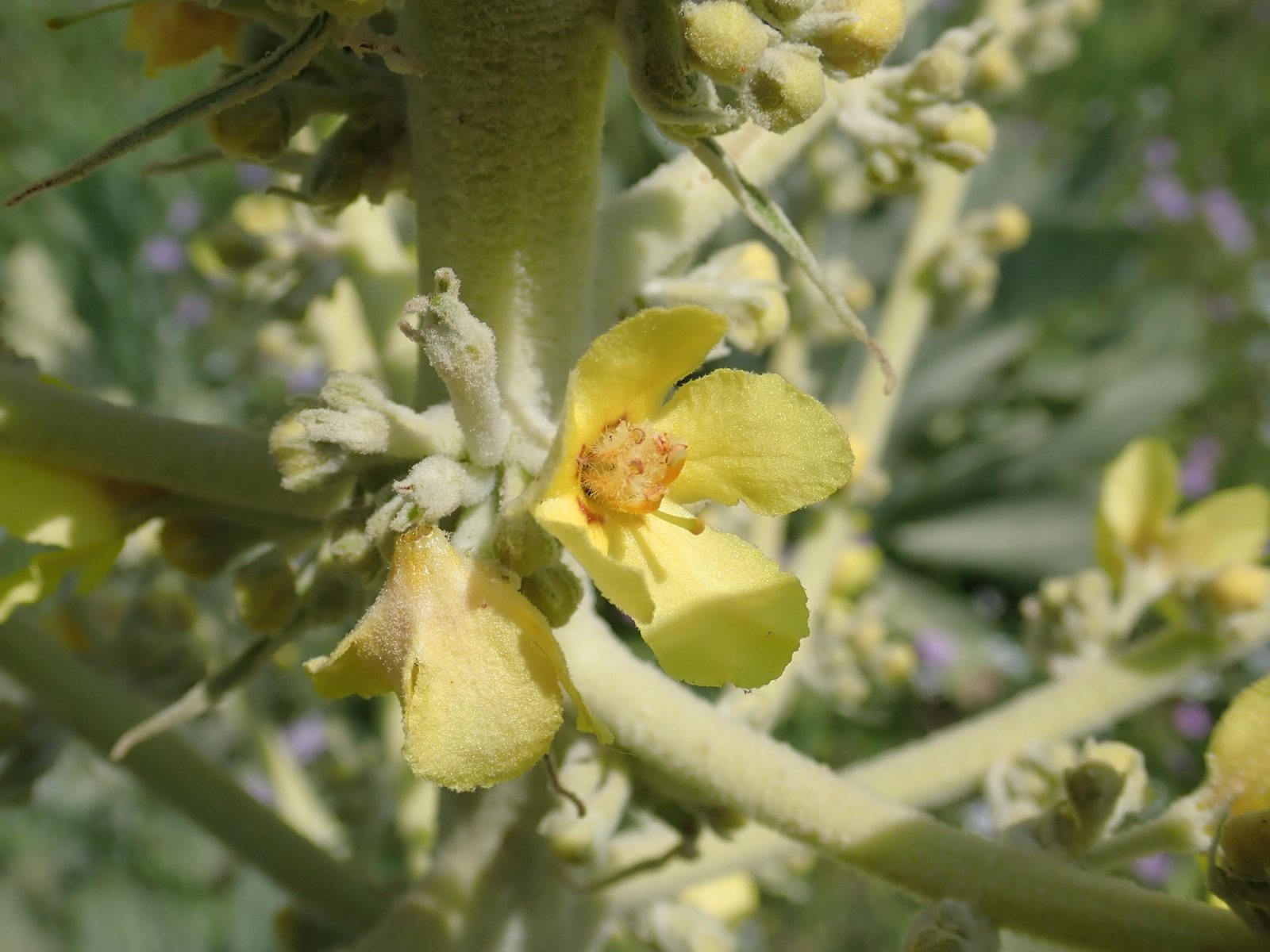
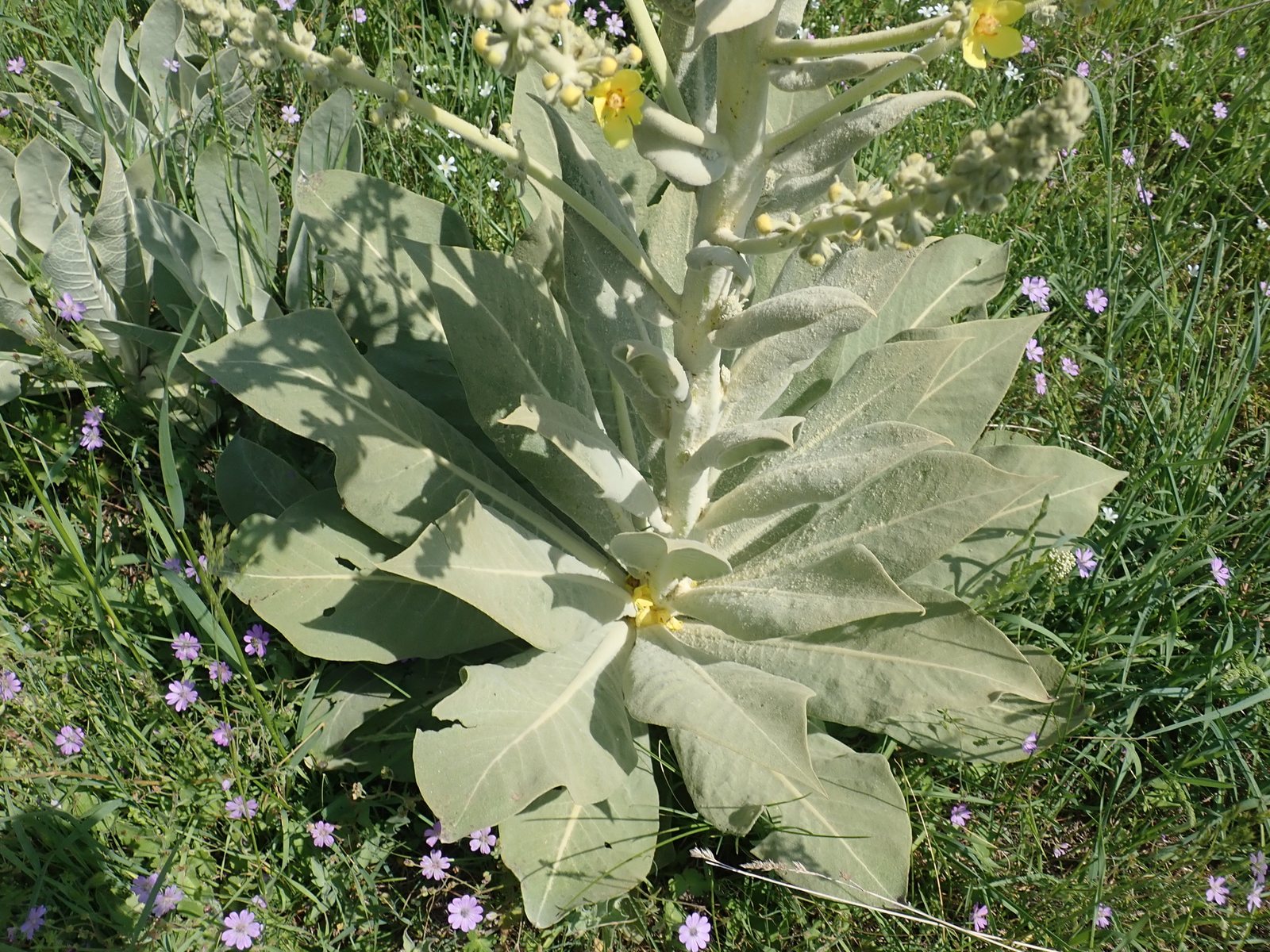
Usually a biennial or short-lived perennial, giant silver mullein forms a broad rosette of woolly silver leaves before sending up tall, branching stems of yellow flowers. Grow it for bold foliage and upright summer structure in sunny gravel gardens and dry borders; individual plants usually die after flowering, but may leave seedlings.
At a glance
- Sun
- Full sun.
- Water
- Low once established; water young plants during dry spells, then allow the soil to dry between waterings.
- Soil
- Well-drained, preferably lean, sandy, gravelly or chalky soil. Avoid heavy soil that stays wet in winter.
- Height
- 4-6 ft (1.2-1.8 m)
- Spread
- 2-3 ft (0.6-0.9 m)
- Flowers
- Summer; yellow flowers open progressively along tall, woolly, often branching spikes.
- Foliage
- Evergreen. Large, oblong leaves covered in dense white hairs, forming a striking silver-grey basal rosette.
- Growth
- Fast; usually forms a rosette in its first year and flowers in its second.
- Care needed
- Low
The year at a glance
- Pollinators
- Deer resistant
- Drought tolerant
- Heat tolerant
- Wildlife
- Low allergen
| J | F | M | A | M | J | J | A | S | O | N | D | |
|---|---|---|---|---|---|---|---|---|---|---|---|---|
| Flowers | ||||||||||||
| Fruit | ||||||||||||
| Plant |
Northern hemisphere months. In Australia, shift them by six.
- Difficulty
- Easy
- Toughness
- Very tough
Will it suit your garden?
Pick your zone, country, light and whether you have pets.
Full sun is 6 or more hours of direct sun a day, part shade 3 to 6 hours, shade under 3.
How it grows
Planting day
1 ft (0.3 m)
After 1 year
3 ft (0.92 m)
After 2 years
5 ft (1.5 m)
full size
About 2 years to full size.
From a typical nursery size, at an average rate for this kind of plant. A rule of thumb, not a forecast.
Good to know
- Cats and dogs
- Mildly toxic: may upset a stomach
- Growth rate
- Fast
Care
Jobs through the year
- WaterApr–May, Sep, every 21 days
- Water established plants only during prolonged drought; young rosettes need more frequent watering.
- WaterJun–Aug, every 14 days
- Water during prolonged drought at soil level, keeping the woolly crown dry.
- MulchApr
- Use a thin gravel mulch rather than moisture-retentive material near the crown.
- PruneMar–May
- Remove damaged basal leaves and thin excess seedlings while small.
- ProtectMay–Jun
- Stake developing flower stems early on exposed sites.
- DeadheadJul–Sep, every 14 days
- Remove finished spikes before seed ripens, retaining only selected stems for replacements.
- PruneSep–Oct
- Remove dead plants after flowering and seed shedding.
- ProtectJan–Feb, Oct–Dec
- Clear fallen leaves from surviving rosettes and prevent water collecting around crowns.
- Plant in full sun with enough space for the broad rosette.
- Water at soil level while plants establish; avoid keeping the crown wet.
- Do not routinely feed; rich soil encourages softer growth and leaning stems.
- Use a thin gravel mulch rather than moisture-retentive mulch around the crown.
- Stake flowering stems early if the site is exposed to strong winds.
- Keep a few seedlings as replacements, removing extras while small.
Pruning. Remove damaged basal leaves as needed without cutting into the crown. Cut flower stems down before seed ripens to limit seedlings, or leave selected stems to seed and remove the dead plant afterwards.
Through the year
- Spring
- Surface-sow seed in pots or on a prepared, well-drained seedbed; do not bury it deeply.
- Spring
- Plant out young rosettes before their taproots become crowded, allowing 2-3 ft (0.6-0.9 m) between plants.
- Late spring
- Thin unwanted seedlings and stake developing flower stems on windy sites.
- Summer
- Water recently planted rosettes during prolonged dry weather; established plants need little supplementary water.
- Late summer
- Remove fading flower stems before seed ripens, or retain a few for replacement seedlings.
- Autumn
- Remove dead flowering plants and clear fallen leaves from surviving rosette crowns.
- Winter
- Check that water drains away from crowns; avoid watering dormant plants in wet weather.
In the garden
- Place a single rosette beside a path or terrace where its large silver leaves can be seen clearly.
- Repeat plants through a gravel garden with lavender and ornamental grasses for contrasting shapes.
- Use the tall yellow spikes behind lower, drought-tolerant plants in a sunny mixed border.
- Pair with purple-flowered salvias or catmint for a strong silver, yellow and violet combination.
Garden styles it suits: Architectural minimal, Dry gravel garden, Mediterranean, Cottage garden, Pollinator garden and Desert / xeriscape.
Plant it with: Lavender, Catmint, Russian sage, Yarrow, Sea holly and Blue fescue.
Wildlife: Flowers provide pollen for bees. In the UK, the foliage can support mullein moth caterpillars; retained seed heads may provide food for seed-eating birds.
Problems to watch for
- Crown or root rot in wet soil: improve drainage, keep mulch away from the crown and replace badly affected plants.
- Mullein moth caterpillars, particularly in the UK: inspect leaves in late spring and early summer; tolerate some feeding or move caterpillars by hand if damage is severe.
- Powdery mildew: provide full sun and good spacing, and remove badly affected leaves.
- Flopping flower stems: avoid rich soil and excess feeding; support stems early on exposed sites.
Safety
Not known to be seriously toxic to people, cats, dogs or horses, although species-specific safety information is limited. It is not a food plant: do not eat the leaves, flowers or seeds. The dense leaf and stem hairs can irritate skin, eyes or the throat.
Where it spreads. Naturalised in parts of California and capable of spreading by seed on dry, disturbed ground. Prevent seed set near natural areas and check local weed guidance before planting.
Easily confused with
Common mullein (Verbascum thapsus)
Usually has greener grey foliage and a narrower, mostly unbranched flower spike; giant silver mullein is more densely white-woolly and often develops a broader, branched flowering structure.
Silver mullein (Verbascum argenteum)
Also has silvery foliage, but its leaves typically have distinctly wavy or scalloped margins rather than the broader, more softly outlined leaves of giant silver mullein.
Lamb's ears (Stachys byzantina)
Forms a low, spreading mat of smaller woolly leaves and bears short spikes of pink-purple flowers, rather than a giant rosette with tall yellow-flowered stems.
The name
The species name bombyciferum means 'silk-bearing', referring to the dense, silky hairs covering the plant.
Propagation. Grow from seed sown on the surface in spring or late summer; light helps germination. Pot on seedlings while small and plant out before the taproot becomes restricted. Division is unsuitable.
Checked against open data
- Accepted botanical name
- Verbascum bombyciferum
- Native range
- Turkey.
Sources: GBIF (CC BY 4.0) and Trefle (CC BY 4.0). The care and design notes are LandscapeGPT's own.
See it in your own yard.
Upload a photo of your yard and see it redesigned with plants that suit your climate, each checked against your zone.