Giant snowdrop
Galanthus elwesii. Family Amaryllidaceae. Bulb.
Also called Greater snowdrop, Elwes's snowdrop.
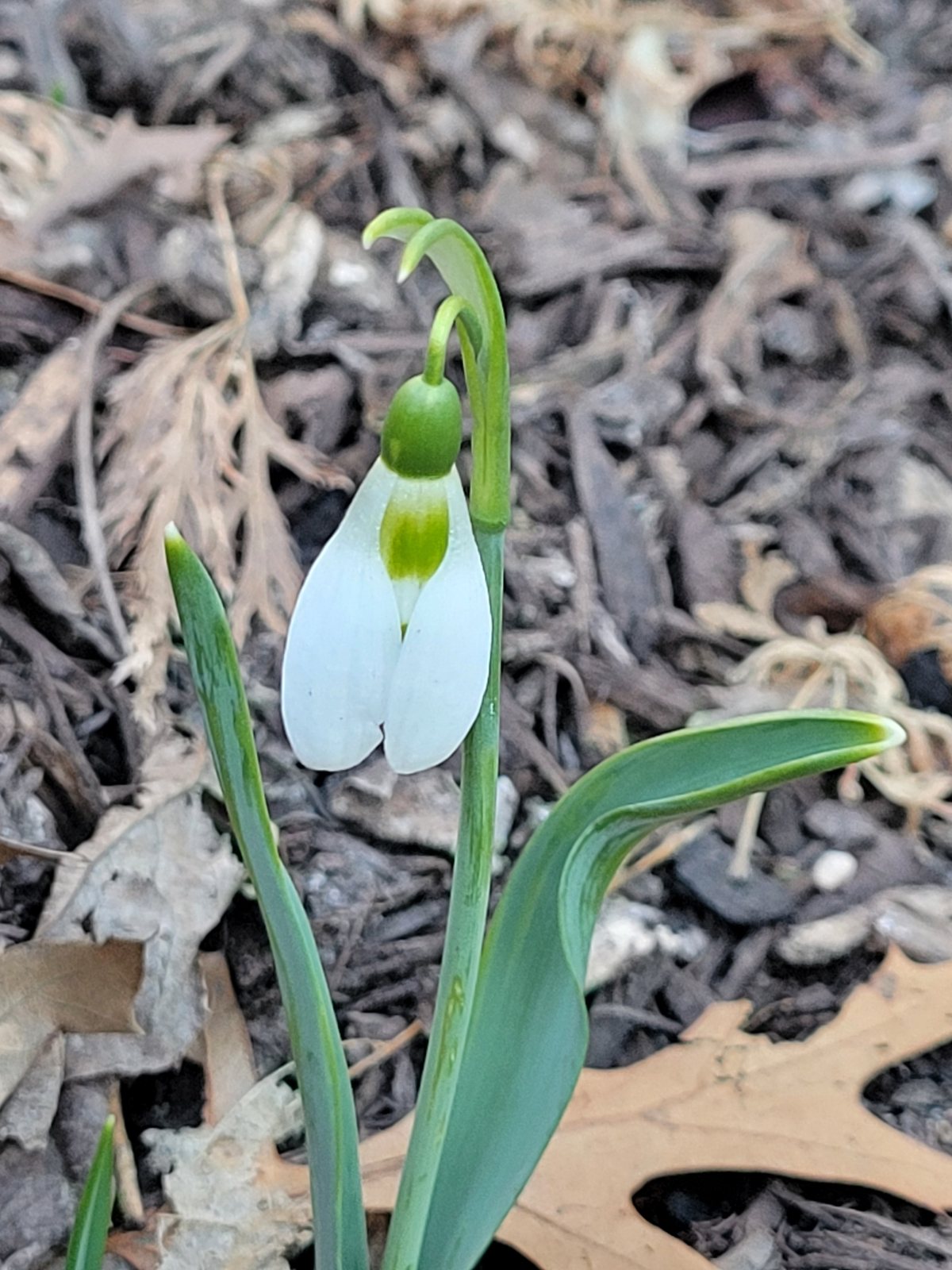
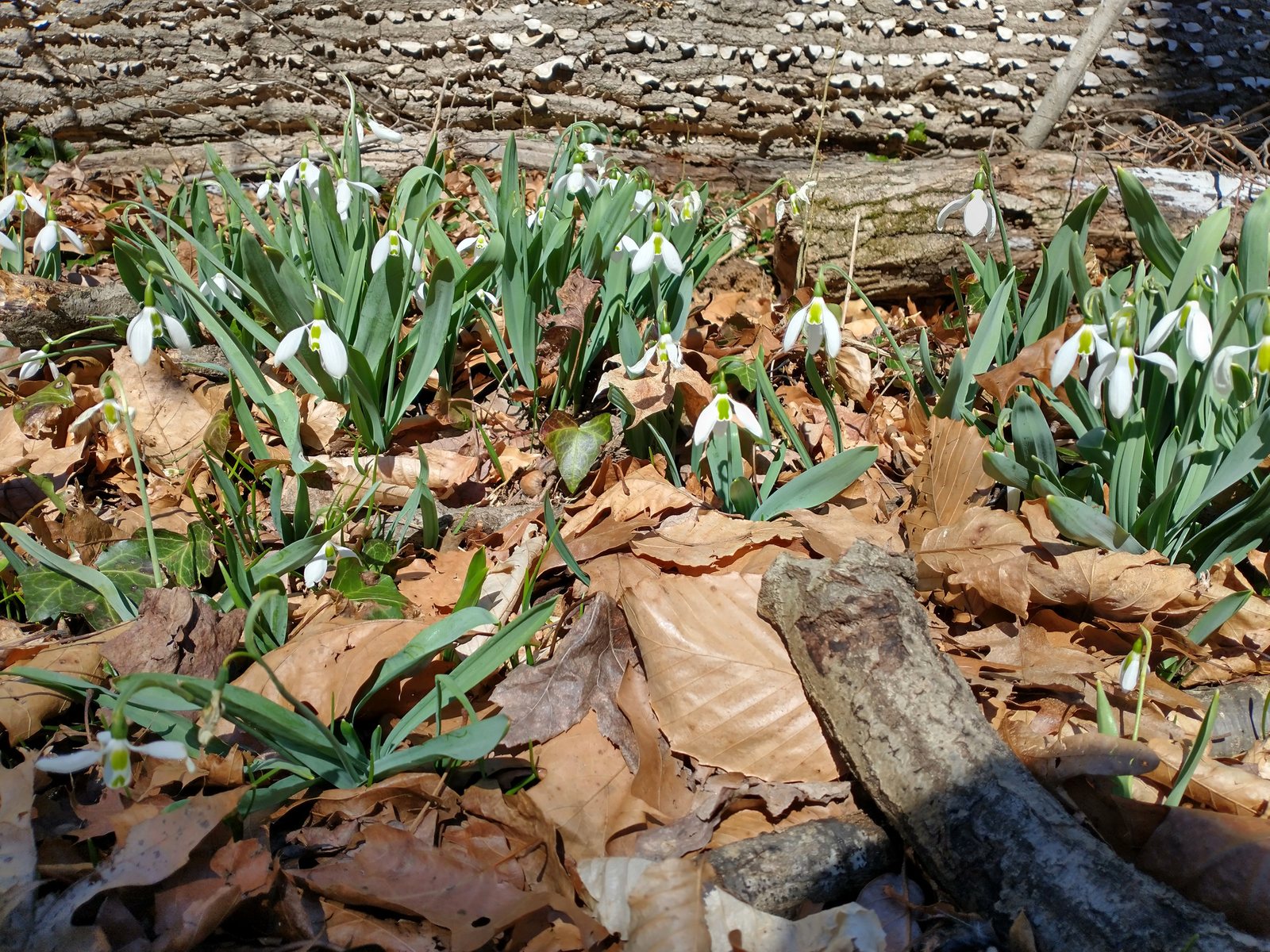
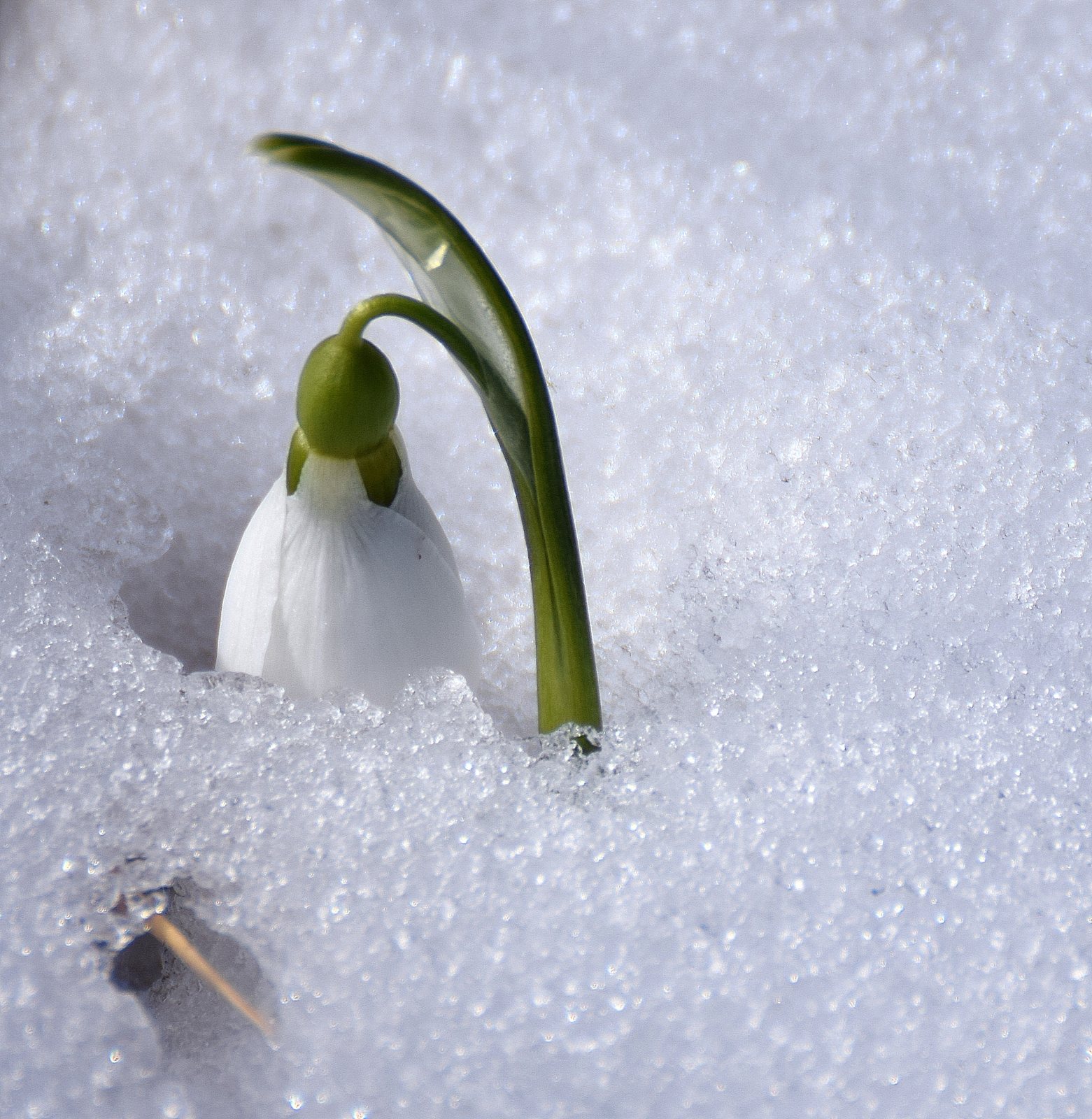
Giant snowdrop is a small, winter-flowering bulb with nodding white flowers and broad, blue-grey leaves. Gardeners grow it beneath deciduous trees and along paths for flowers that appear before most spring plants. It suits climates with cool winters and becomes dormant in summer.
At a glance
- Sun
- Full sun to partial shade during winter and early spring; summer shade beneath deciduous trees is suitable.
- Water
- Keep soil moderately moist while leaves and flowers are growing. Once dormant, bulbs tolerate drier soil but should not sit in waterlogged ground.
- Soil
- Humus-rich, well-drained soil that retains some moisture; neutral to alkaline soil is ideal, though mildly acidic soil is usually tolerated.
- Height
- 0.5-1 ft (0.15-0.3 m)
- Spread
- 0.25-0.5 ft (0.08-0.15 m) per clump initially; colonies gradually spread farther.
- Flowers
- Late winter to early spring, sometimes earlier in mild climates; nodding white flowers with green markings on the shorter inner petals.
- Foliage
- Broad, strap-shaped, blue-grey leaves emerge with the flowers and die back in late spring or early summer.
- Growth
- Moderate seasonal growth; clumps increase slowly to moderately over several years.
- Care needed
- Low
The year at a glance
- Pollinators
- Deer resistant
- Cold hardy
- Low allergen
| J | F | M | A | M | J | J | A | S | O | N | D | |
|---|---|---|---|---|---|---|---|---|---|---|---|---|
| Flowers | ||||||||||||
| Plant |
Northern hemisphere months. In Australia, shift them by six.
- Difficulty
- Easy
- Toughness
- Very tough
Will it suit your garden?
Pick your zone, country, light and whether you have pets.
Full sun is 6 or more hours of direct sun a day, part shade 3 to 6 hours, shade under 3.
How it grows
Planting day
0.5 ft (0.15 m)
After 1 year
0.7 ft (0.21 m)
After 2 years
0.7 ft (0.22 m)
full size
About 1 years to full size.
From a typical nursery size, at an average rate for this kind of plant. A rule of thumb, not a forecast.
Good to know
- Cats and dogs
- Toxic
- Growth rate
- Slow
Care
Jobs through the year
- WaterJan–Mar, every 14 days
- Water established bulbs only if unfrozen soil is dry during growth; new plantings need closer attention.
- WaterApr–May, every 7 days
- Water during dry weather while leaves remain green; stop once dormant.
- MulchOct–Nov
- Spread a thin layer of leaf mould or compost without burying emerging shoots.
- FeedMar
- In poor soil only, apply a light dressing of balanced fertilizer after flowering.
- DivideMar–Apr
- Divide congested clumps after flowering with leaves attached and replant immediately.
- DeadheadMar–Apr
- Remove spent flower stems only if seedlings are unwanted.
- PruneMay–Jun
- Remove foliage only after it has yellowed completely.
- ProtectJan–Mar
- Inspect emerging shoots for slugs and snails and protect flowers from trampling.
- Plant fresh bulbs in early autumn, about 3-4 in (8-10 cm) deep and 3 in (8 cm) apart; do not let unplanted bulbs dry out.
- Water during dry spells while the leaves are green, especially in the first growing season.
- Apply a thin layer of leaf mould or garden compost in autumn without burying emerging shoots.
- In poor soil, apply a light dressing of balanced fertiliser after flowering; rich soil needs little additional feeding.
- Divide crowded clumps after flowering while leaves are still green, and replant immediately at the same depth.
Pruning. Remove spent flower stems if you do not want seedlings. Leave all foliage until it has yellowed naturally, then remove it or allow it to decay.
Through the year
- Early autumn
- Plant fresh bulbs promptly in well-drained soil beneath deciduous trees or shrubs.
- Late autumn
- Add a thin mulch of leaf mould and check that the planting area drains freely.
- Winter
- Watch emerging shoots for slug damage and protect flowers from trampling.
- Late winter to early spring
- Enjoy the flowers and water if the soil becomes dry during active growth.
- Spring
- Divide congested clumps after flowering and replant immediately; keep all leaves attached.
- Late spring to summer
- Let leaves yellow completely before clearing them; avoid digging through the dormant bulbs.
In the garden
- Plant in loose drifts beneath deciduous trees, where winter light reaches the flowers before the canopy develops.
- Edge a frequently used path so the small flowers can be seen closely in winter.
- Combine with winter aconites, early crocuses and hellebores for a long sequence of early flowers.
- Plant among deciduous ferns or hostas, whose later foliage covers the space left by dormant bulbs.
Garden styles it suits: Woodland, Cottage garden, English country, Winter interest, White garden and Low-maintenance.
Plant it with: Winter aconite, Early crocus, Lenten rose, Cyclamen coum, Hosta and Deciduous ferns.
Wildlife: Flowers provide pollen and nectar for bees active during mild winter and early-spring weather. Ants may carry away seeds and help disperse them. Deer and rabbits usually leave the plants alone, though no planting is completely browsing-proof.
Problems to watch for
- Bulbs rot in waterlogged soil: improve drainage or move them to a raised planting area rather than adding more water.
- Slugs and snails damage emerging leaves and flowers: hand-pick them or use an approved iron-phosphate bait according to its label.
- Narcissus bulb fly larvae hollow out bulbs: remove affected bulbs and firm the soil after foliage dies back to close gaps around bulbs.
- Few or no flowers can result from overcrowding, deep shade during growth or cutting leaves too early: divide dense clumps, improve winter light and let foliage die naturally.
Safety
Toxic to people, cats, dogs and horses if eaten. All parts contain poisonous alkaloids, with the bulbs particularly hazardous; ingestion can cause vomiting, diarrhoea and abdominal pain, and larger amounts may cause serious poisoning. Sap can irritate skin, so wear gloves when dividing bulbs.
Easily confused with
Common snowdrop (Galanthus nivalis)
Usually has much narrower leaves that emerge flat against one another. Giant snowdrop has broader, blue-grey leaves, with one leaf wrapping around the other at the base.
Pleated snowdrop (Galanthus plicatus)
Its broad leaves have distinctly folded-back margins. Giant snowdrop lacks these pleated edges.
Spring snowflake (Leucojum vernum)
Its flowers have six roughly equal-length segments, each tipped with green or yellow. Giant snowdrop has three long outer segments and three much shorter, green-marked inner ones.
The name
Galanthus comes from Greek words meaning 'milk flower', while elwesii honours the British botanist and plant collector Henry John Elwes.
Propagation. Divide established clumps after flowering while the leaves are still green, keeping roots moist and replanting immediately. Alternatively, sow fresh ripe seed promptly; seedlings usually take several years to flower and may vary from the parent. Buy nursery-propagated bulbs rather than wild-collected plants.
Checked against open data
- Accepted botanical name
- Galanthus elwesii
- In the US and Canada
- Introduced in the lower 48 states.
- Native range
- Albania, Bulgaria, East Aegean Is., Greece, Turkey, Ukraine and Yugoslavia.
- Measured
- Average height 27 cm.
Sources: GBIF (CC BY 4.0), USDA PLANTS and Trefle (CC BY 4.0). The care and design notes are LandscapeGPT's own.
See it in your own yard.
Upload a photo of your yard and see it redesigned with plants that suit your climate, each checked against your zone.