Giant white bird of paradise
Strelitzia nicolai. Family Strelitziaceae. Perennial.
Also called White bird of paradise, Giant bird of paradise, Wild banana.
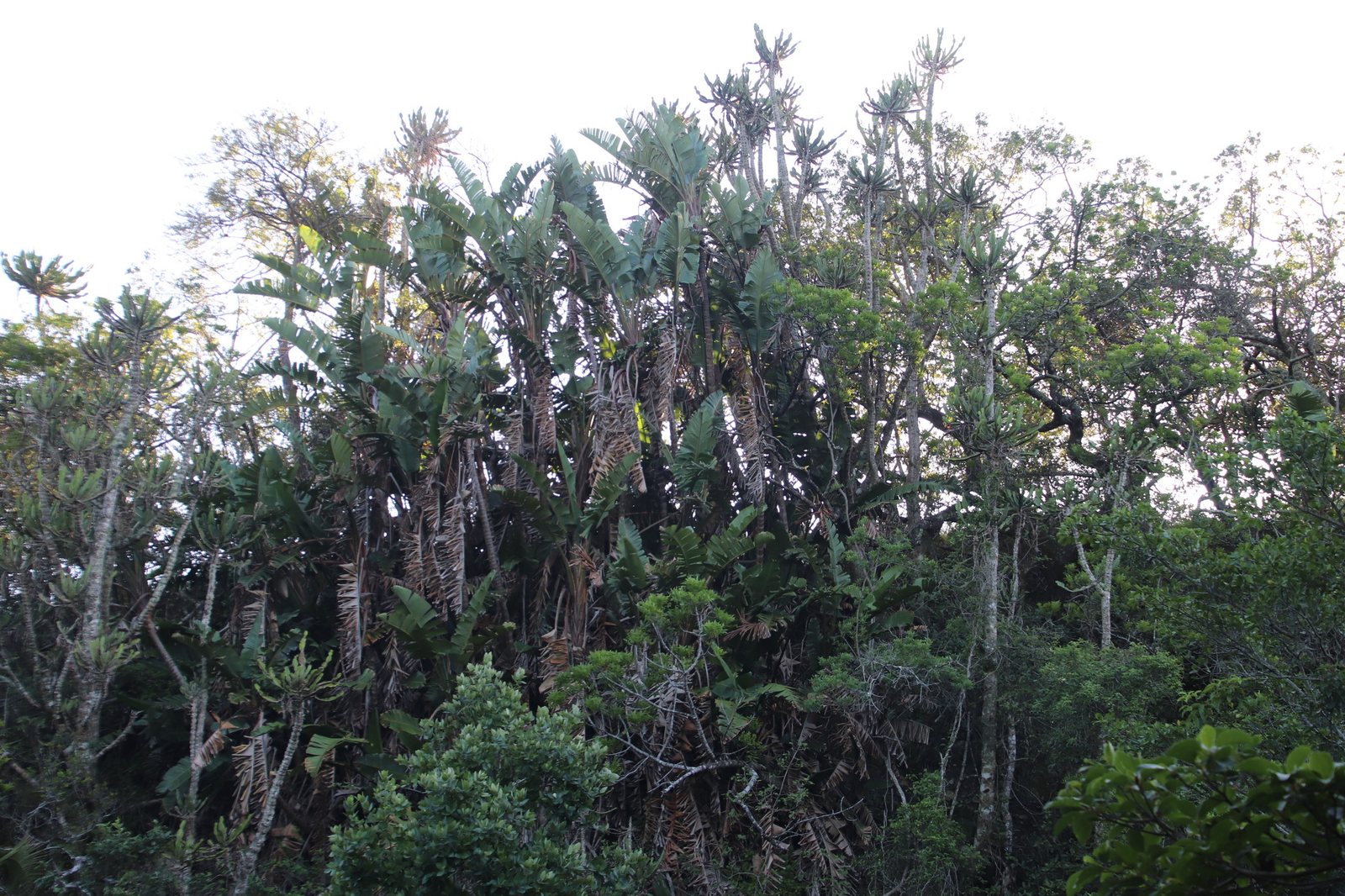
This large, evergreen, clump-forming perennial develops woody-looking stems topped with broad, banana-like leaves. Gardeners grow it for its strong architectural shape and, on mature outdoor plants, white-and-blue bird-shaped flowers. It needs a frost-free garden; in most of the UK and Canada, grow it in a bright conservatory or a container brought indoors for winter.
At a glance
- Sun
- Full sun to partial shade outdoors; bright light with some direct sun indoors. Acclimatise indoor plants gradually before moving them into outdoor sun.
- Water
- Water deeply during active growth, then let the surface soil dry before watering again. Reduce watering in winter, especially in cool conditions; never leave pots standing in water.
- Soil
- Fertile, moisture-retentive but well-drained soil. For containers, use a loam-based potting mix with added coarse material for drainage.
- Height
- 20-30 ft (6-9 m) outdoors; usually smaller in containers
- Spread
- 10-15 ft (3-4.5 m), eventually wider as the clump produces new stems
- Flowers
- White sepals and blue petals emerge from dark, boat-shaped bracts, mainly in spring and summer, with occasional flowers at other times in warm climates. Indoor flowering is uncommon.
- Foliage
- Evergreen. Large, paddle-shaped, grey-green leaves on long stalks form fans at the tops of the stems. Older leaves naturally split along their veins, particularly in wind.
- Growth
- Moderate to fast in warm weather with adequate water and nutrients; much slower indoors or in cool climates.
- Care needed
- Medium
The year at a glance
- Heat tolerant
- Low allergen
| J | F | M | A | M | J | J | A | S | O | N | D | |
|---|---|---|---|---|---|---|---|---|---|---|---|---|
| Flowers | ||||||||||||
| Plant |
Northern hemisphere months. In Australia, shift them by six.
- Difficulty
- Hard
- Toughness
- Fairly tough
Will it suit your garden?
Pick your zone, country, light and whether you have pets.
Full sun is 6 or more hours of direct sun a day, part shade 3 to 6 hours, shade under 3.
How it grows
Planting day
3 ft (0.9 m)
After 1 year
10 ft (3.1 m)
After 2 years
17 ft (5.3 m)
After 3 years
25 ft (7.5 m)
full size
About 3 years to full size.
From a typical nursery size, at an average rate for this kind of plant. A rule of thumb, not a forecast.
Good to know
- Cats and dogs
- Toxic
- In the garden
- Spreads vigorously: plan to contain it.
- Growth rate
- Moderate
Care
Jobs through the year
- WaterApr–May, Sep–Oct, every 10 days
- Use a movable container here; water deeply once the compost surface dries.
- WaterJun–Aug, every 7 days
- Water thoroughly as the surface dries; large outdoor pots may need more frequent watering in heat.
- WaterJan–Mar, Nov–Dec, every 21 days
- Water sparingly in cool shelter without letting the root ball dry completely.
- FeedApr–Aug, every 28 days
- Feed container plants with balanced fertilizer at the label rate during active growth.
- PruneApr–Jun
- Remove dead leaves and unwanted suckers at their bases; never top healthy stems.
- DeadheadApr–Sep
- If flowering occurs, remove spent stalks close to their attachment.
- DivideMay–Jun
- Divide only if necessary and the clump is manageable; protect neighbouring stems and roots.
- ProtectJun
- Move outdoors only when nights stay above 10°C and acclimatize gradually to sun.
- ProtectSep–Oct
- Move into spacious, bright indoor shelter before nights regularly fall below 10°C.
- ProtectJan–May, Nov–Dec
- Keep frost-free in the brightest available position; fleece alone is inadequate outdoors.
- Allow room for a large clump, keeping it clear of narrow paths, walls and small planting beds.
- Water deeply in warm weather, but check that the soil drains freely before watering again.
- Feed outdoor plants with a balanced controlled-release fertiliser in spring; feed container plants during active growth according to the product label.
- Mulch the root area, keeping mulch away from the bases of the stems.
- Shelter from strong winds and move container plants indoors before frost, preferably before nights regularly fall below 50°F (10°C).
Pruning. In spring or early summer, cut dead leaves and spent flower stalks back close to their point of attachment without damaging neighbouring growth. Remove unwanted suckers at the base to control spread; do not shorten healthy stems by cutting off their leafy tops.
Through the year
- Spring
- Remove dead foliage, refresh mulch and begin feeding as active growth resumes.
- Late spring
- Repot crowded container plants or divide manageable clumps once conditions are warm.
- Early summer
- Move overwintered pots outside only when nights are reliably warm, gradually increasing their exposure to sun.
- Summer
- Check soil moisture frequently during hot weather and inspect leaf undersides for pests.
- Autumn
- Bring pots under cover before cold nights and reduce feeding as growth slows.
- Winter
- Provide the brightest available indoor position and water sparingly without letting the root ball dry out completely.
In the garden
- Use as a tall focal point in a spacious, frost-free courtyard, allowing clearance for the arching leaves.
- Plant behind lower foliage plants such as cast-iron plants and philodendrons to build a layered tropical border.
- Use a group as a bold green backdrop beside a terrace, well away from paving edges and access routes.
- Grow a young plant in a large container for seasonal patio display where there is suitable bright winter accommodation.
Garden styles it suits: Architectural minimal, Modern tropical, Luxury resort, Modern courtyard, Tropical and Brazilian tropical modernism.
Plant it with: Cast-iron plant, Tree philodendron, Shell ginger, Bromeliads, Agapanthus and Liriope.
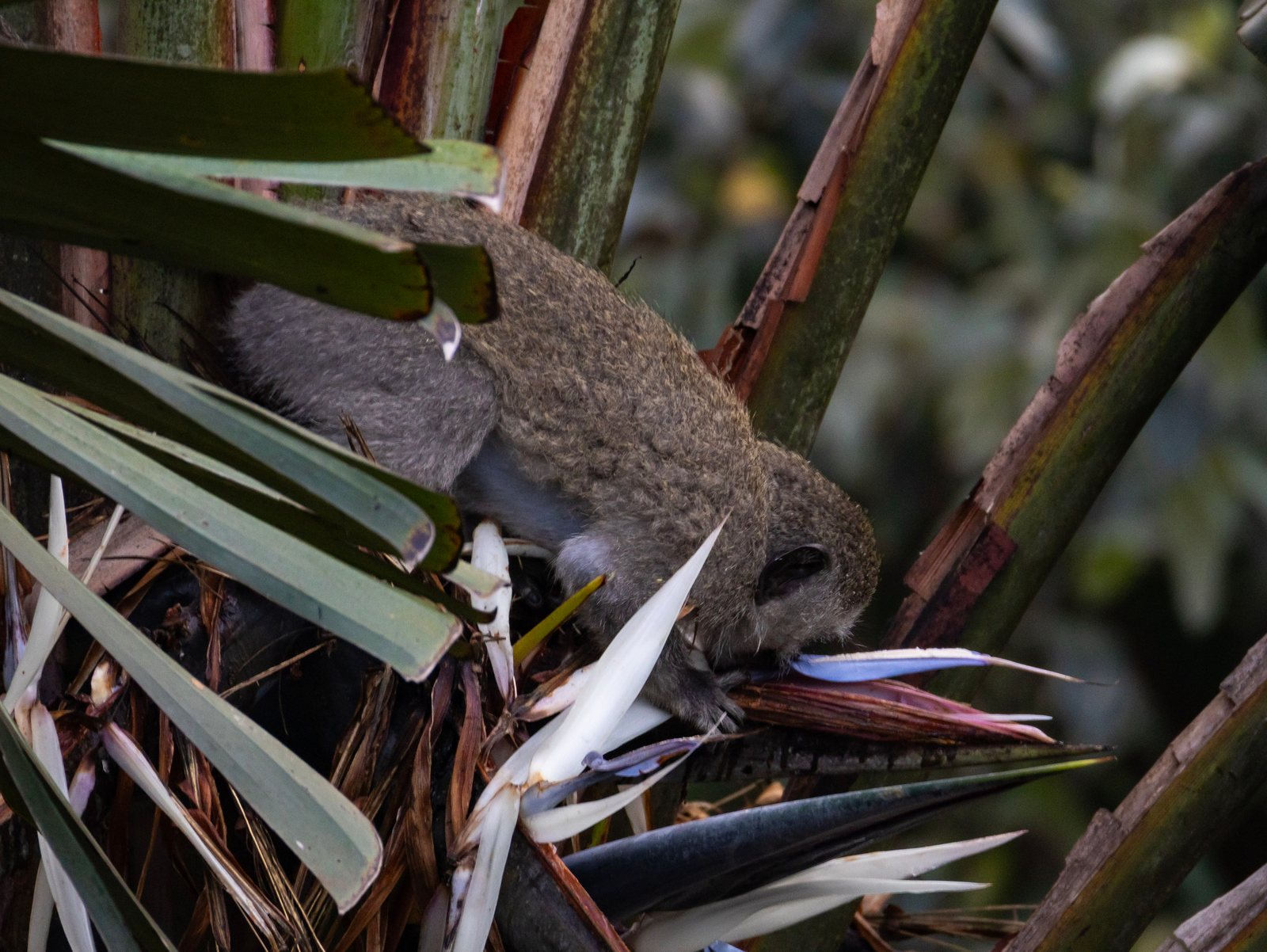
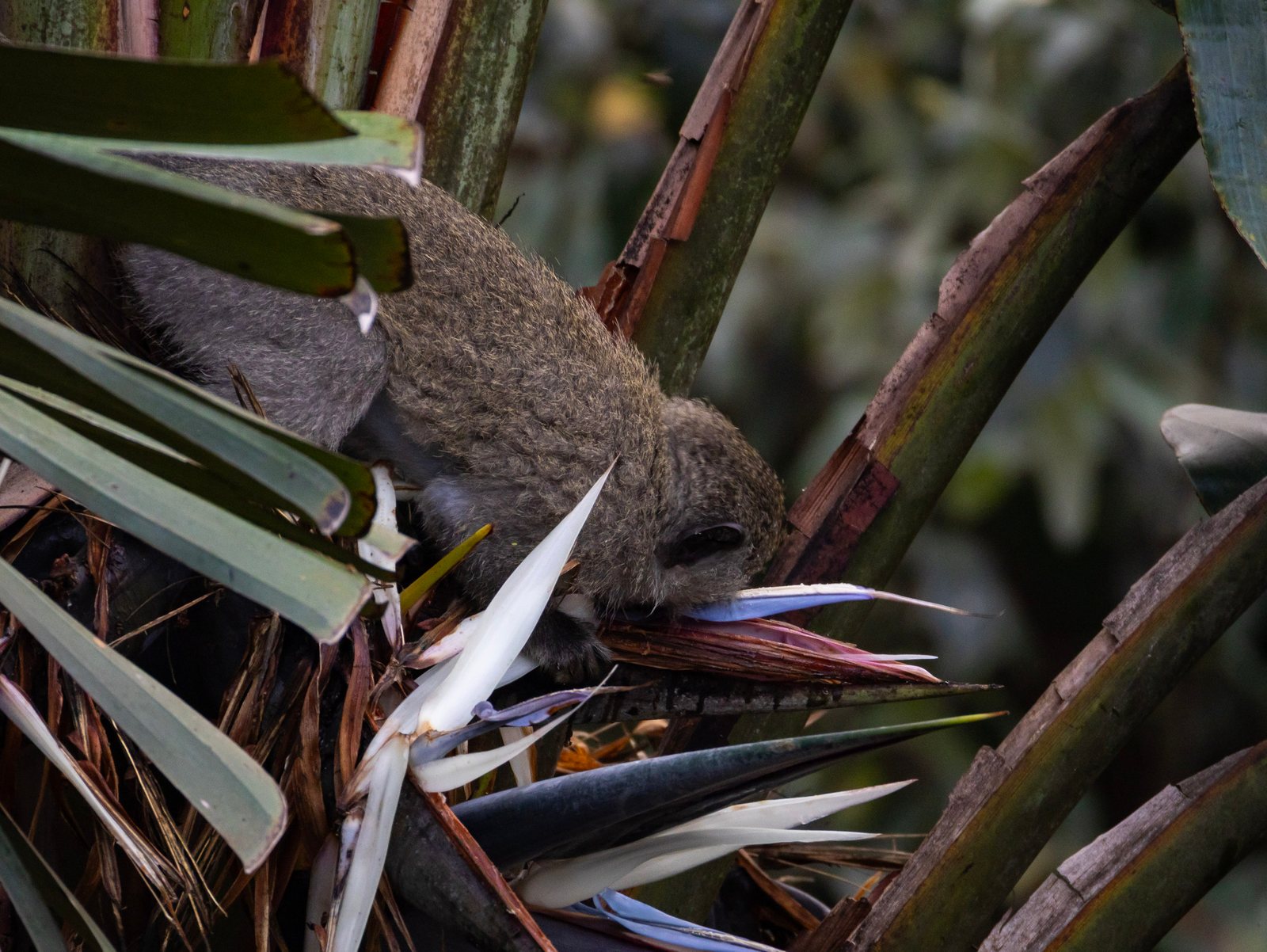
Wildlife: In its native southern African range, the flowers provide nectar for birds, including sunbirds. Large clumps can provide shelter, but it is not a dependable pollinator plant outside its native range.
Problems to watch for
- Spider mites in dry indoor air: look for stippled leaves and fine webbing; wash foliage thoroughly and use a labelled insecticidal soap if needed.
- Scale insects or mealybugs: inspect leaf stalks and sheltered crevices, remove small infestations by hand and treat persistent infestations with a suitable labelled product.
- Root rot from waterlogged soil: improve drainage, empty saucers and let the surface dry between waterings; remove badly rotted roots when repotting.
- Cold damage: frost blackens leaves and can damage stems; provide frost-free winter accommodation rather than relying on fleece in a cold climate.
Safety
Treat as toxic to cats and dogs if eaten, particularly the seeds and fruit; reported effects include nausea, vomiting and drowsiness, usually of mild severity. Human ingestion may cause stomach upset, so keep seeds and fruit away from children. Toxicity to horses is not well established; do not allow grazing.
Easily confused with
Orange bird of paradise (Strelitzia reginae)
Forms a much shorter, largely stemless clump with narrower leaves and orange-and-blue flowers rather than tall stems and white-and-blue flowers.
Traveller's palm (Ravenala madagascariensis)
Usually develops a conspicuous single trunk topped by a broad, orderly fan of leaves; giant white bird of paradise typically forms a clump of several stems.
Japanese banana (Musa basjoo)
Has soft pseudostems made from overlapping leaf bases and leaves arranged around the stem rather than in a two-ranked fan; its flowers and fruit are recognisably banana-like.
The name
Strelitzia honours Queen Charlotte of Mecklenburg-Strelitz, nicolai honours the future Tsar Nicholas I of Russia, and the common name describes the large, bird-shaped white flowers.
Propagation. Divide rooted basal suckers in warm spring or early summer, keeping a substantial root system with each division. Large clumps are heavy and difficult to split. Seed needs warmth and patience, and seedlings take several years to reach flowering size.
Checked against open data
- Accepted botanical name
- Strelitzia nicolai
- Native range
- Botswana, KwaZulu-Natal, Mozambique and Zimbabwe.
Sources: GBIF (CC BY 4.0) and Trefle (CC BY 4.0). The care and design notes are LandscapeGPT's own.
See it in your own yard.
Upload a photo of your yard and see it redesigned with plants that suit your climate, each checked against your zone.