Gladiolus
Gladiolus × hortulanus. Family Iridaceae. Bulb.
Also called Garden gladiolus, Sword lily, Glads.
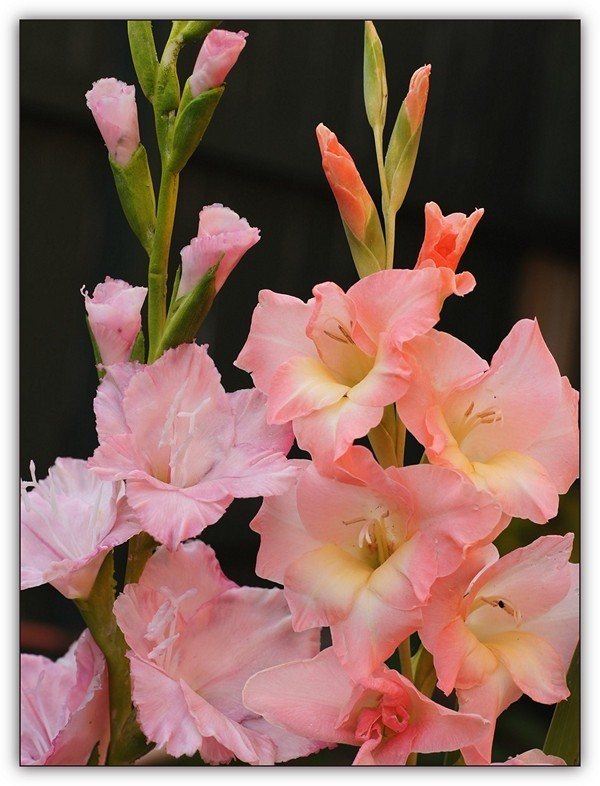
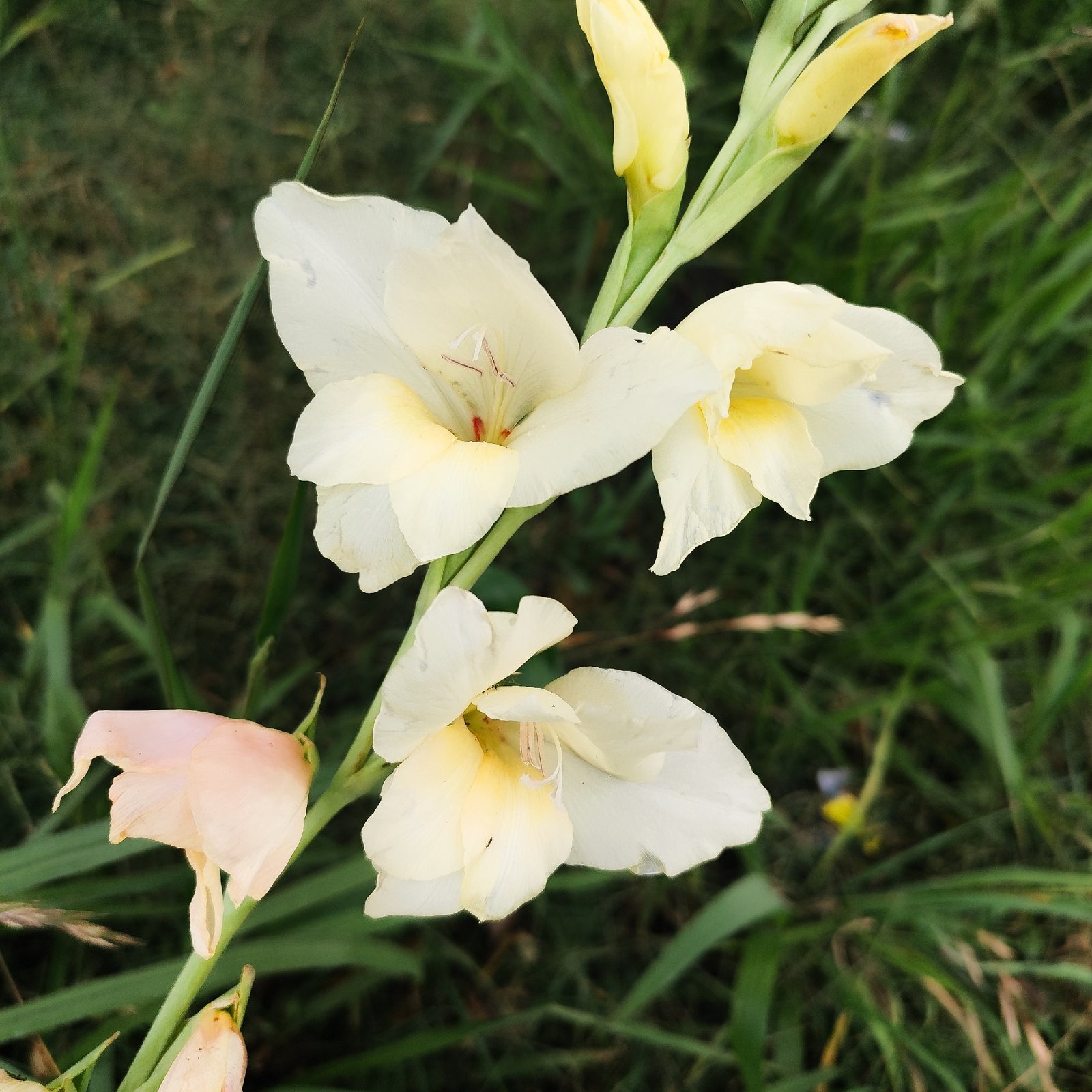
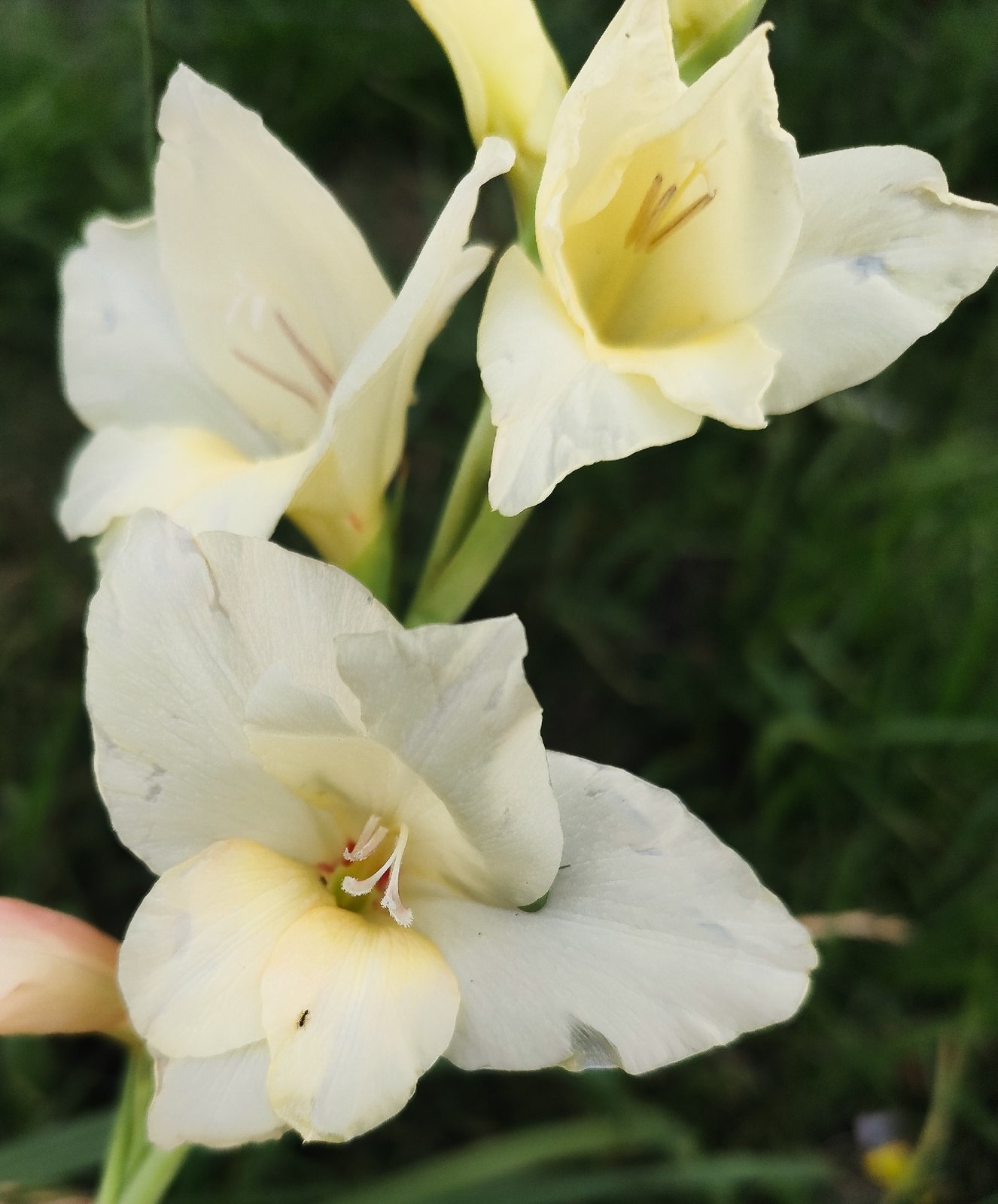
Gladiolus is a tender, corm-forming perennial grown for tall spikes of colourful flowers and long-lasting cut stems. Garden hybrids offer a wide choice of colours, but usually need staking and, in cold climates, lifting and frost-free winter storage.
At a glance
- Sun
- Full sun; choose a sheltered position protected from strong winds.
- Water
- Keep the soil evenly moist during active growth, especially as flower spikes develop. Avoid waterlogged soil and keep dormant, stored corms dry.
- Soil
- Fertile, well-drained soil; improve heavy clay with organic matter and use raised beds where winter drainage is poor.
- Height
- 2-5 ft (0.6-1.5 m), depending on cultivar
- Spread
- 0.5-1 ft (0.15-0.3 m)
- Flowers
- Summer to early autumn; white, cream, yellow, orange, pink, red, purple and green, often with contrasting markings.
- Foliage
- Upright, narrow, sword-shaped green leaves that die back after the growing season.
- Growth
- Fast seasonal growth; spring-planted corms usually flower in about 10-14 weeks.
- Care needed
- Medium
The year at a glance
- Pollinators
- Heat tolerant
- Low allergen
| J | F | M | A | M | J | J | A | S | O | N | D | |
|---|---|---|---|---|---|---|---|---|---|---|---|---|
| Flowers | ||||||||||||
| Plant |
Northern hemisphere months. In Australia, shift them by six.
- Difficulty
- Moderate
- Toughness
- Needs looking after
Will it suit your garden?
Pick your zone, country, light and whether you have pets.
Full sun is 6 or more hours of direct sun a day, part shade 3 to 6 hours, shade under 3.
How it grows
Planting day
0.5 ft (0.15 m)
After 1 year
3 ft (1.1 m)
full size
Full size in one season.
From a typical nursery size, at an average rate for this kind of plant. A rule of thumb, not a forecast.
Good to know
- Cats and dogs
- Toxic
- Growth rate
- Fast
Care
Jobs through the year
- WaterMay–Jun, every 7 days
- Water growing plants deeply when rain is insufficient; keep soil moist but freely drained.
- WaterJul–Sep, every 5 days
- Maintain steady moisture during flowering; skip if soil remains moist and taper as foliage yellows.
- FeedApr–May
- Mix compost into the bed before planting.
- FeedJun–Jul, every 30 days
- On poor soil only, apply a balanced fertilizer at the label rate during active growth.
- ProtectApr–Jun
- Insert stakes at planting and tie tall spikes loosely as they lengthen.
- DeadheadJul–Sep, every 7 days
- Remove spent flower spikes but retain green leaves to replenish the corms.
- PruneSep–Oct
- Remove foliage only after it has yellowed naturally.
- ProtectOct–Nov
- Lift corms before ground freezes, dry thoroughly and store cool, ventilated and frost-free.
- ProtectJan–Mar, Dec, every 30 days
- Inspect stored corms and discard any soft, mouldy or badly damaged ones.
- Plant corms after the soil warms and frost danger has passed, about 4-6 in (10-15 cm) deep and 6 in (15 cm) apart.
- Water deeply during dry spells, keeping moisture steady while leaves and flower spikes develop.
- Mix compost into the bed before planting; use a balanced fertiliser during growth if the soil is poor.
- Insert stakes at planting time and tie tall flower spikes loosely as they lengthen.
- In cold areas, lift corms after foliage yellows and before the ground freezes; dry them, remove the old shrivelled corms, and store the new ones in a cool, dry, frost-free place.
- Where corms remain outdoors, mulch for winter protection and lift crowded clumps every few years.
Pruning. Remove spent flower spikes but leave the leaves until they yellow naturally. When cutting flowers for the house, leave at least four leaves on each plant to help replenish its corm.
Through the year
- Early spring
- Check stored corms and discard any that are soft, mouldy or badly damaged.
- Spring
- Prepare a sunny, well-drained bed and plant once frost danger has passed.
- Late spring
- For a longer cutting season, make further plantings about two weeks apart, allowing enough growing time before autumn frost.
- Summer
- Water during dry weather, support flower spikes and check flowers and leaves for thrips.
- Summer
- Cut stems as the lowest flowers begin to open, or remove spent spikes after flowering.
- Autumn
- Let foliage yellow, then lift and dry corms where winters are too cold or wet for them to remain outdoors.
- Winter
- Keep stored corms dry, ventilated and frost-free; check occasionally for rot.
In the garden
- Plant in a dedicated cutting bed for a succession of upright flower stems.
- Set small groups among dahlias and salvias to add vertical accents to summer borders.
- Use repeated groups of one colour for a more ordered, formal display.
- Grow shorter cultivars in deep containers with drainage holes, sheltered from wind.
Garden styles it suits: Cottage garden, Traditional, Formal, Potager (kitchen garden), Hot border and Romantic rose garden.
Plant it with: Dahlias, Salvias, Zinnias, Cosmos, Catmint and Ornamental grasses.
Wildlife: Open-flowered cultivars may attract bees, and hummingbirds may visit where they occur. Large, heavily ruffled hybrids are generally less useful to pollinators than simpler flowers.
Problems to watch for
- Gladiolus thrips cause silvery leaves, streaked petals and buds that fail to open. Remove affected flowers, clear plant debris and discard heavily infested corms; thrips can survive in storage.
- Fusarium corm rot causes yellowing, poor growth and brown, sunken corm lesions. Discard affected plants and corms, buy healthy stock and rotate the planting site.
- Waterlogged soil causes corms to rot. Improve drainage, use raised beds or containers, and never store damp corms.
- Tall spikes lean or snap in wind. Plant in a sheltered position and stake before the flowers become heavy.
Safety
Toxic to cats, dogs and horses if eaten, with the greatest concentration in the corms. Ingestion can cause drooling, vomiting or diarrhoea and abdominal pain; large amounts can cause more serious illness. People should not eat any part, especially the corms, which can cause gastrointestinal upset; sap may irritate sensitive skin.
Easily confused with
Crocosmia (Crocosmia × crocosmiiflora)
Usually forms spreading clumps with arching, branched stems carrying smaller orange, red or yellow flowers; garden gladiolus usually has a stout, unbranched spike of larger flowers.
Abyssinian gladiolus (Gladiolus murielae)
Has fragrant, star-shaped white flowers with dark maroon centres on slender stems, rather than the broad, often ruffled flowers of garden hybrids.
Byzantine gladiolus (Gladiolus communis subsp. byzantinus)
Usually flowers earlier, with smaller magenta flowers on more slender spikes, and is generally hardier than large-flowered garden hybrids.
The name
Gladiolus comes from the Latin for a small sword, referring to its leaves, while hortulanus means 'of gardens'.
Propagation. Separate the small cormlets from lifted corms during dormancy and grow them on separately; they usually need several growing seasons to reach flowering size. Seed-grown plants vary and will not reliably match a named cultivar.
Checked against open data
- Accepted botanical name
- Gladiolus hortulanus
Sources: GBIF (CC BY 4.0) and Trefle (CC BY 4.0). The care and design notes are LandscapeGPT's own.
See it in your own yard.
Upload a photo of your yard and see it redesigned with plants that suit your climate, each checked against your zone.