Glory of the snow
Scilla forbesii. Family Asparagaceae. Bulb.
Also called Forbes' glory-of-the-snow, Chionodoxa forbesii.
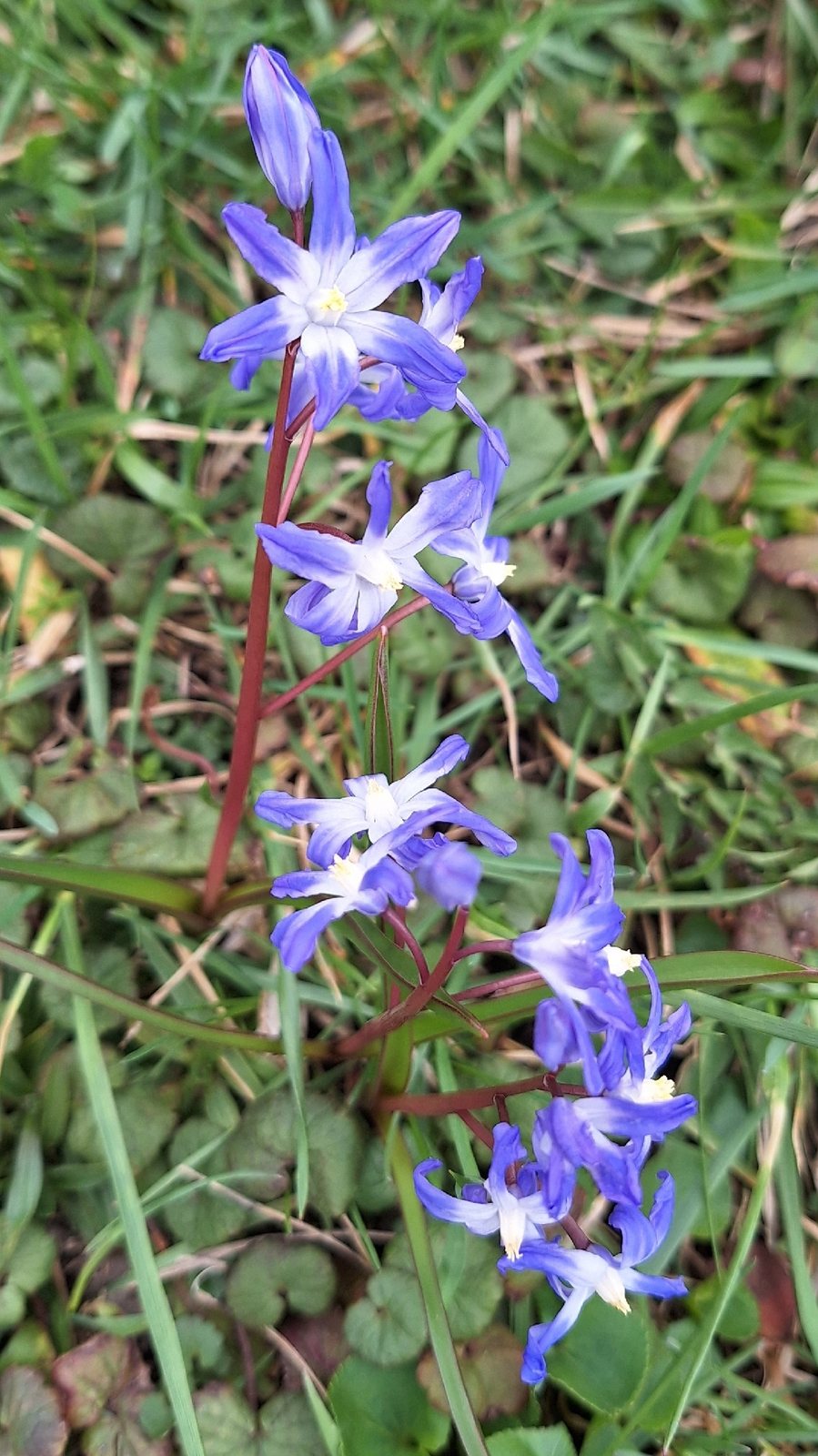
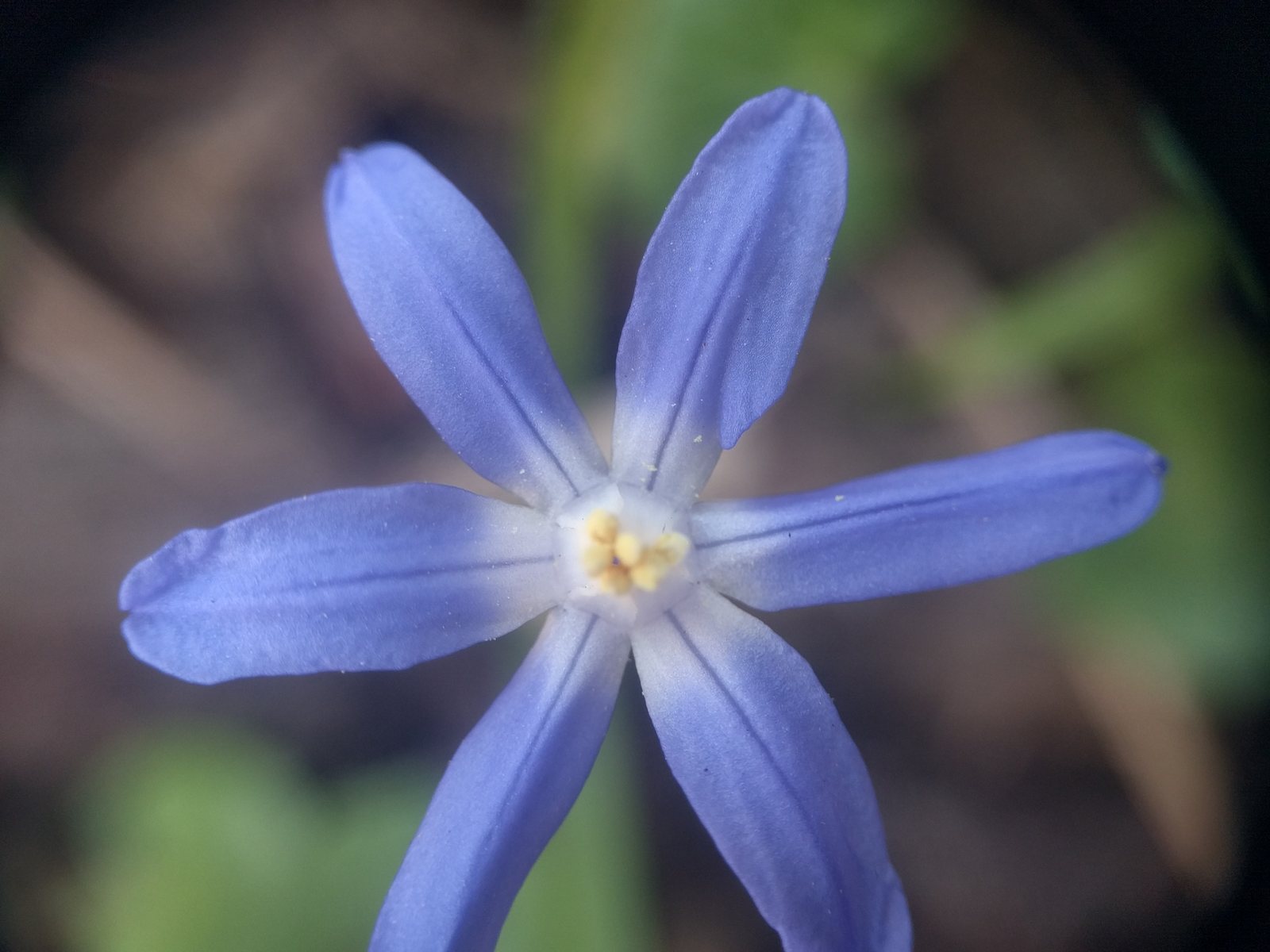
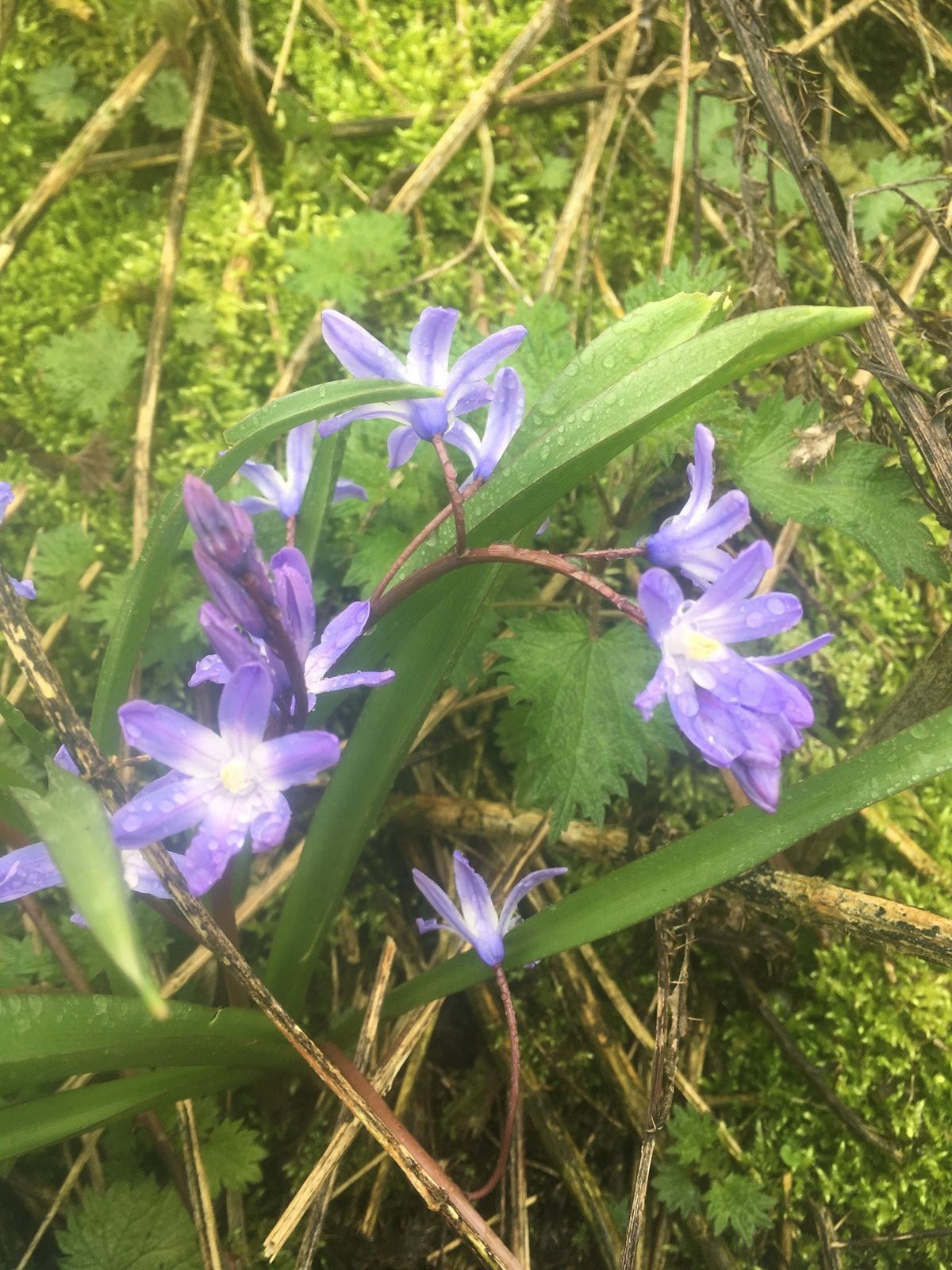
Glory of the snow is a small, spring-flowering bulb with blue, star-shaped flowers and white centres. Gardeners grow it for early colour beneath deciduous trees, along paths and in short grass, where it can gradually form colonies before disappearing underground for summer.
At a glance
- Sun
- Full sun to partial shade; suitable beneath deciduous trees that leaf out after flowering.
- Water
- Moderate moisture while growing in spring; little extra water once dormant. Avoid persistently wet soil.
- Soil
- Well-drained soil with some organic matter; tolerates chalk, loam and sandy soils, but struggles in waterlogged clay.
- Height
- 0.3-0.5 ft (0.1-0.15 m)
- Spread
- 0.2-0.3 ft (0.05-0.1 m) per bulb; colonies spread farther through offsets and seed.
- Flowers
- Early spring; blue flowers with distinct white centres, carried in small, upright clusters.
- Foliage
- A few narrow, strap-shaped green leaves emerge with the flowers, then yellow and die back by early summer.
- Growth
- Moderate; established colonies can increase steadily through self-seeding.
- Care needed
- Low
The year at a glance
- Pollinators
- Cold hardy
- Low allergen
| J | F | M | A | M | J | J | A | S | O | N | D | |
|---|---|---|---|---|---|---|---|---|---|---|---|---|
| Flowers | ||||||||||||
| Fruit | ||||||||||||
| Plant |
Northern hemisphere months. In Australia, shift them by six.
- Difficulty
- Easy
- Toughness
- Very tough
Will it suit your garden?
Pick your zone, country, light and whether you have pets.
Full sun is 6 or more hours of direct sun a day, part shade 3 to 6 hours, shade under 3.
How it grows
Planting day
0.4 ft (0.13 m)
full size
About 1 years to full size.
From a typical nursery size, at an average rate for this kind of plant. A rule of thumb, not a forecast.
Good to know
- Cats and dogs
- Toxic
- In the garden
- Spreads vigorously: plan to contain it.
- Growth rate
- Moderate
Care
Jobs through the year
- WaterMar–May, every 14 days
- Water established bulbs during prolonged dry spells while leaves remain green; stop during summer dormancy.
- WaterSep–Nov, every 14 days
- Water only if autumn soil is dry; soak newly planted bulbs once at planting.
- MulchOct–Nov
- Top-dress poor soil with thin compost; remove thick leaf mats that could smother shoots.
- DeadheadApr
- Remove fading stems before seed ripens if you want to limit spreading.
- PruneMay–Jun
- Wait until leaves have completely yellowed before clearing foliage or mowing.
- DivideJun
- Separate crowded clumps as foliage dies back and replant offsets promptly.
- Plant bulbs in autumn, about 3 in (8 cm) deep and 2-3 in (5-8 cm) apart.
- Water after planting and during unusually dry weather while leaves are green.
- Top-dress poor soil with a thin layer of compost in autumn; routine feeding is usually unnecessary.
- Leave foliage intact until it yellows naturally, and delay mowing naturalised areas until then.
- Lift and separate crowded clumps after the leaves yellow, replanting offsets promptly.
- Remove fading flower stems before seed capsules ripen if you want to limit spread.
Pruning. No regular pruning is needed. Remove leaves only after they have turned yellow and died back; deadhead after flowering if seedlings are unwanted.
Through the year
- Early autumn
- Choose a well-drained site and plant dormant bulbs.
- Late autumn
- Clear thick mats of fallen leaves that could smother emerging shoots.
- Early spring
- Water during prolonged dry spells while plants are flowering and actively growing.
- Mid-spring
- Remove spent flower stems before seed ripens if you do not want the colony to expand.
- Late spring
- Allow foliage to yellow fully before mowing or clearing it away.
- Early summer
- Divide crowded clumps as foliage dies back, and avoid watering the dormant planting area unnecessarily.
In the garden
- Plant in loose drifts beneath deciduous trees for colour before the canopy closes.
- Naturalise in short grass where mowing can wait until the bulb leaves die back.
- Use beside paths or at the front of borders where the small flowers are easy to see.
- Combine with later-emerging hostas or hardy geraniums that cover the space after the bulbs become dormant.
- Mix with snowdrops, crocuses and miniature daffodils for a sequence of early flowers.
Garden styles it suits: Woodland, Cottage garden, English country, Low-maintenance, Alpine rock garden and Blues and silvers.
Plant it with: Snowdrops, Crocuses, Miniature daffodils, Hellebores, Hostas and Hardy geraniums.
Wildlife: Early flowers provide pollen and nectar for bees active during mild spring weather. Ants may help disperse the seeds.
Problems to watch for
- Bulb rot in waterlogged soil: improve drainage or move bulbs to a raised planting area; discard soft, rotting bulbs.
- Slugs and snails damaging emerging leaves and flowers: check plants during damp weather and use barriers or locally approved controls if damage is significant.
- Poor flowering after premature mowing or cutting: leave green foliage intact so bulbs can replenish their reserves.
- Unwanted seedlings among other plants: remove flower stems before seed ripens and lift stray bulbs while their leaves are visible.
Safety
Treat all parts, especially the bulbs, as poisonous to people, cats, dogs and horses. Ingestion can cause vomiting, diarrhoea and abdominal pain; potentially serious poisoning is a concern with squills, although species-specific information for Scilla forbesii is limited. Seek medical or veterinary advice after ingestion, and wear gloves if handling bulbs irritates your skin.
Where it spreads. Can self-seed freely and form spreading colonies in lawns and woodland gardens, including in parts of the northeastern United States and southern Canada. Naturalisation does not necessarily mean it is officially listed as invasive; check local guidance before planting near natural woodland.
Easily confused with
Lucile's glory-of-the-snow (Scilla luciliae)
Usually has fewer, larger flowers per stem, often one to three, with a broad white centre. Scilla forbesii generally carries more flowers in a taller cluster; trade names are often confused.
Lesser glory-of-the-snow (Scilla sardensis)
Has deeper blue flowers with only a tiny pale centre rather than the conspicuous white eye of Scilla forbesii.
Siberian squill (Scilla siberica)
Its flowers usually hang downward like small blue bells, rather than facing upward or outward as open stars.
The name
The common name refers to its very early flowering, sometimes beside melting snow in its native mountain habitats.
Propagation. Separate bulb offsets as the foliage dies back and replant promptly. Alternatively, sow fresh ripe seed outdoors; seedlings usually take several years to flower and may differ from the parent, especially where related species grow nearby.
Checked against open data
- Accepted botanical name
- Scilla forbesii
- Native range
- Turkey.
- Measured
- Average height 23 cm.
Sources: GBIF (CC BY 4.0) and Trefle (CC BY 4.0). The care and design notes are LandscapeGPT's own.
See it in your own yard.
Upload a photo of your yard and see it redesigned with plants that suit your climate, each checked against your zone.