Glossy abelia Kaleidoscope
Abelia × grandiflora 'Kaleidoscope'. Family Caprifoliaceae. Shrub.
Also called Kaleidoscope abelia, Linnaea × grandiflora 'Kaleidoscope'.
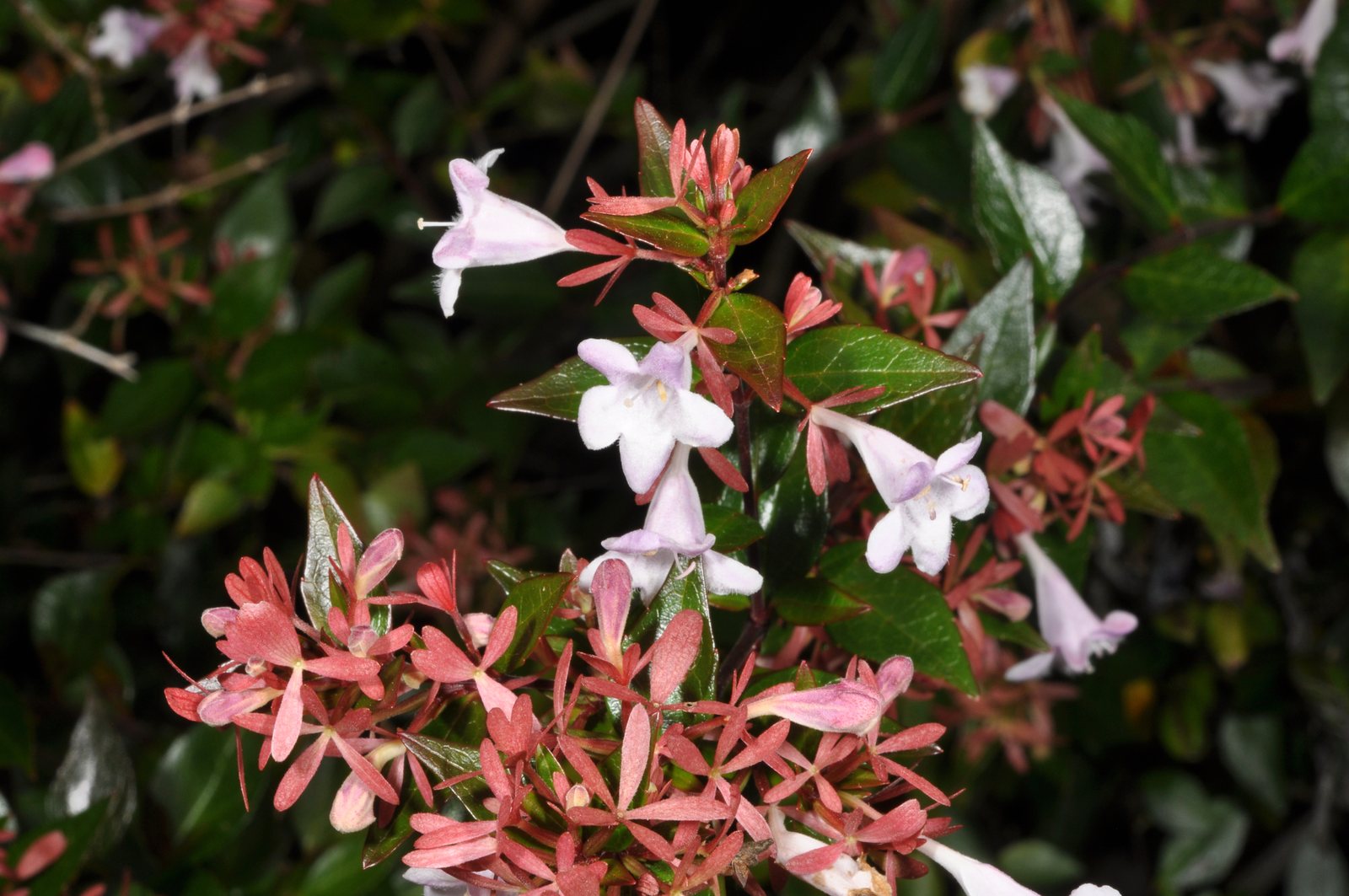
A compact, rounded abelia grown mainly for its changing leaf colours: yellow and green in spring, deepening to orange and red in cooler weather. It carries small white flowers over a long season and stays evergreen in mild climates, but may lose some or all of its leaves in cold winters.
At a glance
- Sun
- Full sun to partial shade; foliage colours best with good light. Give afternoon shade in very hot, dry locations.
- Water
- Water regularly during the first growing season. Once established, water deeply during prolonged dry spells; plants in pots need more frequent watering.
- Soil
- Well-drained soil, preferably moderately fertile and slightly acidic to neutral. Avoid waterlogged ground.
- Height
- 2-3 ft (0.6-0.9 m)
- Spread
- 3-4 ft (0.9-1.2 m)
- Flowers
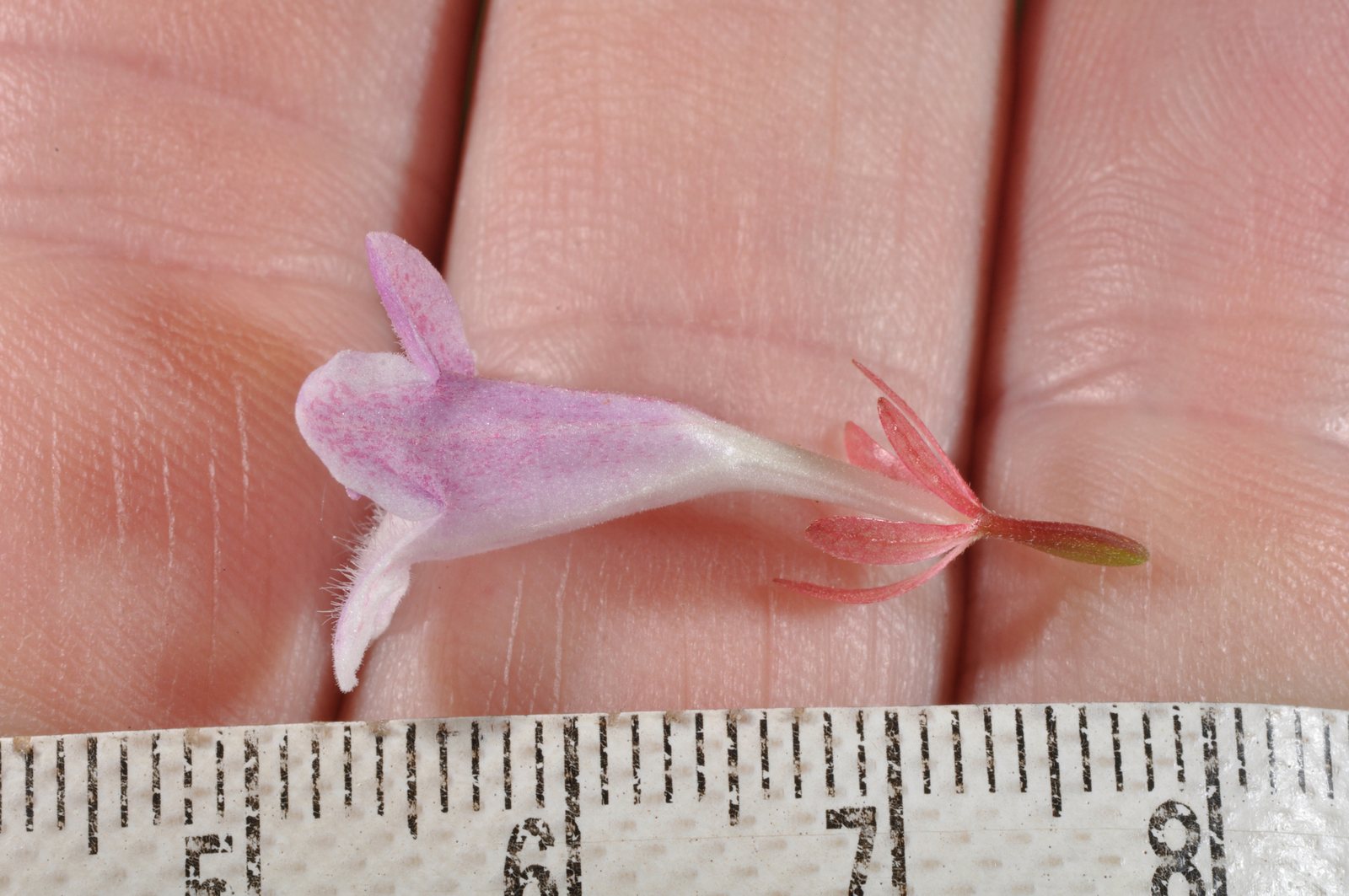
- Small, lightly fragrant white tubular flowers from summer into autumn, opening from pale pink buds.
- Foliage
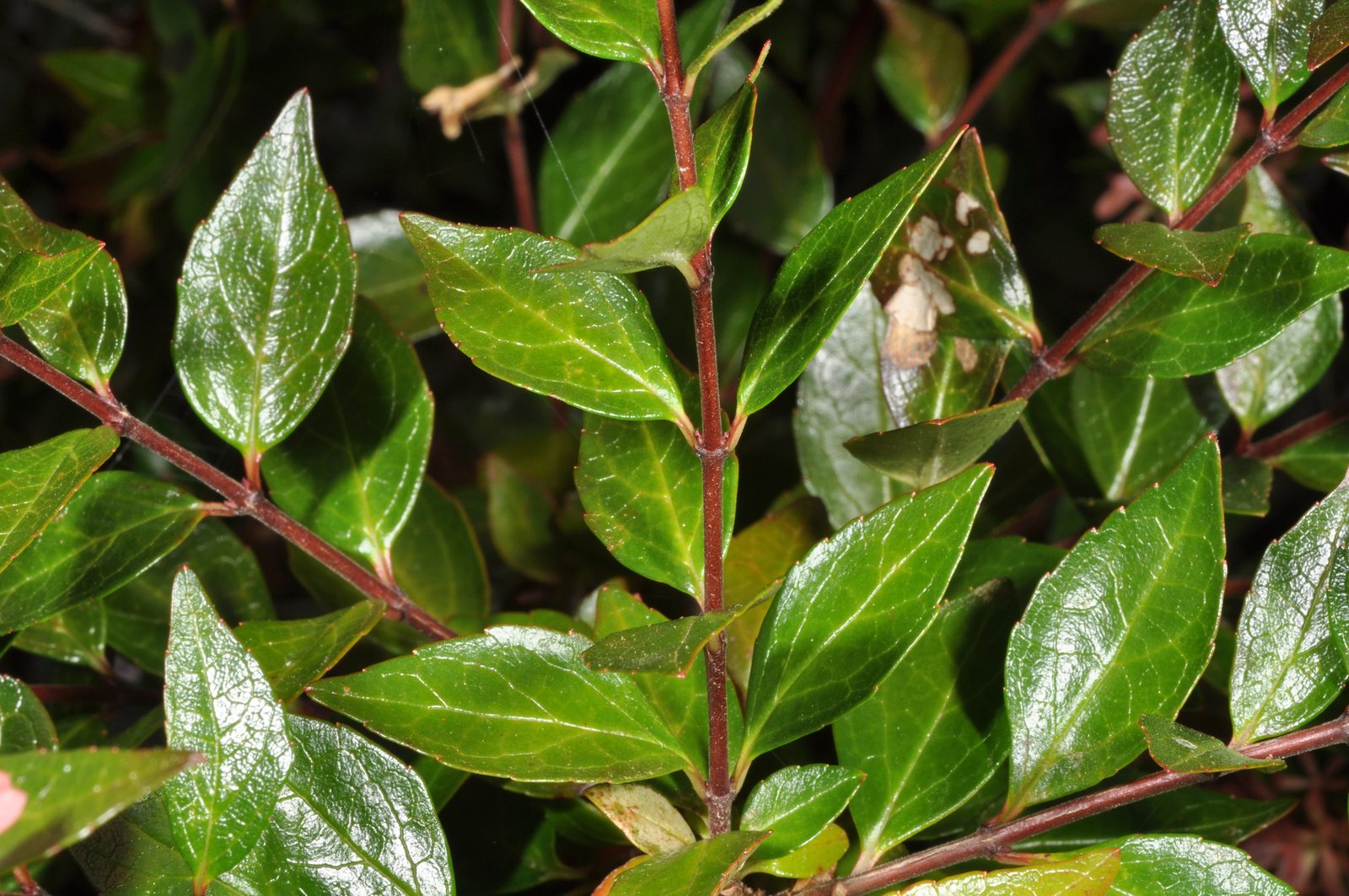
- Evergreen. Small, glossy, pointed leaves with green centres and yellow margins; margins develop orange, bronze and red tones in autumn and winter.
- Growth
- Moderate
- Care needed
- Low
The year at a glance
- Pollinators
- Deer resistant
- Drought tolerant
- Heat tolerant
- Disease resistant
- Low allergen
- Fragrant
| J | F | M | A | M | J | J | A | S | O | N | D | |
|---|---|---|---|---|---|---|---|---|---|---|---|---|
| Flowers | ||||||||||||
| Plant |
Northern hemisphere months. In Australia, shift them by six.
- Difficulty
- Easy
- Toughness
- Fairly tough
Will it suit your garden?
Pick your zone, country, light and whether you have pets.
Full sun is 6 or more hours of direct sun a day, part shade 3 to 6 hours, shade under 3.
How it grows
Planting day
1.6 ft (0.5 m)
After 1 year
1.8 ft (0.55 m)
After 2 years
2 ft (0.6 m)
After 3 years
2.1 ft (0.65 m)
After 5 years
2.5 ft (0.75 m)
full size
About 5 years to full size.
From a typical nursery size, at an average rate for this kind of plant. A rule of thumb, not a forecast.
Good to know
- Cats and dogs
- Safe
- Growth rate
- Moderate
Care
Jobs through the year
- WaterApr–May, Sep–Oct, every 14 days
- Water established shrubs only if the root zone is dry; young plants and pots need more frequent checks.
- WaterJun–Aug, every 7 days
- Water deeply during prolonged dry weather, allowing the surface to dry between waterings.
- MulchApr
- Refresh 5–8 cm of organic mulch, keeping it away from stems.
- FeedApr
- Use a light balanced slow-release feed only on poor soil or if growth is weak.
- PruneMar–Apr
- Once winter damage is clear, remove dead stems and shorten wayward growth; avoid shearing.
- PruneMay–Aug
- Remove any vigorous, entirely green reverted shoots at their base.
- ProtectJan–Feb, Nov–Dec
- Shelter container roots from severe freezes; exposed zone 6 plants benefit from winter shelter.
- Water deeply when the root zone begins to dry during establishment; do not keep the soil constantly wet.
- Apply a 2-3 in (5-8 cm) organic mulch, keeping it clear of the stems.
- Feed lightly in spring with a balanced slow-release fertiliser if growth is weak or the soil is poor.
- Choose a sheltered position near the colder end of its hardiness range.
- Use a pot with drainage holes and protect container roots from severe winter freezing.
Pruning. In late winter or early spring, remove dead or frost-damaged stems and shorten wayward shoots just above a leafy bud. Remove vigorous, entirely green shoots at their base; avoid frequent shearing, which reduces flowers and spoils the natural shape.
Through the year
- Early spring
- Check for winter damage and prune once the extent of dieback is clear.
- Spring
- Plant in well-drained soil, refresh mulch and feed lightly if needed.
- Late spring
- Check new growth for aphids and remove any entirely green reverted shoots.
- Summer
- Water newly planted shrubs during dry weather; check pots frequently.
- Summer
- Take semi-ripe cuttings from healthy, non-flowering shoots.
- Autumn
- Plant in mild regions while the soil is warm; avoid hard pruning before winter.
- Winter
- Keep containers draining freely and shelter their roots during severe freezes.
In the garden
- Plant along the front of a mixed border for a low layer of changing foliage colour.
- Repeat in loose groups beside paths or terraces to create rhythm without a clipped hedge.
- Combine with purple-leaved shrubs and blue-flowered perennials for foliage and flower contrast.
- Grow in a large patio container where its rounded shape and winter colour can be seen closely.
- Use as a low, informal foundation shrub, allowing room for its mature spread.
Garden styles it suits: Modern, Modern courtyard, Cottage garden, Low-maintenance, Small-space and Winter interest.
Plant it with: Catmint, Hardy geranium, Purple coneflower, Coral bells, Dwarf fountain grass and Purple-leaved ninebark.
Wildlife: The flowers provide nectar for bees and other visiting insects. Its dense branching offers small-scale shelter, although it is not a native shrub in the United States, United Kingdom, Canada or Australia.
Problems to watch for
- Winter leaf loss or stem dieback: choose a sheltered site, mulch the root zone and remove dead wood in spring; some leaf loss is normal in colder climates.
- Root rot in wet soil: improve drainage or move the shrub to a raised position; reduce watering rather than feeding a declining plant.
- Aphids on soft shoots: wash off small colonies with water and encourage ladybirds and other predators.
- Leaf scorch during hot, dry weather: water deeply, maintain mulch and provide afternoon shade in the hottest locations.
Safety
Not known to be toxic to cats, dogs, horses or people. No part is recognised as poisonous, although cultivar-specific safety information is limited; it is not an edible plant, and eating foliage may cause stomach upset.
Easily confused with
Glossy abelia (Abelia × grandiflora)
The usual green-leaved forms grow considerably taller and have plain green foliage rather than the yellow-edged, seasonally orange-red leaves of 'Kaleidoscope'.
Variegated weigela (Weigela florida 'Variegata')
Has larger, less glossy, visibly toothed leaves with creamy margins, and a stronger flush of pink trumpet-shaped flowers in late spring. It is deciduous.
Golden privet (Ligustrum ovalifolium 'Aureum')
Has larger, broader yellow-edged leaves and upright growth. Its flowers form dense clusters rather than the small tubular flowers scattered along abelia shoots.
The name
Abelia honours the physician and naturalist Clarke Abel, grandiflora means large-flowered, and 'Kaleidoscope' refers to the changing colours of its foliage.
Propagation. Take semi-ripe cuttings in summer and root them in a free-draining propagation mix. Seed will not reliably reproduce this cultivar; check local plant breeders' rights before propagating for sale.
Checked against open data
- Accepted botanical name
- Abelia chinensis Abelia × grandiflora 'Kaleidoscope' is an older name for Abelia chinensis.
- Native range
- China South-Central, China Southeast, Nansei-shoto, Taiwan and Vietnam.
- Measured
- Average height 183 cm.
Sources: GBIF (CC BY 4.0) and Trefle (CC BY 4.0). The care and design notes are LandscapeGPT's own.
See it in your own yard.
Upload a photo of your yard and see it redesigned with plants that suit your climate, each checked against your zone.