Goat's beard
Aruncus dioicus. Family Rosaceae. Perennial.
Also called Goatsbeard, Bride's feathers.
Goat's beard is a large, clump-forming perennial grown for its tall, creamy-white flower plumes and finely divided foliage. It brings height to moist woodland gardens and shaded borders, but needs room and dependable moisture. It performs best in cool climates and struggles with prolonged heat or dry soil.
At a glance
- Sun
- Partial shade is ideal; tolerates full sun in cool climates if the soil stays moist. Give afternoon shade in warmer areas.
- Water
- Keep consistently moist, especially during establishment and hot weather; avoid prolonged waterlogging.
- Soil
- Humus-rich, moisture-retentive but well-drained soil; tolerates clay if drainage is adequate and accepts acidic to mildly alkaline conditions.
- Height
- 4-6 ft (1.2-1.8 m)
- Spread
- 2-4 ft (0.6-1.2 m)
- Flowers
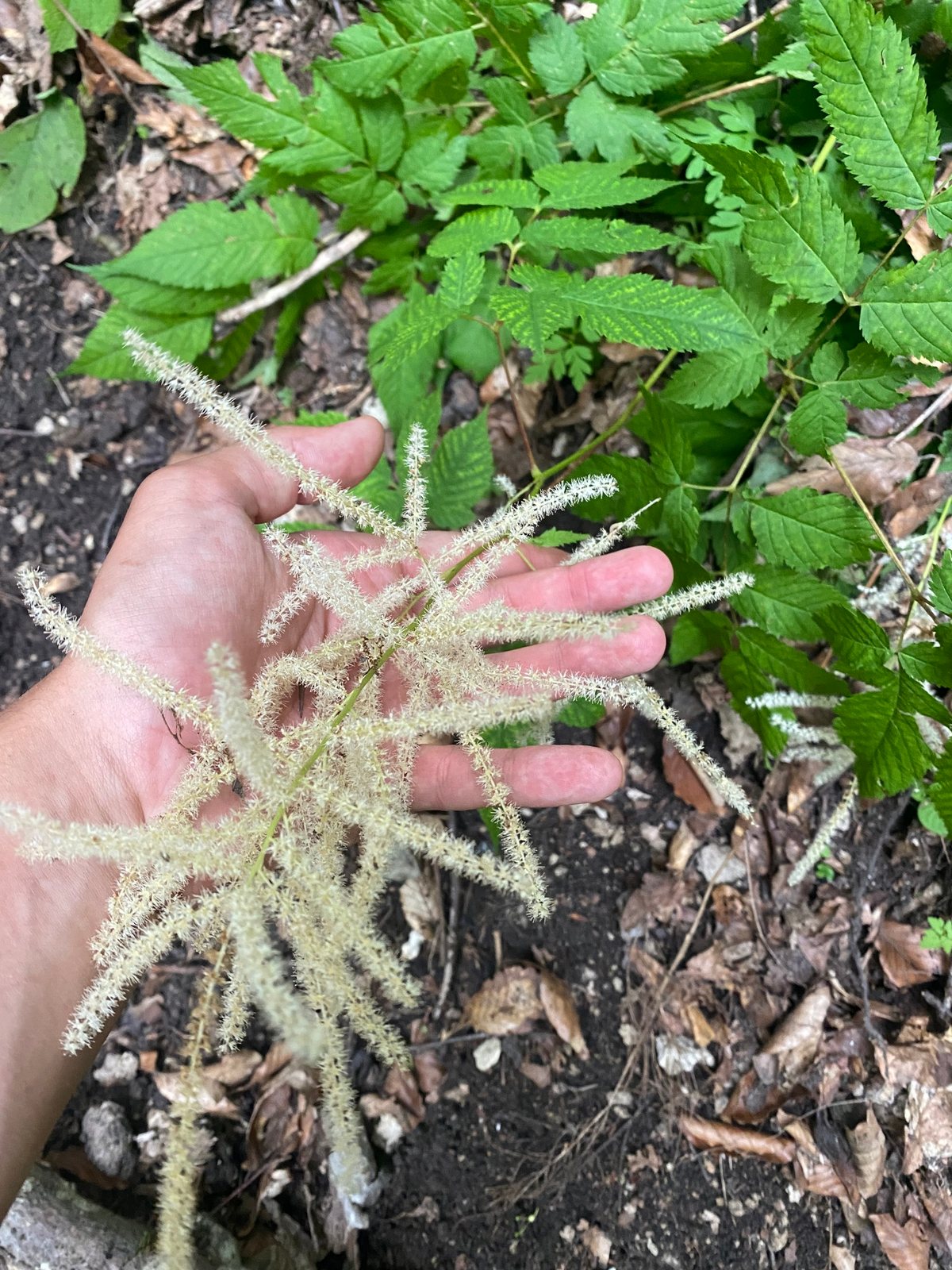
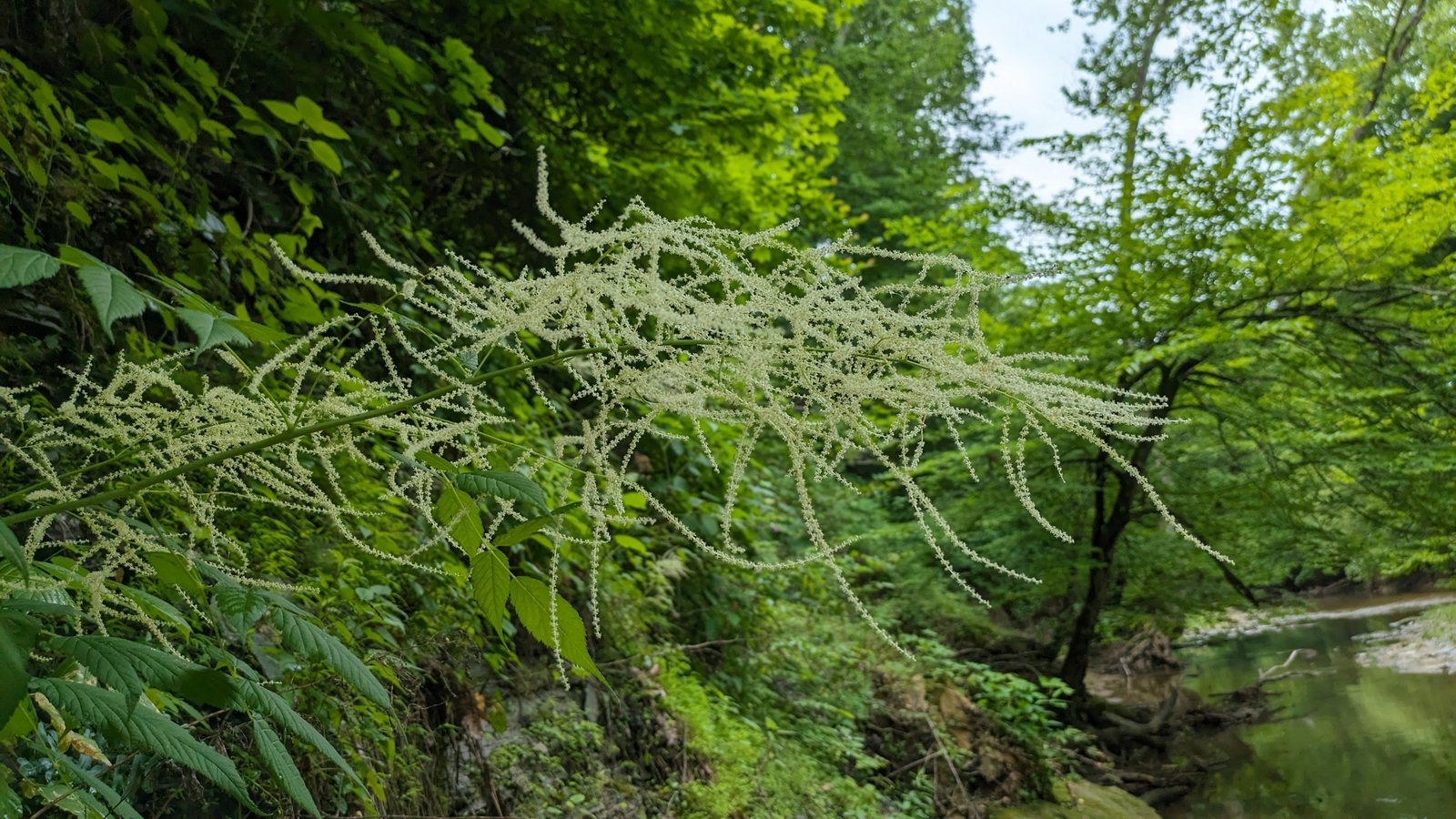
- Late spring to midsummer, with branching plumes of creamy-white flowers. Male and female flowers usually occur on separate plants; male plumes are generally showier.
- Foliage
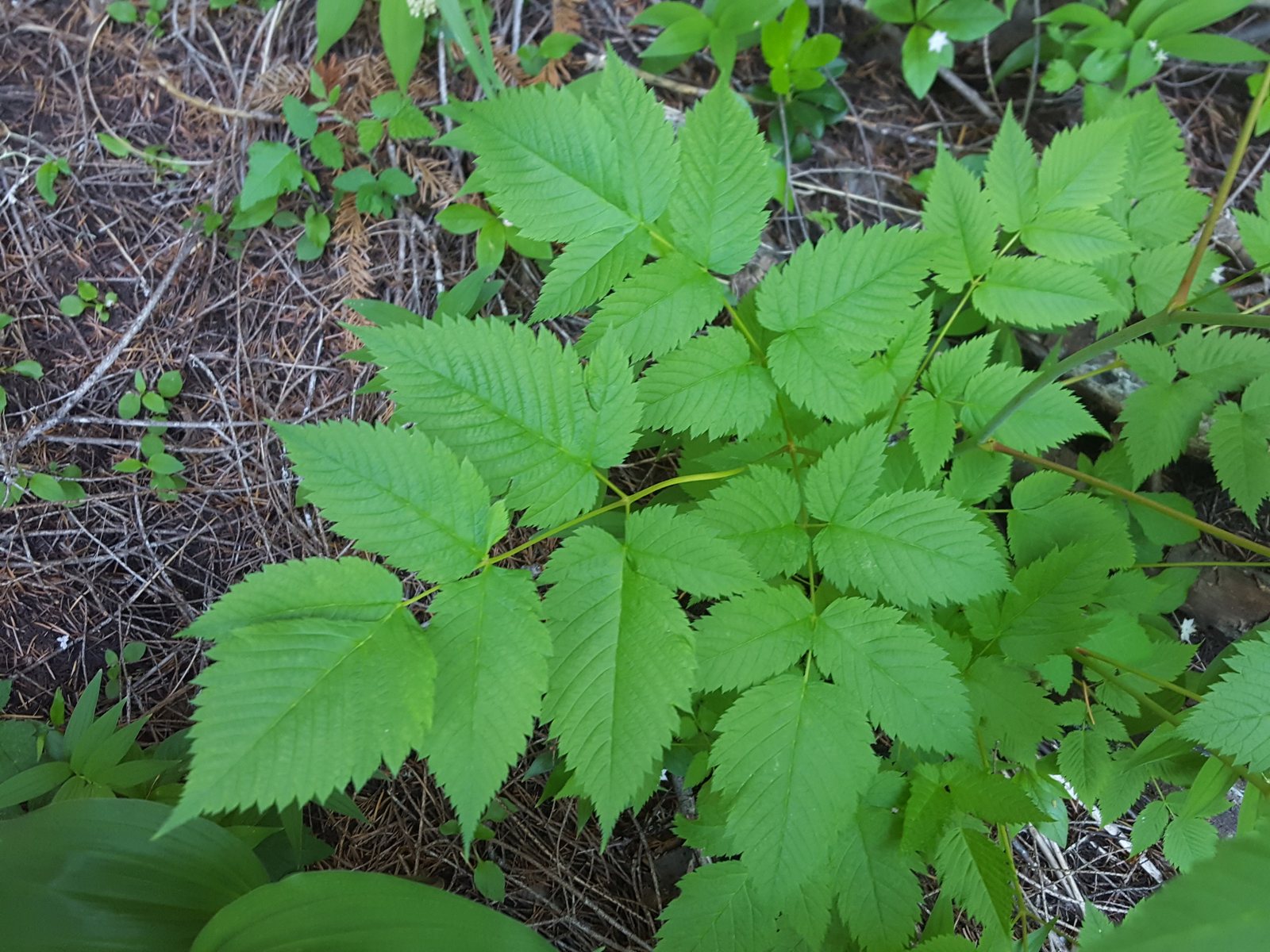
- Large, compound leaves divided into pointed, toothed green leaflets; sometimes yellow in autumn before dying back.
- Growth
- Moderate; takes several years to form a substantial clump.
- Care needed
- Low
The year at a glance
- Pollinators
- Deer resistant
- Cold hardy
- Wildlife
| J | F | M | A | M | J | J | A | S | O | N | D | |
|---|---|---|---|---|---|---|---|---|---|---|---|---|
| Flowers | ||||||||||||
| Fruit | ||||||||||||
| Plant |
Northern hemisphere months. In Australia, shift them by six.
- Difficulty
- Easy
- Toughness
- Fairly tough
Will it suit your garden?
Pick your zone, country, light and whether you have pets.
Full sun is 6 or more hours of direct sun a day, part shade 3 to 6 hours, shade under 3.
How it grows
Planting day
1 ft (0.3 m)
After 1 year
2.3 ft (0.7 m)
After 2 years
4 ft (1.1 m)
After 3 years
5 ft (1.5 m)
full size
About 3 years to full size.
From a typical nursery size, at an average rate for this kind of plant. A rule of thumb, not a forecast.
Good to know
- Cats and dogs
- Toxic
- Native to
- the US and Canada
- Growth rate
- Moderate
Care
Jobs through the year
- WaterApr–May, Sep, every 7 days
- Water established clumps when rain is insufficient; keep new plants consistently moist.
- WaterJun–Aug, every 4 days
- Soak established roots during dry weather, keeping soil moist but not waterlogged.
- MulchMar–Apr
- Apply compost or leaf mould around, not over, emerging shoots.
- FeedApr
- Feed lightly only if soil is poor or growth is weak.
- ProtectMar–May
- Check emerging shoots for slugs and use wildlife-conscious controls if needed.
- DeadheadJul–Aug
- Remove faded plumes for tidiness or to prevent seedlings; otherwise retain their structure.
- PruneFeb–Mar
- Cut remaining dead stems near ground level before new growth starts.
- DivideMar–Apr
- Divide only if necessary; established clumps are best left undisturbed.
- Water deeply during dry spells; leaf edges can scorch if roots dry out.
- Apply a layer of compost or leaf mould in spring, keeping it clear of emerging shoots.
- Feed lightly in spring only if growth is weak or the soil is poor.
- Allow space for the mature clump rather than crowding it against smaller plants.
- Stake early only on exposed sites; plants usually support themselves.
- Leave established clumps undisturbed unless division is needed.
Pruning. Remove faded flower stalks after flowering if you want a tidier appearance or less self-seeding. Cut dead stems to near ground level in late autumn or late winter, before new shoots emerge.
Through the year
- Late winter
- Cut down any remaining dead stems before fresh growth starts.
- Spring
- Plant or divide while the soil is moist; water well after planting.
- Spring
- Mulch with compost or leaf mould and protect emerging shoots from slugs if necessary.
- Summer
- Water during dry spells, soaking the root zone rather than wetting only the surface.
- After flowering
- Remove spent flower stalks if you do not want seedlings, or leave them for their branching structure.
- Autumn
- Remove unwanted seedlings and replenish mulch once the soil is moist.
In the garden
- Place at the back of a shaded border, where its flower plumes rise above hostas and ferns.
- Plant in loose groups along a woodland edge for a broad, natural-looking mass.
- Use beside a pond or stream on moist ground above the permanently waterlogged margin.
- Combine with white foxgloves and dark green foliage in a cool white garden.
Garden styles it suits: Woodland, Cottage garden, English country, Wildlife garden, White garden and Pacific Northwest woodland.
Plant it with: Hostas, Astilbes, Japanese painted ferns, Siberian bugloss, Solomon's seal and White foxgloves.
Wildlife: Flowers attract bees, flies and other small pollinating insects. The dense clump provides shelter for garden invertebrates.
Problems to watch for
- Brown leaf edges or wilting in summer usually indicate dry soil or excessive sun; water deeply, mulch and provide afternoon shade.
- Slugs and snails may damage young shoots; inspect at dusk and use barriers or locally approved controls where needed.
- Powdery mildew can occur in crowded, stressed plants; improve air circulation and keep roots evenly moist.
- Poor growth or crown decay in persistently saturated soil calls for better drainage or relocation to moist but aerated ground.
Safety
Seeds are reported to contain cyanogenic compounds and should not be eaten. The risk to people, cats, dogs and horses, and the toxicity of other plant parts, are not well established; do not treat it as an edible or fodder plant. Potential cyanide poisoning can be serious, so seek medical or veterinary advice after ingestion.
Easily confused with
Astilbe (Astilbe spp.)
Astilbes usually have denser, narrower flower plumes and are often smaller; their flowers may be pink, red or purple as well as white. Goat's beard has broad, airy, branching cream plumes.
Yellow goat's beard (Tragopogon pratensis)
This unrelated plant has narrow, grass-like leaves, yellow daisy-like flowers and large dandelion-like seed heads, not divided leaves and white plumes.
Korean goat's beard (Aruncus aethusifolius)
Forms a much smaller, low mound with finer foliage and shorter flower stems, rather than the tall, broad clump of Aruncus dioicus.
The name
Aruncus comes from a Greek word for a goat's beard, referring to the flower plumes, while dioicus means that male and female flowers occur on separate plants.
Propagation. Divide established clumps in early spring using a sharp spade or knife; older crowns can be tough to split. Alternatively, sow fresh seed in autumn and leave outdoors for natural winter chilling. Seed-grown plants vary and may take several years to flower.
Checked against open data
- Accepted botanical name
- Aruncus dioicus
- In the US and Canada
- Native in Alaska, Canada and the lower 48 states. Introduced in the lower 48 states.
- Native range
- Alabama, Alaska, Albania, Alberta, Amur, Arkansas, Austria, Belarus, British Columbia, California, Chita and Czechoslovakia.
- Measured
- Average height 158 cm.
Sources: GBIF (CC BY 4.0), USDA PLANTS and Trefle (CC BY 4.0). The care and design notes are LandscapeGPT's own.
See it in your own yard.
Upload a photo of your yard and see it redesigned with plants that suit your climate, each checked against your zone.