Goji berry
Lycium barbarum. Family Solanaceae. Shrub.
Also called Wolfberry, Duke of Argyll's tea tree, Chinese boxthorn.
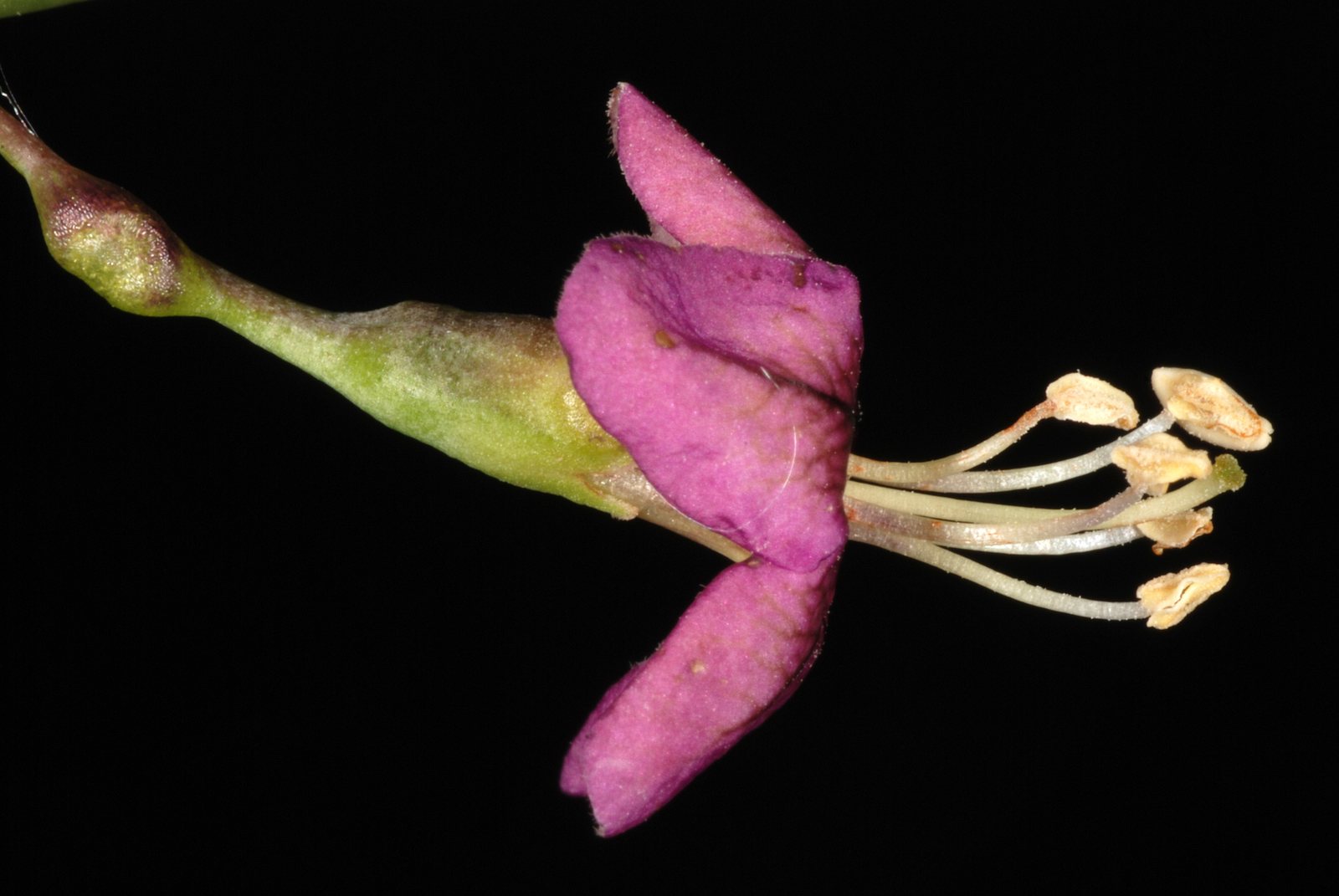
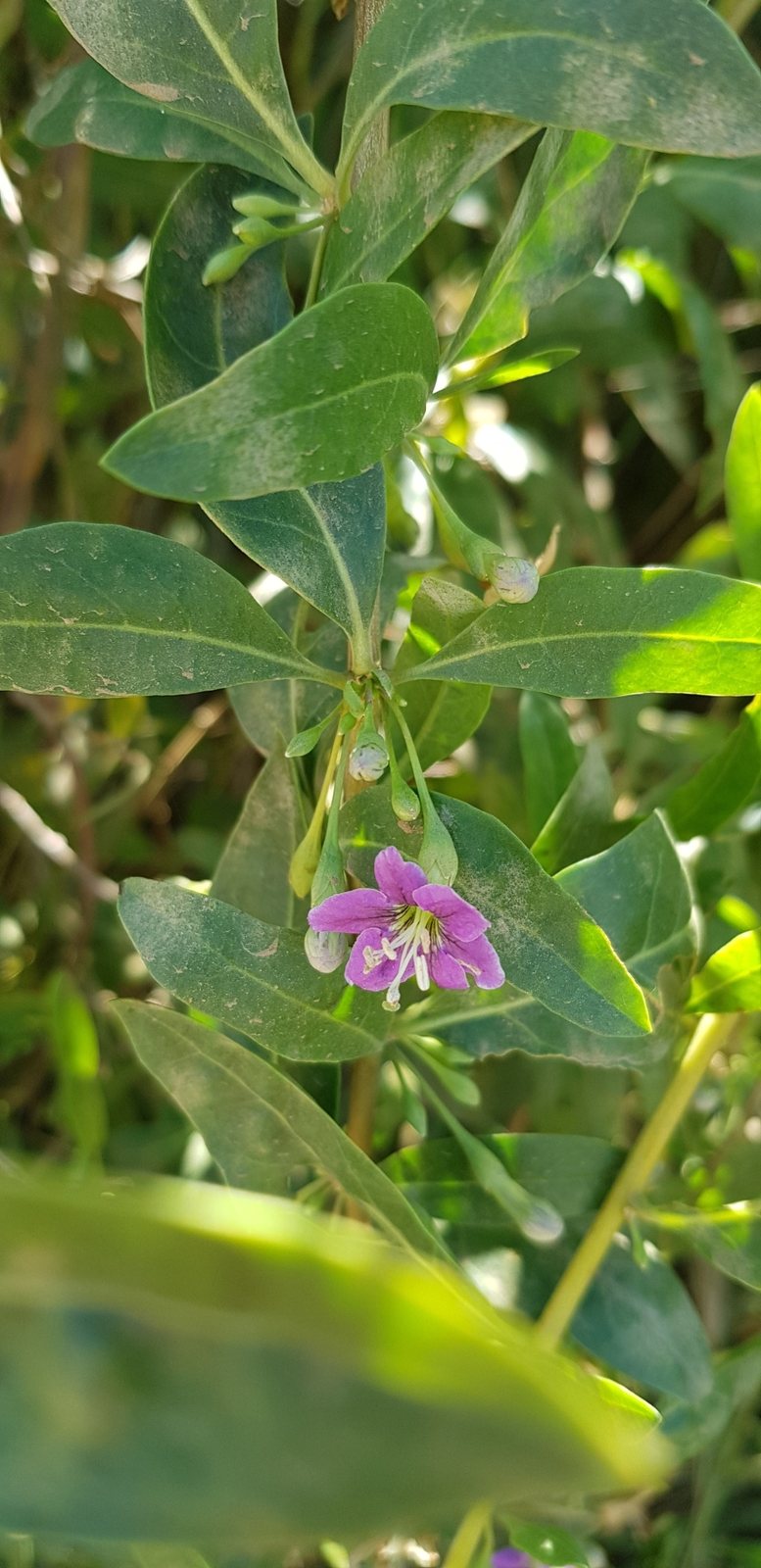
Goji berry is a deciduous, sometimes thorny shrub with arching stems, purple flowers and orange-red edible berries. Gardeners grow it for fresh or dried fruit, usually training its sprawling growth against wires or keeping it within a dedicated fruit bed.
At a glance
- Sun
- Full sun gives the best flowering and fruiting; tolerates light shade.
- Water
- Water regularly during establishment and fruit development, letting the soil surface dry between waterings. Established plants tolerate some drought.
- Soil
- Well-drained soil, including sandy, chalky or moderately poor soil; avoid waterlogged ground.
- Height
- 6-10 ft (1.8-3 m)
- Spread
- 4-8 ft (1.2-2.4 m), wider if suckers are left unchecked
- Flowers
- Small purple to lilac flowers from late spring through summer, sometimes continuing into autumn.
- Foliage
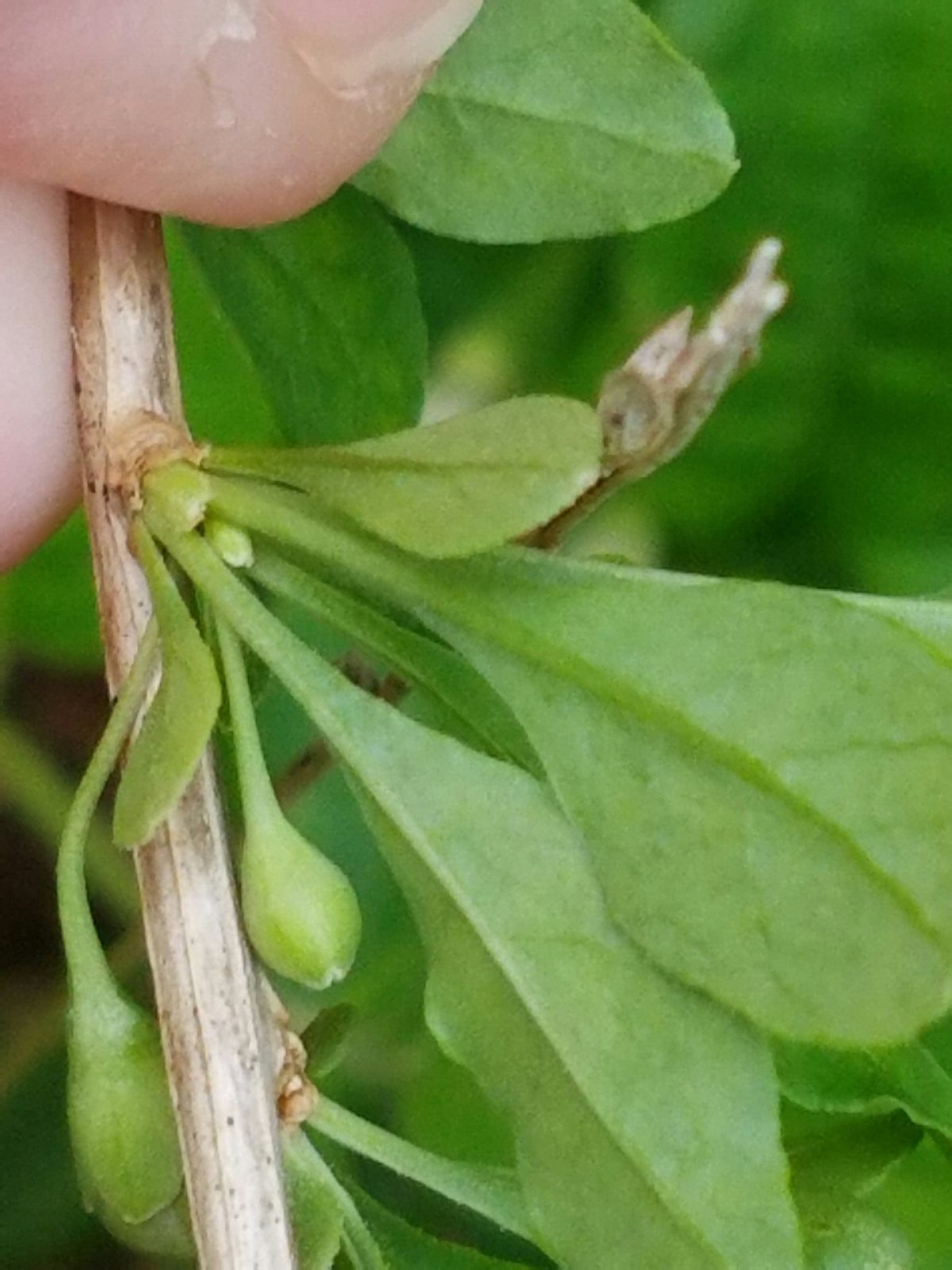
- Narrow, grey-green leaves on long, arching shoots; stems may carry thorns.
- Growth
- Fast once established
- Care needed
- Medium
The year at a glance
- Pollinators
- Drought tolerant
- Heat tolerant
- Wildlife
- Low allergen
- Edible
| J | F | M | A | M | J | J | A | S | O | N | D | |
|---|---|---|---|---|---|---|---|---|---|---|---|---|
| Flowers | ||||||||||||
| Fruit | ||||||||||||
| Plant |
Northern hemisphere months. In Australia, shift them by six.
- Difficulty
- Moderate
- Toughness
- Very tough
Will it suit your garden?
Pick your zone, country, light and whether you have pets.
Full sun is 6 or more hours of direct sun a day, part shade 3 to 6 hours, shade under 3.
How it grows
Planting day
1.6 ft (0.5 m)
After 1 year
4 ft (1.1 m)
After 2 years
5 ft (1.7 m)
After 3 years
7 ft (2.3 m)
After 5 years
8 ft (2.4 m)
full size
About 3 years to full size.
From a typical nursery size, at an average rate for this kind of plant. A rule of thumb, not a forecast.
Good to know
- Cats and dogs
- Mildly toxic: may upset a stomach
- In the garden
- Spreads vigorously: plan to contain it.
- Growth rate
- Fast
Care
Jobs through the year
- WaterApr–May, Oct, every 14 days
- Water established shrubs during dry spells; water young plants more frequently during establishment.
- WaterJun–Sep, every 7 days
- Water during dry weather while berries swell, letting the soil surface dry between waterings.
- FeedMar–Apr
- Apply compost lightly; avoid heavy nitrogen feeding.
- MulchMar–Apr
- Mulch the root area with organic matter, keeping stem bases clear.
- PruneFeb–Mar
- Thin crowded and old stems, remove dead wood and shorten last year's side shoots.
- PruneMay–Sep, every 30 days
- Remove unwanted root suckers and prevent low branches rooting into the soil.
- ProtectMay–Jun
- Tie long new shoots to sturdy wires or a trellis to keep fruit off the ground.
- HarvestJul–Oct
- Pick only fully orange-red, soft berries that release easily; handle gently.
- Water deeply during dry spells in the first growing season and while berries are swelling.
- Apply compost in spring; avoid heavy nitrogen feeding, which encourages leafy growth rather than fruit.
- Mulch the root area, keeping mulch clear of the stem bases.
- Tie long stems to sturdy wires or a trellis to keep fruit off the ground.
- Remove unwanted root suckers promptly and keep branches from rooting where they touch soil.
Pruning. In late winter, remove dead, damaged and crowded stems, retaining a framework of well-spaced branches. Shorten last season's side shoots to encourage fresh fruiting growth, and replace a few old stems at the base as the shrub ages.
Harvest
Pick berries from summer into autumn when they are fully orange-red, soft and easily released; avoid green or partly coloured fruit. Handle gently because ripe berries bruise easily. Expect the first worthwhile crop about 2-3 years after planting, sometimes longer in cool summers.
Through the year
- Late winter
- Prune the framework and remove dead wood before growth starts.
- Spring
- Plant in well-drained ground, apply compost and refresh mulch.
- Late spring
- Tie in new shoots and inspect young growth for aphids.
- Summer
- Water during prolonged dry spells and remove unwanted suckers.
- Late summer
- Pick fully ripe berries regularly as they colour and soften.
- Autumn
- Finish harvesting and remove fallen diseased leaves.
In the garden
- Train against wires along a sunny boundary to make harvesting easier.
- Use in a dedicated berry bed with enough space to control suckers.
- Include in an informal edible hedge, away from narrow paths because of the thorns.
- Grow behind low herbs in a productive garden, where its loose outline softens supports.
Garden styles it suits: Potager (kitchen garden), Edible landscape, Homestead, Food forest, Cottage garden and Native hedgerow.
Plant it with: Chives, Thyme, Oregano, Lavender and Calendula.
Wildlife: Flowers attract bees and other pollinating insects. Birds eat ripe berries and may spread the seed.
Problems to watch for
- Powdery mildew: thin crowded stems, provide good airflow and avoid drought stress.
- Aphids: wash colonies from young shoots with water and encourage ladybirds and other predators.
- Poor fruiting: provide full sun, avoid excessive nitrogen and allow young plants time to establish.
- Unwanted spread: dig out suckers with their connecting roots and prevent low branches from rooting.
Safety
Fully ripe berries are edible for people. Avoid eating unripe berries or unidentified leaves and stems; their safety should not be assumed from the edible fruit. Reliable species-specific toxicity information for cats, dogs and horses is limited, so keep pets and livestock from browsing it. Goji products can interact with warfarin.
Where it spreads. Spreads by root suckers, rooting stems and bird-carried seed. It is naturalised in parts of the United Kingdom, continental Europe and North America and can form persistent local thickets; check local guidance before planting near natural areas.
Easily confused with
Chinese wolfberry (Lycium chinense)
Very similar and also sold as goji. It generally has broader leaves and a flower calyx with 3-5 lobes, whereas L. barbarum usually has a two-lobed calyx; reliable identification may require close examination.
Bittersweet nightshade (Solanum dulcamara)
A scrambling plant with broad, sometimes lobed leaves and purple flowers with strongly swept-back petals around a yellow cone. Its red berries are poisonous and must not be harvested as goji.
The name
The common name goji comes from the Chinese name gouqi.
Propagation. Take hardwood cuttings during dormancy or softwood cuttings in early summer, or separate rooted suckers. Seed-grown plants vary in fruit quality and may take longer to crop.
Checked against open data
- Accepted botanical name
- Lycium barbarum
- In the US and Canada
- Introduced in Canada and the lower 48 states.
- Native range
- China North-Central, China South-Central, Inner Mongolia, Qinghai and Xinjiang.
- Measured
- Soil pH 7 to 7.5. Average height 200 cm.
Sources: GBIF (CC BY 4.0), USDA PLANTS and Trefle (CC BY 4.0). The care and design notes are LandscapeGPT's own.
See it in your own yard.
Upload a photo of your yard and see it redesigned with plants that suit your climate, each checked against your zone.