Gold Heart bleeding heart
Lamprocapnos spectabilis 'Gold Heart'. Family Papaveraceae. Perennial.
Also called Golden bleeding heart, Dicentra spectabilis 'Gold Heart'.
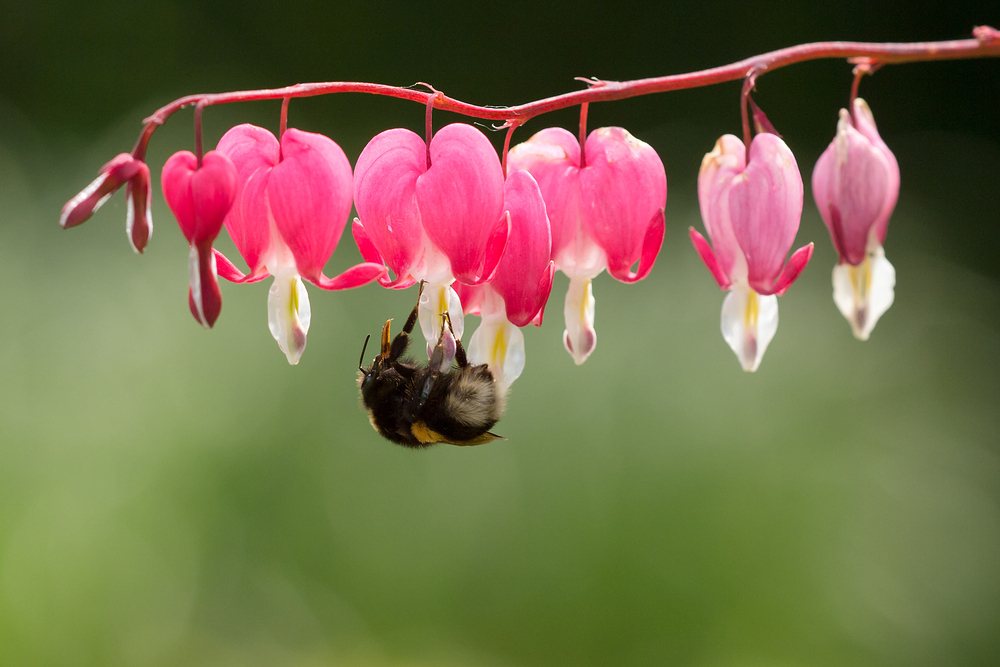
Gold Heart bleeding heart is a clump-forming perennial grown for its golden-yellow foliage and arching stems of pink-and-white, heart-shaped flowers. It brightens sheltered, partly shaded borders in spring, then often dies back during summer, especially in hot or dry conditions.
At a glance
- Sun
- Partial shade, preferably morning sun and afternoon shade. Protect the golden leaves from strong midday sun; deep shade reduces flowering.
- Water
- Keep evenly moist while growing, without waterlogging. Water during dry spells; dormant plants need much less water.
- Soil
- Humus-rich, moisture-retentive but well-drained soil; tolerates slightly acidic to slightly alkaline conditions.
- Height
- 2-3 ft (0.6-0.9 m)
- Spread
- 2-3 ft (0.6-0.9 m)
- Flowers
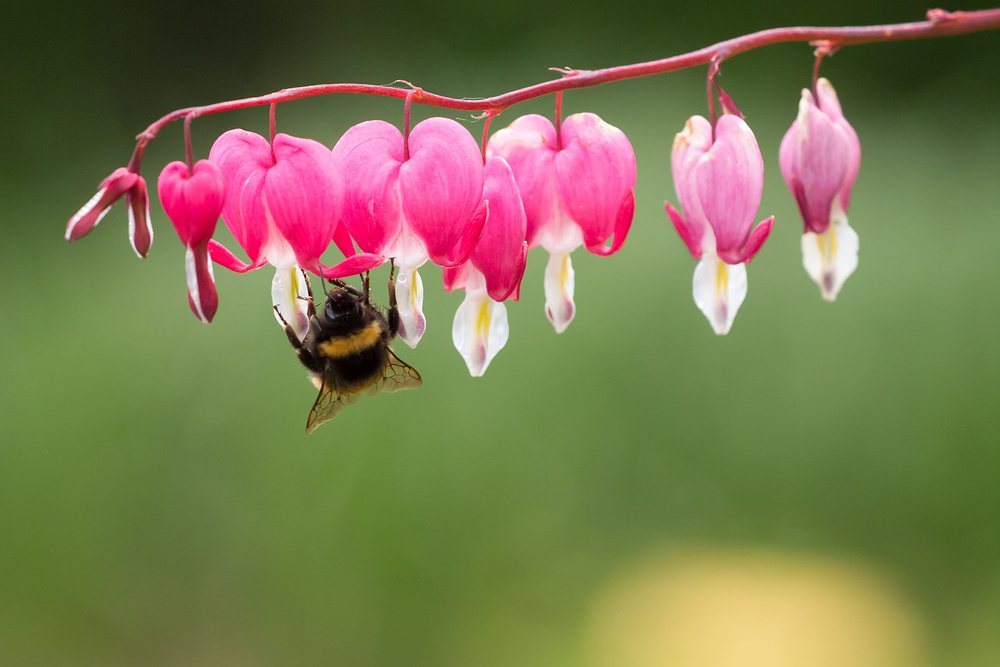
- Mid- to late spring, sometimes into early summer; rose-pink hearts with white projecting inner petals hang beneath arching stems.
- Foliage
- Soft, divided leaves emerge golden yellow and may become chartreuse as they age. Foliage often yellows and disappears in summer.
- Growth
- Moderate; makes substantial spring growth from a dormant crown.
- Care needed
- Low
The year at a glance
- Pollinators
- Deer resistant
- Cold hardy
- Low allergen
| J | F | M | A | M | J | J | A | S | O | N | D | |
|---|---|---|---|---|---|---|---|---|---|---|---|---|
| Flowers | ||||||||||||
| Plant |
Northern hemisphere months. In Australia, shift them by six.
- Difficulty
- Easy
- Toughness
- Fairly tough
Will it suit your garden?
Pick your zone, country, light and whether you have pets.
Full sun is 6 or more hours of direct sun a day, part shade 3 to 6 hours, shade under 3.
How it grows
Planting day
1 ft (0.3 m)
After 1 year
1.5 ft (0.45 m)
After 2 years
2 ft (0.6 m)
After 3 years
2.5 ft (0.75 m)
full size
About 3 years to full size.
From a typical nursery size, at an average rate for this kind of plant. A rule of thumb, not a forecast.
Good to know
- Cats and dogs
- Toxic
- Growth rate
- Moderate
Care
Jobs through the year
- WaterMar–Apr, every 7 days
- Check established plants and water deeply if soil begins drying; water new plants more often.
- WaterMay–Jun, every 5 days
- Water if needed to maintain even moisture during growth; stop routine watering once dormant.
- FeedMar
- Top-dress with a thin layer of compost; avoid heavy feeding.
- MulchMar, Oct
- Refresh leaf mould around the plant, keeping the crown clear.
- ProtectMar–Apr
- Cover emerging shoots with fleece before late frosts and check for slugs.
- DeadheadMay–Jun
- Remove spent flower stems if a tidier appearance is wanted.
- PruneJun–Aug
- Cut foliage to ground level only after it has fully yellowed; mark the dormant crown.
- DivideMar, Sep–Oct
- Divide only if necessary, handling the brittle roots carefully.
- Water deeply when the soil begins to dry during spring growth.
- Apply a thin layer of compost in early spring; avoid heavy feeding.
- Mulch with leaf mould or compost to conserve moisture, keeping it clear of the crown.
- Shelter emerging shoots from late frosts and strong winds.
- Leave established clumps undisturbed unless division is needed.
Pruning. Remove spent flower stems if you want a tidier clump. Cut foliage to ground level only once it has yellowed and died back naturally.
Through the year
- Early spring
- Plant or divide while dormant or just emerging, and top-dress established plants with compost.
- Spring
- Protect tender shoots during late frosts and check for slugs and snails.
- Late spring
- Water during dry weather and remove spent flower stems if desired.
- Summer
- Allow natural dormancy; remove fully yellowed foliage and mark the crown so you do not dig into it.
- Autumn
- Plant dormant nursery stock while the soil is workable and refresh the organic mulch.
In the garden
- Plant beneath deciduous trees where spring light gives way to summer shade.
- Pair with blue-flowered brunnera or lungwort for contrast with the golden leaves.
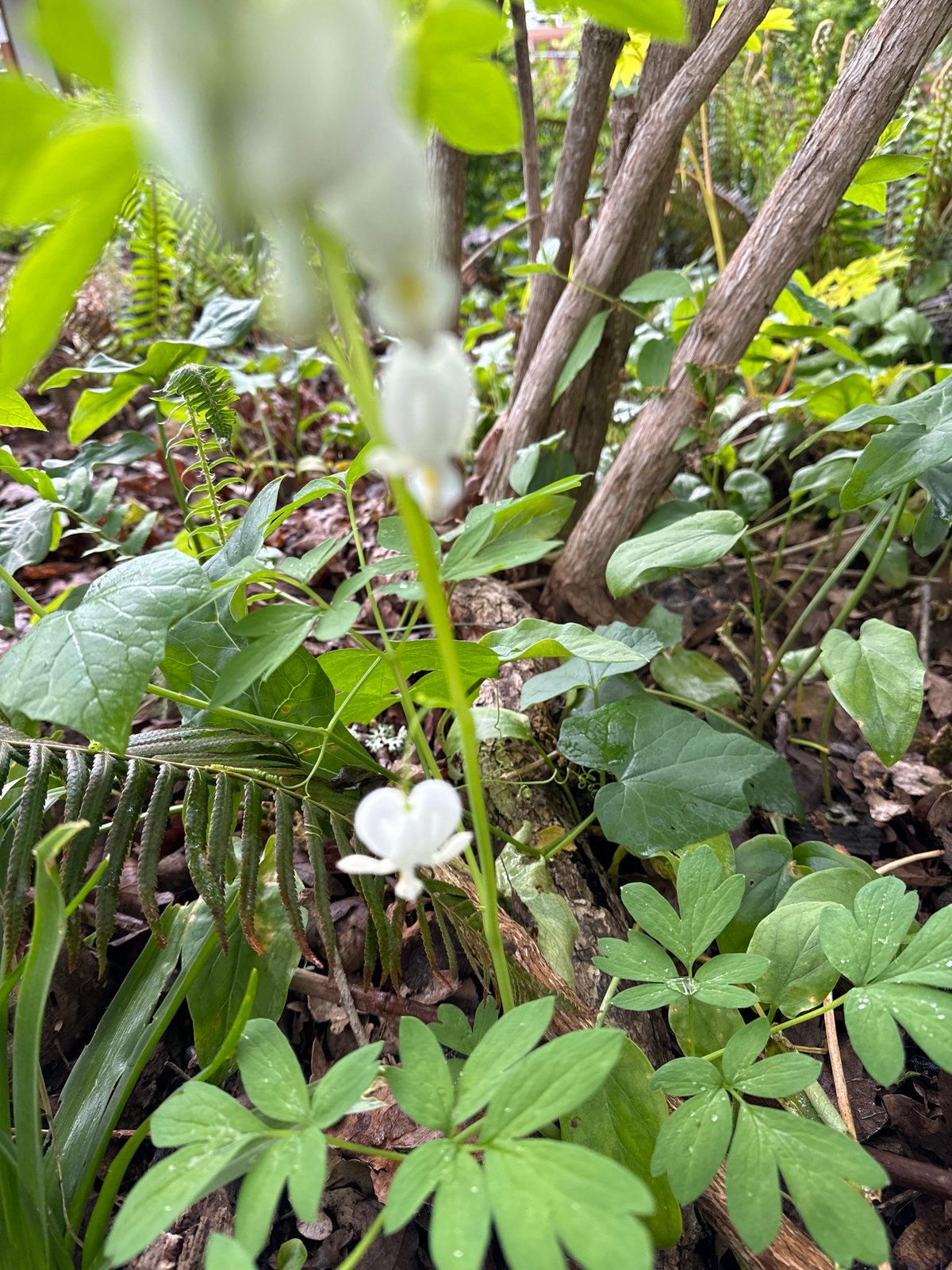
- Place among hostas and ferns that expand later and cover the gap left by summer dormancy.
- Use beside a shaded path where the hanging flowers can be seen at close range.
Garden styles it suits: Woodland, Cottage garden, Romantic rose garden, English country, Secret garden and Pastel border.
Plant it with: Hostas, Japanese painted fern, Siberian bugloss, Lungwort, Astilbe and Hardy geraniums.
Wildlife: Flowers can attract bumblebees and other long-tongued bees. It is not a host plant for most native insects outside its native East Asian range.
Problems to watch for
- Slugs and snails can eat emerging shoots; check at dusk, remove pests and use iron phosphate bait according to the label if needed.
- Hot sun or dry soil can scorch leaves and trigger early dormancy; provide afternoon shade, mulch and steady spring moisture.
- Waterlogged soil can cause crown or root rot; improve drainage or move the plant, and discard badly rotted crowns.
- Late frost can blacken young shoots; cover emerging growth with horticultural fleece when frost is forecast and remove damaged tissue afterward.
Safety
All parts are toxic if eaten by people, cats, dogs or horses, particularly the roots. Ingestion can cause vomiting, diarrhoea and, with larger amounts, trembling or other nervous-system effects. Sap may irritate skin; keep it away from grazing animals and seek medical or veterinary advice after ingestion.
Easily confused with
Common bleeding heart (Lamprocapnos spectabilis)
Has similar pink-and-white flowers but normally green rather than golden-yellow foliage.
Fern-leaf bleeding heart (Dicentra eximia)
Usually shorter, with more finely cut grey-green leaves and smaller flowers; often remains leafy and flowers longer in suitable conditions.
Pacific bleeding heart (Dicentra formosa)
Forms spreading colonies with finely divided green foliage and smaller, clustered flowers rather than the large hearts on long arching stems.
The name
Bleeding heart describes the heart-shaped flowers with their protruding inner petals, while 'Gold Heart' refers to the cultivar's golden foliage.
Propagation. Divide dormant clumps in early spring or autumn, retaining healthy buds and roots on each section. Root cuttings taken during dormancy are another option; seedlings will not reliably retain the golden foliage of 'Gold Heart'.
Checked against open data
- Accepted botanical name
- Lamprocapnos spectabilis
- In the US and Canada
- Introduced in the lower 48 states.
- Native range
- Korea and Manchuria.
- Measured
- Average height 75 cm.
Sources: GBIF (CC BY 4.0), USDA PLANTS and Trefle (CC BY 4.0). The care and design notes are LandscapeGPT's own.
See it in your own yard.
Upload a photo of your yard and see it redesigned with plants that suit your climate, each checked against your zone.