Golden everlasting
Xerochrysum bracteatum. Family Asteraceae. Annual.
Also called Strawflower, Paper daisy, Everlasting daisy.
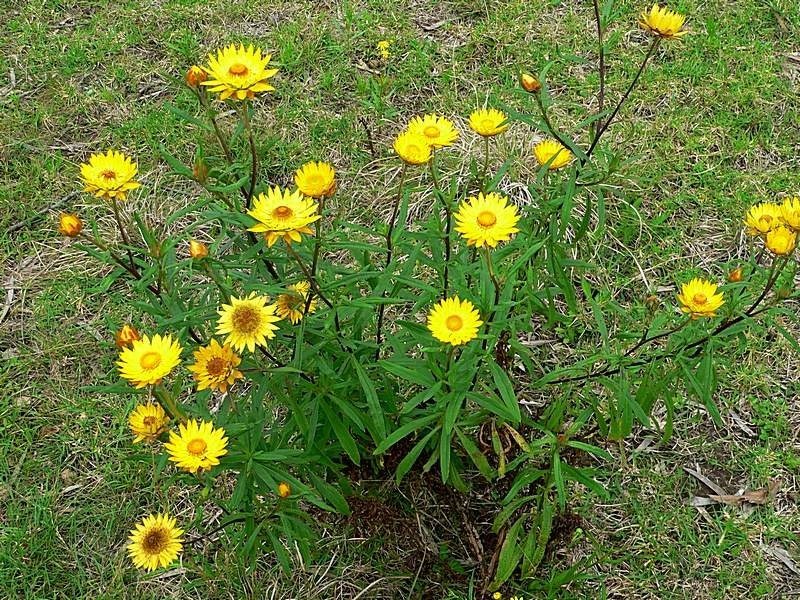
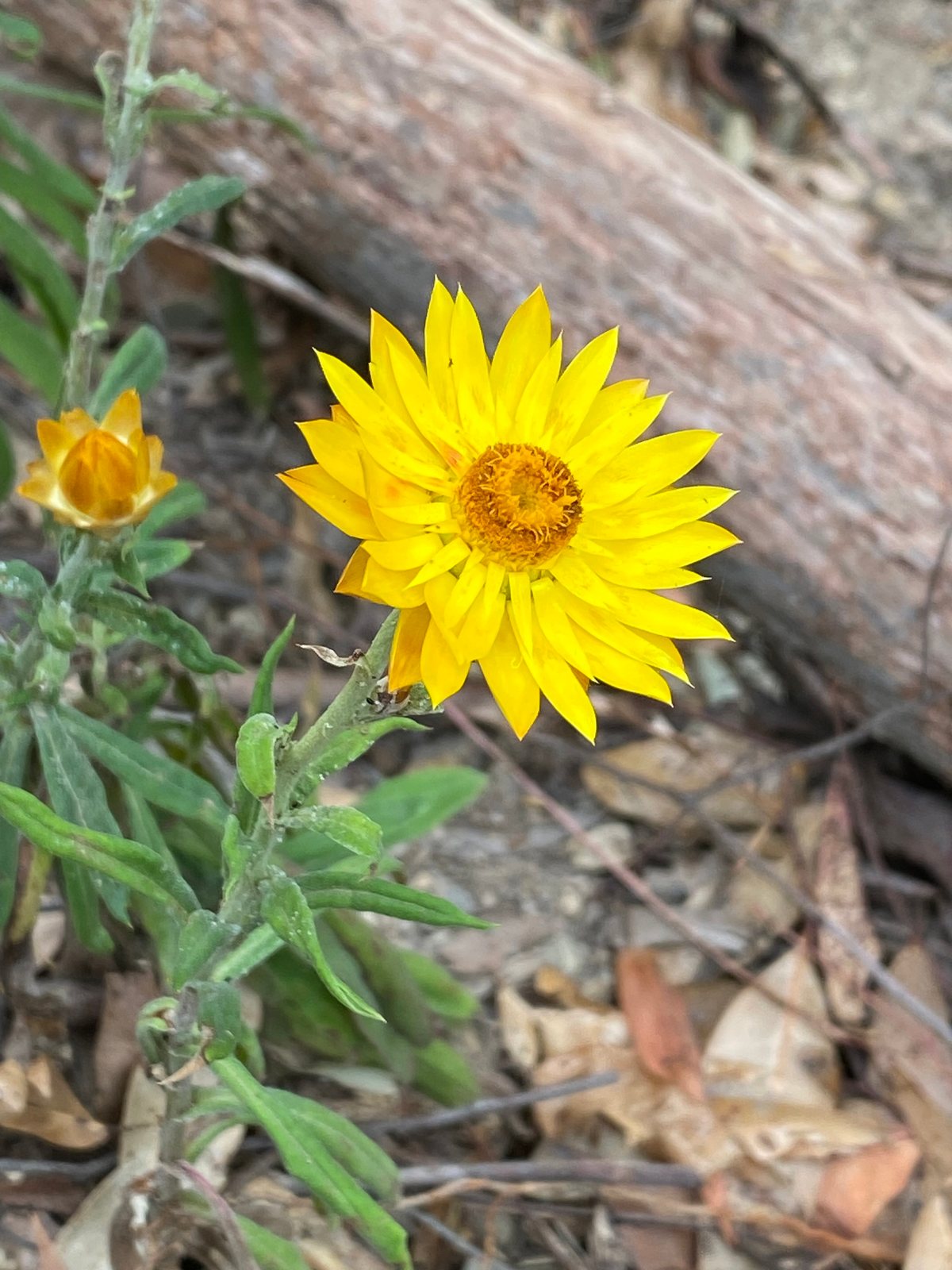
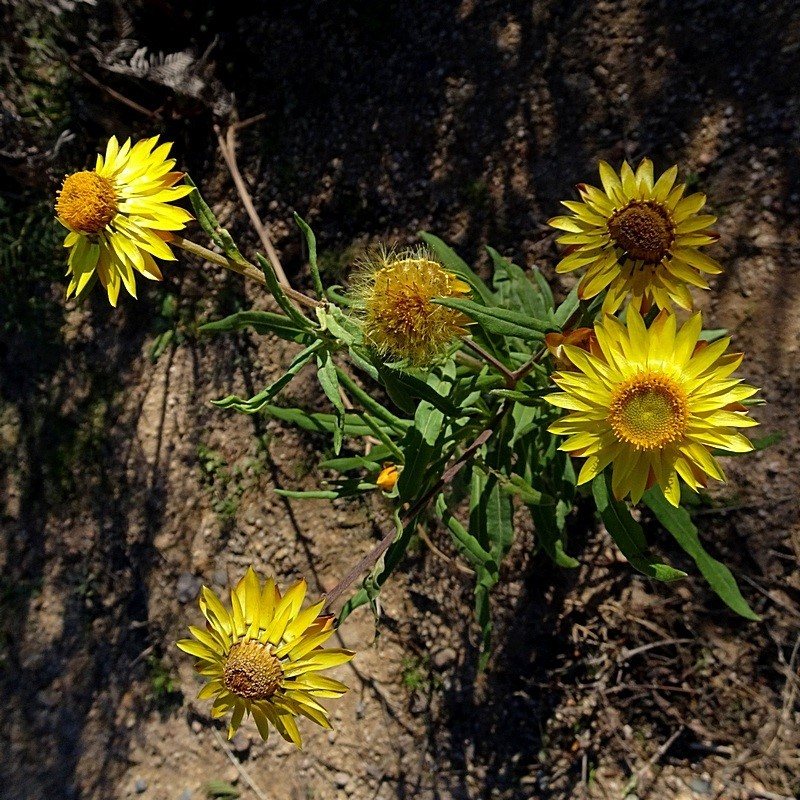
Golden everlasting is an Australian daisy grown for flower heads surrounded by stiff, papery bracts that keep their colour when dried. Usually grown as an annual, it can be a short-lived perennial in frost-free climates; garden varieties include yellow, orange, red, pink and white.
At a glance
- Sun
- Full sun.
- Water
- Water moderately while establishing, then let the surface soil dry between waterings. Established plants tolerate short dry spells, but flower better with occasional deep watering.
- Soil
- Well-drained sandy or loamy soil of modest fertility. Avoid heavy, waterlogged ground.
- Height
- 1-4 ft (0.3-1.2 m), depending on variety
- Spread
- 1-2 ft (0.3-0.6 m)
- Flowers
- Summer to autumn, usually until frost; yellow in wild plants, with orange, red, pink, white and mixed shades in garden varieties.
- Foliage
- Narrow, lance-shaped green to grey-green leaves, often slightly hairy.
- Growth
- Fast; flowers in its first growing season.
- Care needed
- Low
The year at a glance
- Pollinators
- Drought tolerant
- Heat tolerant
- Low allergen
| J | F | M | A | M | J | J | A | S | O | N | D | |
|---|---|---|---|---|---|---|---|---|---|---|---|---|
| Flowers | ||||||||||||
| Fruit | ||||||||||||
| Plant |
Northern hemisphere months. In Australia, shift them by six.
- Difficulty
- Easy
- Toughness
- Fairly tough
Will it suit your garden?
Pick your zone, country, light and whether you have pets.
Full sun is 6 or more hours of direct sun a day, part shade 3 to 6 hours, shade under 3.
How it grows
Planting day
0.5 ft (0.15 m)
After 1 year
2.5 ft (0.75 m)
full size
Full size in one season.
From a typical nursery size, at an average rate for this kind of plant. A rule of thumb, not a forecast.
Good to know
- Cats and dogs
- Safe
- Native to
- Australia
- Growth rate
- Fast
Care
Jobs through the year
- WaterMay–Jun, every 7 days
- For rooted plants in the ground, water if surface soil is dry; seedlings need closer attention.
- WaterJul–Aug, every 7 days
- Water deeply during dry weather, letting surface soil dry between waterings.
- WaterSep–Oct, every 14 days
- Water only when soil is drying and plants are still actively growing.
- FeedJun
- Apply a light balanced feed only if growth is weak; rich feeding causes floppy stems.
- PruneMay–Jun
- Pinch young growing tips once to encourage branching.
- ProtectJun
- Support tall varieties before stems lean, especially in exposed sites.
- DeadheadJun–Oct, every 7 days
- Cut faded heads back to a leaf or side shoot; leave a few late heads for seed if wanted.
- ProtectOct–Nov
- Clear frost-killed plants and remove diseased debris.
- Plant out after frost danger has passed, allowing space for air to move between plants.
- Water at soil level when the surface dries; avoid keeping the roots constantly wet.
- Use a light application of balanced fertiliser only if growth is weak; rich feeding encourages floppy stems.
- Support tall varieties early in exposed gardens with twiggy stakes or a low plant-support grid.
- Keep mulch thin and away from the stems to reduce rotting.
Pruning. Pinch out the growing tip of young plants to encourage branching. Remove faded flower heads regularly, cutting back to a leaf or side shoot, and clear frost-killed plants at the end of the season.
Through the year
- Early spring
- Sow indoors in bright light about 6-8 weeks before the last expected frost; press seed onto the surface and barely cover.
- Late spring
- Harden off seedlings and plant outside after frost danger has passed, or sow directly into warming soil.
- Early summer
- Pinch young plants for bushier growth and support tall varieties before stems lean.
- Summer
- Water during prolonged dry weather and remove spent flower heads to prolong flowering.
- Late summer
- For dried arrangements, cut stems when the outer bracts have opened but the centre is still closed; hang in a dry, shaded, airy place.
- Autumn
- Leave a few heads to ripen if you want seed, then clear plants once frost kills them.
In the garden
- Plant in groups through sunny cottage borders for long-lasting summer colour.
- Use compact varieties in sunny containers with freely draining compost.
- Grow in a cutting bed for fresh bouquets and dried arrangements.
- Combine with fine grasses and airy annuals in informal, sunny borders.
- Include in Australian native plantings where drainage is good and taller neighbours will not shade it.
Garden styles it suits: Cottage garden, Australian native, Pollinator garden, Dry gravel garden, Hot border and Sensory garden.
Plant it with: Cosmos, Zinnia, Salvia, Verbena, Lavender and Kangaroo paw.
Wildlife: Open flower heads provide pollen and nectar for bees, hoverflies and other visiting insects.
Problems to watch for
- Root or stem rot in wet soil: improve drainage, keep mulch away from stems and avoid watering before the soil needs it.
- Downy mildew in damp, crowded conditions: improve spacing, keep foliage dry and remove badly affected plants.
- Aphids on soft shoots: rinse off with water or use insecticidal soap according to its label if infestations persist.
- Tall stems flopping in rich soil or wind: reduce feeding, provide full sun and install supports early.
Safety
Not known to be toxic to people, cats, dogs or horses; no particular plant part is recognised as poisonous. It is an ornamental rather than a food plant, and eating it may still cause stomach upset.
Easily confused with
Sticky everlasting (Xerochrysum viscosum)
Also has yellow papery flower heads, but its narrower leaves are conspicuously sticky; it is usually grown as a perennial.
Pink paper daisy (Rhodanthe chlorocephala subsp. rosea)
Usually has smaller pink or white heads with a dark central ring and finer, narrower foliage on more slender stems.
Curry plant (Helichrysum italicum)
Has silver-grey, strongly curry-scented leaves and clusters of small yellow button flowers rather than large, individually borne papery daisies.
The name
Xerochrysum comes from Greek words meaning dry and gold, while bracteatum refers to the conspicuous papery bracts surrounding the true flowers.
Propagation. Grow from seed in spring, either indoors before the last frost or directly outside after frost danger has passed. Seed needs light for germination, so sow shallowly. Named varieties may not come true from saved seed; some perennial selections are propagated from softwood cuttings.
Checked against open data
- Accepted botanical name
- Xerochrysum bracteatum
- In the US and Canada
- Introduced in the lower 48 states and Puerto Rico.
- Native range
- New South Wales and Victoria.
- Measured
- Average height 68 cm.
Sources: GBIF (CC BY 4.0), USDA PLANTS and Trefle (CC BY 4.0). The care and design notes are LandscapeGPT's own.
See it in your own yard.
Upload a photo of your yard and see it redesigned with plants that suit your climate, each checked against your zone.