Golden garlic
Allium moly. Family Amaryllidaceae. Bulb.
Also called Lily leek, Golden onion.
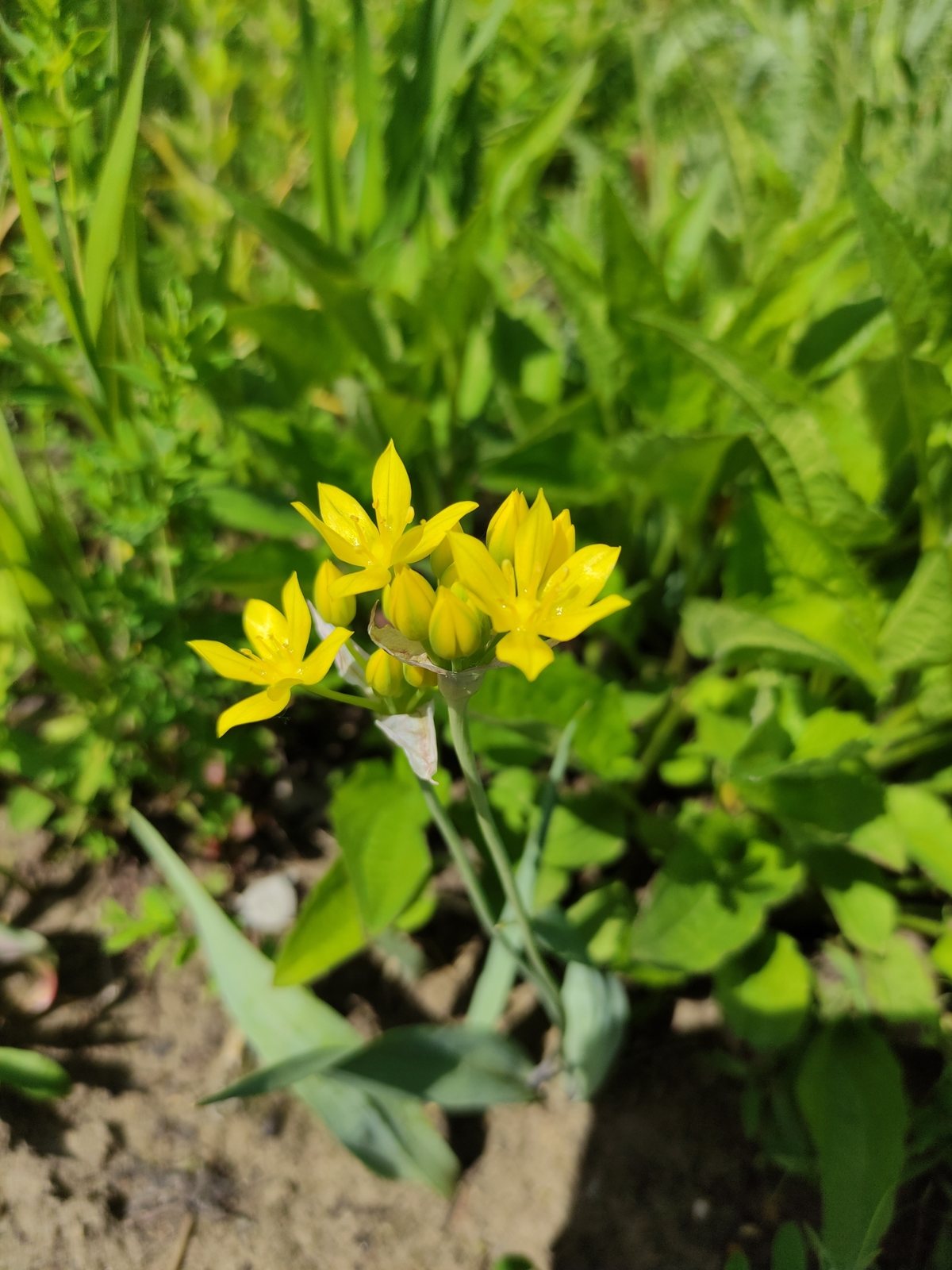
Golden garlic is a small, deciduous bulb grown for clusters of bright yellow, star-shaped flowers in late spring and early summer. It suits border edges, rock gardens and lightly shaded places beneath deciduous shrubs, where its bulbs can gradually form colonies.
At a glance
- Sun
- Full sun to partial shade; flowers best with several hours of direct sunlight.
- Water
- Water during active spring growth if the soil becomes dry. Keep relatively dry during summer dormancy and avoid waterlogged soil in winter.
- Soil
- Well-drained soil, including sandy, chalky or moderately fertile loam; tolerates a range of soil pH.
- Height
- 0.7-1.3 ft (0.2-0.4 m)
- Spread
- 0.3-0.7 ft (0.1-0.2 m) per clump initially; colonies spread farther over time.
- Flowers
- Late spring to early summer; loose, rounded clusters of bright yellow, star-shaped flowers.
- Foliage
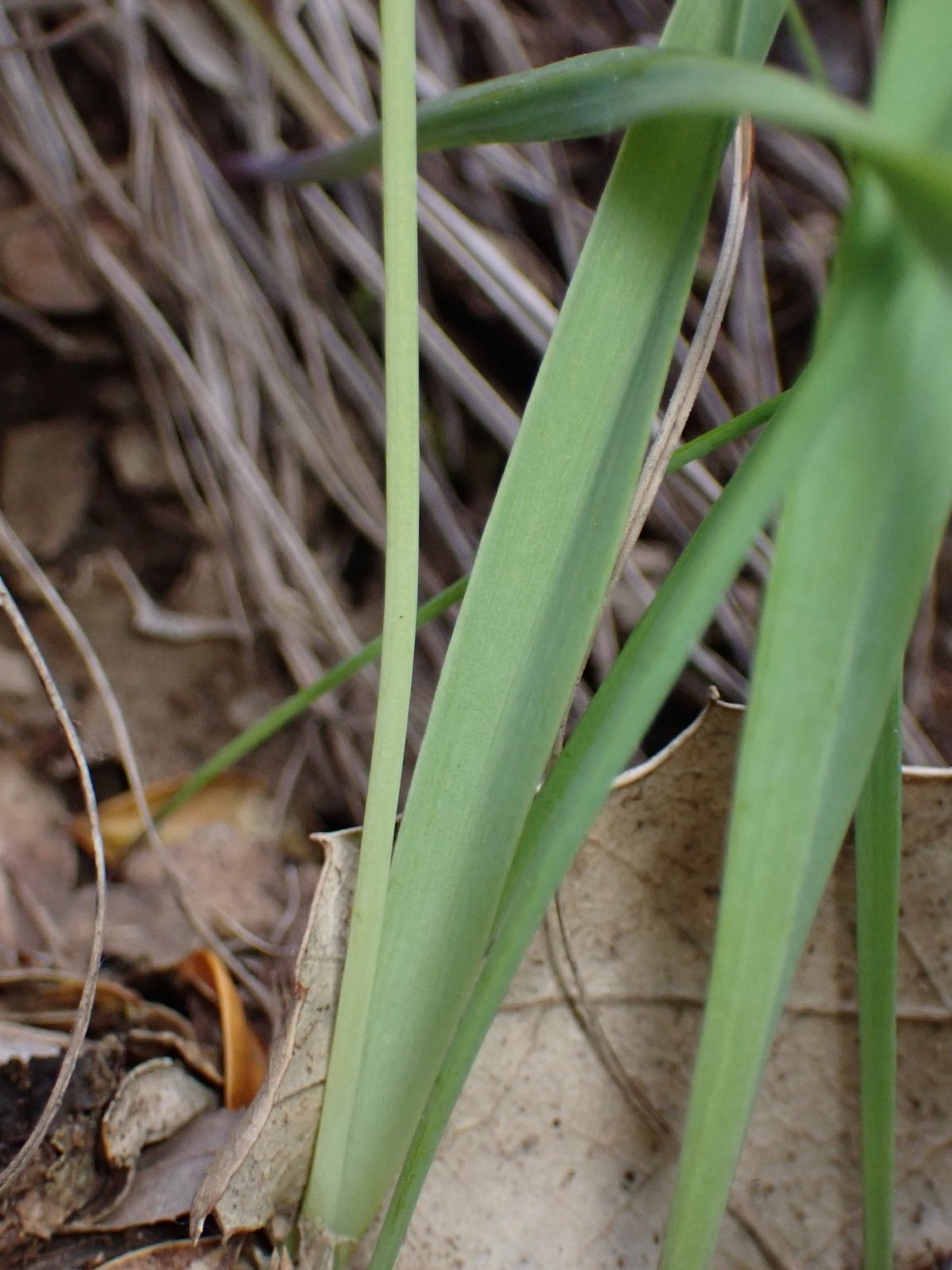
- Broad, flat, blue-green leaves with a garlic smell when crushed; foliage yellows and dies back after flowering.
- Growth
- Moderate; increases through bulb offsets and sometimes self-seeding.
- Care needed
- Low
The year at a glance
- Pollinators
- Deer resistant
- Cold hardy
- Low allergen
| J | F | M | A | M | J | J | A | S | O | N | D | |
|---|---|---|---|---|---|---|---|---|---|---|---|---|
| Flowers | ||||||||||||
| Plant |
Northern hemisphere months. In Australia, shift them by six.
- Difficulty
- Easy
- Toughness
- Very tough
Will it suit your garden?
Pick your zone, country, light and whether you have pets.
Full sun is 6 or more hours of direct sun a day, part shade 3 to 6 hours, shade under 3.
How it grows
Planting day
0.5 ft (0.15 m)
After 1 year
1 ft (0.3 m)
full size
About 1 years to full size.
From a typical nursery size, at an average rate for this kind of plant. A rule of thumb, not a forecast.
Good to know
- Cats and dogs
- Toxic
- In the garden
- Spreads vigorously: plan to contain it.
- Growth rate
- Moderate
Care
Jobs through the year
- WaterMar–Apr, every 14 days
- Water established bulbs only if soil is dry; newly planted bulbs need closer checks.
- WaterMay–Jun, every 7 days
- Water only during dry spells while leaves remain green; stop at dormancy.
- FeedMar
- Add a light compost dressing only on poor soil.
- DeadheadMay–Jun
- Remove fading heads before seeds ripen to limit spreading.
- PruneJun–Jul
- Remove foliage at ground level only after it has completely yellowed.
- DivideJul–Aug
- Separate crowded bulbs after foliage dies back, usually every three to four years.
- ProtectFeb–Apr
- Check emerging shoots for slugs and hand-pick where needed.
- ProtectJan–Feb, Nov–Dec
- Keep drainage clear and avoid watering dormant bulbs in moist soil.
- Plant bulbs in autumn, about 2-3 inches (5-8 cm) deep and 3-4 inches (8-10 cm) apart.
- Water during dry spells while leaves are green; stop routine watering once the plant becomes dormant.
- Apply a light dressing of compost in spring if the soil is poor; avoid heavy feeding.
- Remove fading flower heads before seeds ripen if you want to limit its spread.
- Divide crowded clumps after the foliage dies back, usually every three to four years.
Pruning. Cut off spent flower stems after flowering unless you want seed. Leave the leaves until they turn completely yellow, then remove them at ground level.
Through the year
- Autumn
- Plant bulbs in well-drained soil, avoiding places that stay wet through winter.
- Early spring
- Check emerging shoots for slug damage and add a light compost dressing on poor soil.
- Spring
- Water during prolonged dry weather while leaves and flower stems are growing.
- Late spring to early summer
- Remove fading flower heads before seed develops if spreading is unwanted.
- Summer
- Let foliage yellow naturally, then clear it away and divide crowded bulbs if needed.
- Winter
- Check that drainage remains clear; avoid watering dormant bulbs in already moist soil.
In the garden
- Plant in repeated groups along sunny border edges for a low ribbon of yellow flowers.
- Tuck between rocks or into gravel beds where drainage is good and summer dormancy is unobtrusive.
- Grow beneath open deciduous shrubs where spring light reaches the ground.
- Combine with hardy geraniums or catmint, whose expanding foliage helps conceal the dying leaves.
Garden styles it suits: Cottage garden, English country, Dry gravel garden, Woodland, Pollinator garden and Low-maintenance.
Plant it with: Hardy geraniums, Catmint, Lady's mantle, Columbines, Siberian bugloss and Creeping thyme.
Wildlife: Flowers provide nectar and pollen for bees and other visiting insects. Garlic-scented foliage is often left alone by deer and rabbits, though it is not completely browsing-proof.
Problems to watch for
- Bulb rot in wet soil: improve drainage or move bulbs to a raised bed; discard soft or rotting bulbs.
- Slugs and snails eating young leaves: inspect emerging shoots and use hand-picking or suitable slug controls.
- Poor flowering in deep shade or crowded clumps: move to a brighter position and divide after the leaves die back.
- Unwanted spreading by offsets and seed: deadhead before seed ripens and lift surplus bulbs while their location is still visible.
Safety
All parts, including the bulbs, are toxic to cats, dogs and horses; ingestion can damage red blood cells and cause serious anaemia. Eating it may cause stomach upset in people; do not treat ornamental bulbs as food.
Easily confused with
Yellow onion (Allium flavum)
Has narrow, threadlike leaves and dangling, bell-shaped yellow flowers on long stalks; golden garlic has broad, flat leaves and open, star-shaped flowers.
Neapolitan garlic (Allium neapolitanum)
Has similar loose flower clusters and flat leaves, but its flowers are white rather than yellow.
The name
The common name refers to the golden-yellow flowers and the garlic smell released when the leaves or bulbs are crushed.
Propagation. Separate bulb offsets after the foliage dies back and replant promptly, or store them somewhere cool, dry and ventilated until autumn. Seed can be sown when ripe, but seedlings take several years to reach flowering size.
Checked against open data
- Accepted botanical name
- Allium moly
- Native range
- Algeria, France, Italy, Morocco and Spain.
Sources: GBIF (CC BY 4.0) and Trefle (CC BY 4.0). The care and design notes are LandscapeGPT's own.
See it in your own yard.
Upload a photo of your yard and see it redesigned with plants that suit your climate, each checked against your zone.