Golden hop
Humulus lupulus 'Aureus'. Family Cannabaceae. Climber.
Also called Golden hops, Golden-leaved hop.
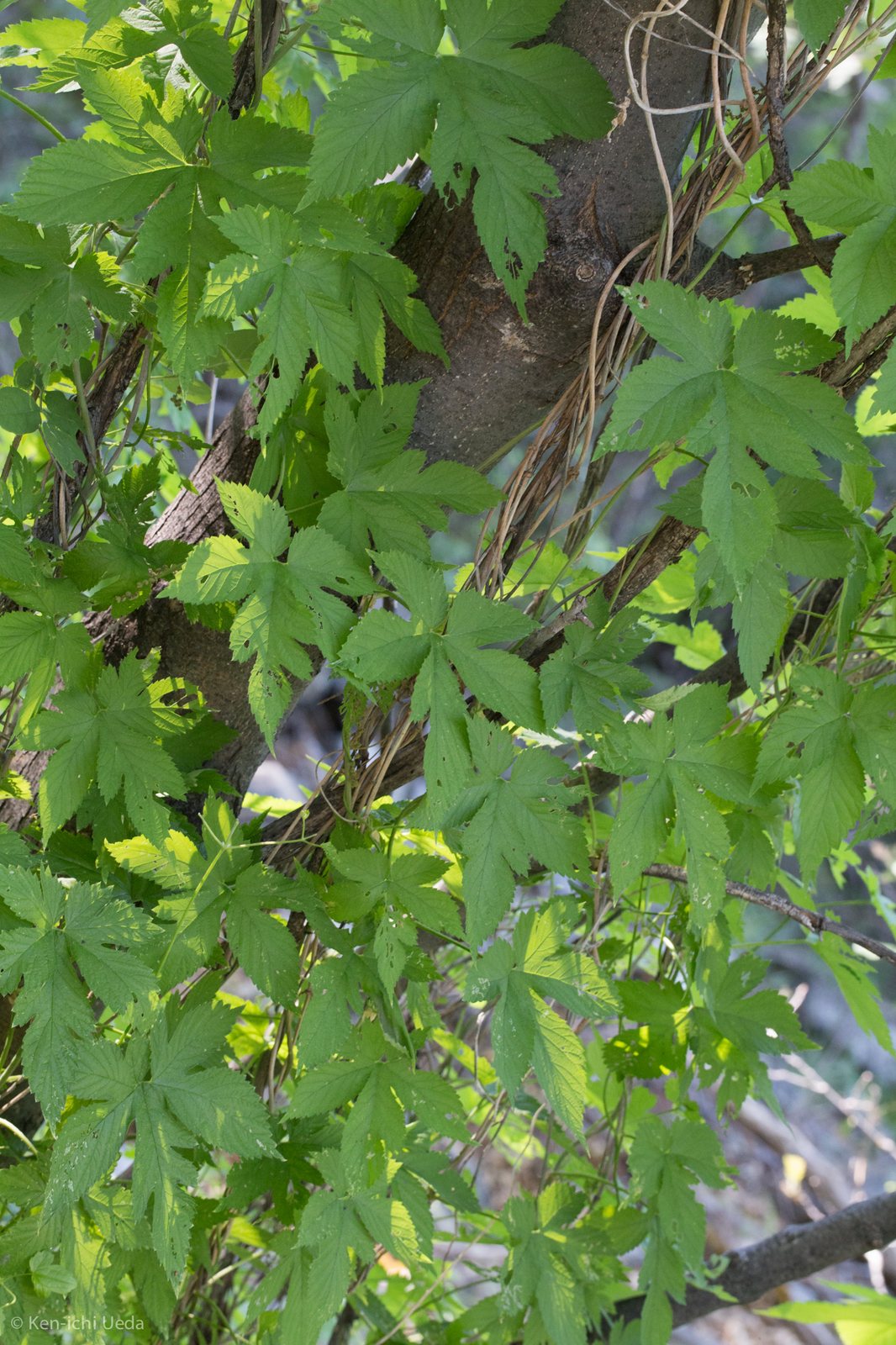
Golden hop is a vigorous, deciduous climber grown for its yellow-green leaves and pale green, cone-like flower clusters. Its stems grow afresh from the ground each spring, quickly covering a tall support before dying back in autumn. Give it room: underground rhizomes can spread beyond its planting space.
At a glance
- Sun
- Full sun to partial shade; morning sun with afternoon shade helps prevent leaf scorch in hot districts.
- Water
- Keep the root zone evenly moist during active growth, especially in the first year. Avoid prolonged waterlogging.
- Soil
- Fertile, humus-rich, well-drained soil; tolerates a range of soil textures and pH levels.
- Height
- 15-25 ft (4.5-7.5 m)
- Spread
- 3-6 ft (0.9-1.8 m) on a support; underground rhizomes can spread farther.
- Flowers
- Inconspicuous pale green female flowers in summer, developing into papery, pale green hop cones in late summer and early autumn.
- Foliage
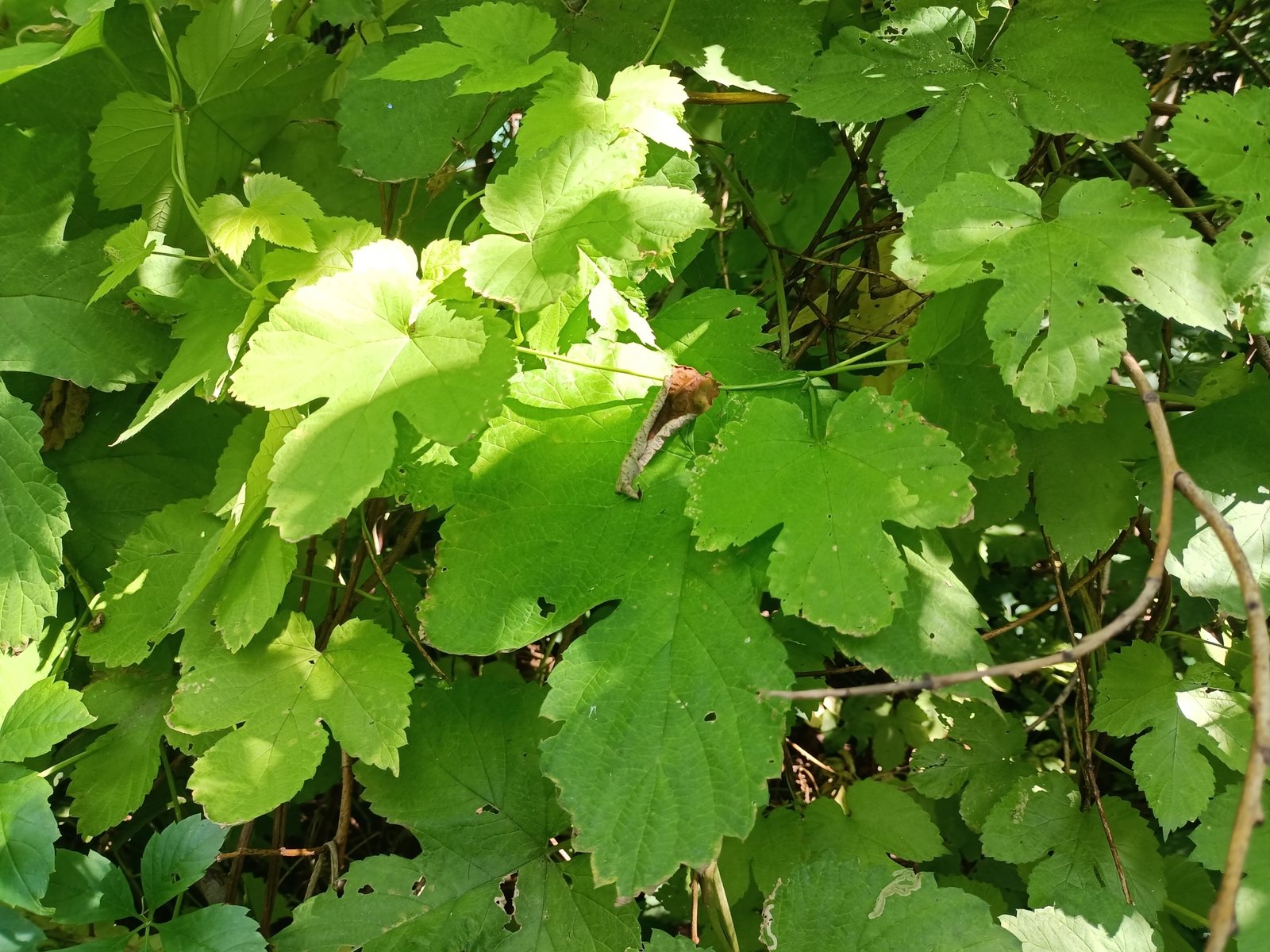
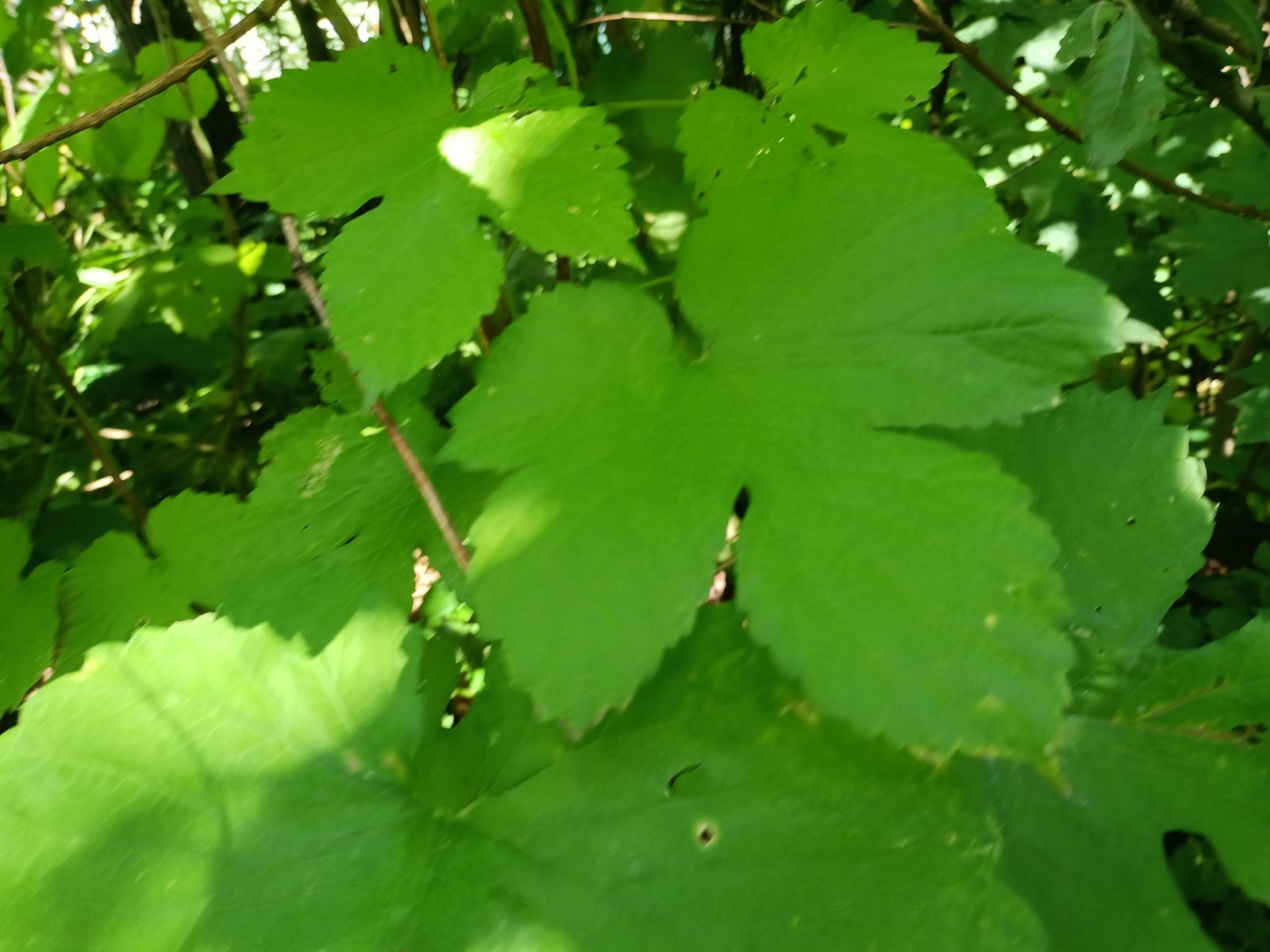
- Rough-textured, usually three- to five-lobed leaves, bright yellow in spring and often becoming yellow-green later in summer.
- Growth
- Fast; established plants can cover a tall support in one growing season.
- Care needed
- Medium
The year at a glance
- Cold hardy
- Wildlife
- Low allergen
| J | F | M | A | M | J | J | A | S | O | N | D | |
|---|---|---|---|---|---|---|---|---|---|---|---|---|
| Fruit | ||||||||||||
| Plant |
Northern hemisphere months. In Australia, shift them by six.
- Difficulty
- Moderate
- Toughness
- Very tough
Will it suit your garden?
Pick your zone, country, light and whether you have pets.
Full sun is 6 or more hours of direct sun a day, part shade 3 to 6 hours, shade under 3.
How it grows
Planting day
2 ft (0.6 m)
After 1 year
3 ft (1.1 m)
After 2 years
5 ft (1.5 m)
After 3 years
6 ft (1.8 m)
full size
About 3 years to full size.
From a typical nursery size, at an average rate for this kind of plant. A rule of thumb, not a forecast.
Good to know
- Cats and dogs
- Toxic
- Native to
- the US, Canada and the UK
- In the garden
- Spreads vigorously: plan to contain it.
- Growth rate
- Fast
Care
Jobs through the year
- WaterApr–May, Sep, every 7 days
- Water established plants if rainfall is insufficient; check new plants more often.
- WaterJun–Aug, every 7 days
- Soak the root zone during dry weather; do not let actively growing plants dry out.
- FeedMar–Apr
- Apply compost around the crown; avoid excessive nitrogen.
- MulchMar–Apr
- Mulch moist soil, keeping emerging shoots clear.
- ProtectMar–May
- Secure strong supports and guide young stems onto them.
- PruneFeb–Mar
- Cut remaining dead stems to ground level before new shoots emerge.
- PruneApr–Sep, every 21 days
- Keep selected strong shoots and remove wandering rhizomes; wear gloves and long sleeves.
- Install strong wires, stout twine or a tall trellis before spring growth starts; guide young stems onto it.
- Water deeply during dry spells so the root zone does not dry out.
- Apply compost in spring and mulch around the crown, keeping mulch clear of emerging shoots.
- Avoid excessive nitrogen feeding, which encourages more sprawling growth.
- Remove unwanted shoots and dig out wandering rhizomes before they establish beyond the planting area.
- Wear gloves and long sleeves when handling the rough stems and leaves.
Pruning. Cut dead stems back to ground level in late autumn or late winter, before new shoots emerge. In spring, select several strong shoots to train up the support and remove surplus or wandering growth.
Through the year
- Late winter
- Remove any remaining dead stems and check that supports are secure.
- Early spring
- Plant or divide while dormant, then apply compost and mulch.
- Spring
- Train the strongest young shoots onto supports and remove unwanted shoots.
- Summer
- Water during dry weather and check leaf undersides for aphids and spider mites.
- Late summer
- Enjoy the developing hop cones and check for rhizomes spreading beyond the allotted area.
- Late autumn
- Cut down stems after they die back, or leave this job until late winter.
In the garden
- Train over a sturdy pergola for summer shade, accepting that the structure will be bare in winter.
- Cover a tall fence or trellis to create a bright seasonal backdrop to a mixed border.
- Pair with purple-leaved shrubs for strong foliage contrast.
- Grow on a tall obelisk in a large cottage or kitchen garden, where its spread can be monitored.
Garden styles it suits: Cottage garden, English country, Arts and Crafts, Potager (kitchen garden), Modern rustic and Green on green.
Plant it with: Purple smoke bush, Purple-leaved ninebark, Hardy geranium, Lady's mantle, Japanese anemone and Siberian iris.
Wildlife: Hop foliage feeds several moth caterpillars and some butterflies, including the comma in the UK. The flowers are wind-pollinated rather than a significant nectar source.
Problems to watch for
- Unwanted spread: remove stray shoots with their attached rhizomes; choose another climber where roots cannot be contained or monitored.
- Leaf scorch: provide afternoon shade in hot climates and maintain consistent soil moisture.
- Powdery mildew or downy mildew: improve airflow, avoid wetting foliage unnecessarily and remove affected debris; cut out distorted, diseased shoots.
- Aphids and spider mites: inspect leaf undersides, dislodge aphids with water and use an appropriately labelled insecticidal soap if infestation persists.
Safety
Hop cones are highly toxic to dogs, whether fresh, dried or spent after brewing, and can cause a rapidly developing, potentially fatal rise in body temperature. Seek emergency veterinary care after suspected ingestion. Hops are not known to be toxic to cats or horses, but evidence is limited and access to cones is best prevented. They are not generally regarded as poisonous to people in normal culinary use, but rough stems and leaves can cause skin irritation and hops can cause allergic reactions.
Where it spreads. Can spread aggressively by underground rhizomes in temperate gardens, including the UK, northern United States, southern Canada and southeastern Australia. This cultivar should not be assumed sterile or contained simply because it is ornamental; remove escaping rhizomes and check local guidance before planting near natural areas.
Easily confused with
Common hop (Humulus lupulus)
Has the same rough, lobed leaves and hop cones, but ordinary plants have green rather than golden foliage.
Japanese hop (Humulus scandens)
Usually has more deeply divided leaves with five to seven lobes and is an annual rather than a perennial with a persistent crown. It is invasive in parts of North America.
Golden Virginia creeper (Parthenocissus quinquefolia 'Yellow Wall')
Has leaves divided into five separate leaflets, clings with tendrils and turns yellow in autumn; golden hop has single lobed leaves and twining stems.
The name
The cultivar name 'Aureus' is Latin for 'golden', referring to its yellow foliage.
Propagation. Divide the crown or take rooted rhizome sections in early spring, or take softwood cuttings in late spring. Propagate vegetatively to retain the golden foliage; seedlings will not reliably match the cultivar.
Checked against open data
- Accepted botanical name
- Humulus lupulus
- In the US and Canada
- Native in Canada and the lower 48 states. Introduced in Canada and the lower 48 states.
- Native range
- Albania, Altay, Austria, Baltic States, Belarus, Belgium, Bulgaria, Buryatiya, Central European Rus, Chita, Corse and Czechoslovakia.
- Measured
- Soil pH 7 to 7.5. Average height 225 cm.
Sources: GBIF (CC BY 4.0), USDA PLANTS and Trefle (CC BY 4.0). The care and design notes are LandscapeGPT's own.
See it in your own yard.
Upload a photo of your yard and see it redesigned with plants that suit your climate, each checked against your zone.