Golden sweet flag
Acorus gramineus 'Ogon'. Family Acoraceae. Perennial.
Also called Golden Japanese sweet flag, Ogon sweet flag, Japanese rush.
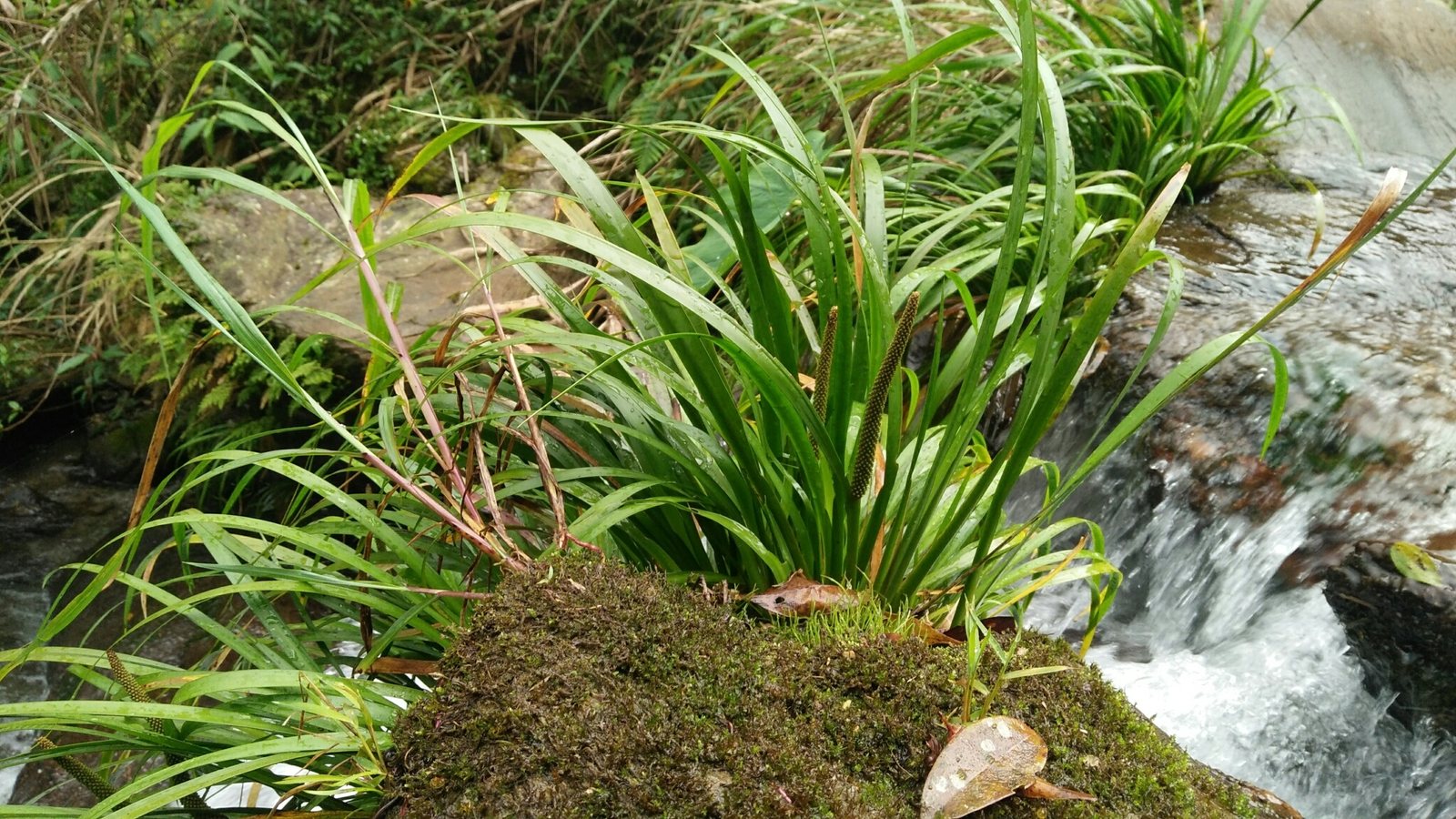
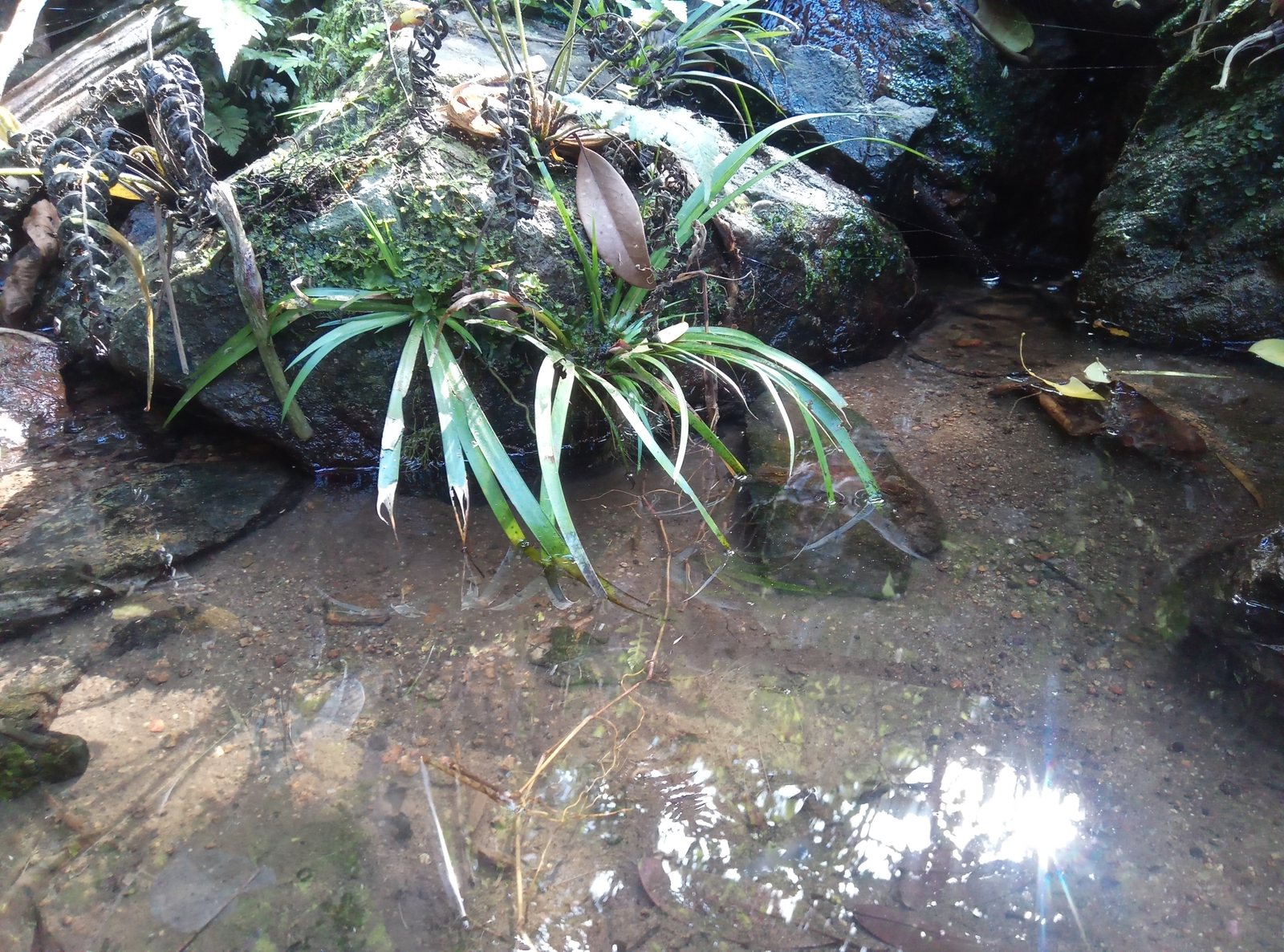
Golden sweet flag is a small, grass-like perennial grown for its narrow, gold-and-green striped leaves. It forms slowly spreading clumps that brighten damp borders, pond edges and containers, remaining evergreen in mild winters but often losing its foliage in colder climates.
At a glance
- Sun
- Partial shade is ideal. Full sun suits cool climates if the soil stays wet; provide afternoon shade in hot regions.
- Water
- Keep consistently moist to wet. It tolerates boggy soil and shallow pond margins but does not tolerate prolonged drying.
- Soil
- Humus-rich, moisture-retentive soil; tolerates heavy clay and poor drainage. Slightly acidic to neutral soil is ideal.
- Height
- 0.5-1 ft (0.15-0.3 m)
- Spread
- 0.5-1 ft (0.15-0.3 m), gradually wider as rhizomes spread
- Foliage
- Evergreen. Narrow, arching, yellow leaves striped with green, arranged in fans; aromatic when crushed. Winter foliage may brown in exposed or cold sites.
- Growth
- Slow to moderate
- Care needed
- Low
The year at a glance
- Deer resistant
- Heat tolerant
- Wildlife
| J | F | M | A | M | J | J | A | S | O | N | D | |
|---|---|---|---|---|---|---|---|---|---|---|---|---|
| Plant |
Northern hemisphere months. In Australia, shift them by six.
- Difficulty
- Easy
- Toughness
- Fairly tough
Will it suit your garden?
Pick your zone, country, light and whether you have pets.
Full sun is 6 or more hours of direct sun a day, part shade 3 to 6 hours, shade under 3.
How it grows
Planting day
0.7 ft (0.22 m)
full size
About 4 years to full size.
From a typical nursery size, at an average rate for this kind of plant. A rule of thumb, not a forecast.
Good to know
- Cats and dogs
- Toxic
- Growth rate
- Slow
Care
Jobs through the year
- WaterMar–May, Sep–Oct, every 7 days
- Keep established clumps consistently moist; omit watering where the ground stays wet naturally.
- WaterJun–Aug, every 3 days
- Water before soil dries; new plants need more frequent checks, especially in heat.
- WaterJan–Feb, Nov–Dec, every 14 days
- Check moisture in unfrozen soil and water only if drying; never let roots dry completely.
- PruneFeb–Mar
- Remove browned leaves before new growth, avoiding emerging shoots.
- MulchApr
- Apply a thin compost mulch around clumps, leaving the central fans exposed.
- DivideMar–May
- Divide congested clumps every three to four years and replant vigorous sections.
- ProtectJun–Aug
- Provide afternoon shade where hot sun scorches the foliage.
- ProtectJan–Feb, Nov–Dec
- Shelter containers from drying winds and severe root freezing.
- Water whenever the soil begins to dry; check containers frequently during warm weather.
- Plant in partial shade where summers are hot to reduce leaf scorch.
- Apply a thin layer of compost in spring; avoid heavy feeding.
- Mulch around clumps to conserve moisture, keeping the central fans uncovered.
- Divide crowded clumps in spring, usually every three to four years.
Pruning. Remove dead or browned leaves in late winter or early spring before new growth develops. If most foliage is damaged, trim it just above the crown without cutting into emerging shoots.
Through the year
- Late winter
- Remove winter-damaged foliage before fresh growth starts.
- Spring
- Plant or divide clumps and water them thoroughly.
- Mid-spring
- Add a thin compost mulch around established plants.
- Summer
- Keep the root zone moist and check pots frequently during hot weather.
- Autumn
- Clear fallen leaves that bury small clumps, but retain healthy foliage.
- Winter
- In cold regions, shelter containers from drying winds and severe root freezing.
In the garden
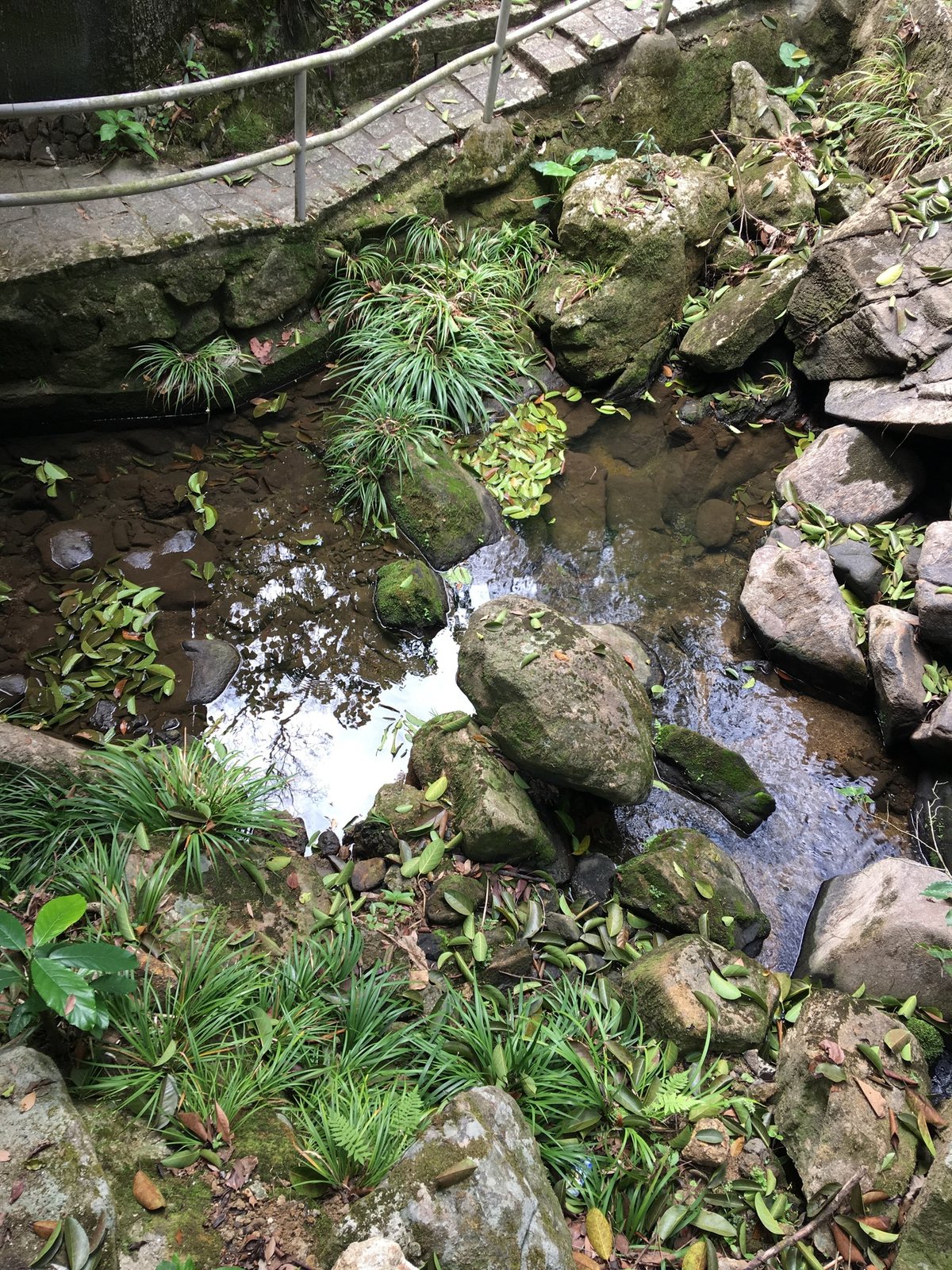
- Edge a pond or bog garden with low ribbons of gold foliage.
- Plant beside dark-leaved heucheras or green ferns in a moist, partly shaded border.
- Repeat small clumps along a damp path to create a consistent edging.
- Use in containers without drought-loving companions, where its arching leaves soften the rim.
Garden styles it suits: Japanese, Bog garden, Woodland, Modern courtyard, Small-space and Sensory garden.
Plant it with: Hostas, Astilbes, Japanese painted ferns, Siberian irises, Heucheras and Marsh marigolds.
Wildlife: Dense clumps provide shelter for small invertebrates at pond margins. Its inconspicuous flowers offer little ornamental or pollinator value, and it is not a substitute for locally native wetland plants.
Problems to watch for
- Brown tips and scorched leaves usually indicate dry soil, hot sun or drying wind; restore steady moisture and provide afternoon shade.
- Winter browning occurs in cold or exposed sites; leave the crown undisturbed and remove damaged foliage before spring growth.
- Spider mites may appear during hot, dry weather; rinse the foliage and correct dry growing conditions.
- Thin or congested older clumps can lose their tidy shape; divide in spring and replant vigorous outer sections.
Safety
Do not use it as food: its aromatic oils, especially those in the rhizomes, can contain potentially harmful compounds including beta-asarone. The seriousness of poisoning from garden exposure is poorly documented, and toxicity to cats, dogs and horses is not well established; prevent chewing or ingestion.
Easily confused with
Evergold Japanese sedge (Carex oshimensis 'Evergold')
Has a broad creamy central stripe with dark green leaf edges, rather than the predominantly golden foliage of 'Ogon'; its leaves lack the characteristic sweet-flag aroma.
Bowles' golden sedge (Carex elata 'Aurea')
Forms a much taller, more upright tussock with mostly golden leaves and distinct sedge flower stems.
Variegated sweet flag (Acorus calamus 'Variegatus')
Grows much taller and has broader, upright leaves striped cream and green rather than the low, arching gold-striped foliage of 'Ogon'.
The name
The species name gramineus means grass-like, while the Japanese cultivar name 'Ogon' means gold.
Propagation. Divide rhizomes in spring, keeping several rooted leaf fans on each section. Replant promptly and keep moist; division preserves the cultivar's striped foliage.
Checked against open data
- Accepted botanical name
- Acorus gramineus
- Native range
- Bangladesh, Cambodia, China North-Central, China South-Central, China Southeast, East Himalaya, Hainan, Inner Mongolia, Japan, Korea, Laos and Myanmar.
Sources: GBIF (CC BY 4.0) and Trefle (CC BY 4.0). The care and design notes are LandscapeGPT's own.
See it in your own yard.
Upload a photo of your yard and see it redesigned with plants that suit your climate, each checked against your zone.