Golden wattle
Acacia pycnantha. Family Fabaceae. Tree.
Also called Australian golden wattle.
Golden wattle is a fast-growing, evergreen small tree from southeastern Australia, grown for its fragrant golden flower clusters in late winter and spring. Its broad, curved foliage makes a loose screen or informal specimen, but it needs a mild climate and is often relatively short-lived. It is Australia's national floral emblem.
At a glance
- Sun
- Full sun; tolerates light shade but flowers less freely.
- Water
- Water regularly while establishing; once established, give occasional deep watering during prolonged dry weather. Avoid constantly wet soil.
- Soil
- Well-drained sandy or loamy soil, preferably slightly acidic to neutral. Avoid waterlogged ground and strongly alkaline soil.
- Height
- 13-26 ft (4-8 m)
- Spread
- 10-20 ft (3-6 m)
- Flowers
- Fragrant, golden-yellow balls carried in clusters in late winter and spring; usually July-October in Australia and roughly February-April in mild Northern Hemisphere gardens.
- Foliage
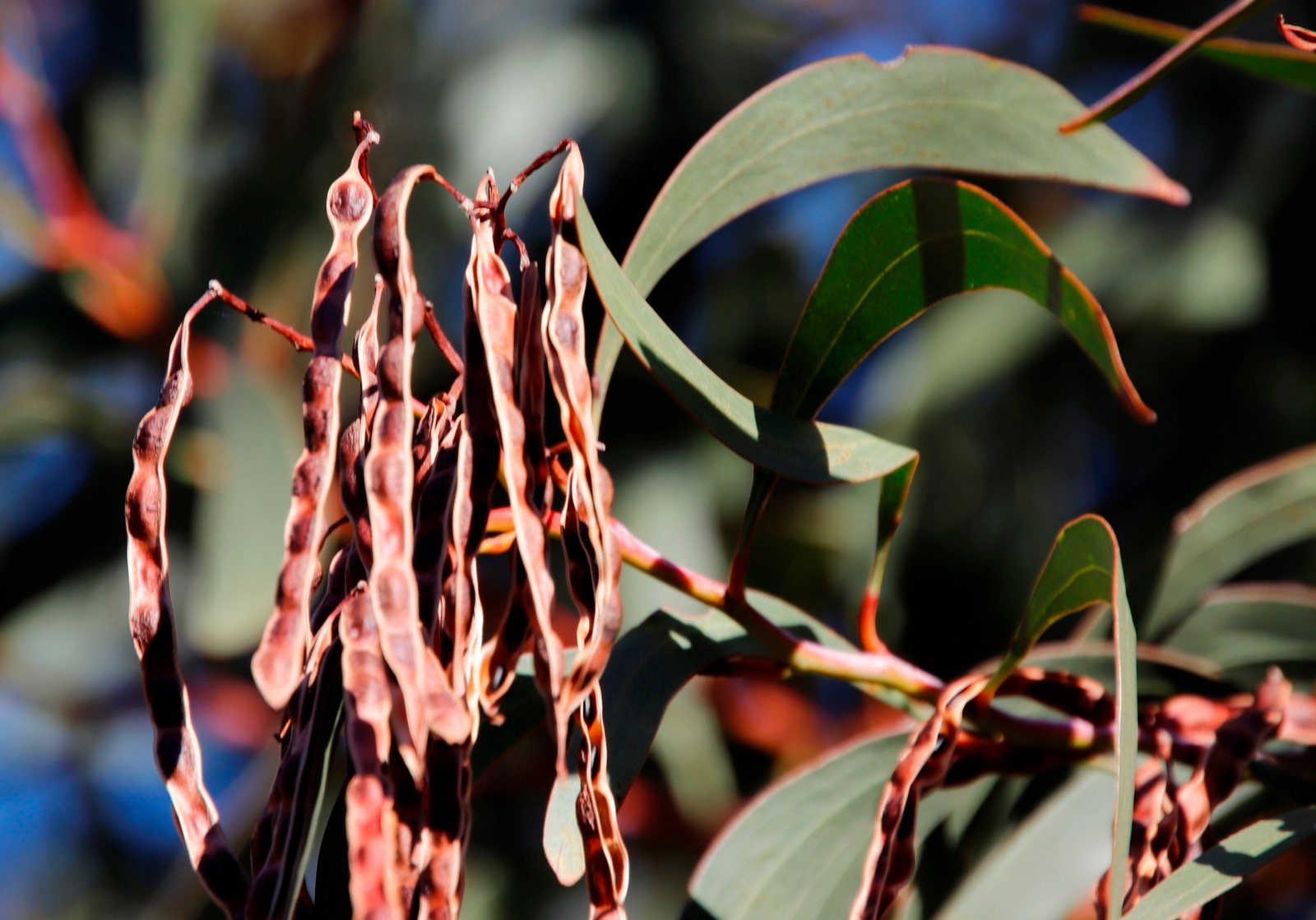
- Evergreen. Glossy green, broad, sickle-shaped phyllodes—flattened leaf stalks that function as leaves. Young seedlings initially carry finely divided true leaves.
- Growth
- Fast
- Care needed
- Low
The year at a glance
- Pollinators
- Drought tolerant
- Heat tolerant
- Wildlife
- Fragrant
| J | F | M | A | M | J | J | A | S | O | N | D | |
|---|---|---|---|---|---|---|---|---|---|---|---|---|
| Flowers | ||||||||||||
| Fruit | ||||||||||||
| Plant |
Northern hemisphere months. In Australia, shift them by six.
- Difficulty
- Hard
- Toughness
- Fairly tough
Will it suit your garden?
Pick your zone, country, light and whether you have pets.
Full sun is 6 or more hours of direct sun a day, part shade 3 to 6 hours, shade under 3.
How it grows
Planting day
7 ft (2 m)
After 1 year
8 ft (2.3 m)
After 2 years
9 ft (2.6 m)
After 3 years
10 ft (2.9 m)
After 5 years
12 ft (3.5 m)
About 13 years to full size.
From a typical nursery size, at an average rate for this kind of plant. A rule of thumb, not a forecast.
Good to know
- Cats and dogs
- Safe
- Native to
- Australia
- In the garden
- Spreads vigorously: plan to contain it.
- Growth rate
- Fast
Care
Jobs through the year
- WaterApr–May, Sep–Oct, every 21 days
- Water established ground-grown trees only in prolonged dry weather; young trees need more.
- WaterJun–Aug, every 14 days
- Deep-water established ground-grown trees only during extended drought; check containers more often.
- WaterJan–Mar, Nov–Dec, every 14 days
- Check sheltered containers and water sparingly, keeping the root ball from drying completely.
- MulchMay
- Apply organic mulch over the root area, leaving the trunk clear.
- FeedApr–May
- Only on very poor soil, apply a little low-phosphorus native-plant fertilizer.
- PruneApr–May
- After flowering, lightly shorten young shoots if needed; avoid hard cuts into old wood.
- ProtectAug–Sep
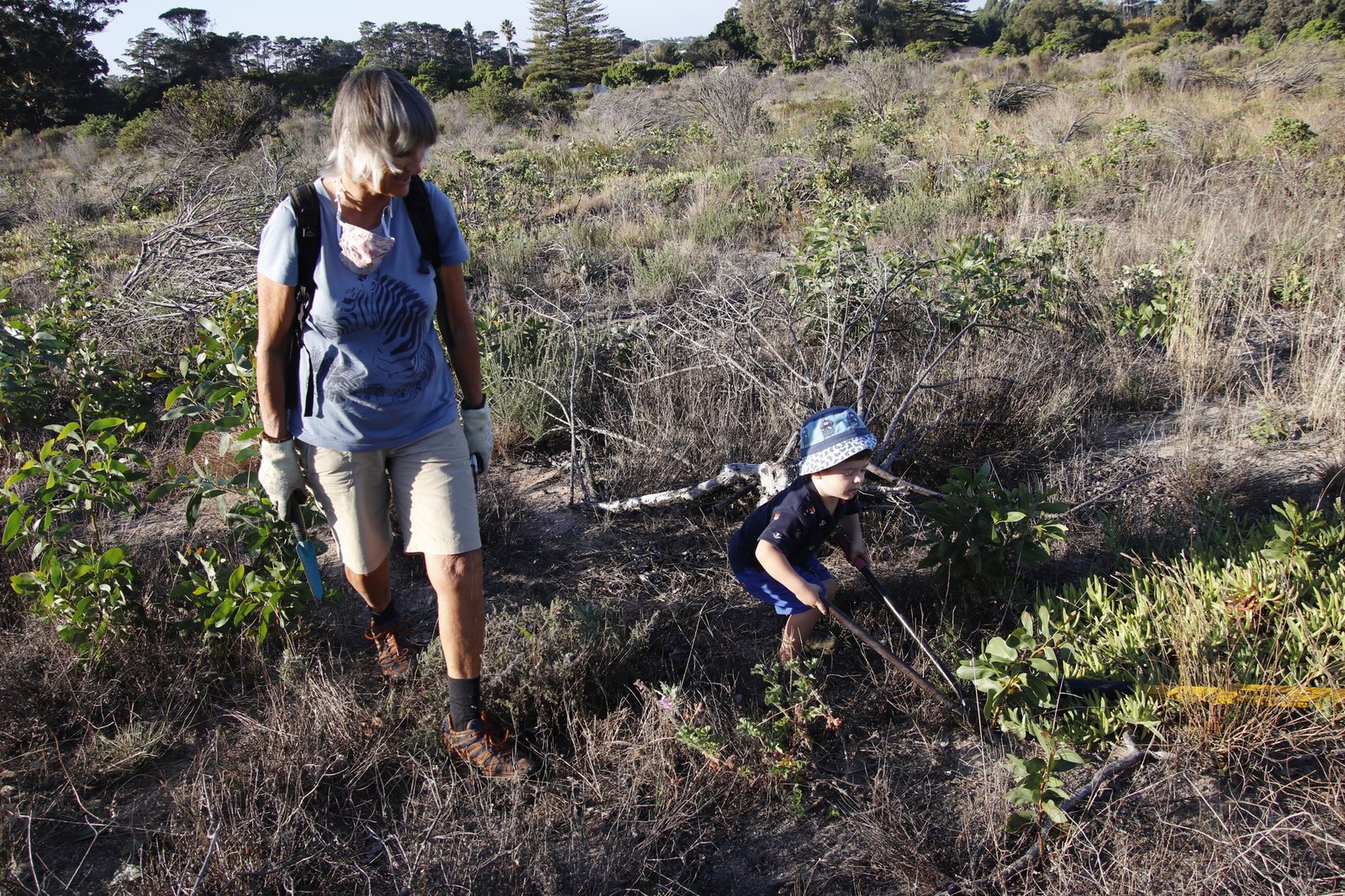
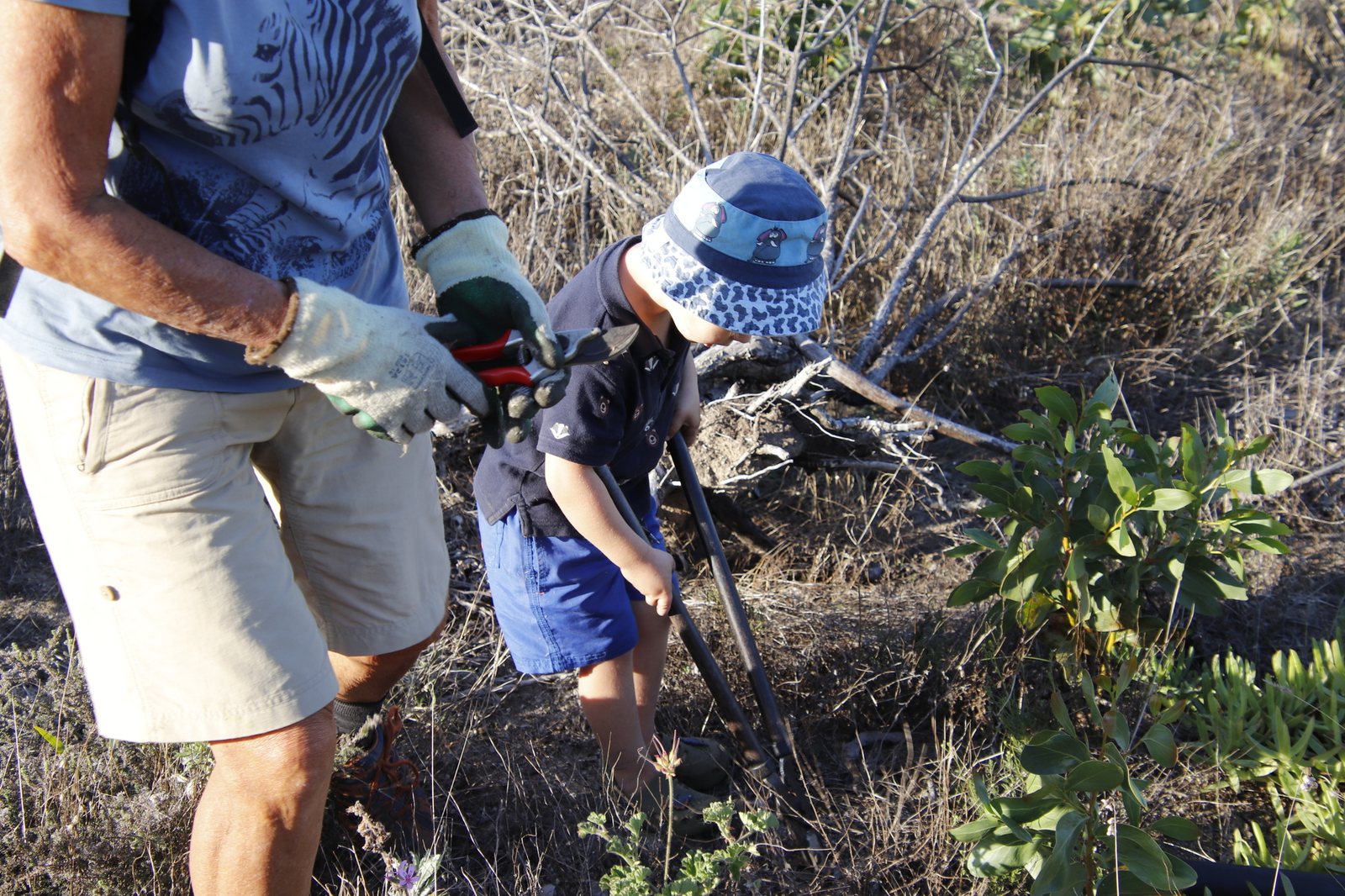
- Remove unwanted seedlings, especially near natural areas.
- ProtectJan–Apr, Oct–Dec
- Not hardy in zones 6–7; container trees require a spacious, bright, frost-free winter position.
- Plant in a sunny position sheltered from strong, cold winds.
- Water deeply during dry spells through the first one or two growing seasons, then reduce watering.
- Apply organic mulch over the root area, keeping it clear of the trunk.
- Avoid routine feeding; on very poor soil, use a small amount of low-phosphorus fertiliser formulated for Australian native plants.
- Stake only if the young tree is unstable, and remove supports once its roots provide firm anchorage.
- Remove unwanted seedlings promptly, particularly near bushland or other natural areas.
Pruning. Immediately after flowering, lightly shorten young shoots if needed to encourage a bushier crown. Remove dead or damaged branches, but avoid severe cutting into old, bare wood because regrowth is unreliable.
Through the year
- Autumn
- Plant where winters are mild and soil drains freely; water thoroughly and mulch.
- Winter
- Protect young plants from forecast frost and check that the root area is not waterlogged.
- Late winter
- Check developing flower clusters and young shoots for aphids.
- Spring
- After flowering, lightly shape young plants and remove dead branches.
- Summer
- Deep-water young trees during dry spells; water established trees only during extended drought.
- Late summer
- Remove unwanted seedlings and inspect stressed branches for borer holes or dieback.
In the garden
- Use as a flowering specimen in a sunny, frost-sheltered lawn or gravel garden.
- Plant as a loose screen with room for its spreading crown rather than clipping it into a formal hedge.
- Combine with bottlebrushes, native grasses and low-growing grevilleas in an Australian native planting.
- Place against a dark evergreen backdrop to show off the golden flowers in late winter.
Garden styles it suits: Australian native, Mediterranean, Wildlife garden, Pollinator garden, Dry gravel garden and Desert / xeriscape.
Plant it with: Crimson bottlebrush, Coastal rosemary, Spiny-headed mat-rush, Kangaroo grass and Kangaroo paw.
Wildlife: Flowers supply pollen for bees and other insects. In Australia, birds visit glands on the phyllodes for nectar, while the branches provide shelter and nesting sites.
Problems to watch for
- Root rot and sudden decline: avoid wet sites, improve drainage before planting and do not keep the root area constantly moist.
- Borers in stressed or ageing trees: maintain suitable watering, remove badly affected branches and seek an arborist's advice if the trunk is damaged.
- Aphids or scale insects: check young growth, encourage natural predators and treat accessible infestations with a labelled horticultural soap or oil if needed.
- Frost damage: choose a sheltered position, protect young plants during cold snaps and wait until spring growth begins before removing damaged shoots.
Safety
Not generally known to be toxic to people, cats or dogs, but species-specific safety information is limited. Do not treat the seeds, pods, bark or foliage as food, and do not offer prunings to horses or other livestock; their safety as fodder is not established.
Where it spreads. Invasive in South Africa and Portugal, and an environmental weed in parts of Western Australia outside its native range. It can form dense stands from long-lived seed; check local restrictions and avoid planting beside natural vegetation where it is a weed.
Easily confused with
Golden wreath wattle (Acacia saligna)
Usually has longer, narrower, often blue-green phyllodes and a more drooping habit; golden wattle has broader, glossy green, strongly curved phyllodes.
Coastal golden wattle (Acacia leiophylla)
A close relative with generally narrower phyllodes and hairy young branchlets; golden wattle usually has broader phyllodes and hairless branchlets.
Silver wattle (Acacia dealbata)
Has finely divided, fern-like silver-grey leaves rather than the broad, undivided green phyllodes of mature golden wattle.
The name
The species name pycnantha comes from Greek words meaning 'dense-flowered', referring to its crowded flower heads.
Propagation. Grow from seed after breaking the hard seed coat: pour just-boiled water over the seeds, remove them from the heat and leave them to soak overnight. Sow swollen seeds in a free-draining seed mix; handle seedlings gently and plant out while young.
Checked against open data
- Accepted botanical name
- Acacia pycnantha
- In the US and Canada
- Introduced in the lower 48 states.
- Native range
- New South Wales, South Australia and Victoria.
- Measured
- Average height 540 cm.
Sources: GBIF (CC BY 4.0), USDA PLANTS and Trefle (CC BY 4.0). The care and design notes are LandscapeGPT's own.
See it in your own yard.
Upload a photo of your yard and see it redesigned with plants that suit your climate, each checked against your zone.