Gollum jade
Crassula ovata 'Gollum'. Family Crassulaceae. Succulent.
Also called Gollum jade plant, Trumpet jade, Finger jade.
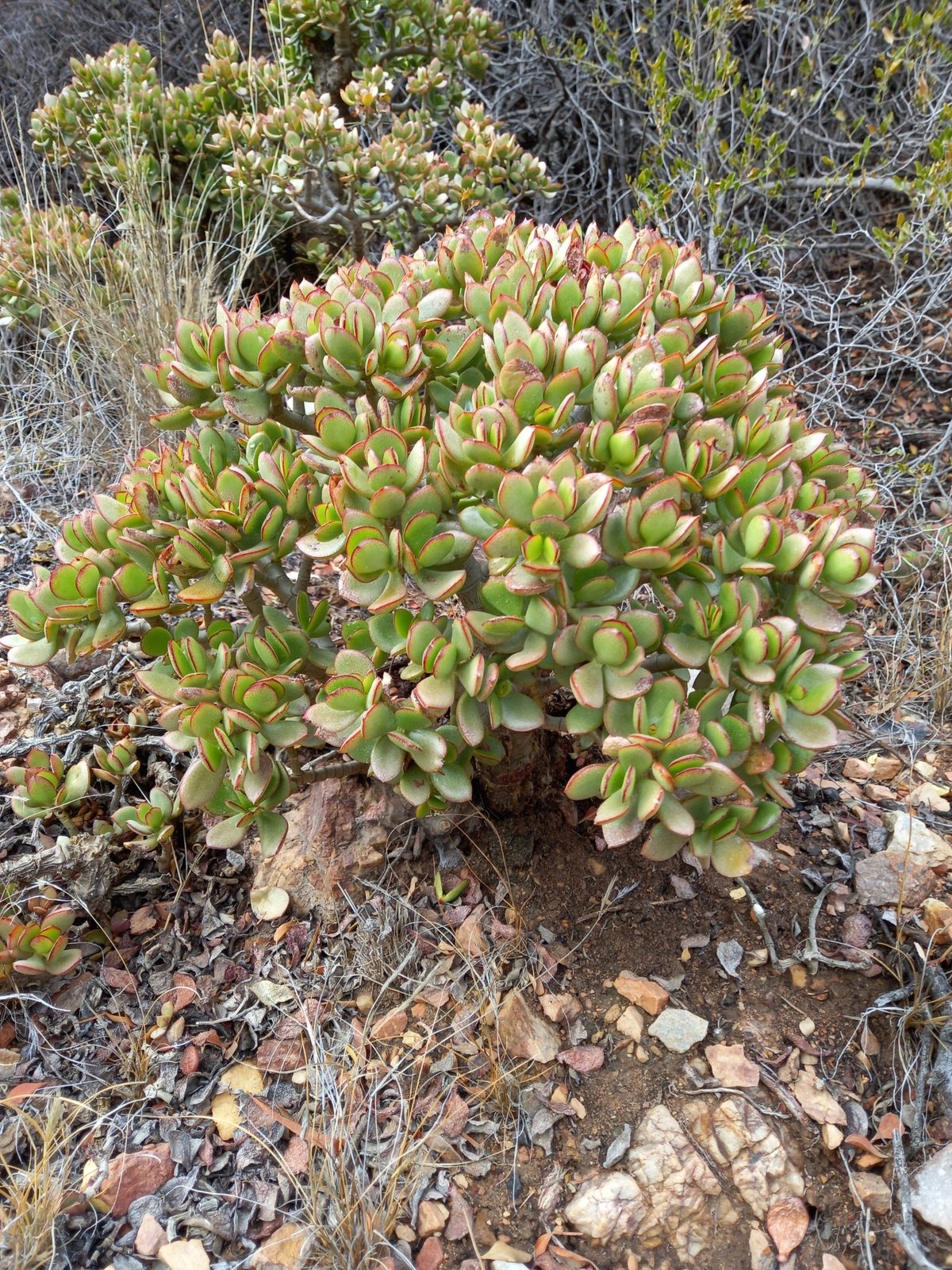
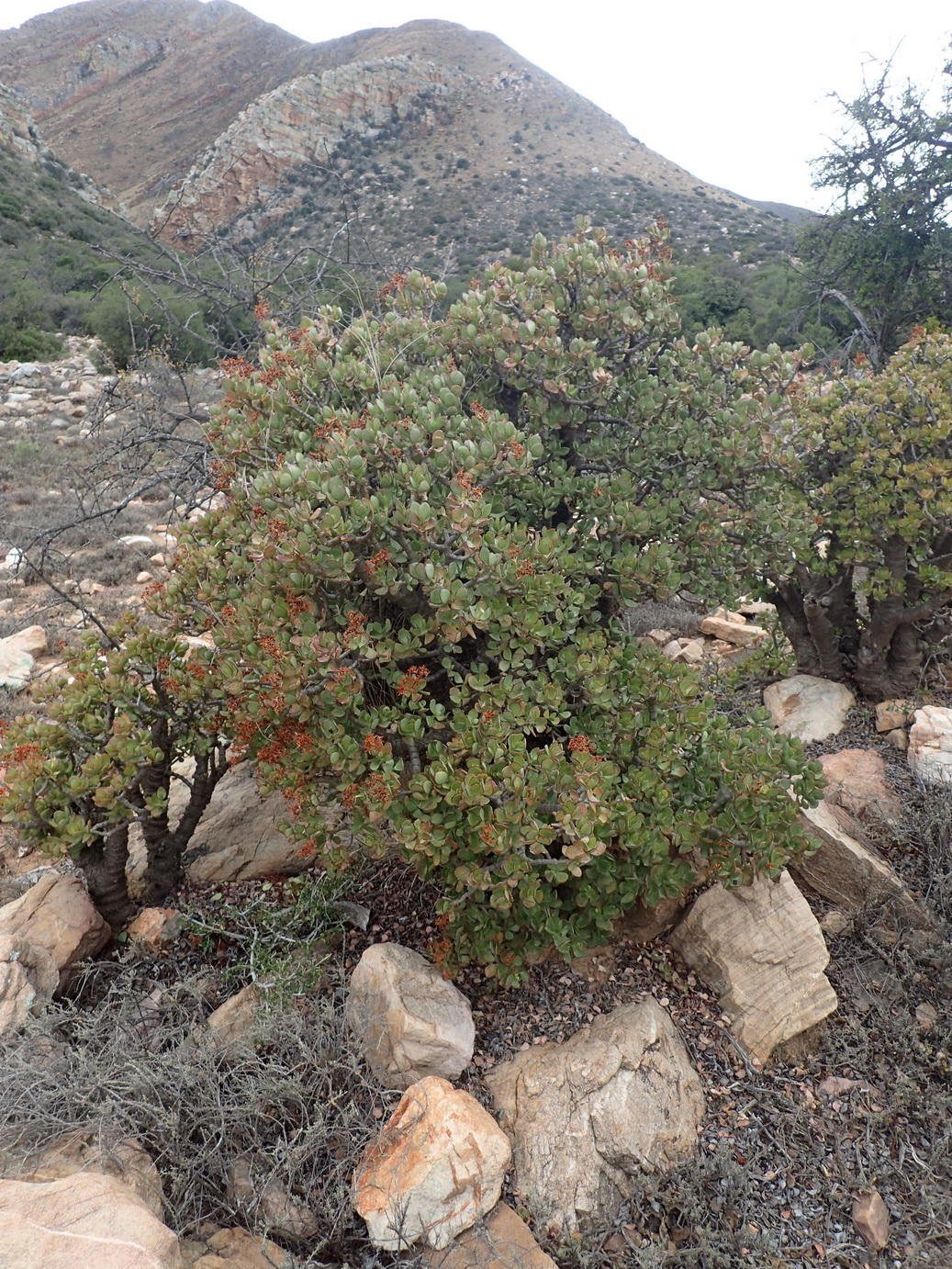
Gollum jade is a slow-growing, evergreen succulent with thick branches and tubular green leaves tipped with small, cup-shaped openings. Grow it as a sculptural houseplant or container specimen, or outdoors in a dry, frost-free garden.
At a glance
- Sun
- Full sun to partial shade outdoors; a sunny window indoors. Introduce strong sun gradually to prevent scorching.
- Water
- Water thoroughly, then let the potting mix dry out before watering again. Water much less in cool weather; never leave the pot standing in water.
- Soil
- Sharply drained, gritty soil or cactus potting mix amended with pumice or coarse grit. Use a pot with drainage holes.
- Height
- 2-3 ft (0.6-0.9 m)
- Spread
- 2-3 ft (0.6-0.9 m)
- Flowers
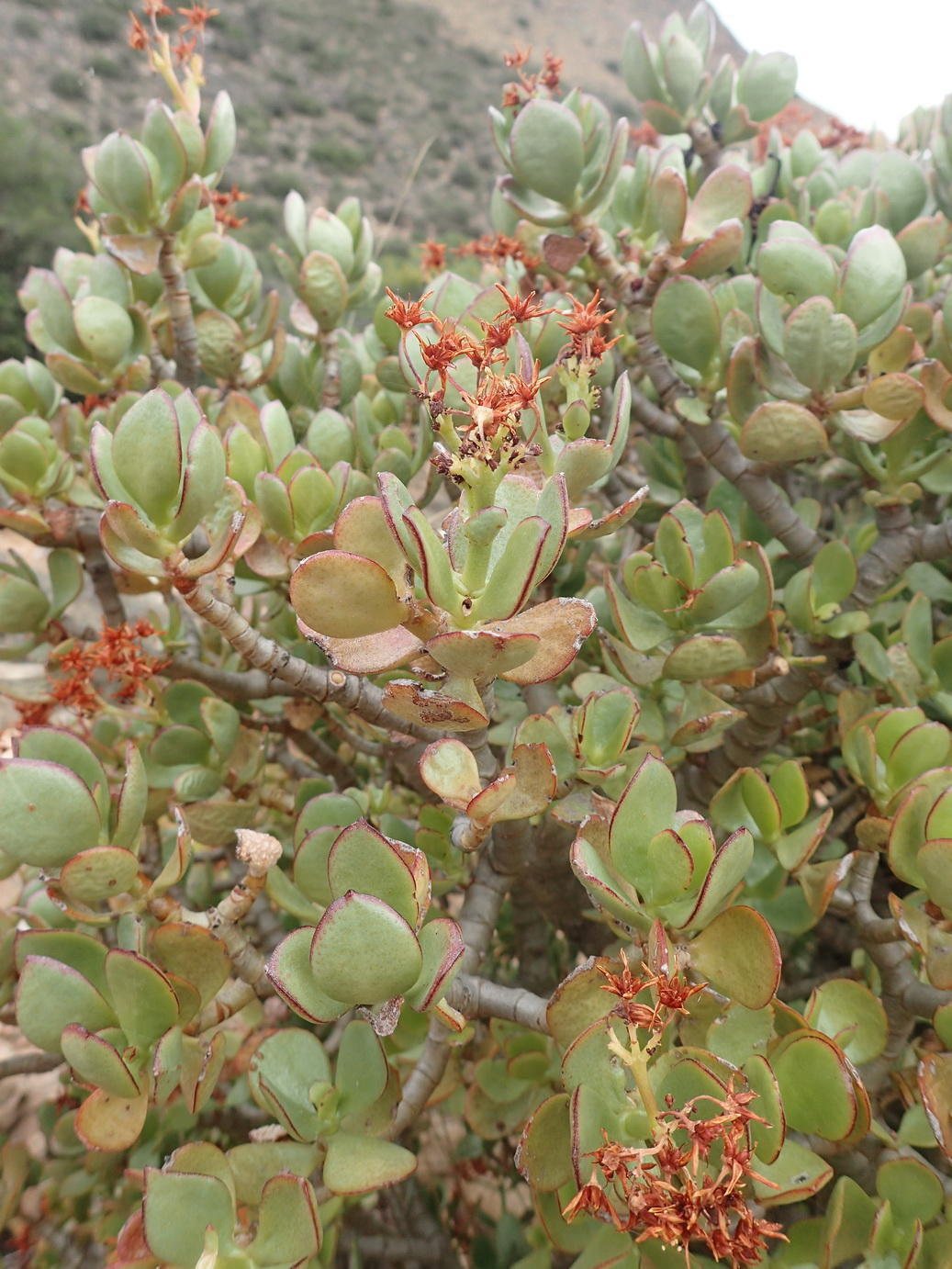
- Small clusters of white to pale pink, star-shaped flowers in winter or early spring on mature plants; flowering is uncommon indoors.
- Foliage
- Evergreen. Thick, glossy green leaves form short tubes with cupped tips, often edged red in bright light. Stems become woody with age.
- Growth
- Slow
- Care needed
- Low
The year at a glance
- Pollinators
- Drought tolerant
- Heat tolerant
- Low allergen
| J | F | M | A | M | J | J | A | S | O | N | D | |
|---|---|---|---|---|---|---|---|---|---|---|---|---|
| Flowers | ||||||||||||
| Plant |
Northern hemisphere months. In Australia, shift them by six.
- Difficulty
- Easy
- Toughness
- Very tough
Will it suit your garden?
Pick your zone, country, light and whether you have pets.
Full sun is 6 or more hours of direct sun a day, part shade 3 to 6 hours, shade under 3.
How it grows
Planting day
0.8 ft (0.25 m)
After 1 year
1 ft (0.3 m)
After 2 years
1.2 ft (0.35 m)
After 3 years
1.3 ft (0.41 m)
After 5 years
1.7 ft (0.51 m)
About 10 years to full size.
From a typical nursery size, at an average rate for this kind of plant. A rule of thumb, not a forecast.
Good to know
- Cats and dogs
- Toxic
- Growth rate
- Slow
Care
Jobs through the year
- WaterMar–May, Sep–Oct, every 21 days
- In this climate grow in a pot; water thoroughly only when the mix has dried well below the surface.
- WaterJun–Aug, every 14 days
- Water only when the mix is dry; small pots and young plants need more frequent checks.
- WaterJan–Feb, Nov–Dec, every 35 days
- Water sheltered plants sparingly when dry, without allowing severe shrivelling.
- FeedApr, Jun, Aug
- Apply a dilute cactus fertiliser to actively growing plants.
- PruneApr–Jun
- Shorten leggy branches just above a leaf pair; remove dead growth.
- ProtectSep–Oct
- Bring pots into bright shelter before cold nights; keep above 5°C.
- ProtectJun
- Move outdoors only on reliably mild nights and introduce strong sun over one to two weeks.
- Check that the potting mix has dried well below the surface before watering.
- Feed lightly with a diluted cactus fertilizer two or three times during spring and summer.
- Bring containers under cover before frost; aim to keep them above 41°F (5°C).
- Move indoor plants into outdoor sunshine gradually over one to two weeks.
- Repot in spring only when crowded or when the mix has deteriorated, using a pot just slightly larger.
Pruning. Prune in spring or early summer, cutting long branches just above a leaf pair to encourage branching. Remove dead or damaged growth with clean tools and avoid heavy pruning during cool, low-light weather.
Through the year
- Spring
- Check roots and repot if needed into fresh, sharply drained mix.
- Late spring
- Prune for shape and take stem cuttings from healthy growth.
- Early summer
- Move containers outdoors once nights are reliably mild, acclimating them gradually to stronger sun.
- Summer
- Water when the mix is dry and give an occasional diluted cactus feed.
- Autumn
- Stop feeding and bring pots into bright shelter before cold nights or prolonged rain.
- Winter
- Keep in the brightest available position and water sparingly, without letting the plant remain severely shrivelled.
In the garden
- Use a single mature plant in a plain container to highlight its branching shape and tubular leaves.
- Group with compact echeverias and small aloes in a sunny, frost-free container display.
- Place among rocks and gravel in a sheltered succulent garden with excellent drainage.
- Grow in a sunny courtyard pot that can be moved under cover for winter.
Garden styles it suits: Modern, Architectural minimal, Desert modern, Modern courtyard, Dry gravel garden and Small-space.
Plant it with: Echeveria, Zebra haworthia, Lace aloe and Golden barrel cactus.
Wildlife: Flowers can attract bees and other small insects where plants bloom outdoors. It offers little wildlife value when kept indoors.
Problems to watch for
- Root or stem rot: soft, dark tissue usually indicates excessive moisture. Remove rotten material, take healthy cuttings if necessary, and improve drainage and watering intervals.
- Mealybugs: inspect leaf joints and roots; isolate affected plants and dab visible insects with a cotton bud lightly moistened with rubbing alcohol, testing a small area first.
- Scorched leaves: pale or brown patches can follow a sudden move into strong sun. Provide temporary shade and increase exposure gradually.
- Stretched, weak growth: move the plant to brighter light and rotate the pot regularly; prune elongated stems during active growth.
Safety
Toxic to cats and dogs if eaten; leaves and stems can cause vomiting, lethargy and poor coordination. Human ingestion may cause stomach upset, and sap may irritate sensitive skin. Reliable information on toxicity to horses is limited, so keep it out of their reach.
Easily confused with
Hobbit jade (Crassula ovata 'Hobbit')
Leaves are usually curled lengthwise with an open seam, rather than forming the more fully closed tubes and cupped tips typical of Gollum. Nursery labels are sometimes mixed up.
Jade plant (Crassula ovata)
The ordinary species has broad, flat, oval leaves rather than tubular ones.
The name
Crassula refers to the thick leaves, ovata means egg-shaped, and the cultivar name 'Gollum' refers to the character in J. R. R. Tolkien's stories.
Propagation. Take stem cuttings in spring or summer and let the cut ends dry and callus for several days before inserting them into barely moist, gritty propagation mix. Keep in bright, indirect light and water cautiously until rooted. Leaf cuttings are possible but slower and less dependable.
Checked against open data
- Accepted botanical name
- Crassula ovata
- In the US and Canada
- Introduced in Hawaii.
- Native range
- Cape Provinces, KwaZulu-Natal and Mozambique.
Sources: GBIF (CC BY 4.0), USDA PLANTS and Trefle (CC BY 4.0). The care and design notes are LandscapeGPT's own.
See it in your own yard.
Upload a photo of your yard and see it redesigned with plants that suit your climate, each checked against your zone.