Gorse
Ulex europaeus. Family Fabaceae. Shrub.
Also called Common gorse, European gorse, Furze, Whin.
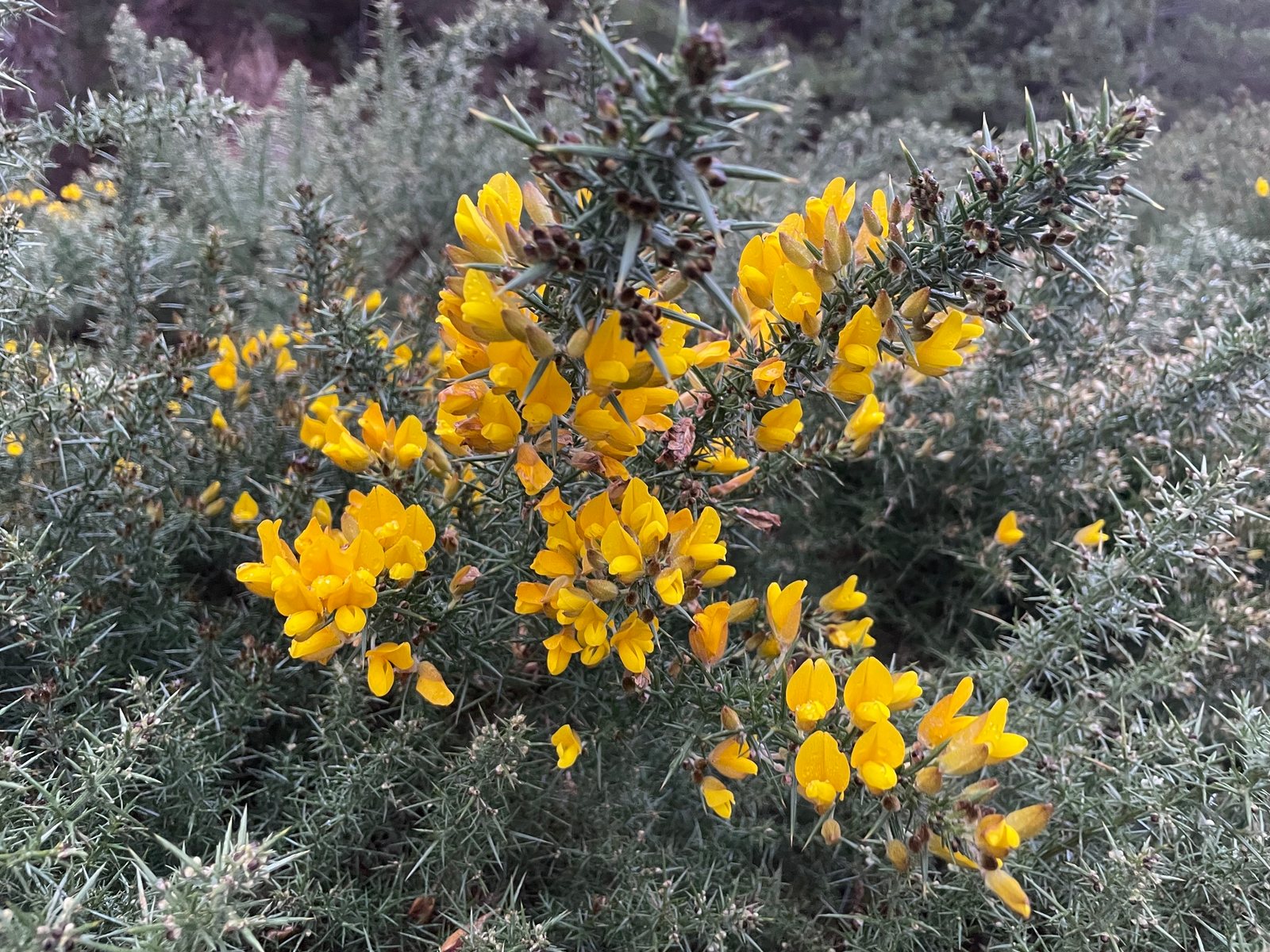
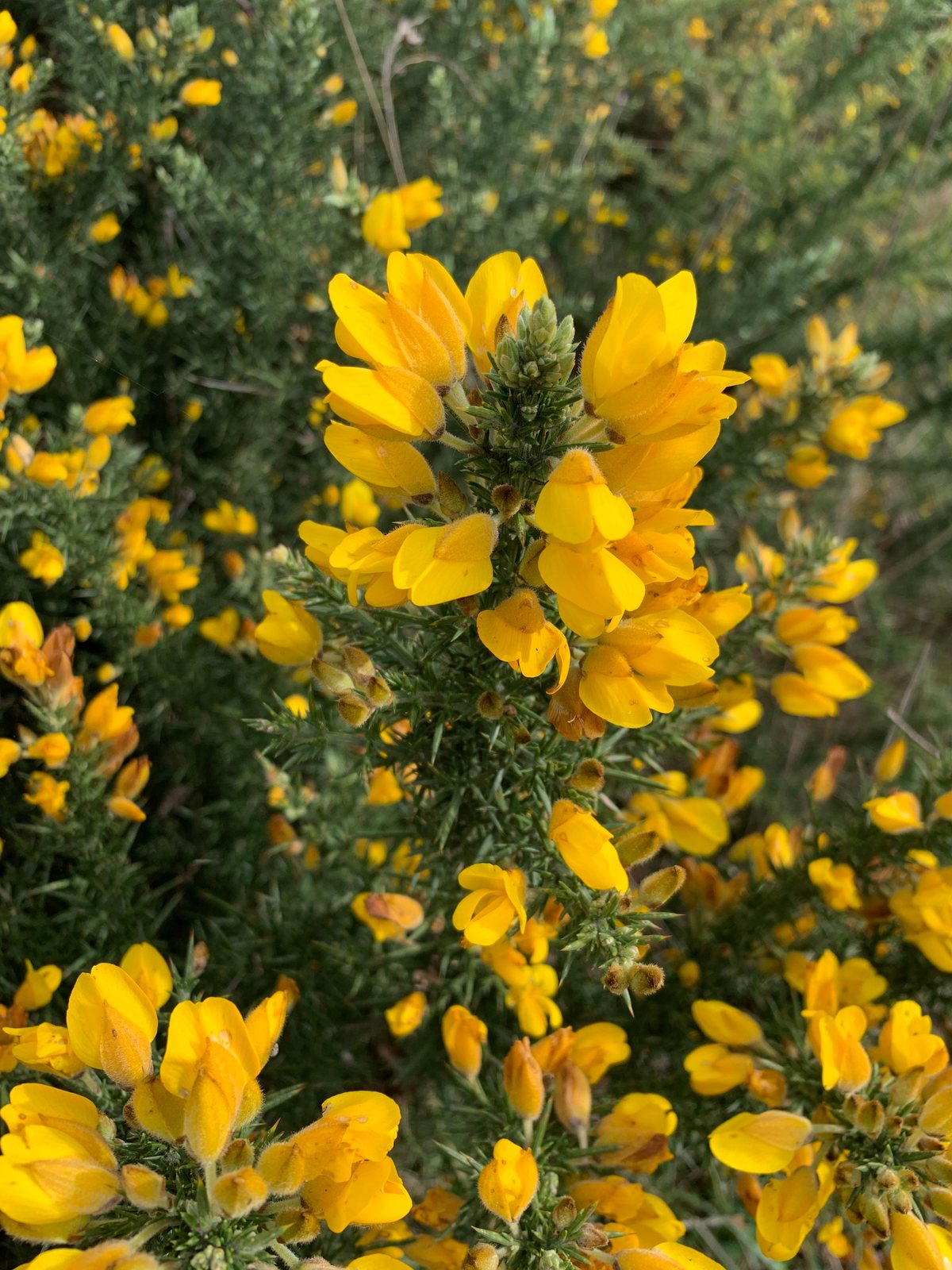
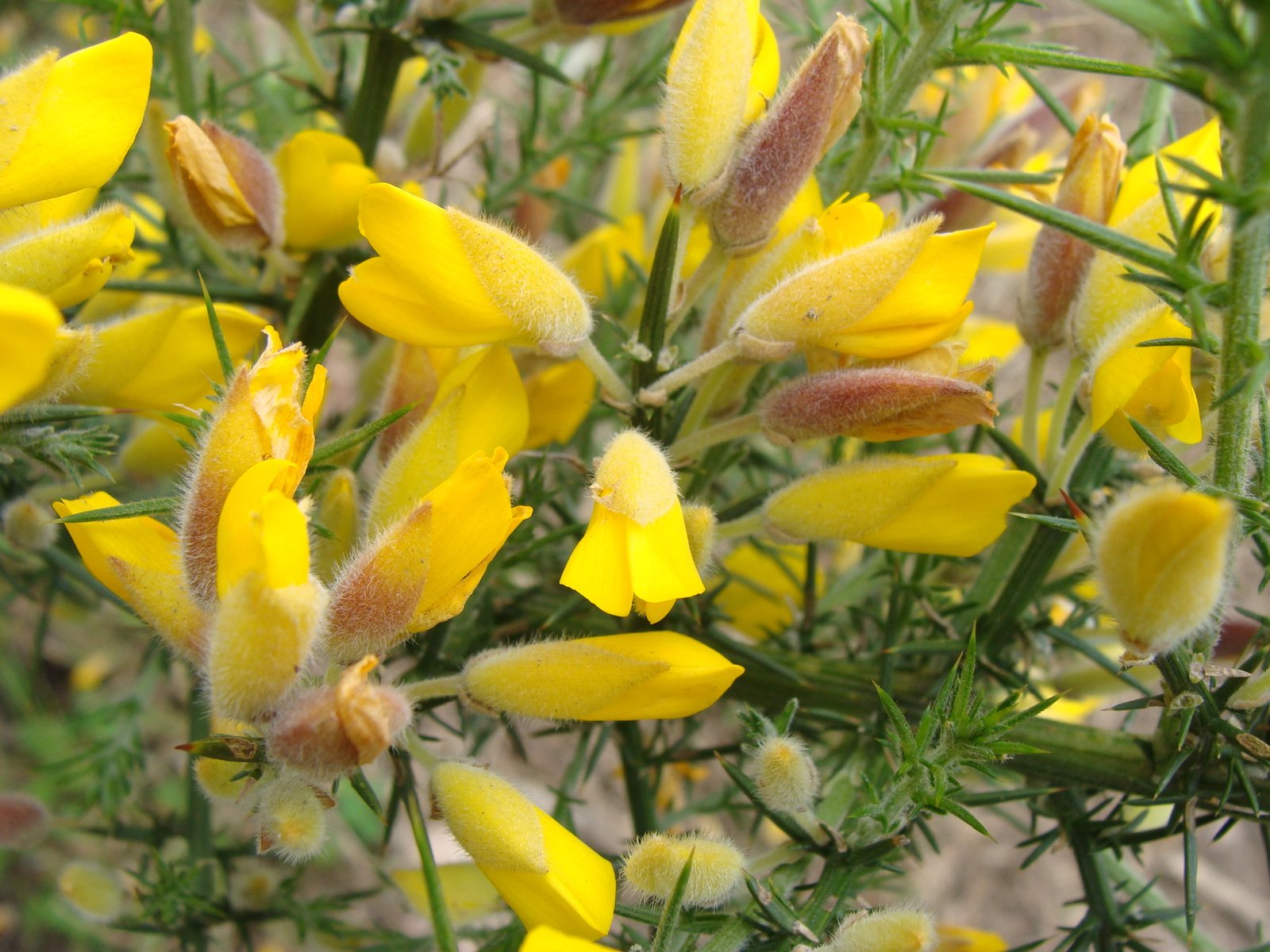
Gorse is a dense, fiercely spiny evergreen shrub grown for its golden, coconut-scented flowers and ability to withstand exposed coastal conditions. It suits sunny, poor-soil sites within its native range, but is a serious invasive weed in many other regions and should not be planted where it can escape. Its dry growth is highly flammable, making it unsuitable near buildings in fire-prone areas.
At a glance
- Sun
- Full sun; flowering and density decline in shade.
- Water
- Water during establishment, then only during prolonged drought; established plants tolerate dry soil.
- Soil
- Poor to moderately fertile, sharply drained, preferably acidic soil. Tolerates sand, gravel and coastal exposure; avoid waterlogged ground and heavy feeding.
- Height
- 6-10 ft (1.8-3 m)
- Spread
- 5-10 ft (1.5-3 m)
- Flowers
- Golden-yellow, pea-shaped flowers, mainly in spring, with scattered flowers through autumn and winter in mild climates.
- Foliage
- Evergreen. Green, rigid, branched spines form most of the mature foliage; young seedlings have small, three-part leaves.
- Growth
- Fast when young.
- Care needed
- High
The year at a glance
- Pollinators
- Deer resistant
- Drought tolerant
- Heat tolerant
- Wildlife
- Low allergen
- Fragrant
| J | F | M | A | M | J | J | A | S | O | N | D | |
|---|---|---|---|---|---|---|---|---|---|---|---|---|
| Flowers | ||||||||||||
| Fruit | ||||||||||||
| Plant |
Northern hemisphere months. In Australia, shift them by six.
- Difficulty
- Hard
- Toughness
- Very tough
Will it suit your garden?
Pick your zone, country, light and whether you have pets.
Full sun is 6 or more hours of direct sun a day, part shade 3 to 6 hours, shade under 3.
How it grows
Planting day
1.6 ft (0.5 m)
After 1 year
4 ft (1.1 m)
After 2 years
5 ft (1.7 m)
After 3 years
7 ft (2.3 m)
After 5 years
8 ft (2.4 m)
full size
About 3 years to full size.
From a typical nursery size, at an average rate for this kind of plant. A rule of thumb, not a forecast.
Good to know
- Cats and dogs
- Toxic
- Native to
- the UK
- Invasive in
- the US, Canada and Australia
- In the garden
- Spreads vigorously: plan to contain it.
- Growth rate
- Fast
Care
Jobs through the year
- WaterApr–May, Sep, every 28 days
- Water established ground plants only in prolonged drought; water first-year shrubs more often.
- WaterJun–Aug, every 21 days
- Water established ground plants only if prolonged drought leaves the root zone very dry.
- PruneMay–Jun
- Lightly trim green shoots after flowering, before pods ripen; never cut into bare old wood.
- PruneFeb, Nov
- Carefully remove dead, flammable growth; wear thick gloves and eye protection.
- ProtectMar–May
- Check invasive-plant restrictions before planting; choose an alternative where gorse threatens habitats.
- ProtectJun–Oct, every 30 days
- Pull unwanted seedlings with their roots before they establish or spread.
- Check local weed restrictions before planting; choose a non-invasive alternative where gorse is a problem.
- Water newly planted shrubs during dry spells through their first growing season.
- Do not apply nitrogen fertilizer; gorse fixes nitrogen and grows well in poor soil.
- Keep mulch clear of the stem base and avoid sites that stay wet in winter.
- Wear thick gloves, long sleeves and eye protection when handling it.
- Remove unwanted seedlings promptly and keep dead, flammable growth away from buildings and access routes.
Pruning. After the main spring flowering, shorten young green shoots lightly to keep the shrub compact; avoid cutting into bare old wood, which may not regrow reliably. Where seed escape is a concern, remove flowering shoots before pods develop, or remove the plant entirely.
Through the year
- Late winter
- Inspect for frost damage and dead growth; keep thorny branches clear of paths.
- Spring
- Where planting is permitted and environmentally appropriate, plant in a sunny, freely drained position and water thoroughly.
- Late spring
- After the main flowering, trim young growth lightly and remove developing pods before they ripen.
- Summer
- Water first-year plants during prolonged dry weather; check nearby bare ground for seedlings.
- Early autumn
- Pull small seedlings while the soil is moist, removing the roots.
- Late autumn
- Clear accumulated dead material and check that drainage remains free.
In the garden
- In its native range, use as a flowering component of a sunny coastal hedge, well away from paths.
- Combine with heathers on acidic, freely drained banks for contrasting yellow and purple flowers.
- Use in a managed wildlife boundary where dense, thorny cover is wanted and seedlings can be controlled.
- Place behind low-growing coastal plants for an evergreen backdrop, away from buildings and fire-sensitive areas.
Garden styles it suits: Coastal, Wildlife garden, Native hedgerow, Wildflower and Winter interest.
Plant it with: Common heather, Bell heather, Sea thrift, Sheep's fescue and Rockrose.
Wildlife: Flowers provide pollen for bees, especially bumblebees; dense shrubs shelter nesting birds. Outside its native range, spreading thickets can displace native vegetation and damage wildlife habitat.
Problems to watch for
- Unwanted seedlings and spreading thickets: remove seedlings before they establish; mature infestations need repeated control because seed can remain viable for decades.
- Root decline in wet soil: improve drainage or replace the plant with a shrub suited to damp conditions.
- Sparse, leggy growth in shade: grow in full sun; replace badly bare plants rather than cutting hard into old wood.
- Dead, flammable growth accumulating inside shrubs: remove dead material carefully and avoid growing gorse near buildings in fire-prone areas.
Safety
Seeds and pods contain toxic alkaloids and should not be eaten by people, cats, dogs or horses. Poisoning reports are uncommon, but significant ingestion may be serious; seek medical or veterinary advice if ingestion is suspected. The sharp spines also cause puncture wounds and can injure eyes.
Where it spreads. A serious invasive shrub in New Zealand, Australia, the western United States, Hawaii and coastal British Columbia, Canada; also invasive in parts of Chile and other temperate regions. It is regulated as a noxious weed in several jurisdictions, including parts of the United States and Australia. Native in the UK, but it can still spread into unwanted areas.
Easily confused with
Western gorse (Ulex gallii)
Usually lower-growing, with smaller flowers mainly in late summer and autumn; common gorse is generally taller and flowers most heavily in spring.
Dwarf gorse (Ulex minor)
A much smaller shrub with finer spines and smaller flowers, chiefly in late summer and autumn; identification can be difficult where gorse species overlap.
Scotch broom (Cytisus scoparius)
Has flexible, ridged green stems and small leaves rather than the dense, rigid spines of gorse.
The name
The botanical epithet europaeus means 'European', referring to the species' native region.
Propagation. Where legal and appropriate within its native range, propagate from semi-ripe cuttings in summer. Seed germinates after its hard coat is scarified, but deliberate seed propagation is best avoided because escape creates a persistent seed bank.
Checked against open data
- Accepted botanical name
- Ulex europaeus
- In the US and Canada
- Introduced in Canada, Hawaii and the lower 48 states.
- Native range
- Belgium, Corse, France, Germany, Great Britain, Ireland, Italy, Madeira, Netherlands, Portugal, Spain and Switzerland.
- Measured
- Soil pH 5 to 5.5. Average height 150 cm.
Sources: GBIF (CC BY 4.0), USDA PLANTS and Trefle (CC BY 4.0). The care and design notes are LandscapeGPT's own.
See it in your own yard.
Upload a photo of your yard and see it redesigned with plants that suit your climate, each checked against your zone.