Granny's bonnet
Aquilegia vulgaris. Family Ranunculaceae. Perennial.
Also called Common columbine, European columbine.
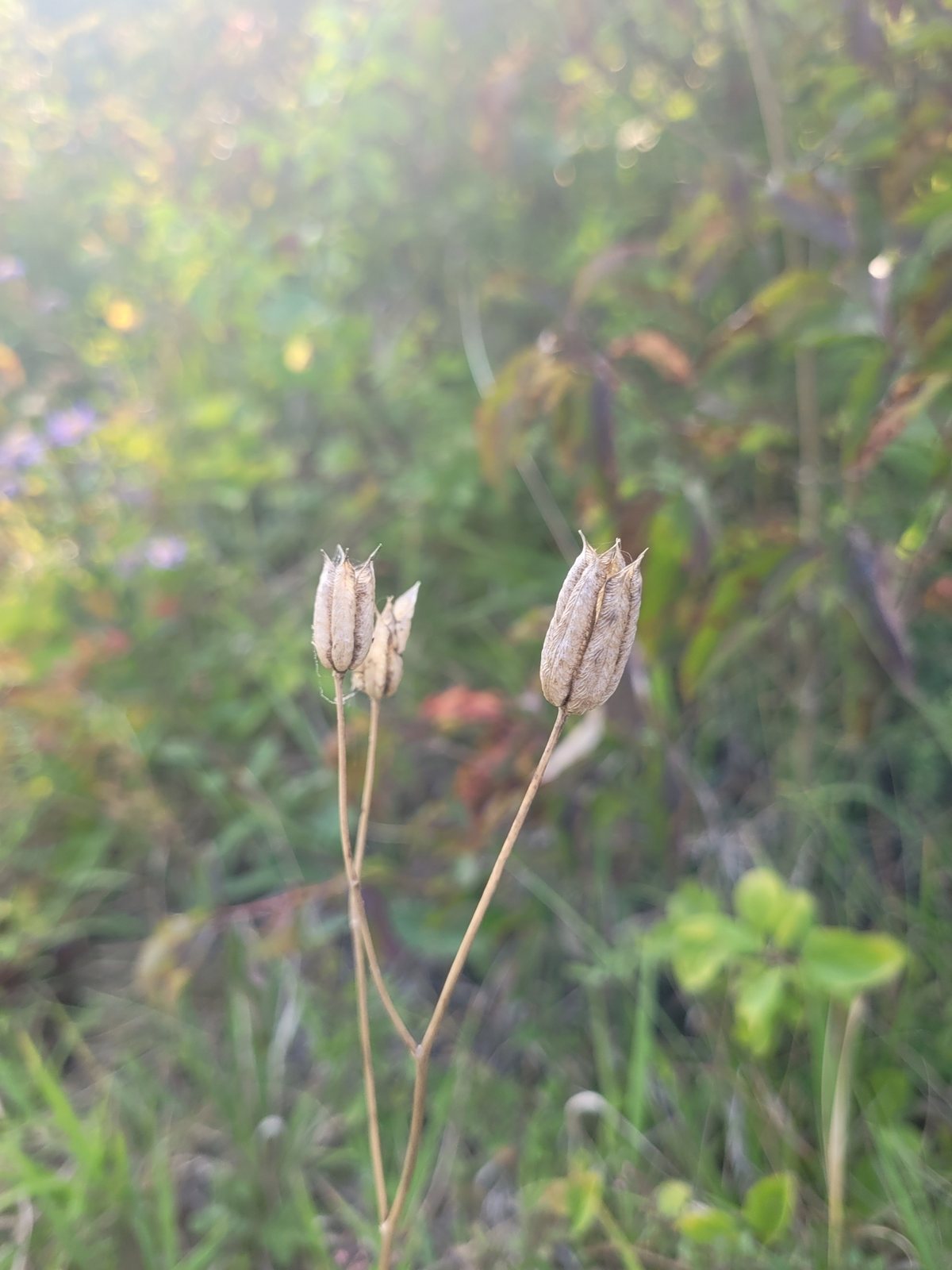
Granny's bonnet is a short-lived perennial with nodding, spurred flowers held above rounded, divided foliage. Gardeners grow it for late-spring colour in cottage borders and lightly shaded gardens, where it often maintains itself by self-seeding.
At a glance
- Sun
- Full sun to partial shade; afternoon shade is best where summers are hot.
- Water
- Moderate; keep the soil evenly moist while plants establish and during prolonged dry spells, without leaving it waterlogged.
- Soil
- Moist but well-drained soil enriched with organic matter; tolerates clay, loam and chalk if drainage is adequate.
- Height
- 2-3 ft (0.6-0.9 m)
- Spread
- 1-1.5 ft (0.3-0.45 m)
- Flowers
- Late spring to early summer; the species is usually violet-blue, with garden forms in purple, pink, red or white, sometimes bicoloured or double.
- Foliage
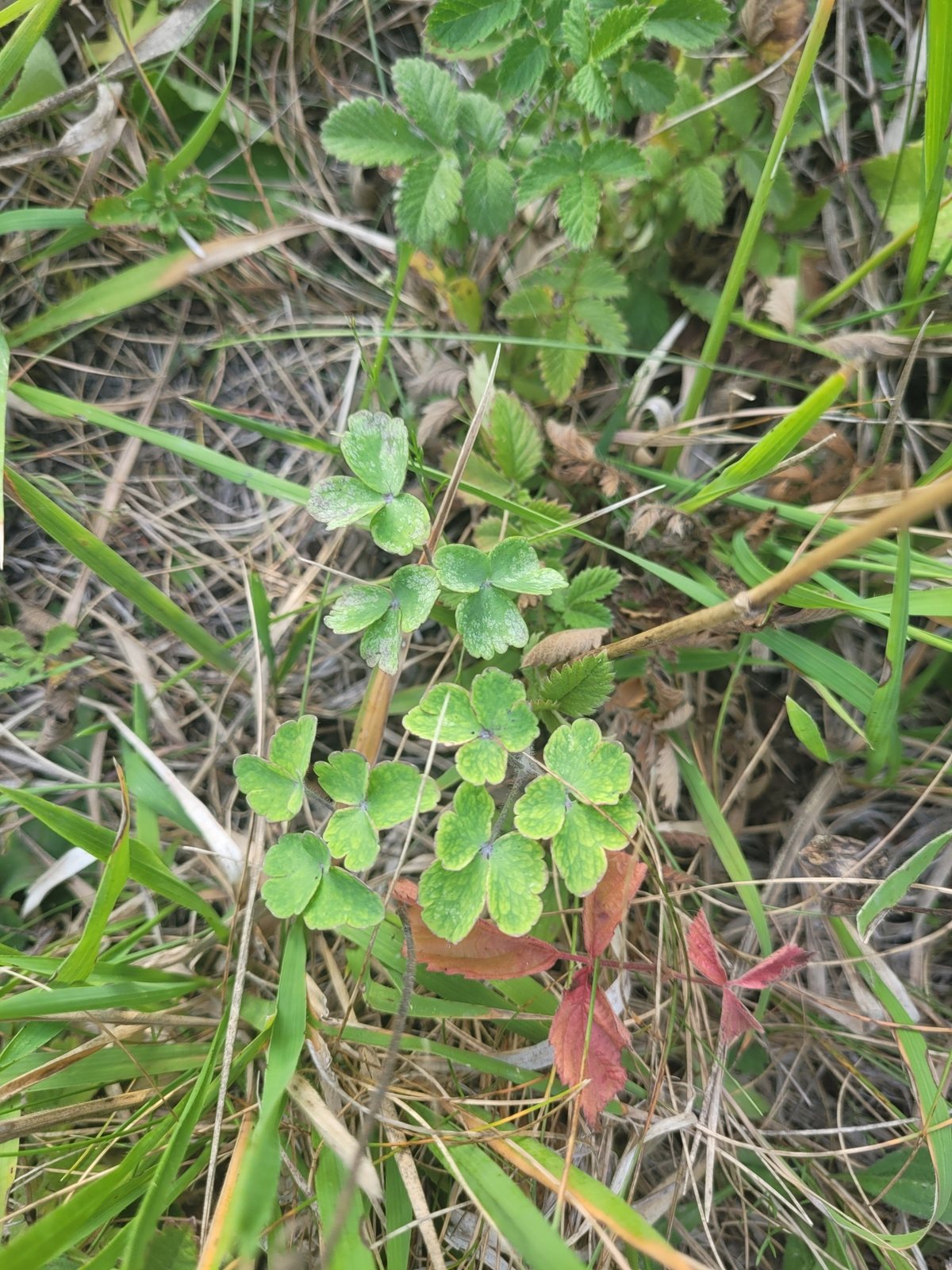
- Blue-green leaves divided into rounded, scalloped leaflets; the basal clump may become untidy or die back after flowering in hot, dry weather.
- Growth
- Moderate; usually flowers in its second year from seed.
- Care needed
- Low
The year at a glance
- Pollinators
- Deer resistant
- Cold hardy
- Low allergen
| J | F | M | A | M | J | J | A | S | O | N | D | |
|---|---|---|---|---|---|---|---|---|---|---|---|---|
| Flowers | ||||||||||||
| Fruit | ||||||||||||
| Plant |
Northern hemisphere months. In Australia, shift them by six.
- Difficulty
- Easy
- Toughness
- Fairly tough
Will it suit your garden?
Pick your zone, country, light and whether you have pets.
Full sun is 6 or more hours of direct sun a day, part shade 3 to 6 hours, shade under 3.
How it grows
Planting day
1 ft (0.3 m)
After 1 year
1.5 ft (0.45 m)
After 2 years
2 ft (0.6 m)
After 3 years
2.5 ft (0.75 m)
full size
About 3 years to full size.
From a typical nursery size, at an average rate for this kind of plant. A rule of thumb, not a forecast.
Good to know
- Cats and dogs
- Safe
- Native to
- the UK
- In the garden
- Spreads vigorously: plan to contain it.
- Growth rate
- Moderate
Care
Jobs through the year
- WaterApr–May, Sep–Oct, every 14 days
- Water established plants if soil dries during prolonged dry spells; water new plants more frequently.
- WaterJun–Aug, every 7 days
- Water established plants during dry spells, especially while flowering; avoid waterlogging.
- FeedMar–Apr
- Apply a thin compost top-dressing; avoid rich feeding.
- MulchMar–Apr
- Apply a light organic mulch, leaving crowns uncovered.
- DeadheadMay–Jul, every 7 days
- Cut faded stems to basal leaves; leave a few if seedlings are wanted.
- PruneJun–Aug
- Cut badly mildewed or leaf-mined foliage back to healthy growth if needed.
- PruneMar
- Remove remaining dead winter foliage before new growth expands.
- Water new plants regularly through their first growing season.
- Water established plants during extended dry spells, especially while flowering.
- Apply a thin layer of compost in spring; rich feeding is usually unnecessary.
- Mulch to conserve moisture, keeping mulch clear of the crown.
- Thin unwanted seedlings and retain a few healthy young plants to replace ageing clumps.
Pruning. Cut spent flower stems down to the basal leaves unless you want seed. After flowering, cut badly mildewed or leaf-mined foliage back to healthy growth, and remove dead foliage in late autumn or early spring.
Through the year
- Early spring
- Remove dead foliage and apply a thin layer of compost around established plants.
- Spring
- Plant nursery-grown plants and move small self-sown seedlings before their roots become well established.
- Late spring
- Water during dry weather and check leaves for mining damage or caterpillar-like sawfly larvae.
- Early summer
- Deadhead fading flowers, leaving a few stems only if you want seedlings.
- Summer
- Collect ripe seed before the pods open, sow it fresh, and cut back badly damaged foliage.
- Autumn
- Thin crowded seedlings and plant out young plants while the soil is moist.
In the garden
- Thread through cottage borders with hardy geraniums and foxgloves for an informal late-spring display.
- Plant along lightly shaded woodland edges with ferns and brunnera.
- Use among roses and peonies, where its slender flower stems add height without a dense mass of foliage.
- Allow a controlled scattering of seedlings through mixed borders to link separate planting groups.
Garden styles it suits: Cottage garden, English country, Romantic rose garden, Woodland, Wildlife garden and Arts and Crafts.
Plant it with: Hardy geraniums, Foxgloves, Brunnera, Lady's mantle, Peonies and Ferns.
Wildlife: The flowers provide nectar and pollen for bees, particularly long-tongued bumblebees. Single flowers are generally more accessible than heavily doubled forms.
Problems to watch for
- Leaf miners leave pale winding trails or blotches in leaves. Remove badly affected leaves; established plants usually tolerate the damage without spraying.
- Columbine sawfly larvae can strip leaves quickly. Inspect plants regularly and pick off larvae by hand.
- Powdery mildew produces a white coating on foliage. Improve airflow, water the soil rather than the leaves, and remove badly affected foliage.
- Aquilegia downy mildew causes yellow angular patches, distorted growth and sometimes downy growth beneath leaves. Remove and dispose of infected plants rather than composting them, and avoid propagating from affected stock.
Safety
Potentially harmful to people if eaten, especially the seeds and roots; do not use any part as food. It is not generally classified as toxic to cats, dogs or horses, but this does not make it suitable for feeding, and chewing plant material can cause stomach upset. Seek medical or veterinary advice after a significant ingestion or if symptoms develop.
Where it spreads. Can self-seed prolifically in gardens in the UK and temperate parts of North America and Australia. It is naturalized in parts of the northeastern United States and eastern Canada; this is not the same as being formally listed as invasive. Remove seed heads where spread is unwanted.
Easily confused with
Wild columbine (Aquilegia canadensis)
Usually has red-and-yellow flowers with relatively straight spurs; common columbine usually has violet-blue flowers with distinctly hooked spurs.
Rocky Mountain columbine (Aquilegia coerulea)
Typically has more outward-facing blue-and-white flowers with long, relatively straight spurs, rather than the shorter hooked spurs and nodding flowers of common columbine.
Meadow-rue (Thalictrum species)
Some have similarly divided, rounded foliage, but their flowers are small and fluffy or starry, without columbine's distinctive bonnet shape and spurs.
The name
Granny's bonnet refers to the flower's old-fashioned bonnet shape, while vulgaris means common.
Propagation. Sow fresh seed in pots outdoors and keep it moist; germination can be irregular, and a period of winter cold may help. Transplant seedlings while small. Garden forms cross readily, so seedlings may differ from their parents; division is possible but established plants resent root disturbance.
Checked against open data
- Accepted botanical name
- Aquilegia vulgaris
- In the US and Canada
- Introduced in the lower 48 states.
- Native range
- Albania, Austria, Baltic States, Belarus, Belgium, Bulgaria, Central European Rus, Corse, Czechoslovakia, France, Germany and Great Britain.
- Measured
- Soil pH 7 to 7.5. Average height 45 cm.
Sources: GBIF (CC BY 4.0), USDA PLANTS and Trefle (CC BY 4.0). The care and design notes are LandscapeGPT's own.
See it in your own yard.
Upload a photo of your yard and see it redesigned with plants that suit your climate, each checked against your zone.