Grecian windflower
Anemone blanda. Family Ranunculaceae. Bulb.
Also called Balkan anemone, Winter windflower.
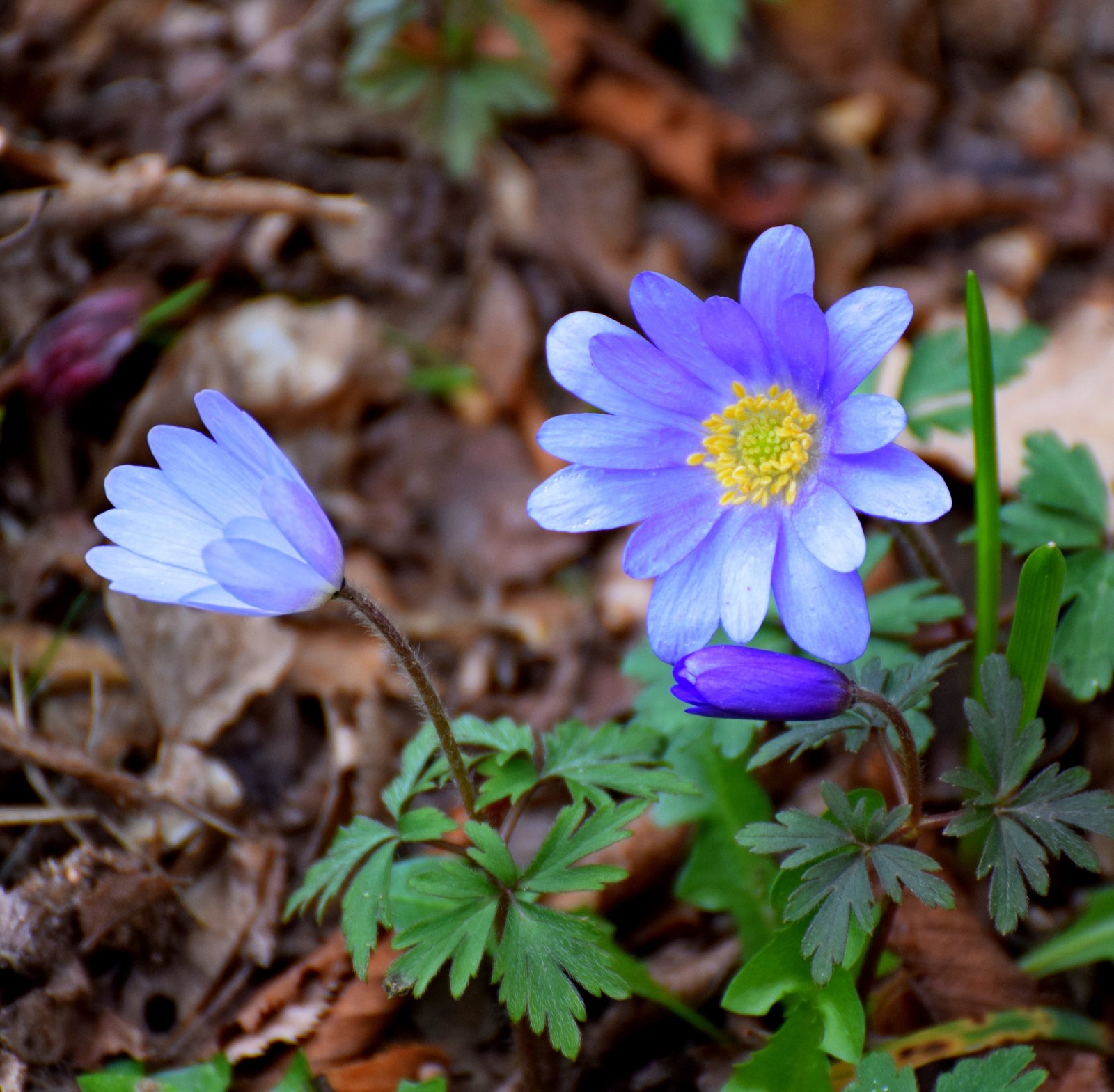
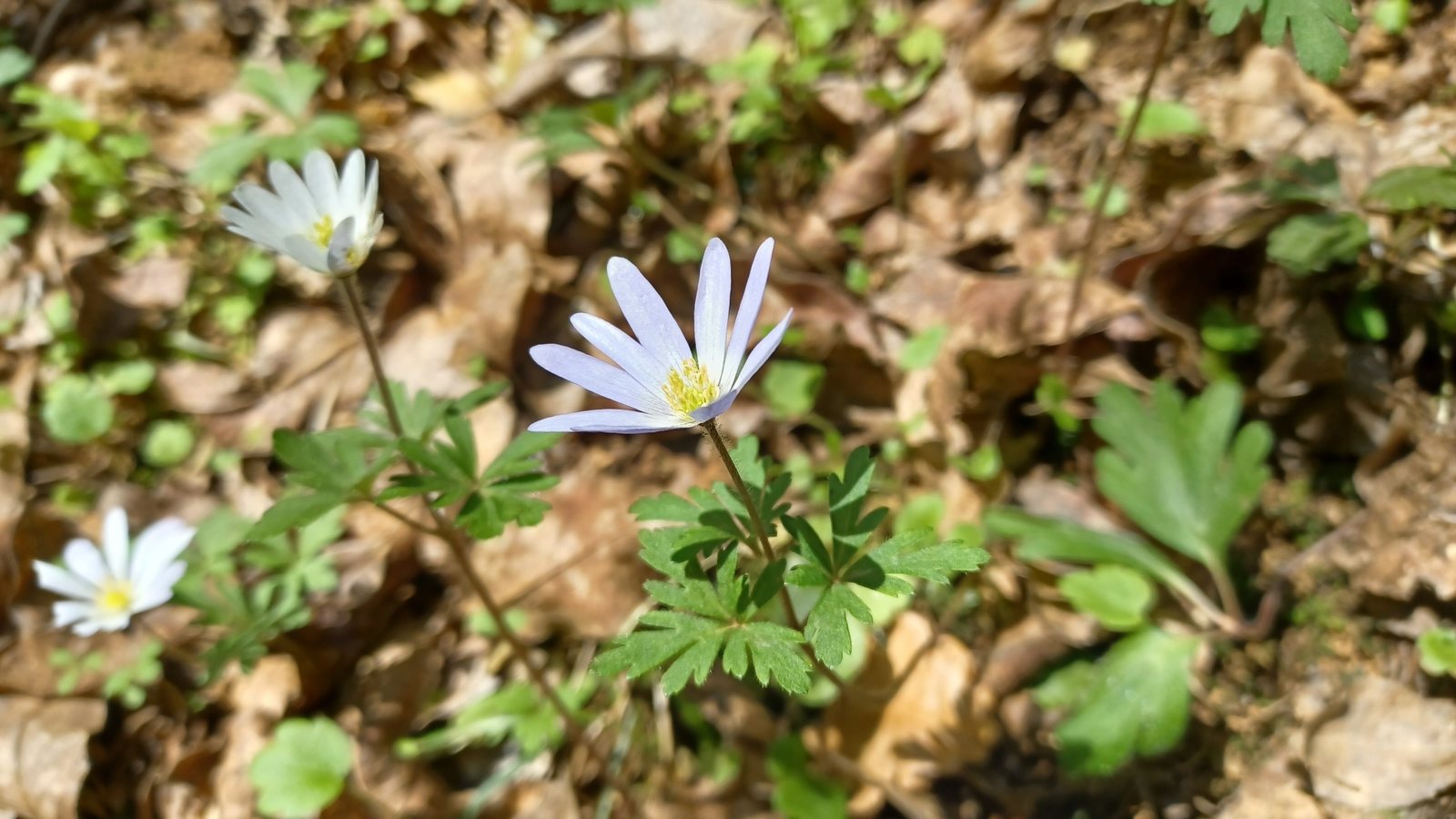
Grecian windflower is a small, tuberous perennial grown for its blue, pink or white daisy-like flowers in early spring. It forms low carpets beneath deciduous trees and shrubs, then dies back for summer, leaving room for later-growing plants.
At a glance
- Sun
- Full sun to partial shade; especially useful beneath deciduous trees that admit sunlight in spring.
- Water
- Keep moderately moist while growing in autumn and spring. Once dormant in summer, it tolerates dry soil but dislikes prolonged wetness.
- Soil
- Well-drained, humus-rich soil; sandy or loamy soil is ideal. Improve heavy clay drainage before planting.
- Height
- 0.25-0.5 ft (0.08-0.15 m)
- Spread
- 0.5-1 ft (0.15-0.3 m), gradually forming wider colonies
- Flowers
- Early to mid-spring; blue to violet-blue, white or pink flowers with yellow centres, opening most fully in sunshine.
- Foliage
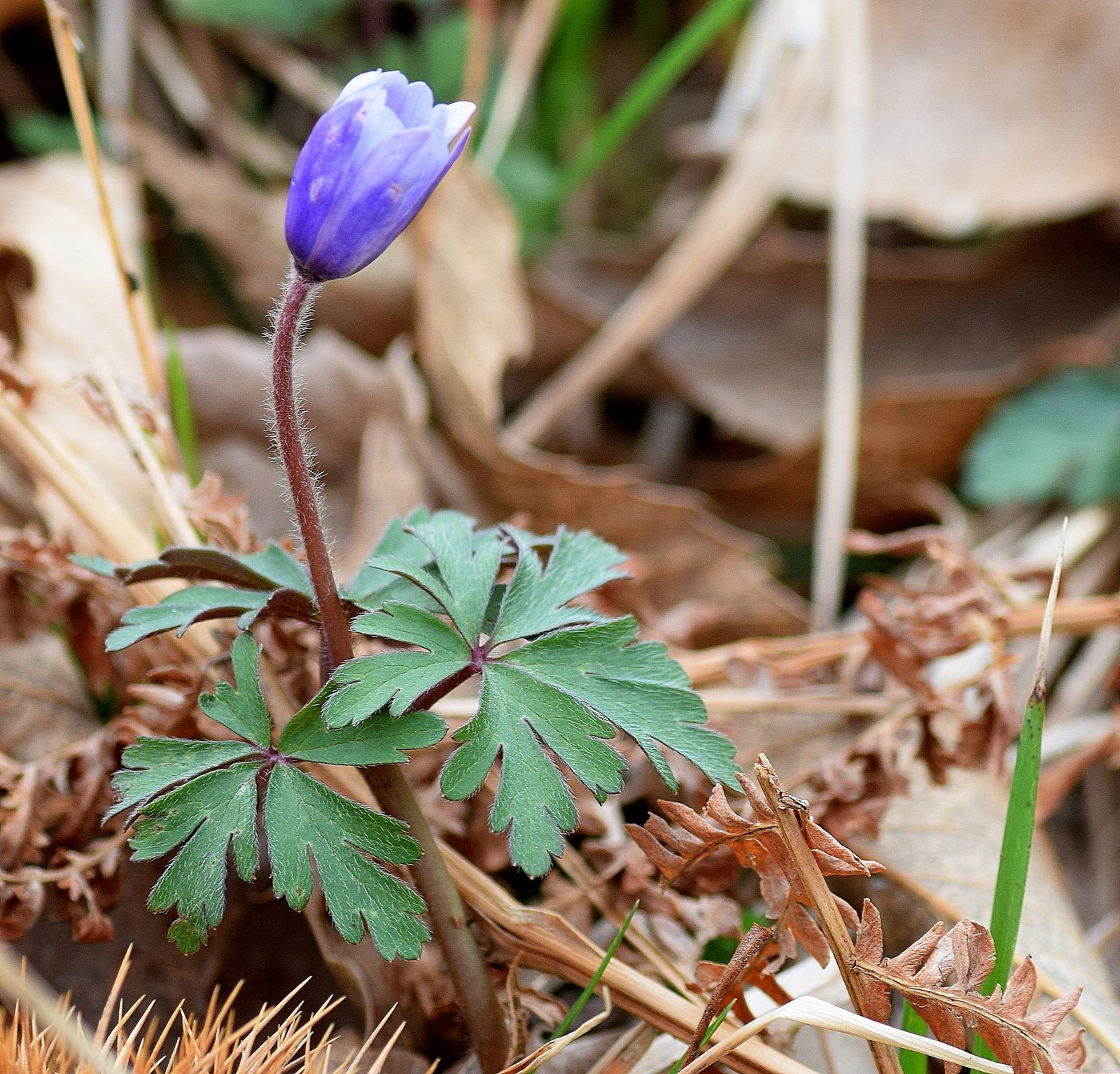
- Low, finely divided green leaves that yellow and disappear in late spring or early summer.
- Growth
- Moderate during its short growing season; colonies expand gradually by seedlings and tuber growth.
- Care needed
- Low
The year at a glance
- Pollinators
- Deer resistant
- Low allergen
| J | F | M | A | M | J | J | A | S | O | N | D | |
|---|---|---|---|---|---|---|---|---|---|---|---|---|
| Flowers | ||||||||||||
| Fruit | ||||||||||||
| Plant |
Northern hemisphere months. In Australia, shift them by six.
- Difficulty
- Easy
- Toughness
- Very tough
Will it suit your garden?
Pick your zone, country, light and whether you have pets.
Full sun is 6 or more hours of direct sun a day, part shade 3 to 6 hours, shade under 3.
How it grows
Planting day
0.4 ft (0.12 m)
full size
About 1 years to full size.
From a typical nursery size, at an average rate for this kind of plant. A rule of thumb, not a forecast.
Good to know
- Cats and dogs
- Toxic
- Growth rate
- Moderate
Care
Jobs through the year
- WaterFeb–Mar, Sep–Nov, every 14 days
- Water established patches only if soil dries during active growth; water newly planted tubers in well.
- WaterApr–May, every 7 days
- Water during dry spells while leaves are green; stop when foliage dies back.
- MulchOct–Nov
- Apply a thin layer of leaf mould or compost; avoid thick, matted leaf cover.
- PruneMay–Jun
- Leave foliage until fully yellow and withered, then clear it if desired.
- DivideJul–Aug
- Separate crowded dormant clumps only when needed and replant promptly.
- ProtectFeb–Apr
- Check emerging shoots for slugs and snails and hand-pick where needed.
- Plant tubers in autumn, about 2-3 in (5-8 cm) deep and 3-4 in (8-10 cm) apart.
- Water after planting and during dry spells while leaves and flowers are growing.
- Apply a thin layer of leaf mould or compost in autumn; rich feeding is usually unnecessary.
- Avoid waterlogged soil, especially during summer dormancy.
- Mark established patches before the leaves disappear so you do not dig through the tubers.
Pruning. Leave the foliage until it has yellowed and withered, then remove it if needed. Deadheading is optional; leave spent flowers if you want seedlings.
Through the year
- Autumn
- Plant dormant tubers and water them in; choose a spot with good drainage and spring sunlight.
- Late autumn
- Top-dress established patches lightly with leaf mould, keeping the soil surface free of thick, matted leaves.
- Late winter
- Check emerging shoots for slug and snail damage and protect them where necessary.
- Spring
- Water during prolonged dry weather while flowers and leaves are active.
- Late spring
- Allow leaves to yellow naturally; leave seed heads if you want the patch to spread.
- Summer
- Lift and separate crowded dormant clumps if needed, then replant promptly; avoid unnecessary irrigation over dormant patches.
In the garden
- Plant in broad drifts beneath deciduous shrubs for spring colour before the canopy closes.
- Combine with small daffodils and grape hyacinths along the front of a spring border.
- Use between later-emerging hostas or ferns, which conceal the space left after summer dormancy.
- Grow in well-drained rock-garden pockets or beside paths where the small flowers can be seen closely.
Garden styles it suits: Woodland, Cottage garden, English country, Romantic rose garden, Low-maintenance and Blues and silvers.
Plant it with: Snowdrops, Small daffodils, Grape hyacinths, Hellebores, Hostas and Deciduous ferns.
Wildlife: Open flowers offer pollen to early insects in suitable weather. It is not a native woodland plant in the United States, Canada, the United Kingdom or Australia.
Problems to watch for
- Tuber rot in wet soil: improve drainage or move the planting to a raised bed; discard soft, rotten tubers.
- Slugs and snails eating young shoots: inspect at dusk, remove pests and use wildlife-conscious controls where needed.
- Poor flowering in dense shade: move dormant tubers to a site that receives more sunlight in early spring.
- Weak growth after foliage is cut early: leave leaves intact until they yellow naturally so the tubers can rebuild reserves.
Safety
All parts, including the tubers, are toxic if eaten by people, cats, dogs or horses. Fresh sap can irritate skin and the mouth; ingestion may cause drooling, vomiting or diarrhoea, and larger amounts can cause more serious illness. Wear gloves when handling damaged plants and seek medical or veterinary advice after ingestion.
Easily confused with
Wood anemone (Anemone nemorosa)
Usually has white flowers with fewer, broader petal-like segments and spreads by creeping rhizomes rather than small, knobbly tubers.
Apennine anemone (Anemone apennina)
Also has blue spring flowers, but generally has narrower, more widely spaced petal-like segments. Grecian windflower usually has a fuller, more densely rayed flower; identification from flower colour alone is unreliable.
The name
Anemone comes from the Greek word for wind, while blanda means charming or pleasing; Grecian refers to part of the plant's native range.
Propagation. Separate tubers or divide established clumps during summer dormancy and replant promptly. Sow ripe seed fresh; germination can be slow and irregular, and seedlings take several years to flower.
Checked against open data
- Accepted botanical name
- Anemone blanda
- In the US and Canada
- Introduced in Canada and the lower 48 states.
- Native range
- Albania, Bulgaria, Cyprus, East Aegean Is., Greece, Lebanon-Syria, North Caucasus, Transcaucasus, Turkey, Turkey-in-Europe and Yugoslavia.
- Measured
- Average height 20 cm.
Sources: GBIF (CC BY 4.0), USDA PLANTS and Trefle (CC BY 4.0). The care and design notes are LandscapeGPT's own.
See it in your own yard.
Upload a photo of your yard and see it redesigned with plants that suit your climate, each checked against your zone.