Green carpet
Herniaria glabra. Family Caryophyllaceae. Groundcover.
Also called Smooth rupturewort, Rupturewort.
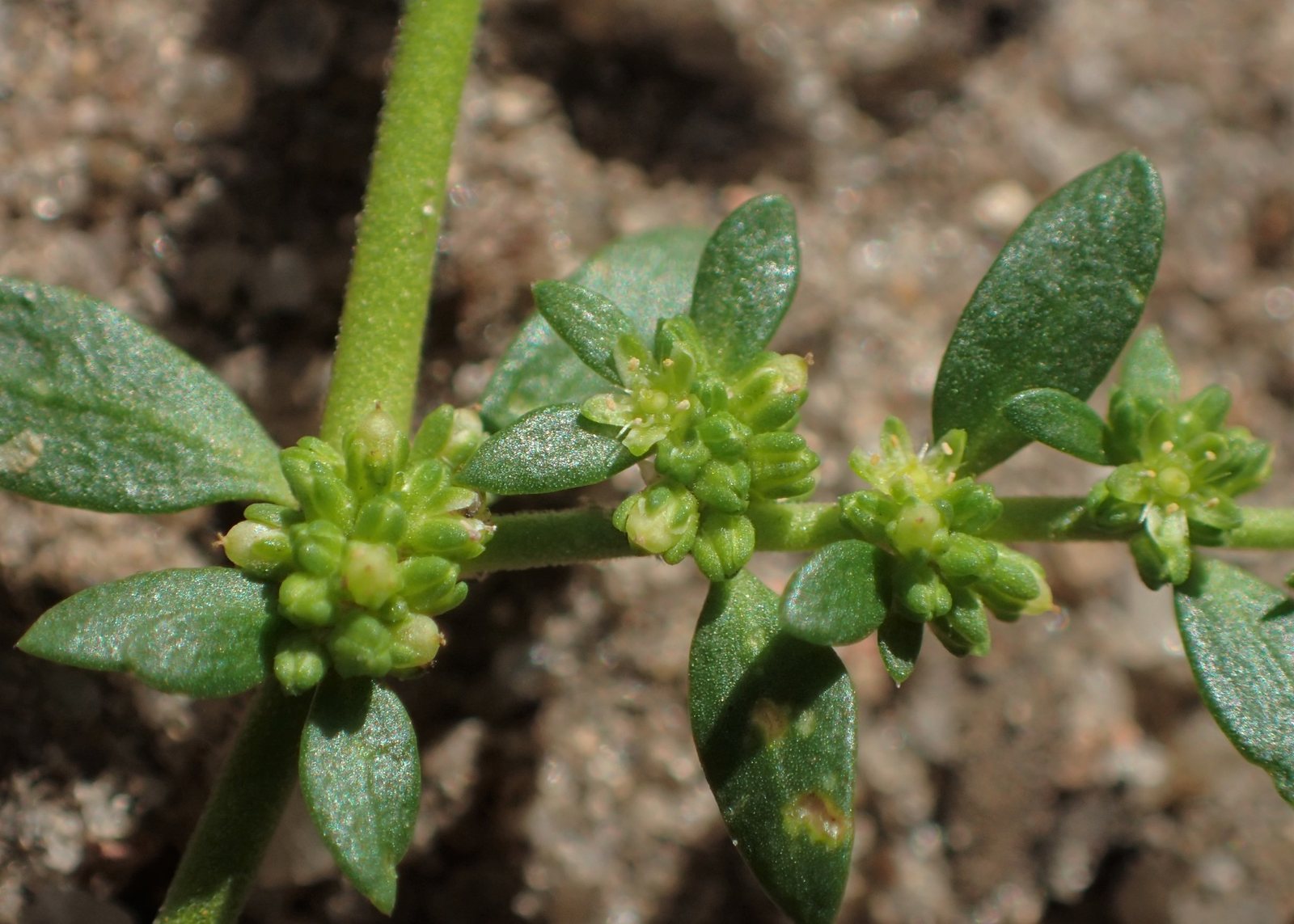
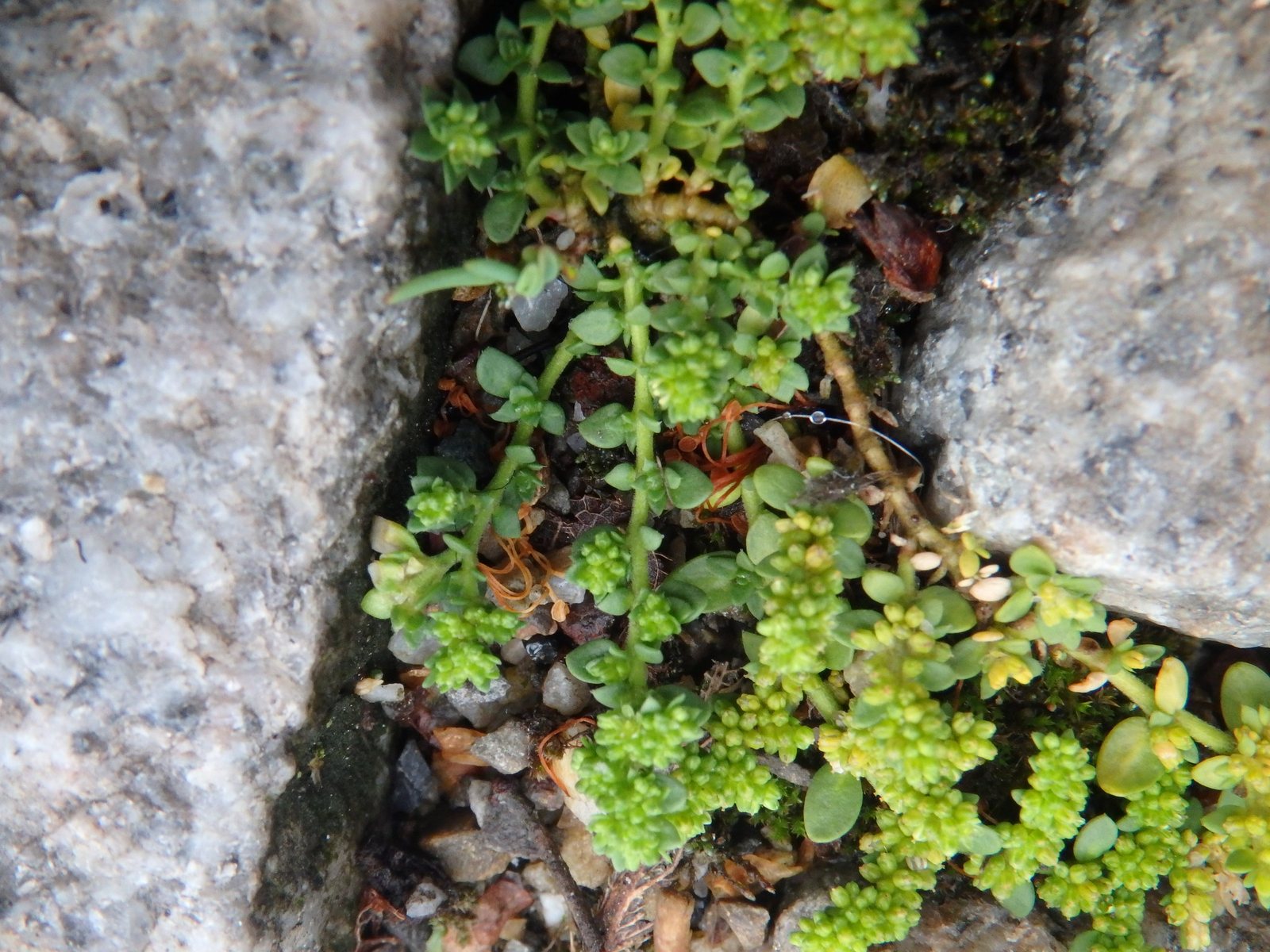
Green carpet is a low, mat-forming perennial grown for its tiny green leaves rather than its inconspicuous flowers. It fills gaps between paving stones and softens gravel edges, tolerating occasional footsteps once established but not regular lawn traffic. It stays evergreen in mild winters and may turn bronze or lose some foliage in colder areas.
At a glance
- Sun
- Full sun to light partial shade; a little afternoon shade helps in hot climates.
- Water
- Water regularly while establishing, then during prolonged dry spells; established plants tolerate some drought.
- Soil
- Well-drained sandy, gritty or loamy soil; tolerates relatively poor soil but struggles in waterlogged ground.
- Height
- 0.1-0.25 ft (0.03-0.08 m)
- Spread
- 1-2 ft (0.3-0.6 m)
- Flowers
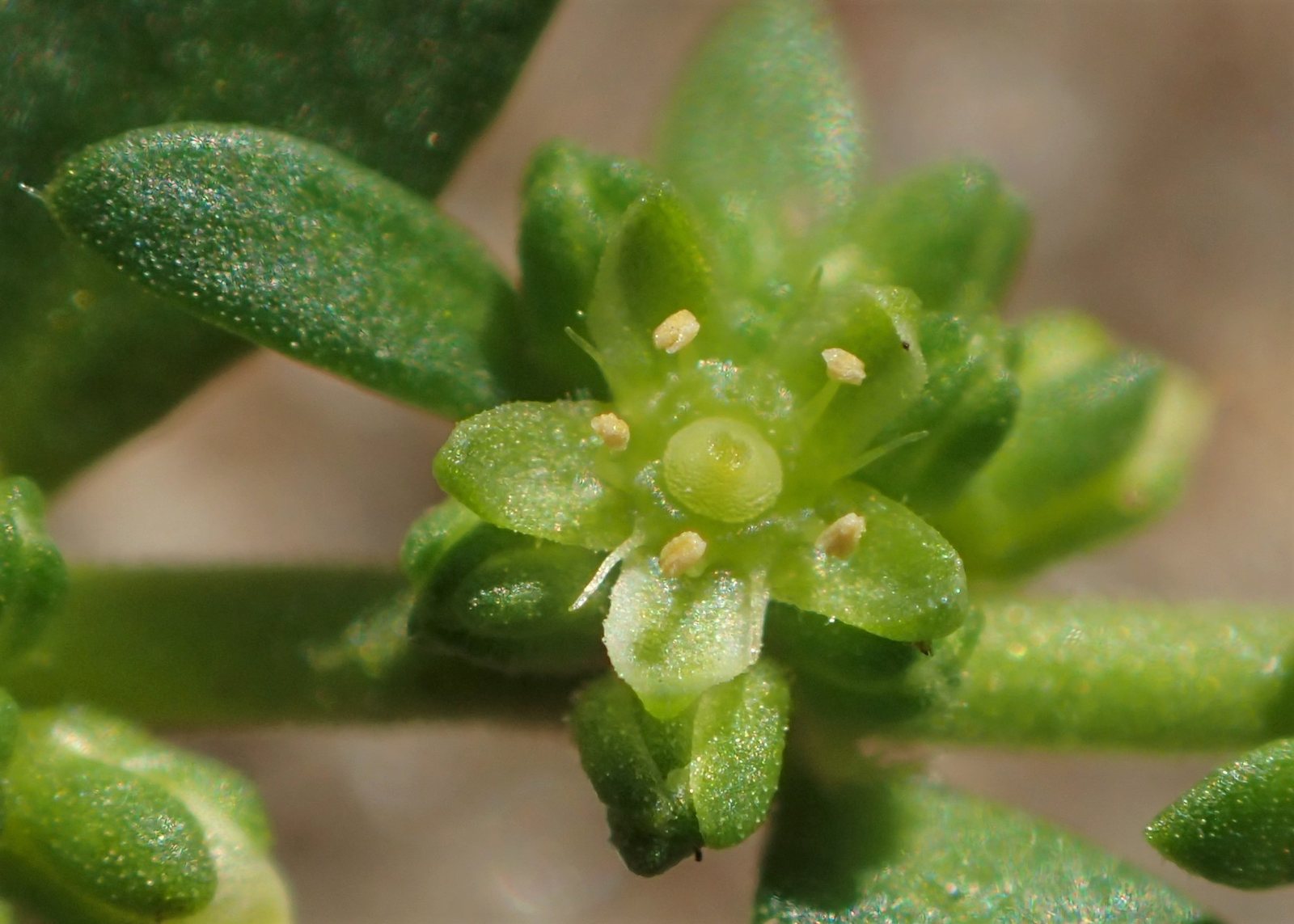
- Tiny, inconspicuous green flowers in summer.
- Foliage
- Evergreen. Very small, smooth, oval green leaves on prostrate, branching stems; often bronze-tinted in cold weather.
- Growth
- Moderate; spreading stems gradually form a close mat.
- Care needed
- Low
The year at a glance
- Drought tolerant
- Heat tolerant
- Wildlife
- Low allergen
| J | F | M | A | M | J | J | A | S | O | N | D | |
|---|---|---|---|---|---|---|---|---|---|---|---|---|
| Flowers | ||||||||||||
| Plant |
Northern hemisphere months. In Australia, shift them by six.
- Difficulty
- Easy
- Toughness
- Very tough
Will it suit your garden?
Pick your zone, country, light and whether you have pets.
Full sun is 6 or more hours of direct sun a day, part shade 3 to 6 hours, shade under 3.
How it grows
Planting day
0 ft (0.01 m)
After 1 year
0.1 ft (0.03 m)
After 2 years
0.2 ft (0.05 m)
After 3 years
0.2 ft (0.06 m)
full size
About 3 years to full size.
From a typical nursery size, at an average rate for this kind of plant. A rule of thumb, not a forecast.
Good to know
- Cats and dogs
- Safe
- Native to
- the UK
- Growth rate
- Moderate
Care
Jobs through the year
- WaterApr–May, Sep, every 21 days
- Water established mats only if dry; water new plants when the surface soil dries.
- WaterJun–Aug, every 14 days
- Water deeply during extended drought rather than keeping the soil constantly moist.
- PruneMar–Apr
- Remove dead or winter-damaged patches and trim stems away from paving.
- PruneAug–Sep
- Trim spreading stems back from paths after summer growth.
- DivideApr, Sep
- Lift rooted sections as needed to fill gaps, allowing autumn divisions time to root.
- ProtectJan–Feb, Nov–Dec
- Clear smothering leaves and avoid walking on frozen or saturated mats.
- Plant in freely draining ground; improve drainage or use a raised bed where winter soil stays wet.
- Water new plants when the surface soil dries until they are well rooted.
- Once established, water during extended drought rather than keeping the soil constantly moist.
- Avoid heavy feeding; use a light spring feed only if growth is weak on very poor soil.
- Hand-weed gaps while plants fill out, and keep bark mulch off the foliage.
- Limit foot traffic to occasional steps and keep frequently used routes on paving.
Pruning. Trim spreading stems back from paving edges in spring or after summer growth. Remove dead or winter-damaged patches in spring; routine mowing is unnecessary.
Through the year
- Early spring
- Remove dead foliage and check that winter-wet areas are draining freely.
- Spring
- Plant new plugs or rooted divisions and water them in thoroughly.
- Late spring
- Hand-weed between young plants before their mats close the gaps.
- Summer
- Water during prolonged drought and trim stems that cover paving.
- Early autumn
- Plant or divide in mild climates while soil is still warm; allow time for rooting before frost.
- Winter
- Remove fallen leaves that smother the mat and avoid walking on frozen or saturated plants.
In the garden
- Fill joints between widely spaced stepping stones to soften hard paving.
- Edge gravel paths with a low green mat that does not obscure the route.
- Cover small sunny areas between rocks and drought-tolerant perennials.
- Use as a small, lightly accessed lawn alternative rather than a surface for games or regular walking.
Garden styles it suits: Dry gravel garden, Alpine rock garden, Low-maintenance, Green on green, Modern courtyard and Small-space.
Plant it with: Creeping thyme, Stonecrop, Dianthus, Dwarf lavender and Rock rose.
Wildlife: The dense mat offers shelter for small ground-dwelling invertebrates. Its tiny flowers are not a major ornamental nectar feature.
Problems to watch for
- Root and crown rot in wet soil: improve drainage, reduce watering and replace badly rotted patches.
- Weeds entering thin patches: hand-weed promptly and fill gaps with rooted pieces.
- Bare patches from repeated foot traffic: redirect walking onto stepping stones and replant damaged areas.
- Browning during prolonged drought: water deeply when the root zone is dry; remove dead growth after recovery.
Safety
Not known to be toxic to people, cats, dogs or horses. Species-specific safety information is limited, particularly for horses, so do not treat any part as food or allow substantial grazing.
Easily confused with
Hairy rupturewort (Herniaria hirsuta)
Its leaves and stems have conspicuous fine hairs, best seen with a hand lens; green carpet is largely hairless. Hairy rupturewort is usually annual.
Irish moss (Sagina subulata)
Has narrow, needle-like leaves and noticeable small white flowers, rather than oval leaves and inconspicuous green flowers.
Baby's tears (Soleirolia soleirolii)
Has rounder leaves on delicate thread-like stems and forms a softer, often deeper mound; it prefers moister, shadier conditions.
The name
Herniaria refers to the plant's historical use for hernias, reflected in the name rupturewort, while glabra means hairless.
Propagation. Divide rooted sections in spring, or early autumn in mild climates, and replant promptly. It can also be raised from seed surface-sown in spring; keep the seedbed lightly moist.
Checked against open data
- Accepted botanical name
- Herniaria glabra
- In the US and Canada
- Introduced in the lower 48 states.
- Native range
- Afghanistan, Albania, Algeria, Altay, Austria, Baltic States, Belarus, Belgium, Bulgaria, Central European Rus, China South-Central and Corse.
- Measured
- Average height 5 cm.
Sources: GBIF (CC BY 4.0), USDA PLANTS and Trefle (CC BY 4.0). The care and design notes are LandscapeGPT's own.
See it in your own yard.
Upload a photo of your yard and see it redesigned with plants that suit your climate, each checked against your zone.