Green Gem boxwood
Buxus 'Green Gem'. Family Buxaceae. Shrub.
Also called Green Gem box, Buxus 'Green Gem'.
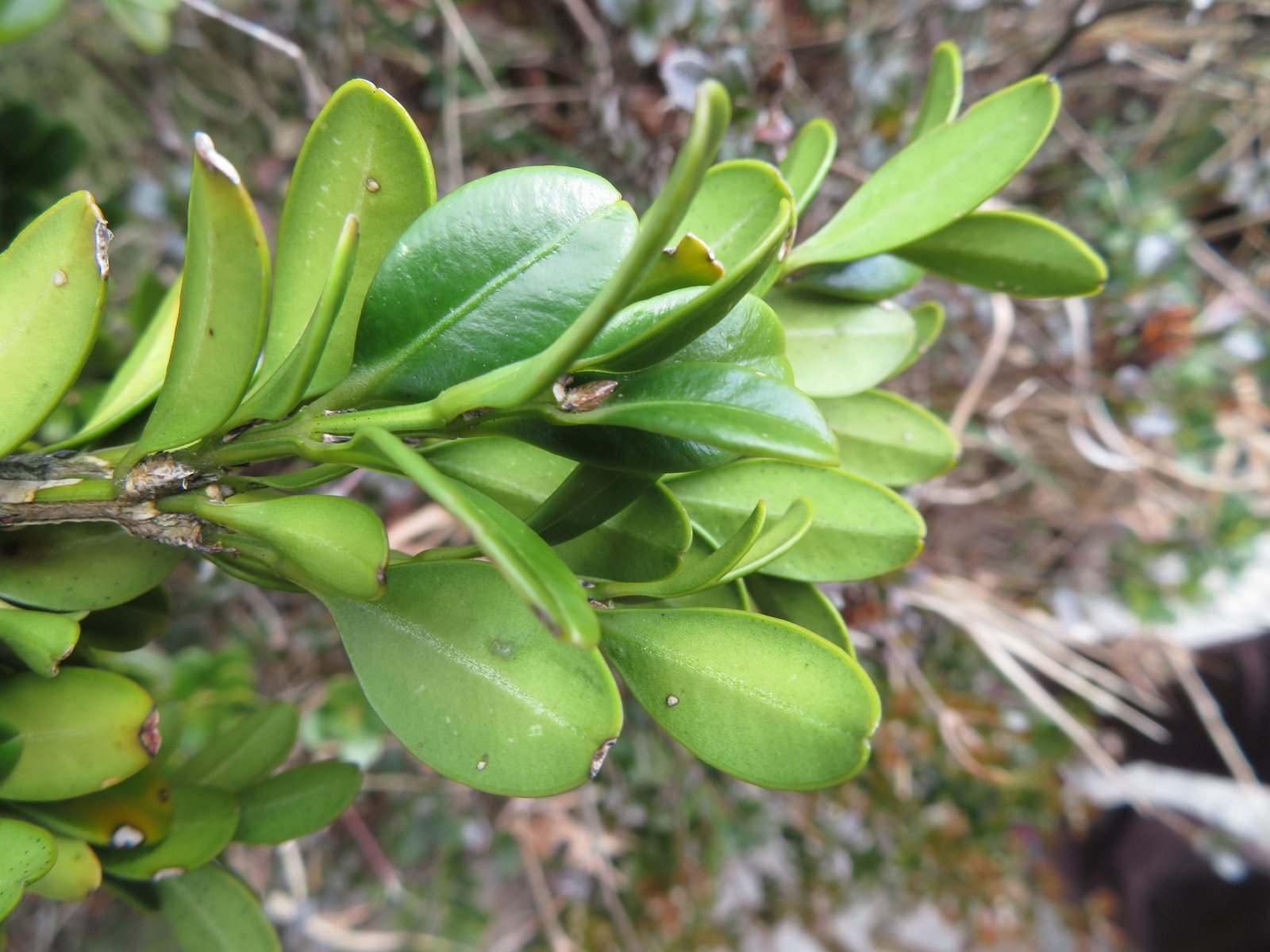
Green Gem is a slow-growing evergreen boxwood that naturally forms a dense, rounded mound. Gardeners use its small green leaves and compact shape for low hedges, clipped balls and year-round structure in small gardens. It holds its winter colour well, although exposed plants can bronze or scorch.
At a glance
- Sun
- Full sun to partial shade; afternoon shade is helpful in hot climates. Shelter from drying winter winds.
- Water
- Keep the root zone evenly moist during establishment; once established, water deeply during prolonged dry weather. Avoid waterlogged soil.
- Soil
- Well-drained loam, clay loam or sandy soil enriched with organic matter; slightly acidic to slightly alkaline conditions are suitable.
- Height
- 3-4 ft (0.9-1.2 m)
- Spread
- 3-4 ft (0.9-1.2 m)
- Foliage
- Small, opposite, oval green leaves form a dense evergreen canopy; foliage may develop bronze tones in cold, exposed conditions.
- Growth
- Slow
- Care needed
- Medium
The year at a glance
- Pollinators
- Deer resistant
- Cold hardy
- Heat tolerant
- Wildlife
- Low allergen
| J | F | M | A | M | J | J | A | S | O | N | D | |
|---|---|---|---|---|---|---|---|---|---|---|---|---|
| Plant |
Northern hemisphere months. In Australia, shift them by six.
- Difficulty
- Moderate
- Toughness
- Fairly tough
Will it suit your garden?
Pick your zone, country, light and whether you have pets.
Full sun is 6 or more hours of direct sun a day, part shade 3 to 6 hours, shade under 3.
How it grows
Planting day
1.6 ft (0.5 m)
After 1 year
1.9 ft (0.57 m)
After 2 years
2.1 ft (0.64 m)
After 3 years
2.3 ft (0.71 m)
After 5 years
2.8 ft (0.84 m)
About 8 years to full size.
From a typical nursery size, at an average rate for this kind of plant. A rule of thumb, not a forecast.
Good to know
- Cats and dogs
- Toxic
- Growth rate
- Slow
Care
Jobs through the year
- WaterApr–May, Sep–Oct, every 14 days
- Water deeply at soil level if roots are drying; young shrubs need more frequent checks for two years.
- WaterJun–Aug, every 7 days
- Water during dry spells; skip if rain has moistened the root zone.
- WaterNov
- Water deeply before the ground freezes if autumn has been dry.
- MulchMar, Oct
- Top up organic mulch to 5–8 cm as needed, keeping it clear of stems.
- FeedMar–Apr
- Feed lightly only for weak growth or a confirmed nutrient deficiency.
- PruneMar–Apr
- Remove dead or damaged shoots and selectively thin crowded branches.
- PruneMay–Jun
- Lightly shape after the spring flush; keep hedge bases wider than tops.
- ProtectApr–Oct, every 7 days
- Inspect inside foliage for caterpillars, webbing and blight; remove diseased debris and disinfect tools.
- ProtectJan–Feb, Nov–Dec
- Shelter exposed shrubs from drying winds and gently brush off heavy loose snow.
- Water at soil level when the root zone begins to dry, especially during the first two growing seasons.
- Apply 2-3 in (5-8 cm) of organic mulch, keeping it clear of the stems.
- Feed lightly in spring only if growth is weak or a soil test indicates a deficiency.
- Keep cultivation shallow to avoid damaging the surface roots.
- Check regularly for caterpillars, leaf damage and sudden patches of browning.
Pruning. Remove dead or damaged shoots in spring, then lightly trim after the main spring flush if a formal shape is wanted. Occasionally thin crowded branches to admit light and air, and avoid late-season clipping that encourages tender growth before frost.
Through the year
- Late winter
- Check for wind scorch, snow damage and loose roots; avoid pruning frozen foliage.
- Spring
- Plant when the soil is workable and not waterlogged; water thoroughly and mulch.
- Spring
- Remove dead shoots and inspect new growth for leafminer damage and caterpillars.
- Early summer
- Lightly clip hedges or rounded shapes after the main flush of growth.
- Summer
- Water during dry spells and inspect for webbing, defoliation or leaf spots.
- Autumn
- Refresh mulch if needed and water well before the ground freezes if autumn has been dry.
In the garden
- Plant as a low formal hedge around a terrace or along a path, allowing room for its mature width.
- Repeat rounded plants through a perennial border to provide evergreen structure between seasonal flowers.
- Use clipped balls beside entrances or steps for a symmetrical accent.
- Edge a rose garden or herb parterre with a restrained green framework.
Garden styles it suits: Formal, English country, French parterre, Tudor knot garden, Topiary garden and Winter interest.
Plant it with: Roses, Catmint, Hardy geraniums, Alliums, Hellebores and Japanese anemones.
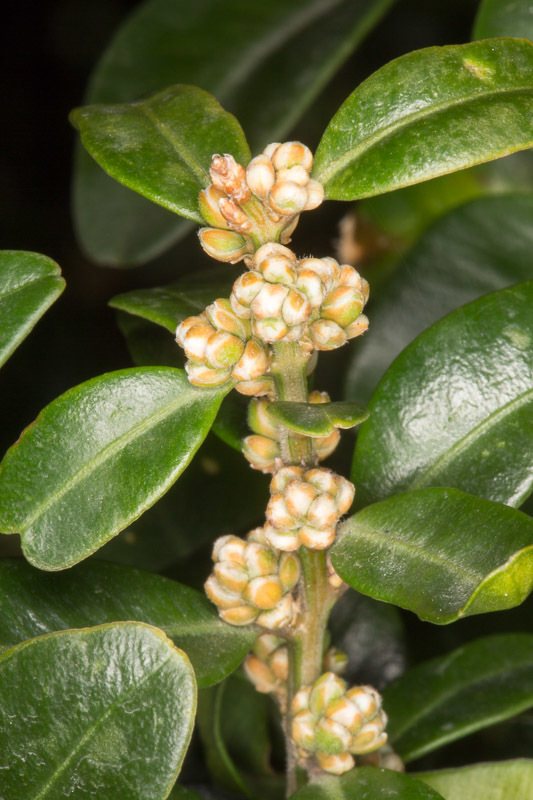
Wildlife: The small spring flowers can provide pollen and nectar for visiting insects. Dense foliage offers some shelter, but this is not a major wildlife food plant.
Problems to watch for
- Boxwood blight causes leaf spots, rapid leaf drop and dark stem streaks. Stop clipping affected plants, seek local confirmation, remove infected material as advised locally and disinfect tools; do not compost diseased debris.
- Box tree moth caterpillars chew leaves and leave webbing, sometimes stripping whole plants. Inspect inside the canopy, hand-pick small infestations and use a locally approved caterpillar treatment while larvae are young.
- Boxwood leafminer causes blistered, yellowing leaves, particularly in North America. Remove lightly affected shoots before adults emerge and seek locally appropriate treatment for persistent infestations.
- Poor drainage can cause root rot, yellowing and dieback. Correct drainage and reduce watering; severely affected plants may need removal rather than repeated treatment.
Safety
All parts contain toxic alkaloids, especially the leaves and bark. Eating it can poison people, cats, dogs and horses, causing vomiting, diarrhoea and abdominal pain; substantial ingestion can be serious or fatal, particularly in horses. Keep clippings away from animals and seek medical or veterinary advice after ingestion.
Easily confused with
Japanese holly (Ilex crenata)
Its small leaves are alternate along the stems and usually have finely scalloped edges; boxwood leaves are opposite with smooth edges. Female Japanese hollies may carry black berries.
Box-leaved honeysuckle (Lonicera nitida)
It has much finer, wiry shoots, usually smaller leaves and faster, more spreading growth. Unclipped plants can bear small paired flowers followed by purple berries.
The name
Buxus is the Latin name for boxwood, and 'Green Gem' is the cultivar name.
Propagation. Take semi-ripe cuttings in late summer and root them in a free-draining medium with protection from drying out. Cuttings preserve the cultivar; seedlings will not reliably match it.
Checked against open data
- Accepted botanical name
- Buxus
Sources: GBIF (CC BY 4.0). The care and design notes are LandscapeGPT's own.
See it in your own yard.
Upload a photo of your yard and see it redesigned with plants that suit your climate, each checked against your zone.