Green Mountain boxwood
Buxus 'Green Mountain'. Family Buxaceae. Shrub.
Also called Green Mountain box, Buxus 'Green Mountain'.
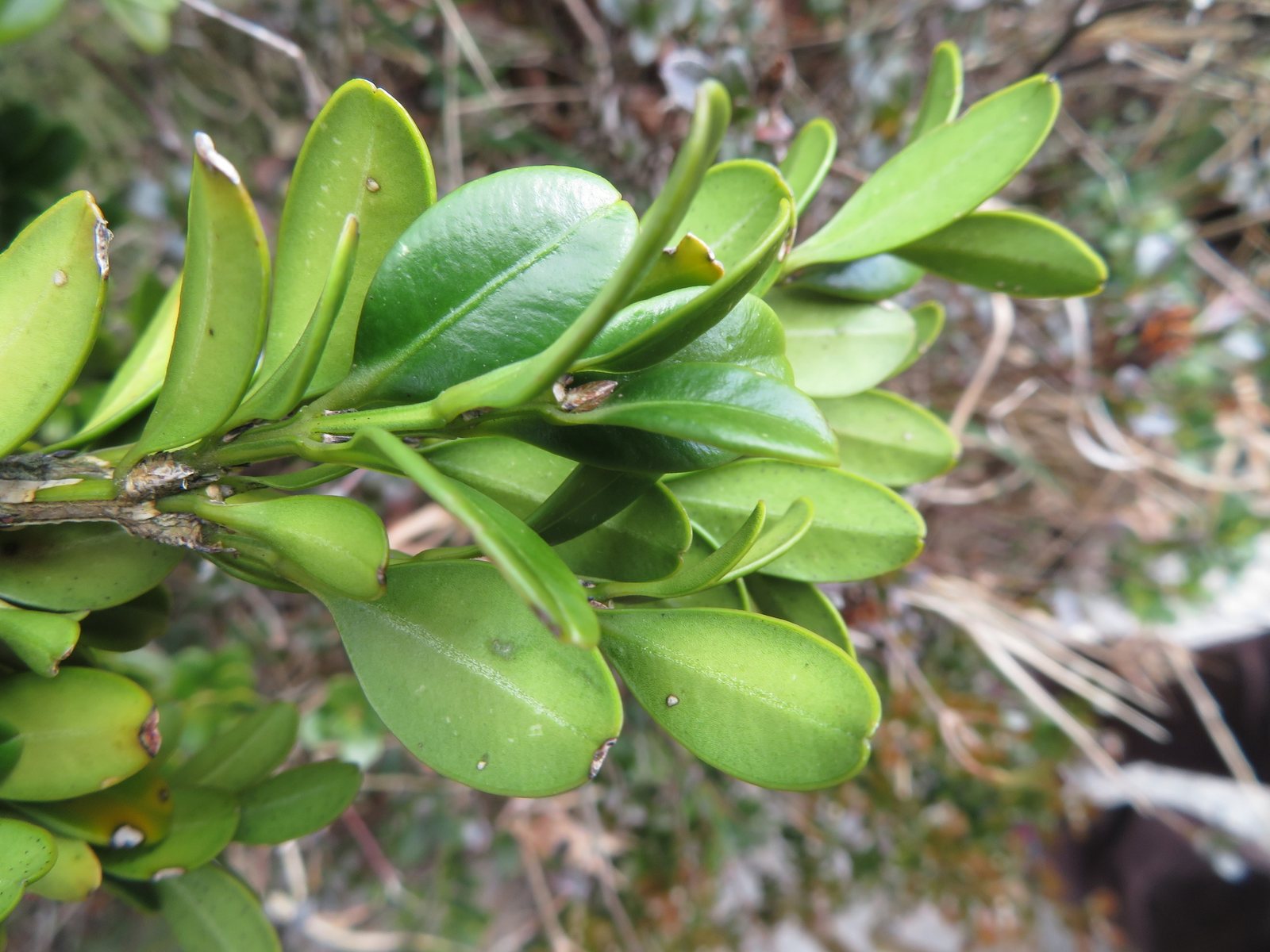
Green Mountain is a slow-growing evergreen boxwood with a naturally upright, pyramidal shape and small, dark green leaves. Gardeners use it for clipped cones, low hedges and year-round structure; it generally holds its winter colour well, but exposed plants can bronze or scorch.
At a glance
- Sun
- Full sun to partial shade; afternoon shade is helpful in hot climates. Shelter from drying winter winds.
- Water
- Keep the root zone evenly moist while establishing. Once established, water deeply during prolonged dry spells; avoid waterlogged soil.
- Soil
- Well-drained loam or clay improved for drainage, with a slightly acidic to slightly alkaline pH. Avoid compacted ground and sites that stay wet.
- Height
- 4-5 ft (1.2-1.5 m), sometimes taller with age
- Spread
- 2-3 ft (0.6-0.9 m), sometimes broader with age
- Foliage
- Evergreen. Small, opposite, oval leaves, glossy to dark green; foliage may bronze in exposed winter conditions.
- Growth
- Slow
- Care needed
- Medium
The year at a glance
- Pollinators
- Deer resistant
- Drought tolerant
- Heat tolerant
- Wildlife
| J | F | M | A | M | J | J | A | S | O | N | D | |
|---|---|---|---|---|---|---|---|---|---|---|---|---|
| Plant |
Northern hemisphere months. In Australia, shift them by six.
- Difficulty
- Moderate
- Toughness
- Fairly tough
Will it suit your garden?
Pick your zone, country, light and whether you have pets.
Full sun is 6 or more hours of direct sun a day, part shade 3 to 6 hours, shade under 3.
How it grows
Planting day
1.6 ft (0.5 m)
After 1 year
2 ft (0.61 m)
After 2 years
2.3 ft (0.71 m)
After 3 years
2.7 ft (0.82 m)
After 5 years
3 ft (1 m)
About 8 years to full size.
From a typical nursery size, at an average rate for this kind of plant. A rule of thumb, not a forecast.
Good to know
- Cats and dogs
- Toxic
- Growth rate
- Slow
Care
Jobs through the year
- WaterApr–May, Sep–Nov, every 21 days
- For established shrubs in the ground, water deeply only if dry; ensure adequate moisture before freezing weather.
- WaterJun–Aug, every 14 days
- Water established shrubs during prolonged dry spells; check young plants more frequently and water at soil level.
- MulchMar–Apr
- Maintain 5–8 cm of mulch over the roots, keeping it away from stems.
- FeedApr
- Feed lightly only if growth is weak or a soil test indicates a need.
- PruneApr
- Remove dead or damaged stems once healthy growth reveals winter damage.
- PruneMay–Jun
- Lightly shape after new growth firms up; thin crowded branches and keep hedge bases wider than tops.
- ProtectMay–Sep, every 14 days
- Inspect inner foliage for caterpillars, webbing and blight; remove small infestations and seek local advice for disease.
- ProtectOct–Nov
- Clear trapped fallen leaves from branches to improve airflow.
- ProtectJan–Feb, Dec
- Shelter exposed young plants from drying winds and gently brush off heavy snow.
- Plant with the root flare at soil level, or slightly above it where drainage is marginal.
- Water deeply through the first growing season, checking the soil rather than watering on a fixed schedule.
- Apply 2-3 in (5-8 cm) of mulch over the roots, keeping it away from the stems.
- Feed lightly in spring only if growth is weak or a soil test shows a need; avoid late-season nitrogen.
- Water at soil level and remove trapped leaves from the branches to improve airflow.
Pruning. Remove dead or damaged stems in spring, then lightly clip after the first flush of growth has firmed up. Keep hedge bases wider than their tops, occasionally thin crowded branches, and avoid clipping during hot, dry weather or close to winter.
Through the year
- Early spring
- Inspect for winter damage and remove dead stems once healthy growth is apparent.
- Spring
- Plant when the soil is workable, refresh mulch and feed lightly only if needed.
- Late spring
- Shape hedges or cones after the first flush of growth firms up; check for caterpillars and leaf damage.
- Summer
- Water during dry spells and inspect inner foliage for webbing, chewing and disease.
- Autumn
- Clear fallen leaves from within the shrub and water before the ground freezes if conditions are dry.
- Winter
- Gently remove heavy snow before branches splay; protect exposed young plants from drying winds.
In the garden
- Plant as a narrow evergreen hedge to define paths or divide garden rooms.
- Clip into cones beside an entrance for a balanced, formal frame.
- Repeat upright shrubs through mixed borders to give structure among softer perennials.
- Use in large, well-drained containers for courtyard structure, protecting the roots from severe winter cold.
Garden styles it suits: Formal, English country, French parterre, Topiary garden, Modern courtyard and Winter interest.
Plant it with: Roses, Catmint, Hardy geraniums, Hellebores, Japanese anemones and Snowdrops.
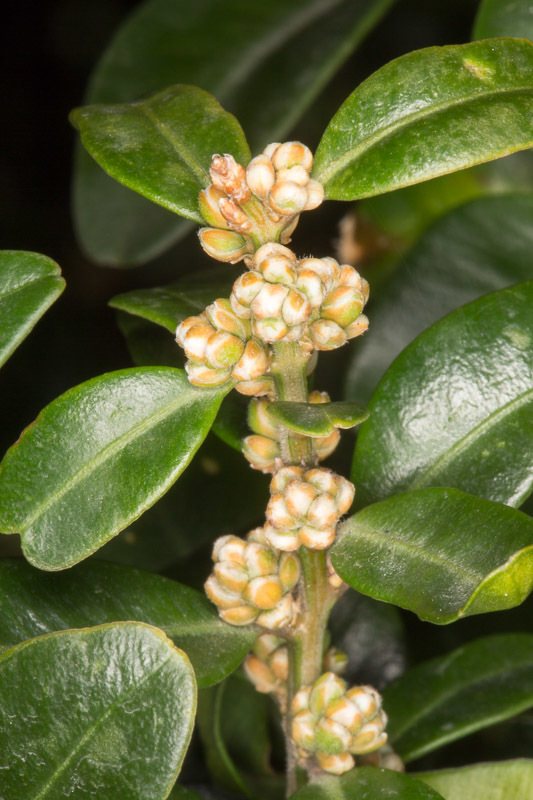
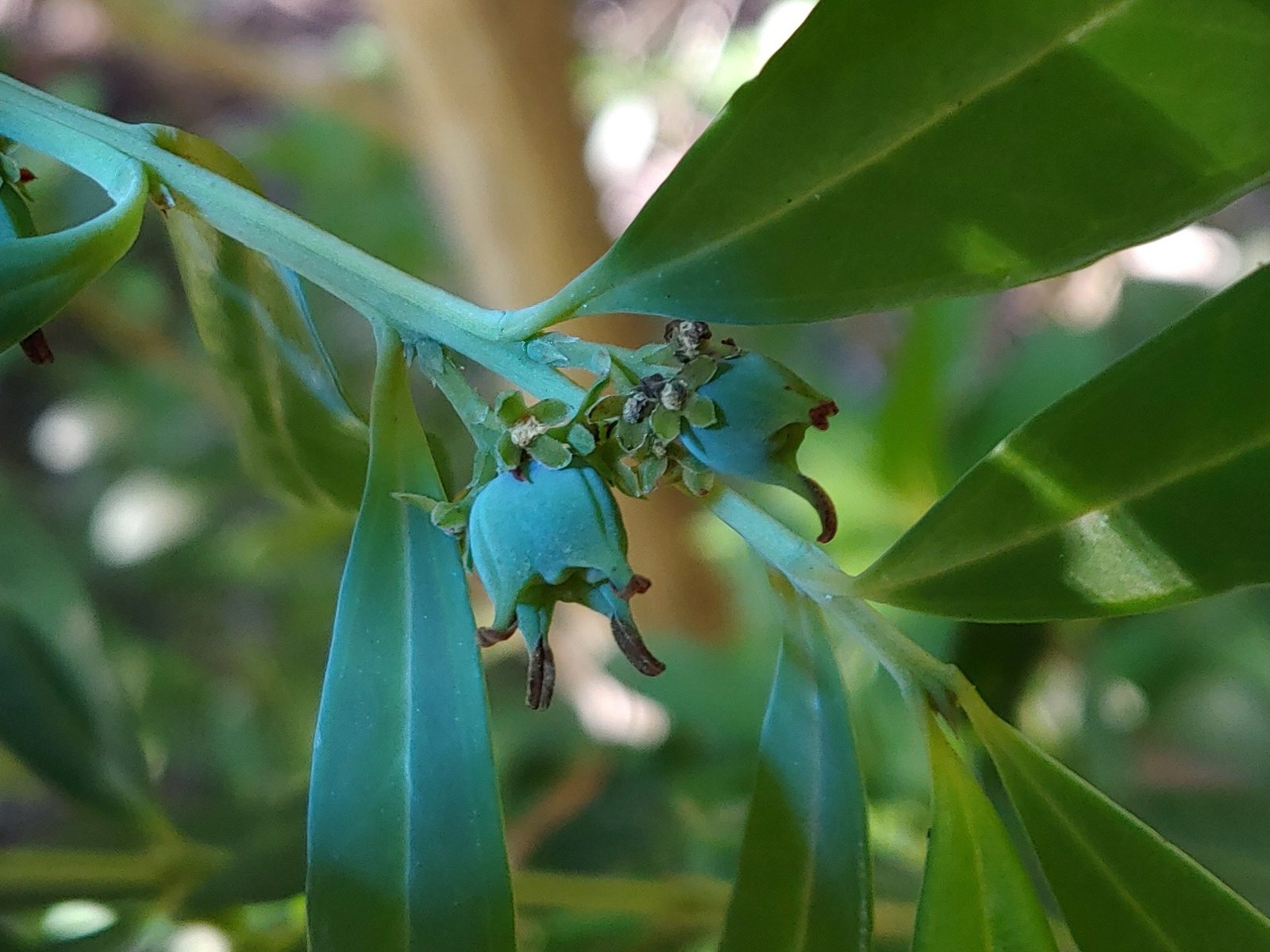
Wildlife: Small spring flowers provide some pollen and nectar for insects. Dense foliage offers shelter for small birds, although this is not a high-value wildlife shrub.
Problems to watch for
- Boxwood blight: rapid leaf loss and dark stem streaks need prompt assessment. Remove infected plants and debris according to local guidance, disinfect tools and avoid overhead watering.
- Box tree moth caterpillars, where present: inspect inside shrubs for webbing and chewed leaves. Hand-pick small infestations or use a locally approved caterpillar treatment while larvae are young.
- Boxwood leafminer, especially in North America: blistered leaves contain larvae. Prune out affected growth before adults emerge and seek local advice if damage is extensive.
- Winter burn: exposed leaves turn bronze or brown after cold, dry weather. Water before freezing weather, mulch the roots and provide wind shelter; wait until spring growth reveals what is dead before pruning.
Safety
All parts are toxic to people, cats, dogs and horses if eaten, especially the leaves. Ingestion can cause vomiting, diarrhoea and abdominal pain; large amounts can cause serious poisoning, particularly in horses. Sap may irritate sensitive skin.
Easily confused with
Green Velvet boxwood (Buxus 'Green Velvet')
Has a naturally rounded, spreading habit rather than Green Mountain's upright pyramid; clipped plants can be difficult to distinguish.
Dwarf English boxwood (Buxus sempervirens 'Suffruticosa')
Usually forms a much lower, very dense rounded mound and grows more slowly; young or closely clipped plants may need a reliable label.
Japanese holly (Ilex crenata)
Its leaves alternate along the stems and have fine rounded teeth; boxwood leaves occur in opposite pairs and have smooth margins.
The name
Buxus is the Latin name for boxwood, and 'Green Mountain' is the cultivar name.
Propagation. Take semi-ripe cuttings from healthy, non-flowering shoots in summer to early autumn and root them in a free-draining medium under humid conditions. Seed will not reliably reproduce this cultivar.
Checked against open data
- Accepted botanical name
- Buxus
Sources: GBIF (CC BY 4.0). The care and design notes are LandscapeGPT's own.
See it in your own yard.
Upload a photo of your yard and see it redesigned with plants that suit your climate, each checked against your zone.