Ground morning glory
Convolvulus sabatius. Family Convolvulaceae. Groundcover.
Also called Blue rock bindweed, Trailing morning glory, Convolvulus mauritanicus.
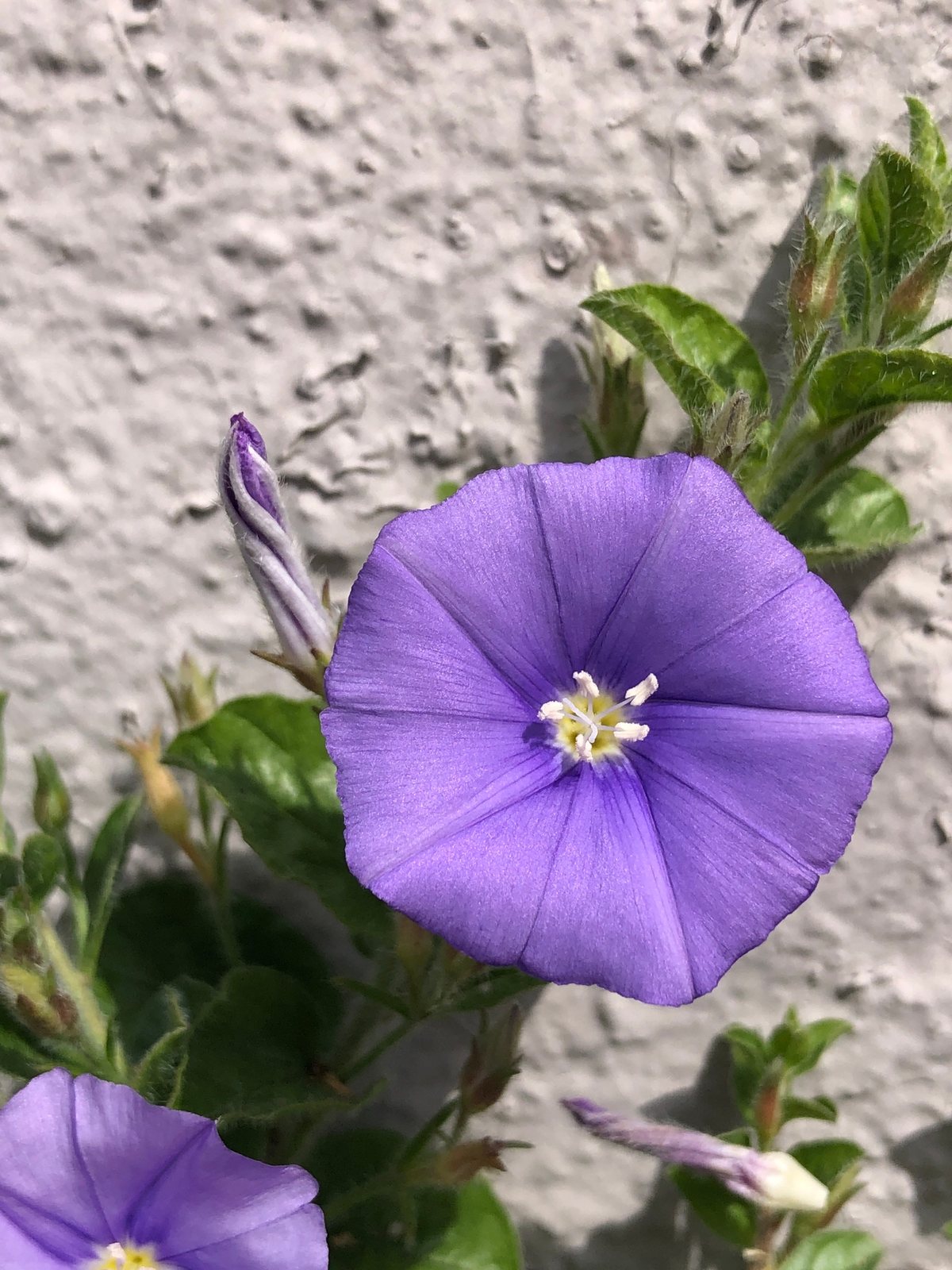
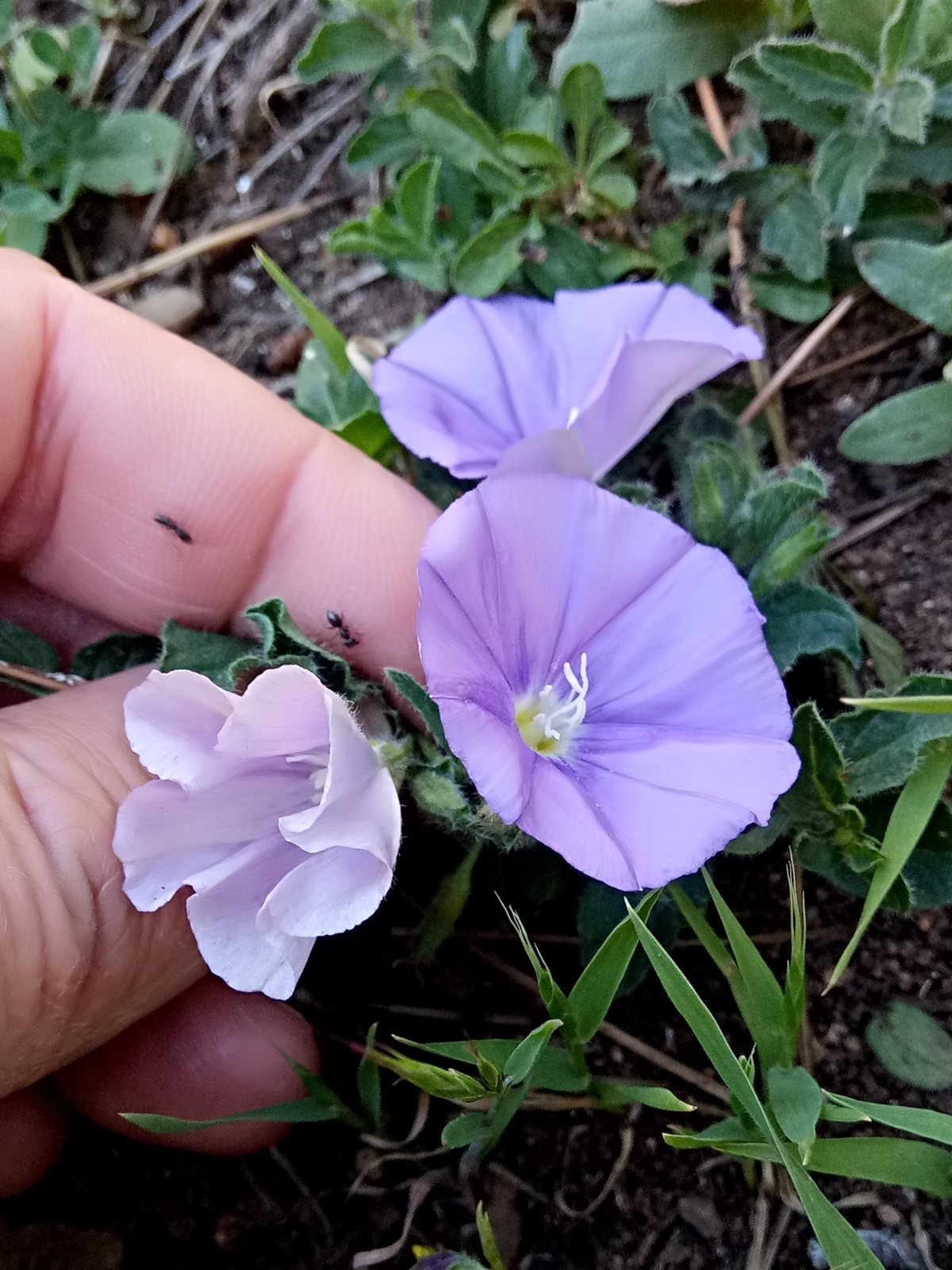
Ground morning glory is a trailing, woody-based perennial grown for its lavender-blue funnel-shaped flowers and low carpet of small leaves. It spills over walls and container edges without climbing like common morning glories. Evergreen in mild climates, it is often grown as an annual or overwintered under cover in colder regions.
At a glance
- Sun
- Full sun; tolerates light afternoon shade in very hot climates, but flowers less in shade.
- Water
- Water regularly while establishing, then let the soil dry slightly between thorough waterings. Established plants tolerate short dry spells; containers need more frequent watering.
- Soil
- Well-drained sandy, gritty or loamy soil, preferably of moderate to low fertility. Avoid heavy, waterlogged soil, especially in winter.
- Height
- 0.5-1 ft (0.15-0.3 m)
- Spread
- 2-3 ft (0.6-0.9 m)
- Flowers
- Lavender-blue flowers with pale centres from late spring into autumn, with a longer season in frost-free climates. Flowers close at night and often in dull weather.
- Foliage
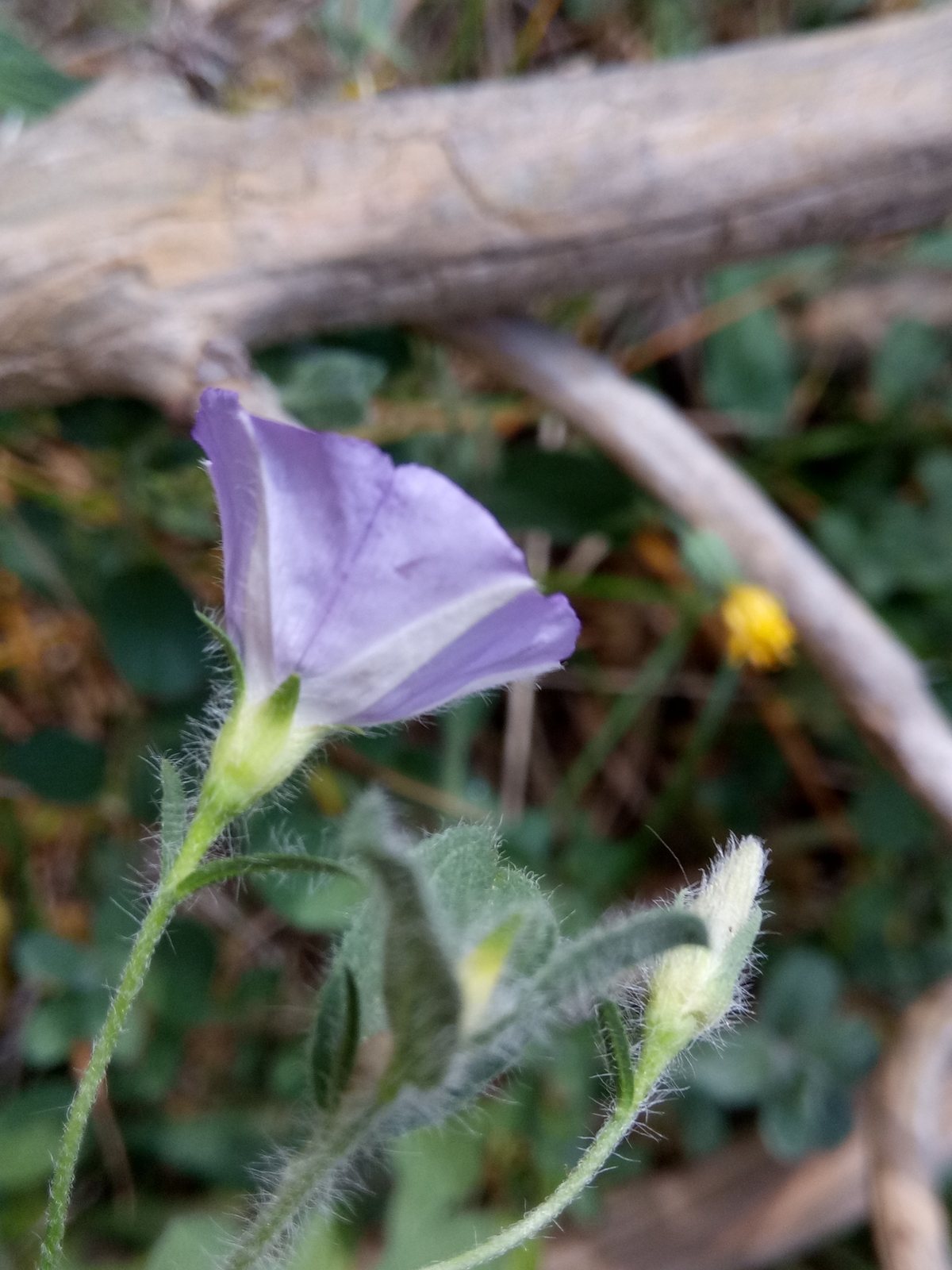
- Evergreen. Small, oval, softly hairy green to grey-green leaves on slender trailing stems.
- Growth
- Moderate to fast in warm weather.
- Care needed
- Low
The year at a glance
- Pollinators
- Drought tolerant
- Heat tolerant
- Low allergen
| J | F | M | A | M | J | J | A | S | O | N | D | |
|---|---|---|---|---|---|---|---|---|---|---|---|---|
| Flowers | ||||||||||||
| Plant |
Northern hemisphere months. In Australia, shift them by six.
- Difficulty
- Moderate
- Toughness
- Fairly tough
Will it suit your garden?
Pick your zone, country, light and whether you have pets.
Full sun is 6 or more hours of direct sun a day, part shade 3 to 6 hours, shade under 3.
How it grows
Planting day
0.2 ft (0.06 m)
After 1 year
0.5 ft (0.14 m)
After 2 years
0.7 ft (0.22 m)
full size
About 2 years to full size.
From a typical nursery size, at an average rate for this kind of plant. A rule of thumb, not a forecast.
Good to know
- Cats and dogs
- Safe
- Growth rate
- Fast
Care
Jobs through the year
- WaterMay, Sep–Oct, every 14 days
- For established plants in the ground, water only if dry; young plants and pots need more.
- WaterJun–Aug, every 7 days
- Water established ground plants during dry spells, letting the surface dry between soakings.
- WaterJan–Apr, Nov–Dec, every 21 days
- For frost-free overwintered pots, water sparingly only when the compost is drying.
- FeedMay
- Give container plants a light balanced feed; omit feeding in ordinary garden soil.
- MulchMay
- Use a thin gravel mulch around the crown, not moisture-holding organic mulch.
- PruneMay
- After frost risk passes, remove damaged stems and trim straggly growth.
- PruneJul–Aug
- Lightly shear after a main flowering flush to encourage compact growth and more flowers.
- ProtectSep–Oct
- Not reliably winter-hardy in zones 6–7; move pots to bright, frost-free cover before frost.
- ProtectMay
- Gradually acclimatize overwintered plants outdoors after frost risk passes.
- Plant after hard frosts have passed, choosing a sunny position with sharp drainage.
- Water at soil level and allow the surface to dry between waterings; do not leave pots standing in water.
- Feed container plants lightly with a balanced fertiliser in spring; rich feeding in the ground is usually unnecessary.
- Use gravel around the crown rather than thick, moisture-holding mulch.
- In cold regions, move pots to a bright, frost-free place before autumn frosts and water sparingly through winter.
Pruning. Trim back straggly stems in spring once frost risk has passed. Lightly shear after a main flush of flowers to encourage compact growth and further flowering.
Through the year
- Early spring
- Check overwintered plants for rot and remove dead or damaged stems.
- Spring
- After frost risk has passed, plant outdoors or return overwintered pots to a sunny position.
- Late spring
- Give container plants a light feed and begin regular watering as growth increases.
- Summer
- Trim long stems after a flowering flush and check pots frequently for dryness.
- Late summer
- Take non-flowering shoot cuttings to keep young plants for the following year.
- Autumn
- Move containers under frost-free cover in cold regions; reduce watering as growth slows.
In the garden
- Let it spill over a sunny retaining wall to soften stone or brick with blue flowers.
- Use it at the front of a dry, sunny border beside lavender and compact salvias.
- Plant it around the edge of pots or hanging baskets with other sun-loving plants that dislike wet roots.
- Use it as a low groundcover between widely spaced shrubs in a mild-climate gravel garden.
Garden styles it suits: Mediterranean, Coastal, Dry gravel garden, Cottage garden, Small-space and Low-maintenance.
Plant it with: Lavender, Santolina, Thyme, Rock rose, Salvia and Stonecrop.
Wildlife: The open flowers provide nectar and pollen for visiting bees and other insects.
Problems to watch for
- Root and crown rot in wet soil: improve drainage, keep the crown clear of damp mulch and reduce winter watering.
- Frost damage: protect container plants under cover; wait until spring to remove damaged growth.
- Aphids on young shoots: wash them off with water or use insecticidal soap according to the label.
- Sparse flowering or loose, leafy growth: provide more sun, reduce feeding and lightly trim trailing stems.
Safety
Not known to be toxic to people, cats, dogs or horses, but reliable species-specific safety information is limited. No particular part is established as poisonous; it is not an edible plant, so discourage ingestion.
Easily confused with
Field bindweed (Convolvulus arvensis)
Field bindweed has arrow-shaped leaves, usually white or pink flowers, and twining stems arising from persistent spreading roots. Ground morning glory has small oval leaves and a low, trailing habit.
Dwarf morning glory (Convolvulus tricolor)
This annual usually forms a more upright mound and has conspicuous blue flowers with sharply defined white and yellow centres, rather than the softer lavender-blue flowers of ground morning glory.
Blue daze (Evolvulus glomeratus)
Blue daze has smaller, flatter blue flowers with a white central eye and often more densely grey-hairy foliage. Ground morning glory has larger, more distinctly funnel-shaped flowers.
The name
Convolvulus comes from the Latin for twining or winding, referring to the climbing habit of many members of the genus.
Propagation. Take softwood or semi-ripe cuttings from non-flowering shoots in late spring or summer and root them in a free-draining medium. Keep cuttings bright but out of strong direct sun until rooted.
Checked against open data
- Accepted botanical name
- Convolvulus sabatius
- Native range
- Algeria, Italy and Morocco.
Sources: GBIF (CC BY 4.0) and Trefle (CC BY 4.0). The care and design notes are LandscapeGPT's own.
See it in your own yard.
Upload a photo of your yard and see it redesigned with plants that suit your climate, each checked against your zone.