Gulf Stream nandina
Nandina domestica 'Gulf Stream'. Family Berberidaceae. Shrub.
Also called Gulf Stream heavenly bamboo, Gulf Stream sacred bamboo.
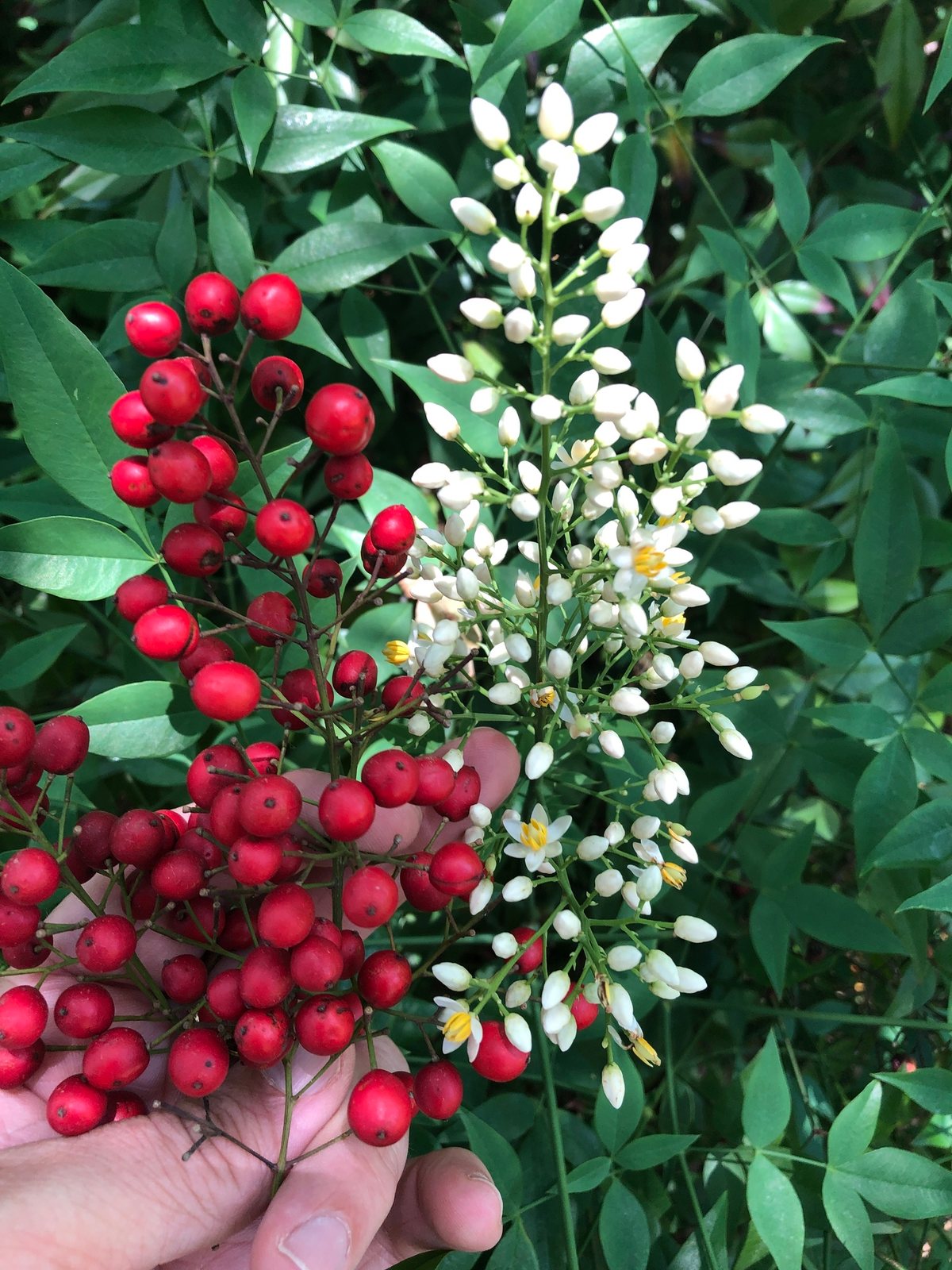
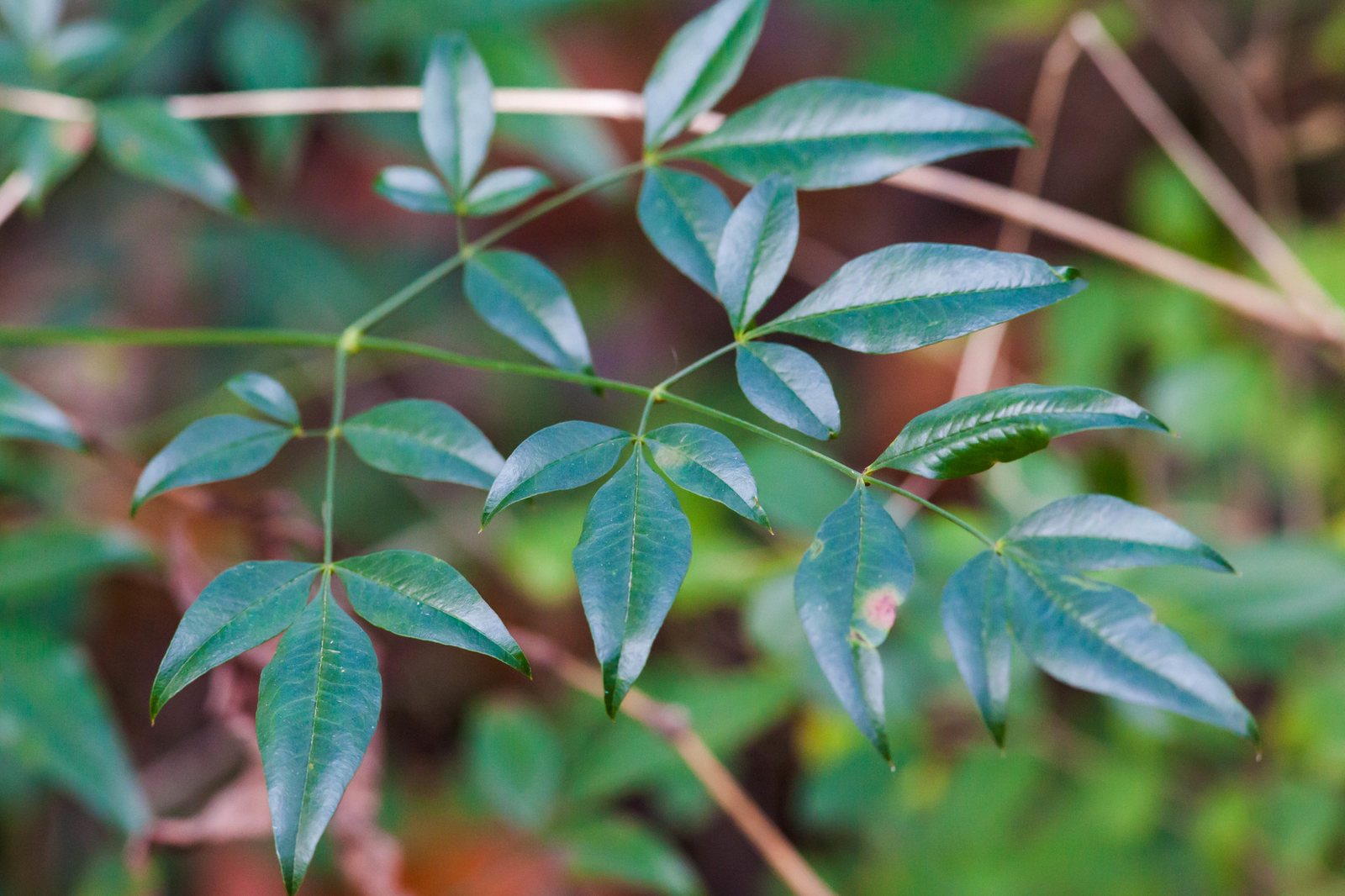
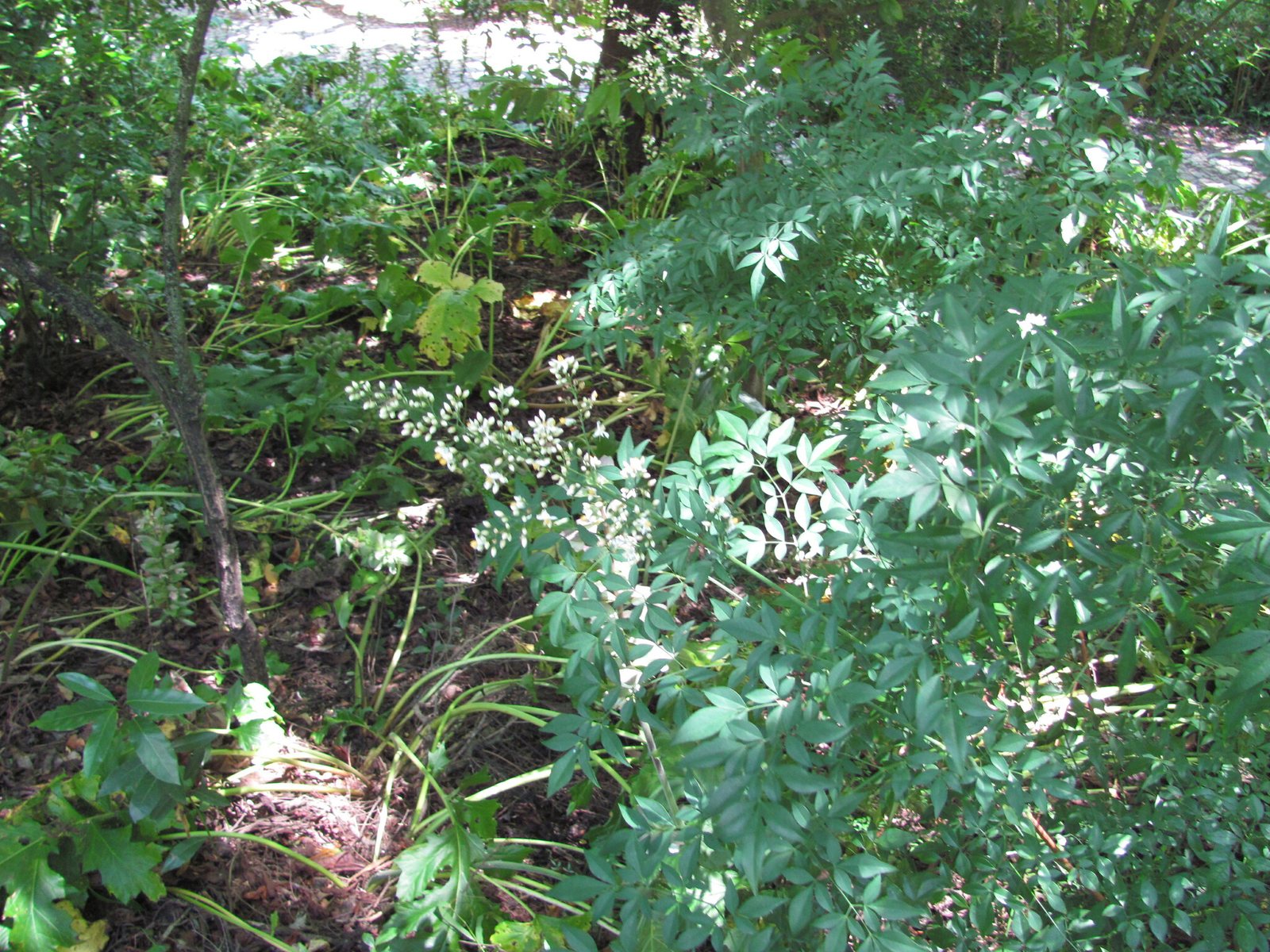
Gulf Stream nandina (Nandina domestica 'Gulf Stream') is a compact, evergreen shrub grown for its finely divided leaves and changing foliage colour, not its flowers. New growth emerges bronze-orange, matures green and often turns red in cold weather; despite its common names, it is not a bamboo. It can lose leaves in severe winters, and the species is invasive in some regions.
At a glance
- Sun
- Full sun to partial shade; foliage colours best with good light. Give afternoon shade in very hot climates.
- Water
- Water regularly during establishment, then during prolonged dry spells. Established plants tolerate some drought but not persistently wet roots.
- Soil
- Well-drained soil, preferably slightly acidic and enriched with organic matter; tolerates clay if drainage is adequate.
- Height
- 3-4 ft (0.9-1.2 m)
- Spread
- 3-4 ft (0.9-1.2 m)
- Foliage
- Evergreen. Fine-textured, compound leaves with many pointed leaflets; bronze-orange young growth becomes green, with red or bronze winter colouring strongest in sunny positions.
- Growth
- Slow to moderate
- Care needed
- Low
The year at a glance
- Deer resistant
- Drought tolerant
- Heat tolerant
- Low allergen
| J | F | M | A | M | J | J | A | S | O | N | D | |
|---|---|---|---|---|---|---|---|---|---|---|---|---|
| Plant |
Northern hemisphere months. In Australia, shift them by six.
- Difficulty
- Easy
- Toughness
- Very tough
Will it suit your garden?
Pick your zone, country, light and whether you have pets.
Full sun is 6 or more hours of direct sun a day, part shade 3 to 6 hours, shade under 3.
How it grows
Planting day
1.6 ft (0.5 m)
After 1 year
1.9 ft (0.58 m)
After 2 years
2.2 ft (0.67 m)
After 3 years
2.5 ft (0.75 m)
After 5 years
3 ft (0.92 m)
About 7 years to full size.
From a typical nursery size, at an average rate for this kind of plant. A rule of thumb, not a forecast.
Good to know
- Cats and dogs
- Toxic
- Invasive in
- the US and Australia
- Growth rate
- Slow
Care
Jobs through the year
- WaterApr–May, Sep–Oct, every 21 days
- Water established shrubs if soil is dry; newly planted shrubs need more frequent watering.
- WaterJun–Aug, every 14 days
- Water established shrubs deeply during prolonged dry spells; skip when soil remains moist.
- PruneFeb–Mar
- After severe cold, remove dead stems and a few congesting old stems at ground level; do not shear.
- PruneSep–Oct
- Remove unwanted shoots and any berries; berries can poison birds.
- MulchApr
- Maintain 5-8 cm of organic mulch, keeping it clear of stems.
- FeedApr–May
- Feed lightly only if growth is weak; avoid heavy nitrogen applications.
- ProtectJan–Feb, Nov–Dec
- Protect young plants from severe drying cold; insulate container roots during prolonged freezes.
- Water deeply when the root zone starts to dry during the first growing season.
- Apply 2-3 in (5-8 cm) of organic mulch, keeping it clear of the stems.
- Feed lightly in spring only if growth is weak; avoid heavy nitrogen feeding.
- Keep container drainage holes clear and water pots before the compost dries completely.
- Inspect around the clump annually and remove unwanted shoots.
Pruning. In late winter or early spring, remove dead or damaged stems and, if needed, cut a few of the oldest stems to ground level. Avoid shearing the top, which spoils the naturally layered foliage.
Through the year
- Spring
- Plant in well-drained soil and water thoroughly; spring planting is safest near the cold limit.
- Early spring
- Remove winter-damaged stems and thin old stems only where necessary.
- Late spring
- Refresh mulch and feed lightly if growth is poor.
- Summer
- Check soil moisture during dry weather, especially for new plants and containers.
- Autumn
- Remove unwanted shoots and any fruit that develops, particularly where nandina is invasive.
- Winter
- Protect container roots during prolonged freezes and leave healthy foliage untrimmed.
In the garden
- Repeat in small groups along a foundation or path for a consistent, fine-textured evergreen layer.
- Use with broad-leaved shrubs to contrast leaf shape and bring bronze-red colour into winter planting.
- Plant in a large, well-drained container as a compact foliage feature for a courtyard.
- Combine with sedges and low evergreen perennials at a lightly shaded woodland edge.
Garden styles it suits: Japanese, Modern courtyard, Urban city garden, Winter interest, Low-maintenance and Small-space.
Plant it with: Japanese forest grass, Camellia, Azalea, Liriope, Hellebore and Japanese sedge.
Wildlife: This cultivar usually flowers and fruits little, so it offers limited nectar or fruit. Nandina berries contain cyanogenic compounds and have caused fatal poisoning in birds, especially cedar waxwings; remove any berries rather than encouraging birds to eat them.
Problems to watch for
- Yellow leaves with green veins: alkaline soil can restrict iron uptake; check soil pH and use chelated iron if needed rather than repeatedly feeding.
- Root rot or collapse: improve drainage, reduce watering and avoid planting in waterlogged soil.
- Brown or dropped leaves after frost: wait until spring growth begins, then remove dead tissue; use a more sheltered position in cold areas.
- Scale insects: inspect stems and leaf undersides; remove small infestations by hand or apply a labelled horticultural oil.
Safety
Toxic to cats, dogs, horses and people if eaten. Leaves, stems and especially berries contain cyanogenic compounds; substantial ingestion can cause serious or fatal poisoning. Keep clippings away from livestock and seek urgent medical or veterinary advice after suspected ingestion.
Where it spreads. Nandina domestica is invasive in parts of the southeastern and mid-Atlantic United States, including Florida, Georgia, Alabama, the Carolinas and Virginia. It is also naturalised and treated as an environmental weed in parts of eastern Australia, including New South Wales and Queensland. 'Gulf Stream' generally produces little or no fruit, but do not assume this eliminates all risk;
Easily confused with
Heavenly bamboo (Nandina domestica)
Typical plants are much taller and more open, with longer exposed canes and more frequent white flowers and red berries; 'Gulf Stream' stays compact and leafy.
Fire Power nandina (Nandina domestica 'Fire Power')
Usually lower and more rounded, with broader-looking leaflets and strong red winter colour; 'Gulf Stream' is generally taller with a finer, more upright outline.
Clumping bamboo (Fargesia species)
True bamboo has jointed canes and simple, narrow leaves; nandina has branching woody stems and compound leaves divided into many leaflets.
The name
Nandina comes from the Japanese name nanten, while heavenly bamboo refers to the plant's bamboo-like stems and foliage.
Propagation. Take semi-ripe cuttings in summer to preserve the cultivar. Well-rooted outer shoots can sometimes be separated in spring; seedlings, if produced, will not reliably match the parent.
Checked against open data
- Accepted botanical name
- Nandina domestica
- In the US and Canada
- Introduced in the lower 48 states and Pacific Basin.
- Native range
- China North-Central, China South-Central and China Southeast.
- Measured
- Soil pH 4.5 to 6. Average height 244 cm.
Sources: GBIF (CC BY 4.0), USDA PLANTS and Trefle (CC BY 4.0). The care and design notes are LandscapeGPT's own.
See it in your own yard.
Upload a photo of your yard and see it redesigned with plants that suit your climate, each checked against your zone.