Hairy alumroot
Heuchera villosa. Family Saxifragaceae. Perennial.
Also called Hairy coral bells.
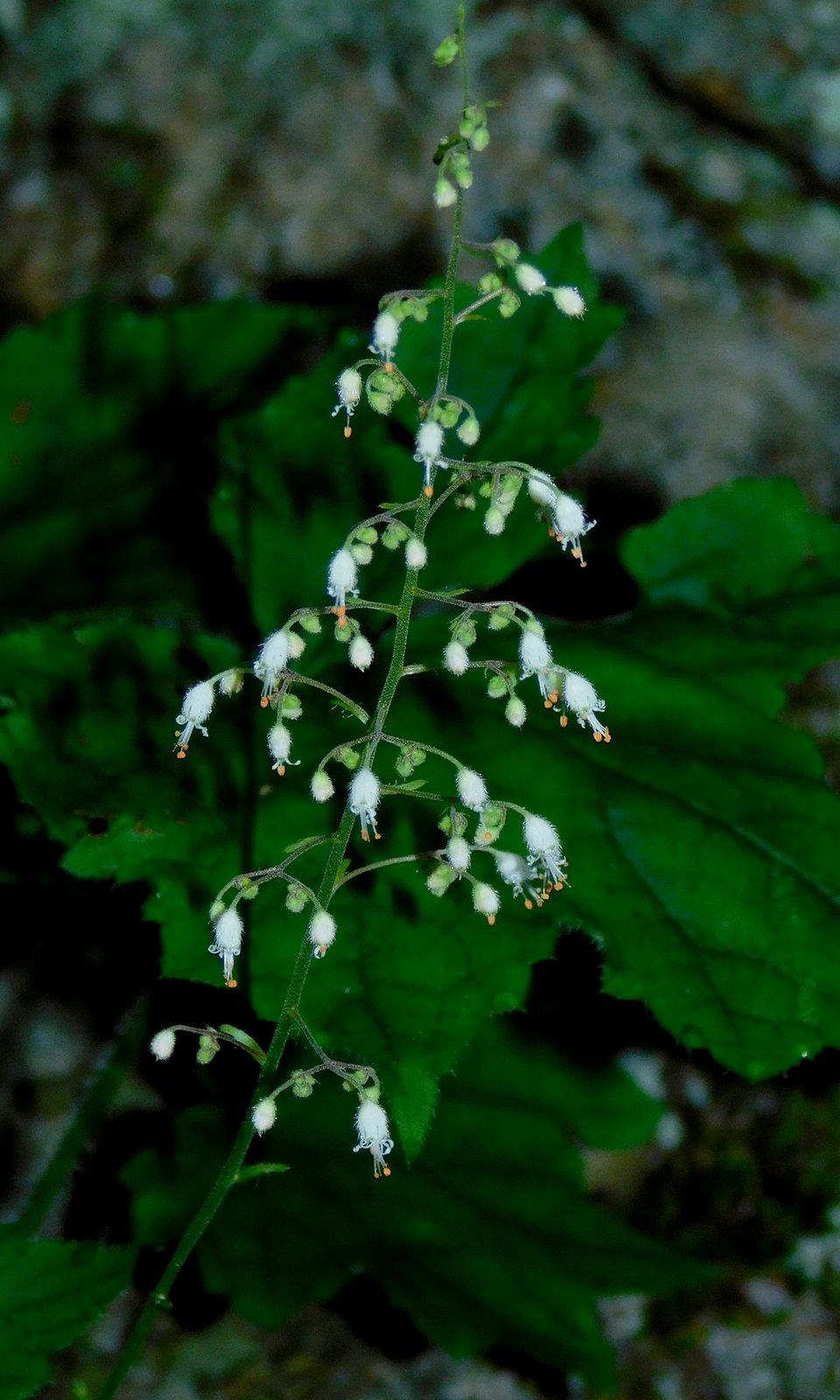
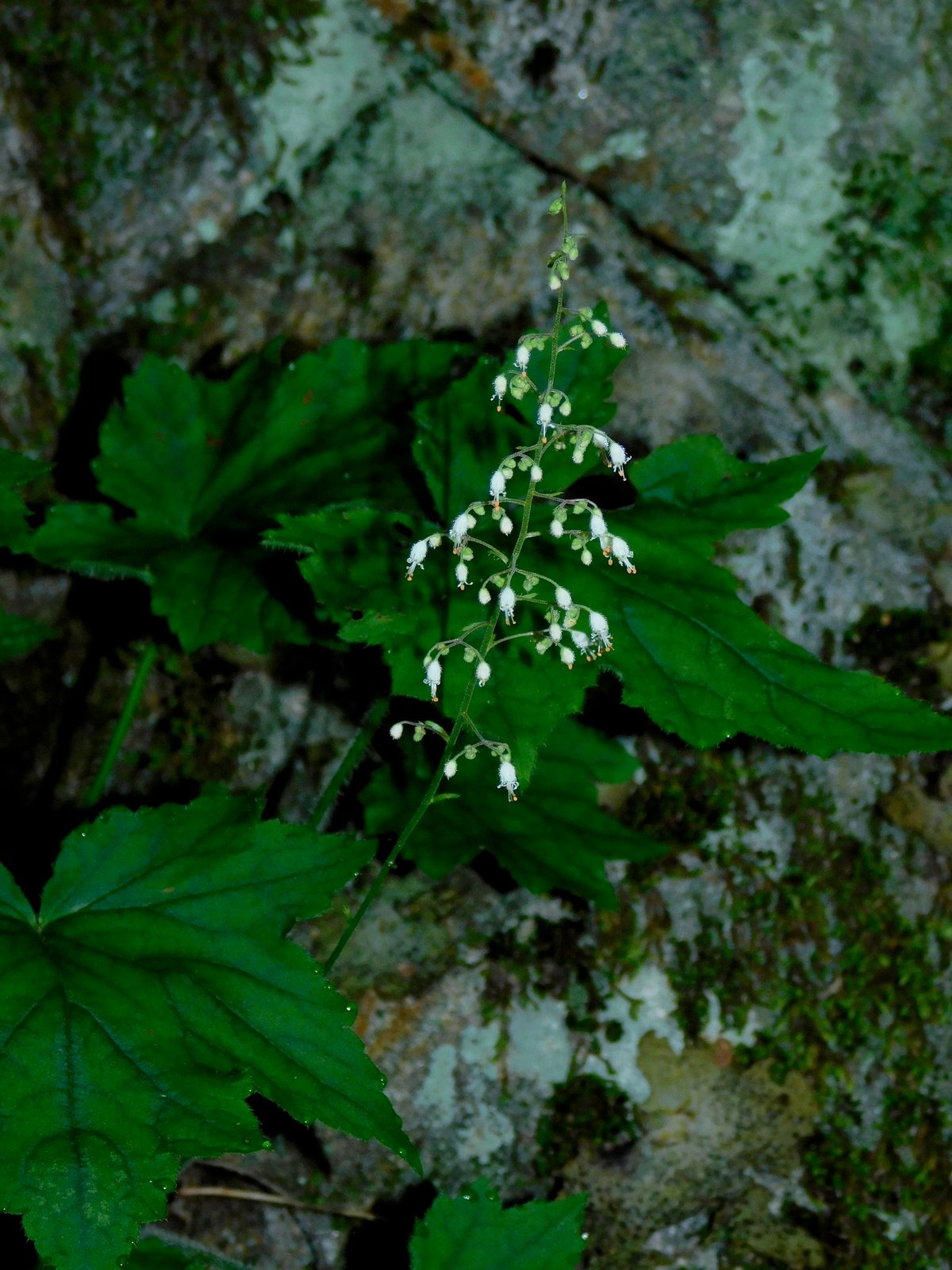
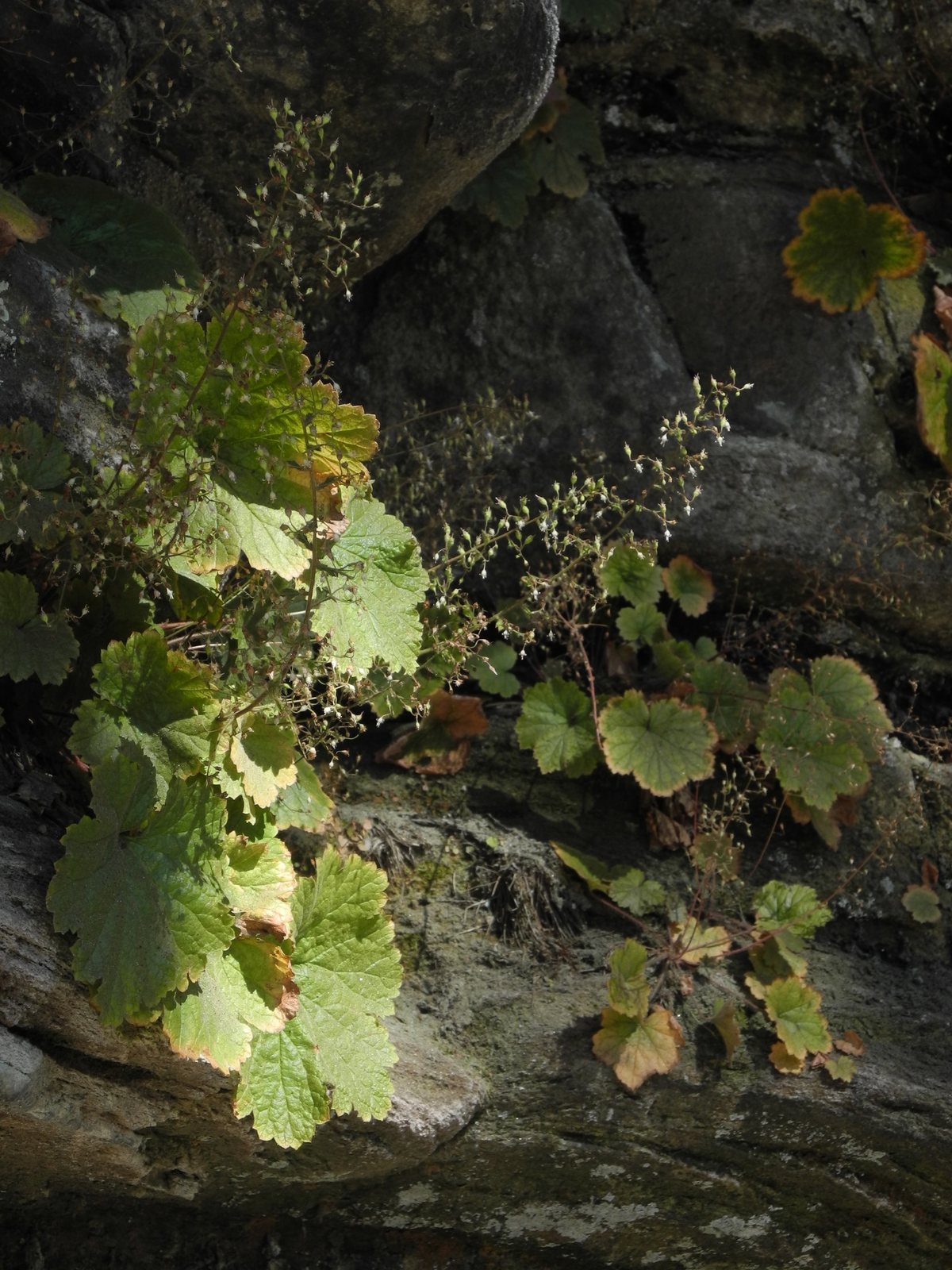
Hairy alumroot is a clump-forming perennial native to the eastern United States, grown for its broad, softly hairy leaves and airy sprays of small flowers. It brings texture to shaded borders and woodland gardens, tolerating summer heat and humidity better than many other heucheras.
At a glance
- Sun
- Partial shade; tolerates deeper shade, but flowers less freely. Morning sun is suitable where soil stays moist; avoid strong afternoon sun in hot climates.
- Water
- Moderate; keep evenly moist while establishing. Established plants tolerate short dry spells, but prolonged drought can scorch or wither the foliage.
- Soil
- Humus-rich, well-drained soil, from mildly acidic to neutral. Avoid waterlogged ground, especially in winter.
- Height
- 1-2 ft (0.3-0.6 m) in leaf; 2-3 ft (0.6-0.9 m) in flower
- Spread
- 1-2 ft (0.3-0.6 m)
- Flowers
- Late summer into autumn; tiny creamy-white to pale pink flowers in loose, branching sprays.
- Foliage
- Broad, rounded, lobed green leaves with conspicuous soft hairs on the leaves and stalks. Usually semi-evergreen, retaining more foliage in mild winters and losing it in severe cold.
- Growth
- Moderate
- Care needed
- Low
The year at a glance
- Pollinators
- Cold hardy
- Heat tolerant
- Wildlife
- Low allergen
| J | F | M | A | M | J | J | A | S | O | N | D | |
|---|---|---|---|---|---|---|---|---|---|---|---|---|
| Flowers | ||||||||||||
| Fruit | ||||||||||||
| Plant |
Northern hemisphere months. In Australia, shift them by six.
- Difficulty
- Easy
- Toughness
- Fairly tough
Will it suit your garden?
Pick your zone, country, light and whether you have pets.
Full sun is 6 or more hours of direct sun a day, part shade 3 to 6 hours, shade under 3.
How it grows
Planting day
1 ft (0.3 m)
After 1 year
1.1 ft (0.35 m)
After 2 years
1.3 ft (0.4 m)
After 3 years
1.5 ft (0.45 m)
full size
About 3 years to full size.
From a typical nursery size, at an average rate for this kind of plant. A rule of thumb, not a forecast.
Good to know
- Cats and dogs
- Safe
- Native to
- the US
- Growth rate
- Moderate
Care
Jobs through the year
- WaterApr–May, Sep–Oct, every 14 days
- Water established clumps if soil is drying; keep new plants evenly moist.
- WaterJun–Aug, every 7 days
- Water deeply during dry weather to prevent prolonged drying and leaf scorch.
- MulchApr
- Add a thin compost or leaf-mould dressing, leaving crowns exposed.
- PruneMar
- Remove dead leaves and old flower stems without cutting into crowns.
- DivideMar–Apr
- Divide only when clumps become woody, crowded or bare-centred, usually every few years.
- ProtectFeb–Mar
- Reset frost-heaved crowns at soil level and gently firm roots.
- ProtectNov–Dec
- Clear wet leaf piles and heavy mulch from crowns to prevent rot.
- Plant with the crown at soil level rather than buried.
- Water during the first growing season whenever the upper soil begins to dry.
- Spread leaf mould or compost around plants in spring, keeping it clear of the crown.
- Avoid heavy feeding; a light annual compost dressing is usually sufficient.
- Check after winter frosts and gently reset any crowns lifted out of the soil.
- Divide in spring when clumps become woody, crowded or bare in the centre.
Pruning. Remove dead or badly damaged leaves in early spring without cutting into the crown. Cut spent flower stalks back to the base after flowering, or leave them until spring for seed and winter structure.
Through the year
- Early spring
- Remove damaged foliage and check for frost-heaved crowns.
- Spring
- Plant or divide clumps, water well and add a thin layer of compost or leaf mould.
- Summer
- Water during extended dry weather and watch for leaf scorch in exposed positions.
- Late summer
- Enjoy the flower sprays; leave some stems if you want seed.
- Autumn
- Remove unwanted seedlings and clear any diseased leaves.
- Winter
- Keep wet leaves and heavy mulch away from the crown, and check that drainage remains clear.
In the garden
- Plant in groups along shaded paths, where the broad leaves soften hard edges.
- Combine with ferns and sedges in woodland borders for contrasting leaf shapes.
- Use beneath deciduous shrubs where there is filtered light and enough moisture for establishment.
- Place near the front of a shade border, allowing the fine flower stems to rise through neighbouring foliage.
Garden styles it suits: Woodland, Cottage garden, Wildlife garden, Low-maintenance and Green on green.
Plant it with: Christmas fern, Japanese painted fern, Foamflower, Solomon's seal, Woodland phlox and Pennsylvania sedge.
Wildlife: The small flowers provide nectar and pollen for bees and other visiting insects. The foliage offers shelter for small invertebrates.
Problems to watch for
- Crown rot in wet soil: improve drainage, keep the crown exposed and remove plants with soft, rotting crowns.
- Vine weevil larvae, especially in containers: inspect roots if plants wilt or loosen unexpectedly, and use a locally approved biological control when soil temperatures are suitable.
- Leaf scorch during hot, dry weather: provide afternoon shade, water deeply and mulch around, not over, the crown.
- Frost heaving: reset lifted plants in spring and firm soil gently around their roots.
Safety
Not known to be toxic to people, cats, dogs or horses; no part is generally recognised as poisonous. It is an ornamental rather than a food plant, and eating large amounts may cause digestive upset.
Easily confused with
American alumroot (Heuchera americana)
Usually has less conspicuously hairy foliage, often with contrasting veins or mottling, and generally flowers earlier. Hairy alumroot has notably hairy leaf stalks and late-season flower sprays.
Heartleaf foamflower (Tiarella cordifolia)
Has denser, foamy spikes of starry white flowers in spring rather than the loose, branching late-season sprays of hairy alumroot; many forms also spread by runners.
The name
Heuchera honours the German physician and botanist Johann Heinrich von Heucher, while villosa means hairy, referring to the plant's soft hairs.
Propagation. Divide established clumps in spring, keeping healthy rooted sections with growing crowns. Sow ripe seed on the surface of moist seed compost without burying it; seedlings from named cultivars may differ from the parent.
Checked against open data
- Accepted botanical name
- Heuchera villosa
- In the US and Canada
- Native in the lower 48 states.
- Native range
- Alabama, Arkansas, Georgia, Indiana, Kentucky, Mississippi, Missouri, New York, North Carolina, Ohio, Pennsylvania and South Carolina.
Sources: GBIF (CC BY 4.0), USDA PLANTS and Trefle (CC BY 4.0). The care and design notes are LandscapeGPT's own.
See it in your own yard.
Upload a photo of your yard and see it redesigned with plants that suit your climate, each checked against your zone.