Hall's honeysuckle
Lonicera japonica 'Halliana'. Family Caprifoliaceae. Climber.
Also called Hall's Japanese honeysuckle, Japanese honeysuckle 'Halliana'.
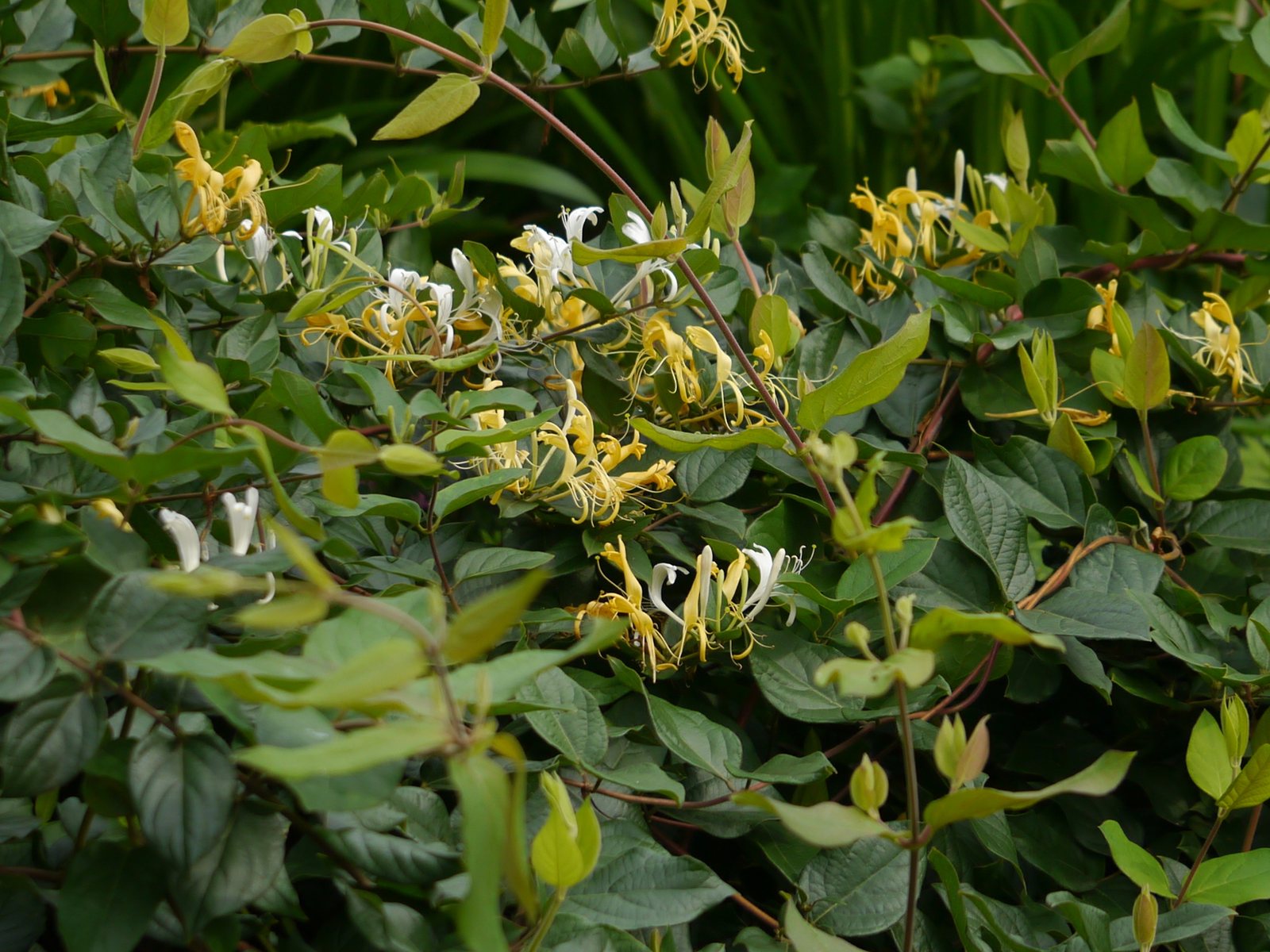
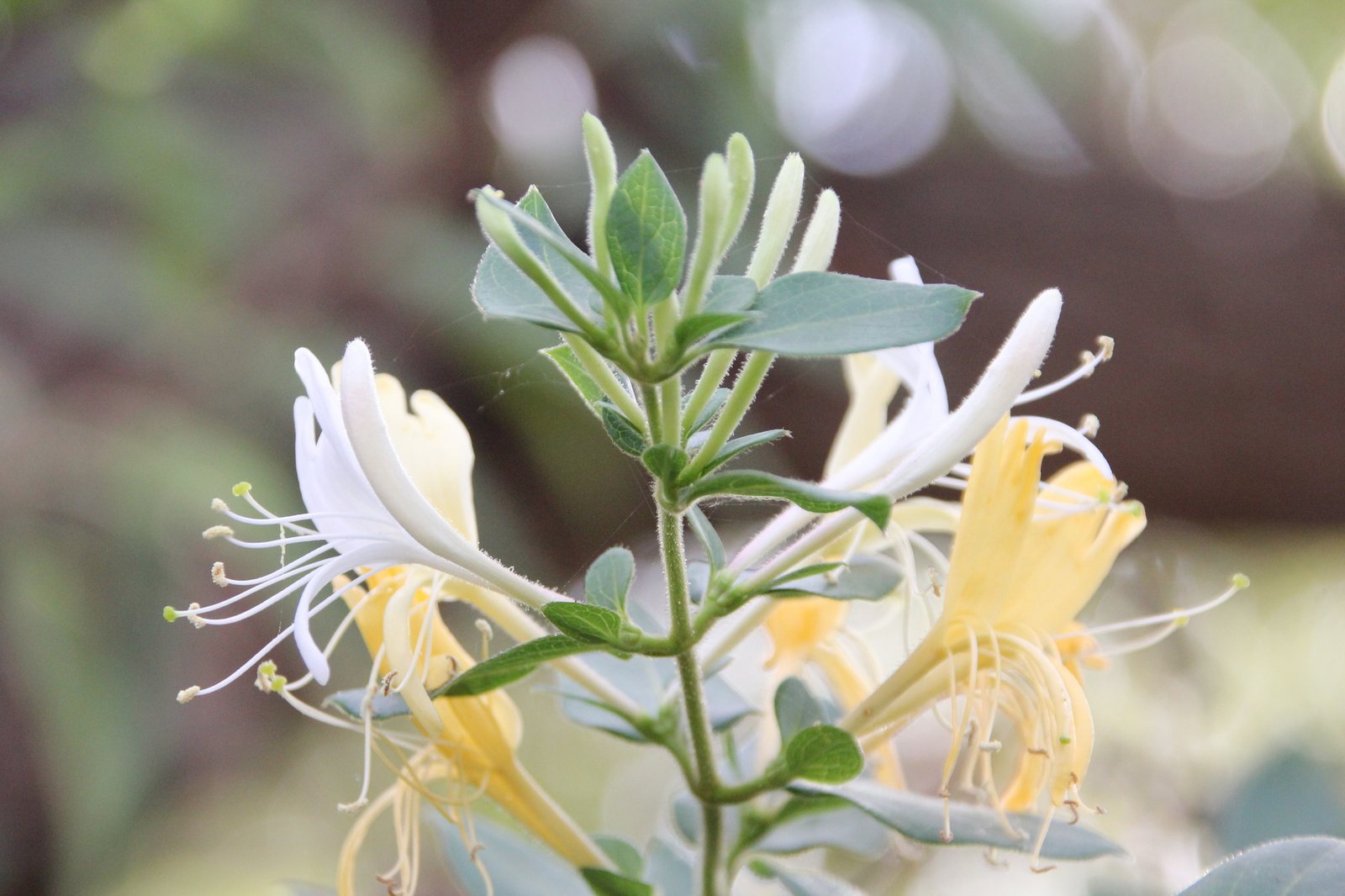
Hall's honeysuckle is a vigorous, twining climber grown for strongly scented flowers that open white and turn yellow. It can cover a substantial fence or arbor, but its rooting stems and bird-dispersed seeds make it difficult to contain; choose a non-invasive alternative wherever Japanese honeysuckle threatens local habitats.
At a glance
- Sun
- Full sun to partial shade; flowers most freely in sun but tolerates considerable shade.
- Water
- Water regularly during establishment; established plants tolerate short dry spells but flower better with moderate moisture.
- Soil
- Adaptable to most reasonably drained soils, including clay; avoids neither acidic nor alkaline conditions, but performs poorly in persistently waterlogged ground.
- Height
- 15-30 ft (4.6-9.1 m)
- Spread
- 6-10 ft (1.8-3 m), spreading much farther if stems are allowed to root
- Flowers
- Late spring through summer, often continuing into autumn in mild climates; fragrant white tubular flowers age to creamy yellow.
- Foliage
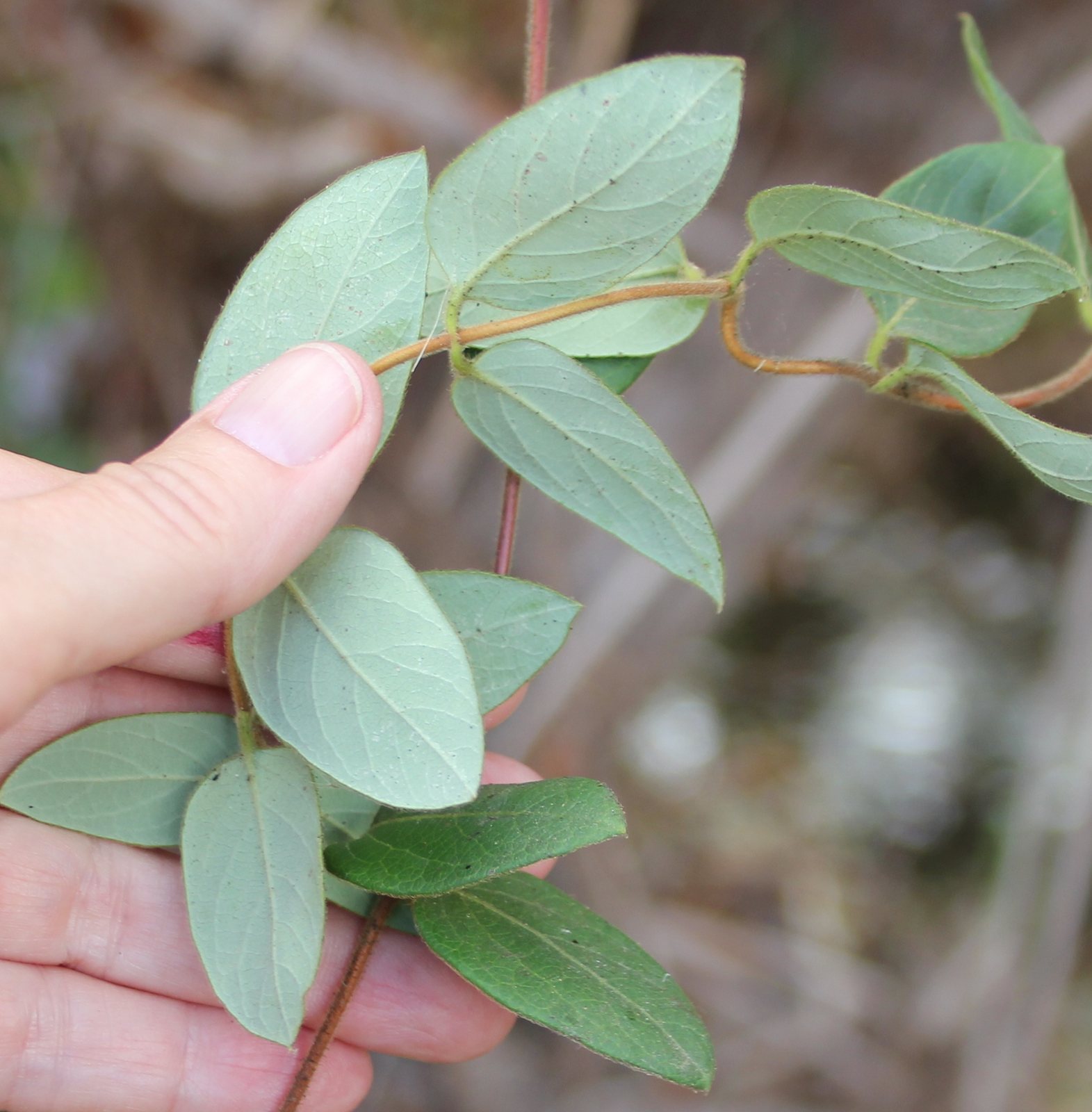
- Opposite, oval green leaves on long twining stems; evergreen in mild climates, semi-evergreen or deciduous in colder areas.
- Growth
- Fast
- Care needed
- High
The year at a glance
- Pollinators
- Deer resistant
- Cold hardy
- Heat tolerant
- Wildlife
- Low allergen
- Fragrant
| J | F | M | A | M | J | J | A | S | O | N | D | |
|---|---|---|---|---|---|---|---|---|---|---|---|---|
| Flowers | ||||||||||||
| Fruit | ||||||||||||
| Plant |
Northern hemisphere months. In Australia, shift them by six.
- Difficulty
- Moderate
- Toughness
- Very tough
Will it suit your garden?
Pick your zone, country, light and whether you have pets.
Full sun is 6 or more hours of direct sun a day, part shade 3 to 6 hours, shade under 3.
How it grows
Planting day
2 ft (0.6 m)
After 1 year
3 ft (1.1 m)
After 2 years
5 ft (1.5 m)
After 3 years
6 ft (1.8 m)
full size
About 3 years to full size.
From a typical nursery size, at an average rate for this kind of plant. A rule of thumb, not a forecast.
Good to know
- Cats and dogs
- Toxic
- Invasive in
- the US
- In the garden
- Spreads vigorously: plan to contain it.
- Growth rate
- Fast
Care
Jobs through the year
- ProtectMar–May, Sep–Oct
- Check invasive-plant restrictions before planting; avoid sites near natural habitats.
- WaterApr–May, Sep–Oct, every 14 days
- Water established plants if soil is dry; young plants need more frequent checks.
- WaterJun–Aug, every 7 days
- Water deeply during dry weather to maintain flowering; skip when rainfall keeps soil moist.
- PruneFeb–Mar
- Remove dead and tangled stems and reduce overgrowth; hard renovation delays flowering.
- PruneApr–Oct, every 14 days
- Cut escaping shoots and remove rooted runners and seedlings completely.
- DeadheadMay–Oct, every 7 days
- Remove fading flower clusters before berries form to limit seed dispersal.
- PruneSep–Nov
- Remove any remaining berry clusters; berries are not edible.
- MulchMar–Apr
- Apply a thin organic mulch, keeping it away from main stems.
- ProtectMar–Sep, every 30 days
- Check the strong support and guide shoots away from neighboring plants.
- Check local invasive-plant restrictions before planting; avoid it near woodland, waterways or other natural areas.
- Provide a strong trellis or arbor and tie young shoots loosely to guide their growth.
- Water deeply during dry weather in the first growing season.
- Apply a thin organic mulch, keeping it clear of the main stems; routine feeding is rarely necessary.
- Lift or remove trailing stems before they root, and remove seedlings promptly.
- Remove spent flower clusters before berries develop to reduce seed dispersal.
Pruning. In late winter or early spring, remove dead and tangled stems and cut overgrown growth back to a manageable framework; hard renovation pruning will delay flowering. Shorten escaping shoots throughout the growing season and remove rooted runners completely.
Through the year
- Late winter
- Prune congested growth and inspect the trellis, ties and supporting posts.
- Spring
- Remove seedlings and rooted runners, then mulch around retained plants.
- Late spring
- Train new shoots onto the support before they reach neighboring shrubs or trees.
- Summer
- Check for escaping stems, water young plants in dry weather and remove fading flower clusters before fruit forms.
- Autumn
- Remove remaining berries where practical and check the surrounding ground for newly rooted stems.
In the garden
- Where it is not invasive or restricted, train it over a substantial arbor to bring fragrance close to a seating area.
- Use on a freestanding trellis for a dense seasonal screen, with access on both sides for pruning.
- Train along a sturdy boundary fence, keeping it separate from trees and shrubs that it could smother.
Garden styles it suits: Cottage garden, Traditional, Romantic rose garden, Sensory garden and Evening garden.
Plant it with: Catmint, Hardy geranium and Garden sage.
Wildlife: Flowers provide nectar for bees, moths and, in North America, hummingbirds. Birds eat the black berries and spread the seeds; in invaded habitats, dense growth can suppress native plants and reduce habitat diversity.
Problems to watch for
- Uncontrolled spread: remove seedlings and rooted runners promptly; repeated cutting alone may not kill established root systems.
- Aphids on soft shoots: wash off with water and encourage natural predators; use insecticidal soap if an infestation persists.
- Powdery mildew: thin crowded stems, improve airflow and water the soil rather than the foliage.
- Sparse flowering: increase light where possible, avoid nitrogen-rich fertilizer and remember that hard spring pruning delays bloom.
Safety
Do not eat the berries or foliage. They are potentially toxic to people, dogs and cats, with ingestion most often associated with vomiting, abdominal discomfort or diarrhea. Horse-specific toxicity information is limited, so keep it out of grazing areas and do not feed prunings to livestock.
Where it spreads. Japanese honeysuckle, including 'Halliana', spreads aggressively by rooting stems and bird-dispersed seed. It is invasive across much of the eastern, southeastern and midwestern United States, with additional problem populations on the Pacific coast and in Hawaii.
Easily confused with
Common honeysuckle (Lonicera periclymenum)
Its flowers form terminal clusters at shoot tips, often with pink or purple coloring outside; Japanese honeysuckle usually bears paired flowers in the leaf axils.
Coral honeysuckle (Lonicera sempervirens)
It has clusters of long red or orange trumpets and upper leaf pairs fused into a disk beneath the flowers; Hall's honeysuckle has separate leaves and white-to-yellow flowers.
Gold-and-silver honeysuckle (Lonicera japonica)
This is the same species rather than a separate lookalike. 'Halliana' is selected for abundant, prolonged flowering, but an unlabeled plant cannot reliably be identified as this cultivar from flowers alone.
The name
Lonicera honors the German botanist Adam Lonitzer, japonica means 'Japanese', and 'Halliana' commemorates George Rogers Hall, who introduced Japanese plants to American cultivation.
Propagation. Readily propagated by layering or summer softwood cuttings where planting is appropriate and legal. Vegetative propagation preserves the cultivar; seedlings do not reliably come true and should not be allowed to spread.
Checked against open data
- Accepted botanical name
- Lonicera japonica
- In the US and Canada
- Introduced in Canada, Hawaii, the lower 48 states and Puerto Rico.
- Native range
- China North-Central, China South-Central, China Southeast, Japan, Korea, Manchuria and Taiwan.
- Measured
- Soil pH 4.9 to 8.3. Average height 30 cm.
Sources: GBIF (CC BY 4.0), USDA PLANTS and Trefle (CC BY 4.0). The care and design notes are LandscapeGPT's own.
See it in your own yard.
Upload a photo of your yard and see it redesigned with plants that suit your climate, each checked against your zone.