Hardneck garlic 'Music'
Allium sativum 'Music'. Family Amaryllidaceae. Bulb.
Also called 'Music' garlic, Porcelain garlic 'Music'.
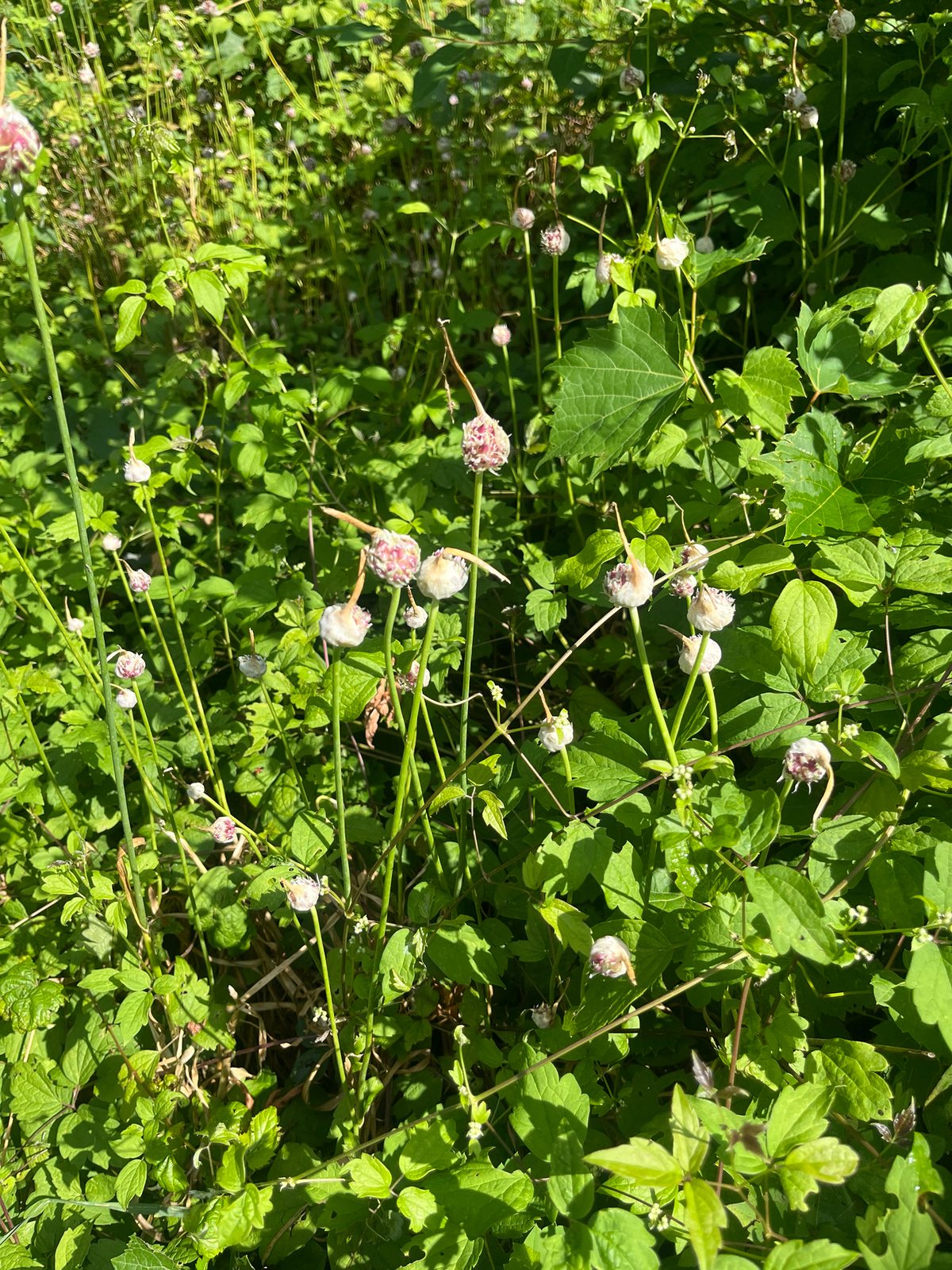
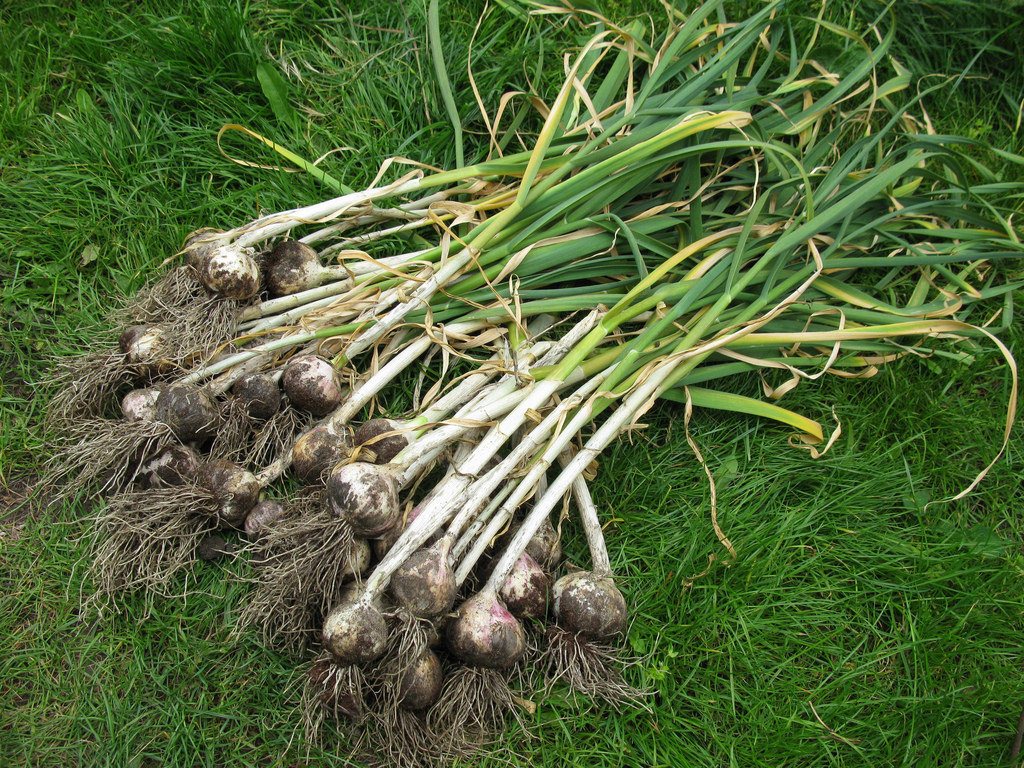
'Music' is a porcelain-type hardneck garlic grown for its large, strongly flavoured cloves and edible curled flower stalks, called scapes. It is a perennial bulb usually grown as an annual crop, planted in autumn and lifted the following summer. It performs best where winters are cold; warm, frost-free areas often give disappointing bulbs.
At a glance
- Sun
- Full sun, ideally at least 6 hours of direct sunlight daily.
- Water
- Keep evenly moist during active growth, without waterlogging; reduce watering as the bulbs mature.
- Soil
- Fertile, loose, well-drained loam, ideally pH 6.0-7.5. Use raised beds where winter drainage is poor.
- Height
- 2-3 ft (0.6-0.9 m), including scapes
- Spread
- 0.3-0.5 ft (0.1-0.15 m) per plant
- Flowers
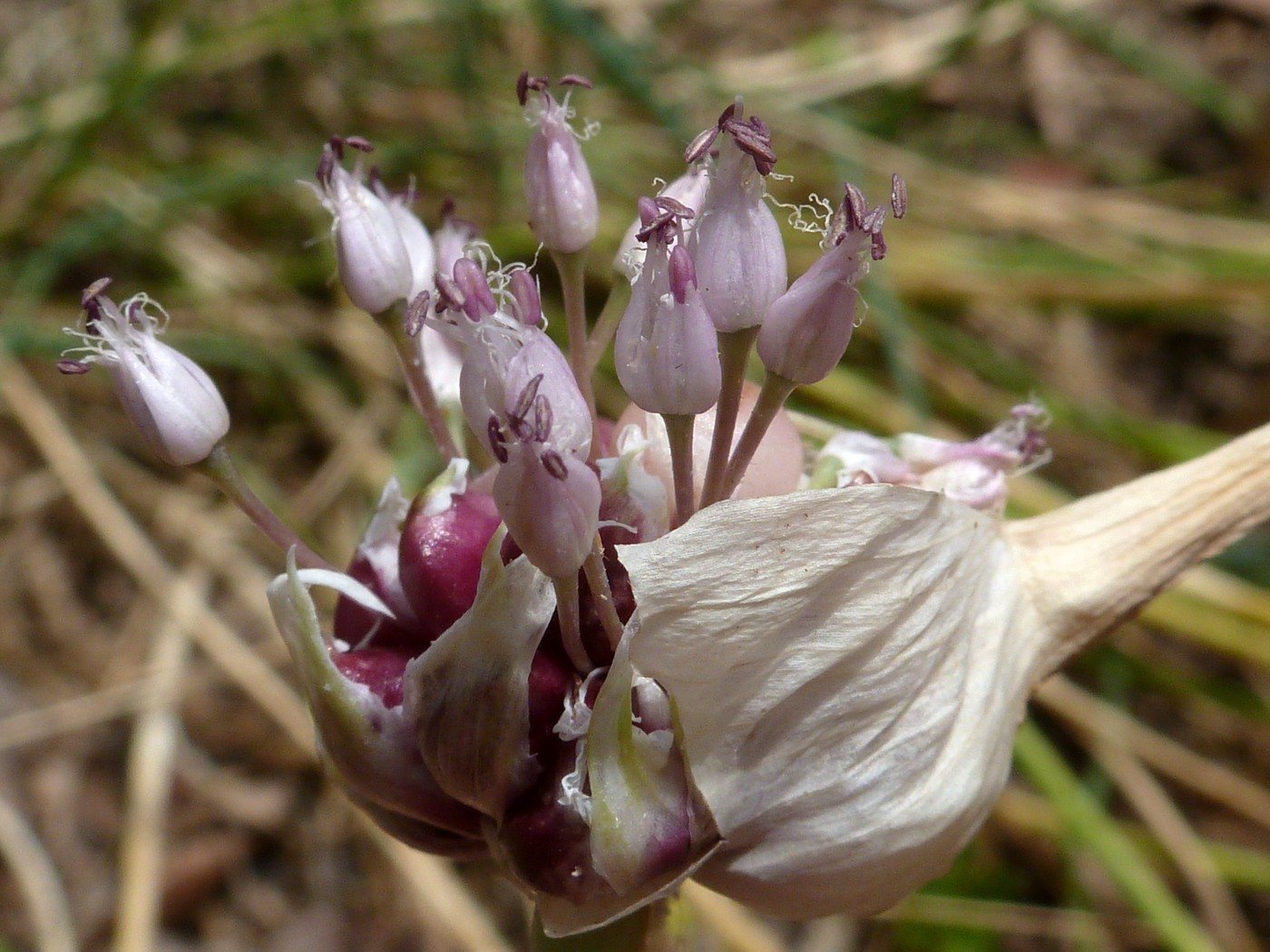
- Summer: scapes carry a papery-covered head containing bulbils and sometimes small whitish to pinkish flowers; usually removed before opening.
- Foliage
- Upright, flat, strap-shaped blue-green leaves that yellow and die back as the bulbs mature.
- Growth
- Moderate; usually takes 8-9 months from autumn planting to harvest.
- Care needed
- Medium
The year at a glance
- Deer resistant
- Cold hardy
- Low allergen
- Edible
| J | F | M | A | M | J | J | A | S | O | N | D | |
|---|---|---|---|---|---|---|---|---|---|---|---|---|
| Flowers | ||||||||||||
| Fruit | ||||||||||||
| Plant |
Northern hemisphere months. In Australia, shift them by six.
- Difficulty
- Easy
- Toughness
- Very tough
Will it suit your garden?
Pick your zone, country, light and whether you have pets.
Full sun is 6 or more hours of direct sun a day, part shade 3 to 6 hours, shade under 3.
How it grows
Planting day
0.5 ft (0.15 m)
After 1 year
2.5 ft (0.75 m)
full size
About 1 years to full size.
From a typical nursery size, at an average rate for this kind of plant. A rule of thumb, not a forecast.
Good to know
- Cats and dogs
- Toxic
- Growth rate
- Moderate
Care
Jobs through the year
- WaterMar–Apr, every 14 days
- For established plants, water only if rainfall leaves the root zone dry; avoid saturated soil.
- WaterMay–Jun, every 7 days
- Water established plants during dry spells; stop as bulbs mature and leaves begin yellowing.
- FeedMar
- Apply a nitrogen-rich feed in early spring; stop nitrogen feeding when bulbs begin swelling.
- MulchOct–Nov
- Apply straw after planting; thin it in spring if soil stays wet.
- HarvestMay–Jun, every 7 days
- Check for curled scapes and cut them while tender, before they straighten.
- HarvestJul–Aug
- Lift when lower leaves brown but upper leaves remain green; cure bulbs in airy shade for 2–4 weeks.
- Plant healthy seed-garlic cloves in autumn, pointed end up, with their tips about 2 in (5 cm) below the surface; space 6 in (15 cm) apart.
- Apply straw mulch after planting in cold regions; loosen or thin it in spring if the soil stays wet.
- Water during dry spells while leaves are growing, keeping the root zone moist but not saturated.
- Work compost into the bed before planting and give a nitrogen-rich feed in early spring; stop nitrogen feeding once bulbs begin swelling.
- Keep weeds down by hand or shallow hoeing, taking care not to damage the shallow roots.
Pruning. Cut off the scapes once they form a clear curl, before they straighten, to favour bulb growth. Leave healthy leaves intact until harvest.
Harvest
Cut tender scapes in late spring or early summer while they are curled. Lift bulbs in summer when the lower third to half of the leaves have browned but several upper leaves remain green; check a sample bulb for well-defined cloves and intact wrappers. Lift gently rather than pulling, then cure in an airy, shaded, dry place for 2-4 weeks before trimming and storing.
Through the year
- Early autumn
- Prepare a sunny, well-drained bed with compost and obtain disease-free planting stock.
- Mid to late autumn
- Separate bulbs into cloves just before planting; plant before the soil freezes.
- Winter
- Check that mulch remains in place and rainwater drains freely.
- Early spring
- Check emergence, remove weeds and apply a nitrogen-rich feed.
- Late spring
- Water during dry weather and harvest curled scapes as they appear.
- Summer
- Reduce watering as leaves yellow, lift mature bulbs and cure them under cover.
In the garden
- Plant in orderly rows in a kitchen garden for upright structure before the summer harvest.
- Use repeated blocks in a potager alongside lettuce and beetroot for contrasting leaf shapes.
- Grow in raised beds where improved drainage makes winter survival more reliable.
- Place within an edible border where neighbouring crops can fill the gap after lifting.
Garden styles it suits: Potager (kitchen garden), Edible landscape, Homestead, Cottage garden, Farmhouse and Herb parterre.
Plant it with: Lettuce, Carrots, Beetroot, Swiss chard and Strawberries.
Wildlife: Open flowers may attract insects, but garlic heads often contain mostly bulbils and scapes are normally harvested. It is not a major wildlife food plant.
Problems to watch for
- White rot: yellowing plants and white fungal growth around bulb bases require removal of affected plants and soil hygiene. Do not move contaminated soil or replant alliums there; the fungus can persist for decades.
- Allium leaf miner: mining and maggots weaken leaves and bulbs. Use insect mesh during local fly activity and remove infested crop remains.
- Thrips: silvery streaks and distorted leaves are worse in hot, dry weather. Keep plants adequately watered, remove weeds and use a locally approved treatment if damage is severe.
- Small bulbs or rotting cloves: shade, crowding, insufficient winter chilling or waterlogged soil can cause failure. Use a sunny, well-spaced planting in freely draining soil; choose a locally adapted garlic in warm climates.
Safety
All parts are toxic to cats, dogs and horses, including raw, cooked and dried garlic; ingestion can damage red blood cells and cause serious anaemia. Contact a veterinarian after ingestion. Garlic is edible for people in normal culinary amounts, though it can cause digestive upset or allergy.
Easily confused with
Softneck garlic (Allium sativum, softneck groups)
Usually lacks a stiff central flowering stalk and has more cloves arranged in several layers; 'Music' has a firm central stem and typically a single ring of large cloves.
Elephant garlic (Allium ampeloprasum)
Has broader, leek-like leaves and much larger, milder cloves; it is related to leeks rather than true garlic.
The name
'Music' is named for Canadian garlic grower Al Music, who introduced this selection.
Propagation. Plant individual cloves from healthy bulbs in autumn; each clove produces a new bulb. Save the largest sound bulbs for replanting. Bulbils can also be planted, but usually need two or more growing seasons to produce useful divided bulbs.
Checked against open data
- Accepted botanical name
- Allium sativum
- In the US and Canada
- Introduced in Canada and the lower 48 states.
- Native range
- Iran, Kazakhstan, Kirgizstan, Tadzhikistan, Turkmenistan and Uzbekistan.
- Measured
- Soil pH 7.5 to 8. Average height 48 cm.
Sources: GBIF (CC BY 4.0), USDA PLANTS and Trefle (CC BY 4.0). The care and design notes are LandscapeGPT's own.
See it in your own yard.
Upload a photo of your yard and see it redesigned with plants that suit your climate, each checked against your zone.