Hardy kiwi (kiwi berry)
Actinidia arguta. Family Actinidiaceae. Climber.
Also called Kiwi berry, Hardy kiwifruit, Siberian kiwi, Tara vine.
Hardy kiwi is a vigorous, deciduous woody climber grown for grape-sized fruit with smooth, edible skins and sweet green flesh. It needs a strong support, regular pruning and, for most varieties, separate male and female plants. Dormant vines withstand cold winters, but young shoots are vulnerable to spring frost and fruit needs a sufficiently long growing season to ripen.
At a glance
- Sun
- Full sun for reliable fruiting; tolerates partial shade with lighter crops. Choose a sheltered position away from frost pockets.
- Water
- Keep the root zone evenly moist, especially during establishment and fruit development; avoid waterlogged soil.
- Soil
- Deep, fertile, well-drained soil, preferably slightly acidic. Improve compacted ground before planting.
- Height
- 20-40 ft (6-12 m) on a support; can grow larger if unrestrained
- Spread
- 10-20 ft (3-6 m) when trained; unpruned vines can spread much farther
- Flowers
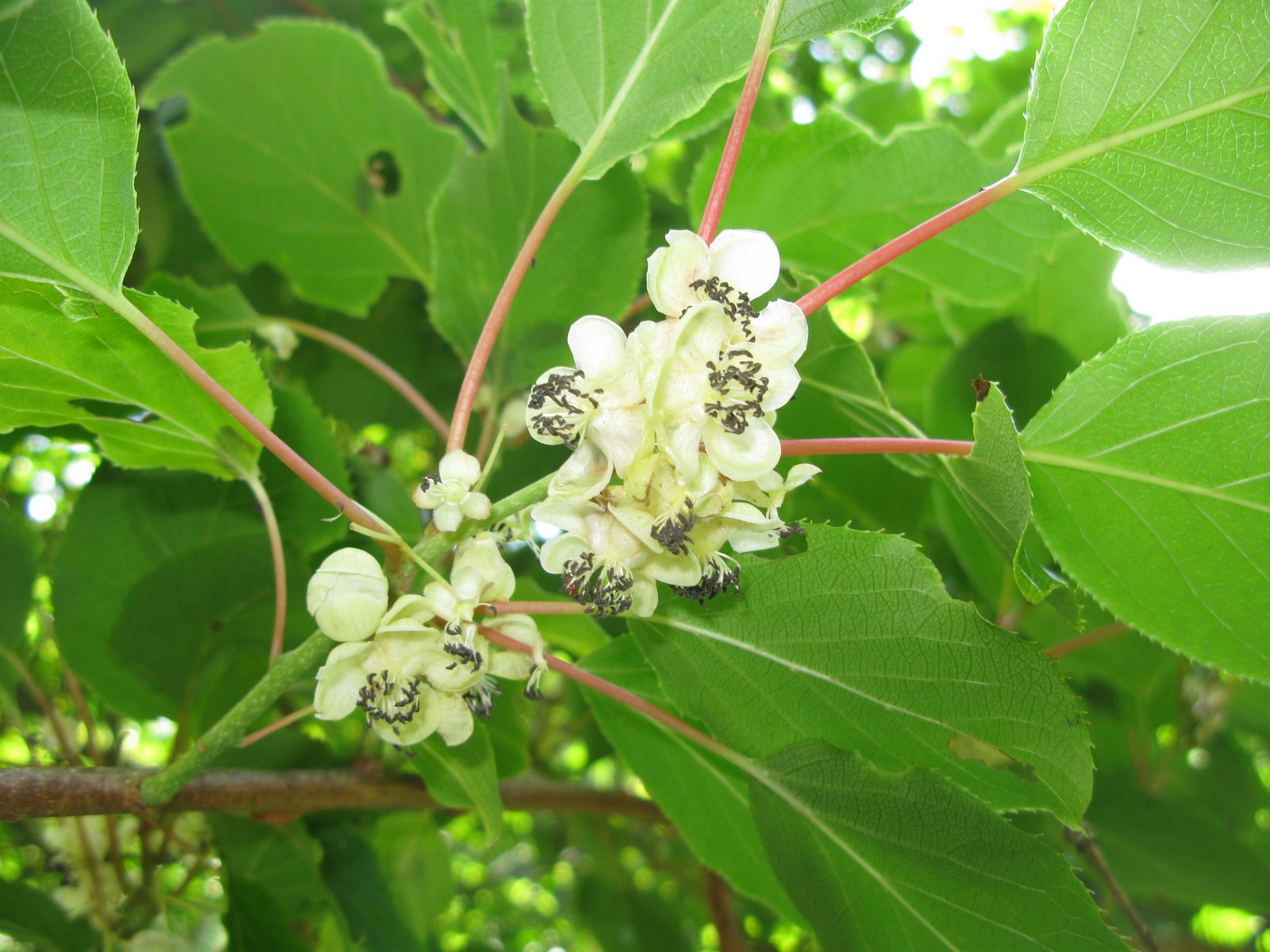
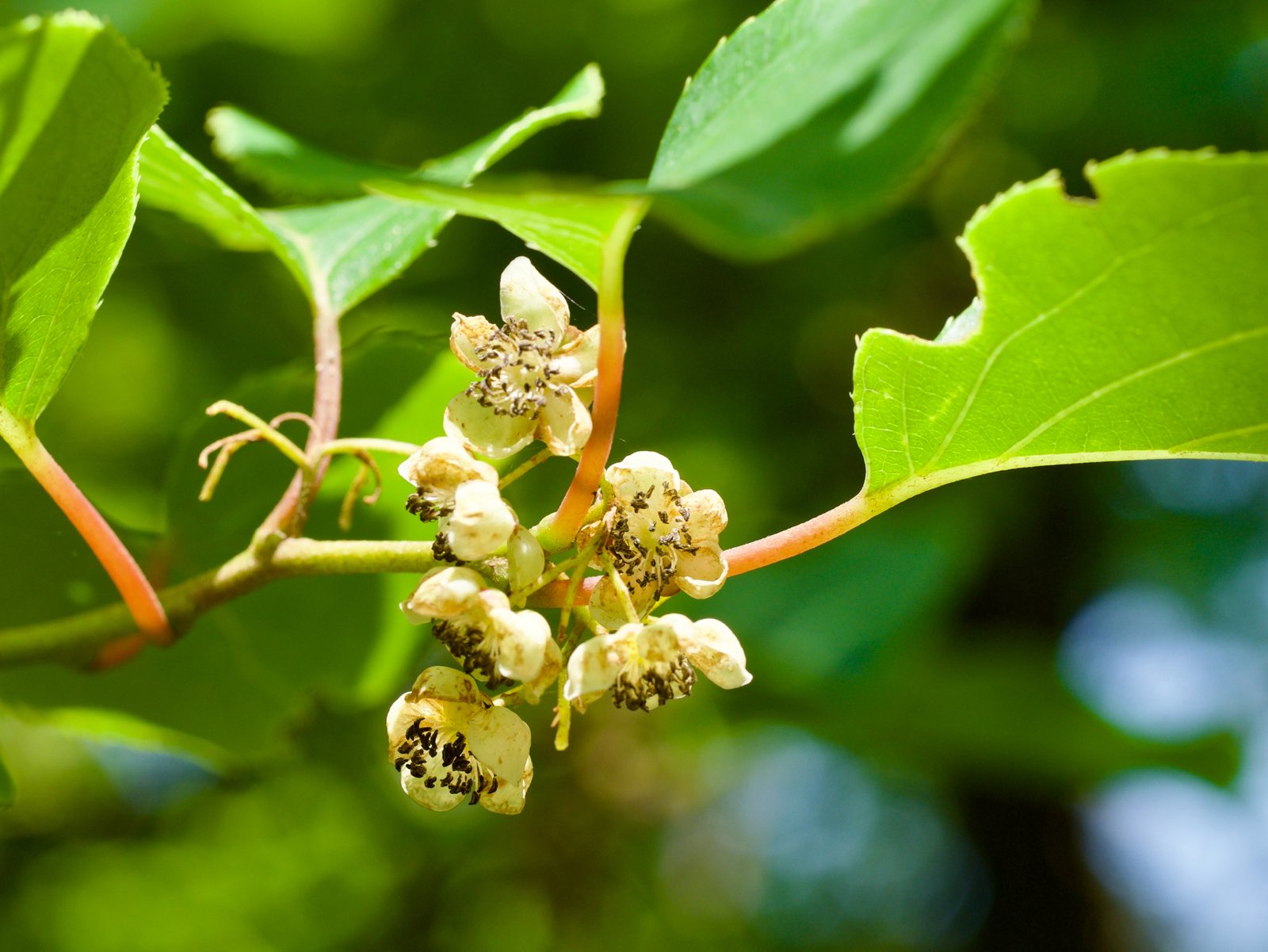
- Small, fragrant, creamy-white flowers in late spring to early summer
- Foliage
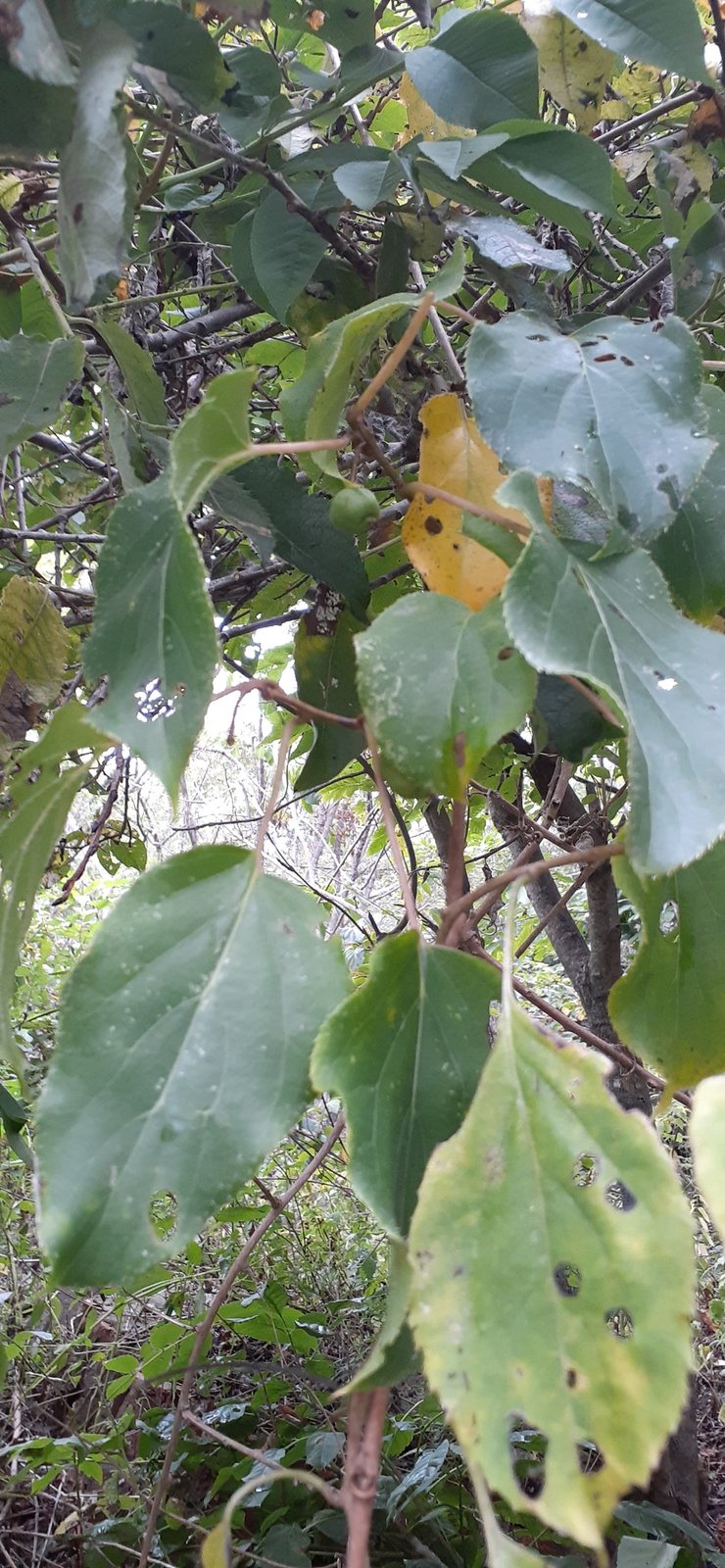
- Broad, pointed, glossy green leaves, often with reddish leaf stalks; usually yellow in autumn.
- Growth
- Fast once established
- Care needed
- High
The year at a glance
- Pollinators
- Cold hardy
- Low allergen
- Fragrant
- Edible
| J | F | M | A | M | J | J | A | S | O | N | D | |
|---|---|---|---|---|---|---|---|---|---|---|---|---|
| Flowers | ||||||||||||
| Fruit | ||||||||||||
| Plant |
Northern hemisphere months. In Australia, shift them by six.
- Difficulty
- Hard
- Toughness
- Fairly tough
Will it suit your garden?
Pick your zone, country, light and whether you have pets.
Full sun is 6 or more hours of direct sun a day, part shade 3 to 6 hours, shade under 3.
How it grows
Planting day
2 ft (0.6 m)
After 1 year
3 ft (1.1 m)
After 2 years
5 ft (1.5 m)
After 3 years
6 ft (1.8 m)
full size
About 3 years to full size.
From a typical nursery size, at an average rate for this kind of plant. A rule of thumb, not a forecast.
Good to know
- Cats and dogs
- Safe
- Invasive in
- the US
- In the garden
- Spreads vigorously: plan to contain it.
- Growth rate
- Fast
Care
Jobs through the year
- ProtectMar–Apr
- Check the substantial support and provide a flowering-compatible male; keep vines out of trees.
- WaterApr–May, Oct, every 7 days
- Deep-water established vines when rainfall is insufficient; young vines need closer moisture checks.
- WaterJun–Sep, every 5 days
- Keep soil evenly moist while fruit develops, but do not water already wet ground.
- FeedMar–Apr
- Feed modestly only if growth is weak; avoid excessive nitrogen.
- MulchMar–Apr
- Renew organic mulch over the roots, keeping it clear of stems.
- ProtectMar–May
- Cover accessible young shoots with fleece when late frost threatens.
- PruneJan, Dec
- Prune while fully dormant before sap rises, retaining the framework and selected one-year-old laterals.
- PruneJun–Aug, every 30 days
- Shorten shoots beyond the last fruit and remove tangled growth without stripping the canopy.
- HarvestAug–Oct
- Pick sweet berries as they soften; before frost, pick mature black-seeded fruit to ripen indoors.
- ProtectOct–Nov
- Clear fallen fruit and remove unwanted seedlings or rooted stems outside the planting area.
- Install a substantial pergola or securely anchored wire framework before planting; do not let vines climb into trees.
- Plant a compatible male that flowers at the same time as the female plants; one male usually serves six to eight females.
- Water deeply during dry spells, particularly while fruit is swelling.
- Apply organic mulch over the root zone, keeping it clear of the stems.
- Feed modestly in spring if growth is weak; excess nitrogen encourages foliage at the expense of fruit.
- Protect emerging shoots from late frost with temporary fleece where practical.
Pruning. In midwinter, before sap begins to rise, maintain a permanent framework and shorten selected one-year-old laterals, retaining buds that will produce fruiting shoots. In summer, shorten fruiting shoots beyond the last fruit and remove tangled, unwanted growth; avoid heavy pruning in late winter or spring, when cuts can bleed heavily.
Harvest
Pick the berries in late summer or autumn when they begin to soften and taste sweet; ripe fruit has edible skin and should detach with a gentle pull. If frost threatens, pick mature, firm berries once their seeds have turned black and finish ripening them indoors. Expect a first substantial crop about 3-5 years after planting, sometimes longer in cool sites or from small plants.
Through the year
- Midwinter
- Prune dormant vines before sap rises, keeping the permanent framework and selected fruiting laterals.
- Early spring
- Plant while dormant where soil is workable; check supports and renew mulch.
- Spring
- Protect emerging growth from late frost and tie new shoots loosely to the support.
- Late spring
- Check that male and female flowers overlap and leave flowers accessible to pollinating insects.
- Summer
- Water during dry weather and shorten excessive shoots without stripping away the fruiting canopy.
- Late summer to autumn
- Taste-test berries regularly and harvest before damaging frost.
- Late autumn
- Remove fallen fruit and check for rooted stems or seedlings beyond the planting area.
In the garden
- Train over a heavy-duty pergola to provide summer shade and hanging fruit.
- Grow on a freestanding wire framework along the sunny edge of a kitchen garden.
- Use as a seasonal screen on a substantial boundary trellis, allowing access for pruning on both sides.
- Train along the sunny edge of a food forest, keeping it separate from living trees.
Garden styles it suits: Potager (kitchen garden), Food forest, Backyard orchard, Edible landscape, Homestead and Farmhouse.
Plant it with: Chives, Thyme, Calendula and Sweet alyssum.
Wildlife: Flowers attract bees and other pollinating insects. Birds and small mammals may take ripe fruit; use taut, wildlife-safe netting if protection is needed.
Problems to watch for
- Late frost blackens new shoots and flowers: avoid frost pockets and cover accessible growth with fleece when frost is forecast.
- Little or no fruit: check for a compatible male flowering at the same time, adequate sunlight and pruning that preserves fruiting wood.
- Root rot in wet ground: improve drainage before planting and avoid frequent watering of already wet soil.
- Japanese beetles can skeletonize leaves in affected parts of North America: hand-pick small infestations and avoid placing beetle traps beside the vines.
Safety
Not known to be toxic to people, cats or dogs; ripe fruit and its skin are edible. Large quantities may cause digestive upset, and kiwi can cause allergic reactions in susceptible people. Safety for horses is not well documented, so keep vines and prunings out of their reach.
Where it spreads. Can escape cultivation and smother trees and shrubs in parts of the northeastern United States, notably Massachusetts and New York. It is listed as invasive in Massachusetts; check local restrictions before planting and prevent stems from rooting beyond the support.
Easily confused with
Fuzzy kiwifruit (Actinidia deliciosa)
Has larger, hairy leaves and larger brown, fuzzy-skinned fruit; it is much less winter-hardy.
Kolomikta kiwi (Actinidia kolomikta)
Often develops striking white and pink leaf patches, especially on male plants, and is generally less vigorous and more cold-hardy.
The name
Actinidia refers to the flower's radiating styles, while arguta means sharply toothed, referring to the leaf margins.
Propagation. Root softwood cuttings in early summer under humid conditions, or layer a low stem and separate it once rooted. Use vegetative propagation to preserve fruit quality and known plant sex; seedlings vary and may take many years to flower.
Checked against open data
- Accepted botanical name
- Actinidia arguta
- Native range
- China North-Central, China South-Central, China Southeast, Japan, Korea, Kuril Is., Manchuria, Primorye, Sakhalin and Taiwan.
- Measured
- Average height 1630 cm.
Sources: GBIF (CC BY 4.0) and Trefle (CC BY 4.0). The care and design notes are LandscapeGPT's own.
See it in your own yard.
Upload a photo of your yard and see it redesigned with plants that suit your climate, each checked against your zone.