Haskap (honeyberry)
Lonicera caerulea. Family Caprifoliaceae. Shrub.
Also called Honeyberry, Blue honeysuckle, Edible honeysuckle.
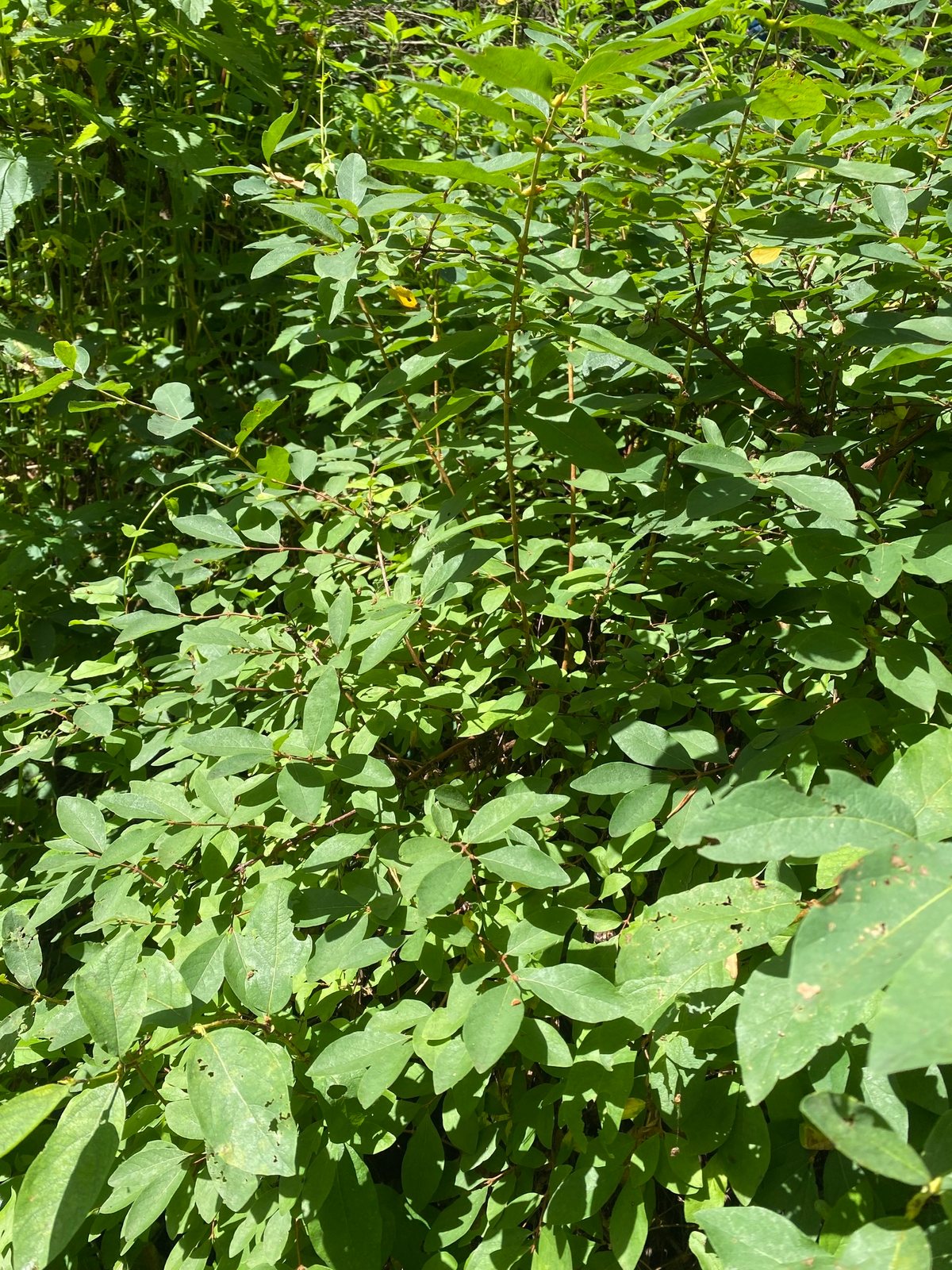
Haskap is a cold-hardy, deciduous shrub grown for elongated blue berries that ripen before many other soft fruits. Its small, creamy flowers feed early pollinators, and its fruit can be eaten fresh or cooked. It needs winter chilling and generally performs poorly in hot climates; plant compatible varieties with overlapping flowering times for reliable crops.
At a glance
- Sun
- Full sun in cool climates; light afternoon shade can help near the warmer end of its range.
- Water
- Keep the root zone evenly moist, especially during establishment and fruit development; avoid waterlogged soil.
- Soil
- Moist but well-drained soil enriched with organic matter; tolerates clay if drainage is adequate and a wider pH range than blueberries, roughly pH 5.5-7.5.
- Height
- 3-6 ft (0.9-1.8 m)
- Spread
- 3-6 ft (0.9-1.8 m)
- Flowers
- Late winter to spring, depending on climate and variety; small, paired, pale yellow to creamy-white flowers.
- Foliage
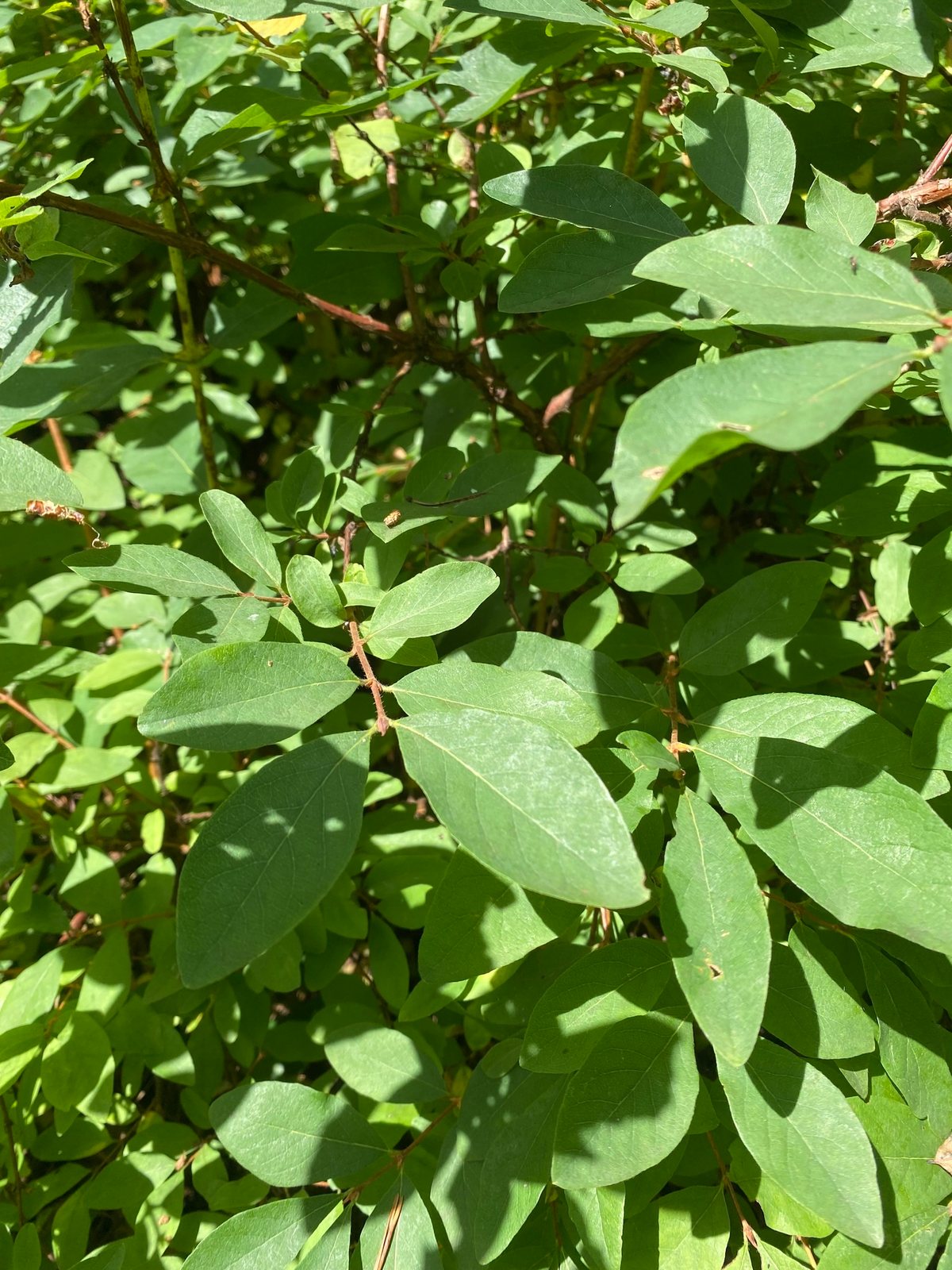
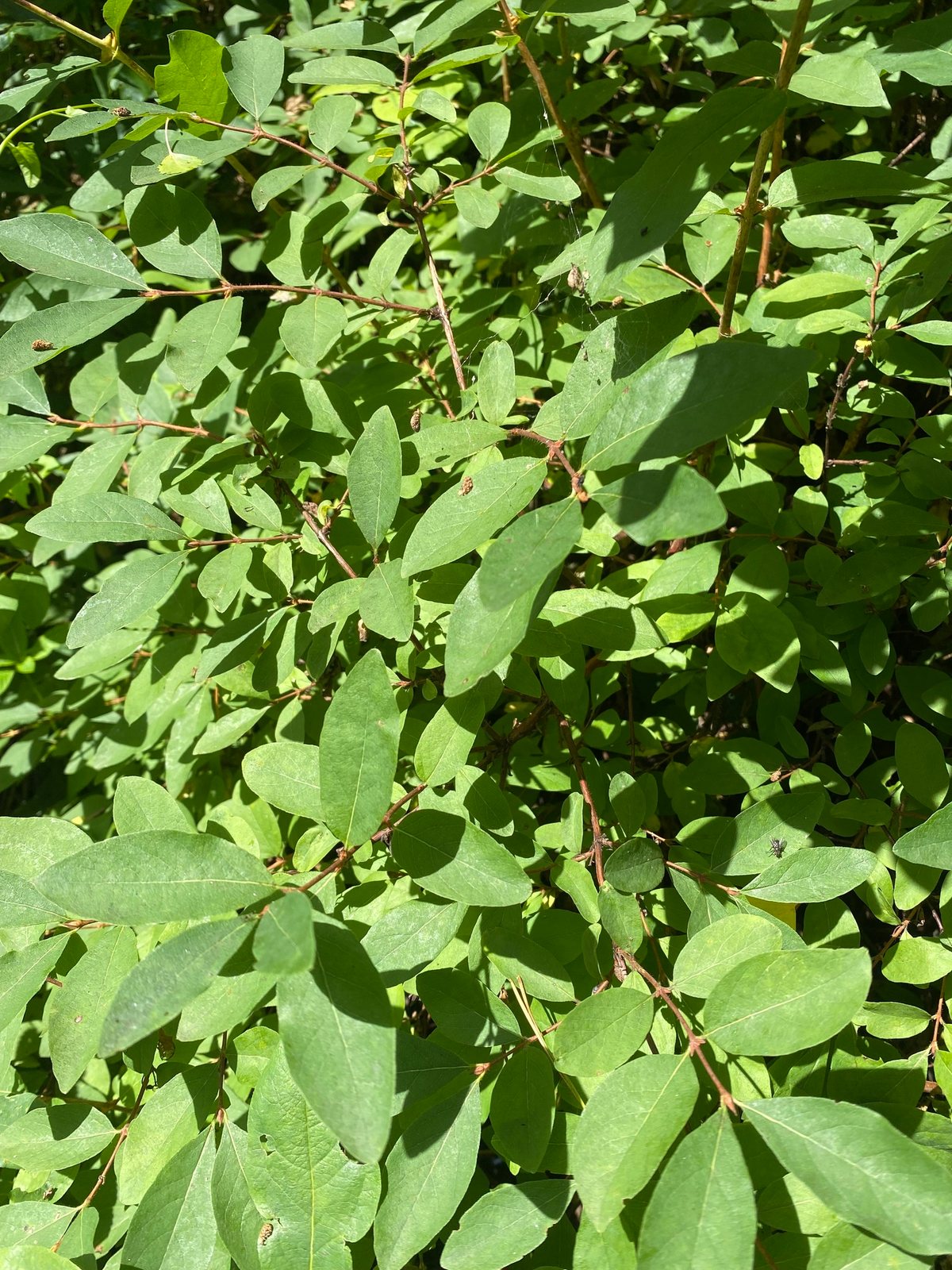
- Opposite, oval, green to blue-green leaves; autumn colour is usually modest.
- Growth
- Moderate; young plants can establish slowly.
- Care needed
- Low
The year at a glance
- Pollinators
- Cold hardy
- Wildlife
- Low allergen
- Edible
| J | F | M | A | M | J | J | A | S | O | N | D | |
|---|---|---|---|---|---|---|---|---|---|---|---|---|
| Flowers | ||||||||||||
| Fruit | ||||||||||||
| Plant |
Northern hemisphere months. In Australia, shift them by six.
- Difficulty
- Easy
- Toughness
- Very tough
Will it suit your garden?
Pick your zone, country, light and whether you have pets.
Full sun is 6 or more hours of direct sun a day, part shade 3 to 6 hours, shade under 3.
How it grows
Planting day
1.6 ft (0.5 m)
After 1 year
2.1 ft (0.63 m)
After 2 years
2.5 ft (0.76 m)
After 3 years
2.9 ft (0.89 m)
After 5 years
4 ft (1.2 m)
About 7 years to full size.
From a typical nursery size, at an average rate for this kind of plant. A rule of thumb, not a forecast.
Good to know
- Cats and dogs
- Safe
- Native to
- the US and Canada
- Growth rate
- Slow
Care
Jobs through the year
- WaterMar–Apr, Sep–Oct, every 14 days
- Water established bushes deeply if soil dries; young plants need more frequent watering.
- WaterMay–Aug, every 7 days
- Water during dry spells, allowing for rainfall; maintain moisture during fruit swelling and after harvest.
- FeedMar–Apr
- Top-dress with compost; add a modest balanced feed only if growth is weak.
- MulchMar–Apr
- Apply 5-8 cm of organic mulch, keeping it clear of stems.
- PruneJan–Feb
- Before bud break, remove damaged wood and occasionally an old mature stem; retain fruiting shoot tips.
- ProtectMay–Jun
- Cover colouring fruit with taut wildlife-safe netting on a frame; check daily.
- HarvestMay–Jun
- Wait until flesh is coloured through and tastes sweet-tart; pick gently or shake onto a clean sheet.
- Plant at least two genetically different, compatible varieties with overlapping flowering times; two plants of the same variety are not enough.
- Space bushes 4-6 ft (1.2-1.8 m) apart, allowing for their mature spread.
- Water deeply during dry spells, particularly while berries are swelling.
- Apply 2-3 in (5-8 cm) of organic mulch, keeping it clear of the stems.
- Top-dress with compost in spring; use a modest balanced feed only if growth is weak.
- Protect ripening fruit with taut, wildlife-safe netting secured over a frame.
Pruning. Prune in late winter while dormant, removing dead, damaged or crossing branches; leave young bushes largely unpruned. On established bushes, occasionally remove an old stem at ground level to encourage replacement growth, and avoid shortening all the shoot tips because these carry much of the crop.
Harvest
Pick berries in late spring to early summer, depending on climate and variety; they turn blue before they are fully ripe, so wait until the flesh is coloured through and a sample tastes sweet-tart rather than sharply sour. Gently pick or shake ripe fruit onto a clean sheet, handling it carefully because the skin bruises easily.
Through the year
- Autumn
- Plant dormant bushes where soil remains workable, choosing compatible pollination partners.
- Late winter
- Remove damaged wood and thin a few old stems from mature bushes.
- Early spring
- Plant in cold regions once soil is workable; renew mulch and top-dress with compost.
- Spring
- Keep flowering plants accessible to bees and water if the soil dries.
- Late spring
- Fit bird protection as berries colour and taste-test before harvesting.
- Summer
- Maintain moisture after harvest and check leaves for mildew or heat stress.
In the garden
- Plant several compatible varieties as a loose edible hedge along a sunny boundary.
- Use in a mixed fruit garden with currants and gooseberries for an extended picking season.
- Place near paths in an edible landscape where the early berries are easy to harvest.
- Include in the sunny shrub layer of a cool-climate food forest, outside dense tree-root competition.
Garden styles it suits: Edible landscape, Food forest, Homestead, Potager (kitchen garden), Cottage garden and Wildlife garden.
Plant it with: Blackcurrants, Redcurrants, Gooseberries, Chives, Strawberries and Crocuses.
Wildlife: Early flowers attract bumblebees and other pollinating insects. Birds readily eat the berries, and dense mature bushes provide some cover.
Problems to watch for
- Few or no berries: add a compatible variety that flowers at the same time, and avoid insecticides during bloom.
- Birds taking the crop: cover bushes before fruit ripens with taut, wildlife-safe netting on a frame.
- Powdery mildew: improve airflow, avoid crowding and excess nitrogen, and choose locally resistant varieties; mild late-season infection rarely needs treatment.
- Leaf scorch or premature leaf drop: check for drought and excessive heat, maintain mulch and moisture, and provide afternoon shade in warmer locations.
Safety
Ripe fruit of correctly identified edible Lonicera caerulea varieties is not known to be toxic to people. Reliable toxicity information for cats, dogs and horses is limited, especially for leaves, stems and unripe fruit; do not offer these parts as food or forage. Do not assume berries from other honeysuckles are edible.
Easily confused with
Fly honeysuckle (Lonicera xylosteum)
Also has opposite oval leaves and paired flowers, but produces round red berries rather than elongated blue berries. Its fruit is not edible.
Twinberry honeysuckle (Lonicera involucrata)
Produces paired, rounded black berries surrounded by conspicuous reddish bracts, rather than the elongated, waxy-blue fruit of haskap; do not substitute its fruit for honeyberries.
The name
Lonicera honours the botanist Adam Lonitzer, while caerulea means blue, referring to the fruit.
Propagation. Take softwood cuttings in early summer and root them in a moist, free-draining medium under humid conditions. Seedlings vary and do not reliably retain a named variety's fruit quality or flowering time; check propagation restrictions before multiplying protected varieties.
Checked against open data
- Accepted botanical name
- Lonicera caerulea
- In the US and Canada
- Native in Canada and the lower 48 states.
- Native range
- Albania, Alberta, Altay, Amur, Austria, Baltic States, Belarus, British Columbia, Bulgaria, Buryatiya, California and China North-Central.
- Measured
- Soil pH 4.5 to 5. Average height 100 cm.
Sources: GBIF (CC BY 4.0), USDA PLANTS and Trefle (CC BY 4.0). The care and design notes are LandscapeGPT's own.
See it in your own yard.
Upload a photo of your yard and see it redesigned with plants that suit your climate, each checked against your zone.