Hawthorn 'Paul's Scarlet'
Crataegus laevigata 'Paul's Scarlet'. Family Rosaceae. Tree.
Also called Midland hawthorn 'Paul's Scarlet', English hawthorn 'Paul's Scarlet', Scarlet hawthorn.
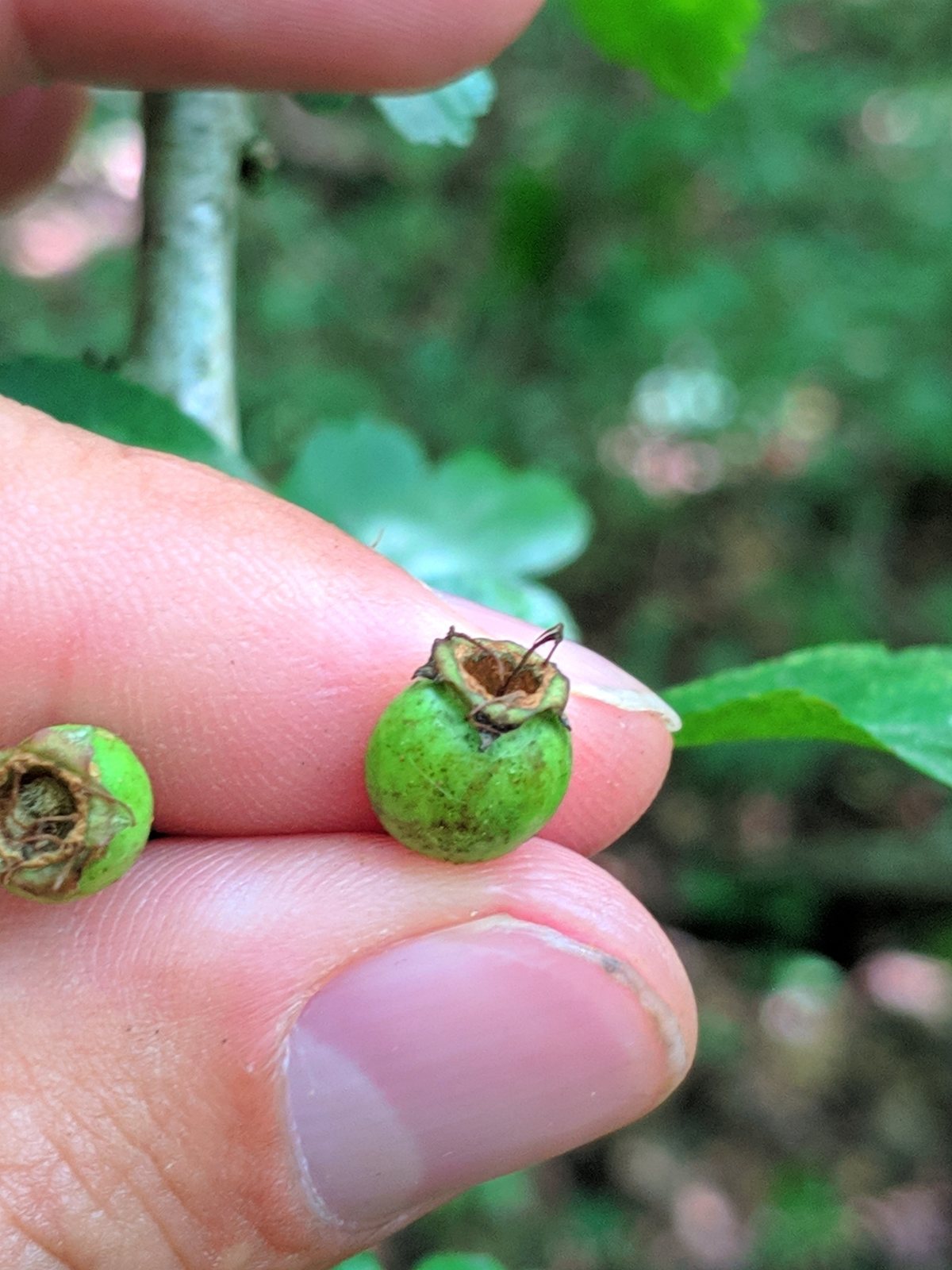
A small, deciduous, thorny tree grown for its clusters of double, deep rose-red flowers in late spring. Its rounded crown suits lawns and traditional gardens, but the double flowers offer less food for insects than single-flowered hawthorns, and fruit is usually sparse or absent.
At a glance
- Sun
- Full sun gives the best flowering; tolerates light partial shade.
- Water
- Water regularly while establishing. Once established, tolerates short dry spells, but prolonged drought can cause early leaf fall.
- Soil
- Moist but well-drained soil, including clay and chalk; tolerates acidic to alkaline conditions. Avoid persistently waterlogged ground.
- Height
- 15-25 ft (4.5-7.5 m)
- Spread
- 15-25 ft (4.5-7.5 m)
- Flowers
- Late spring to early summer; clusters of double, deep rose-red flowers, sometimes fading pink.
- Foliage
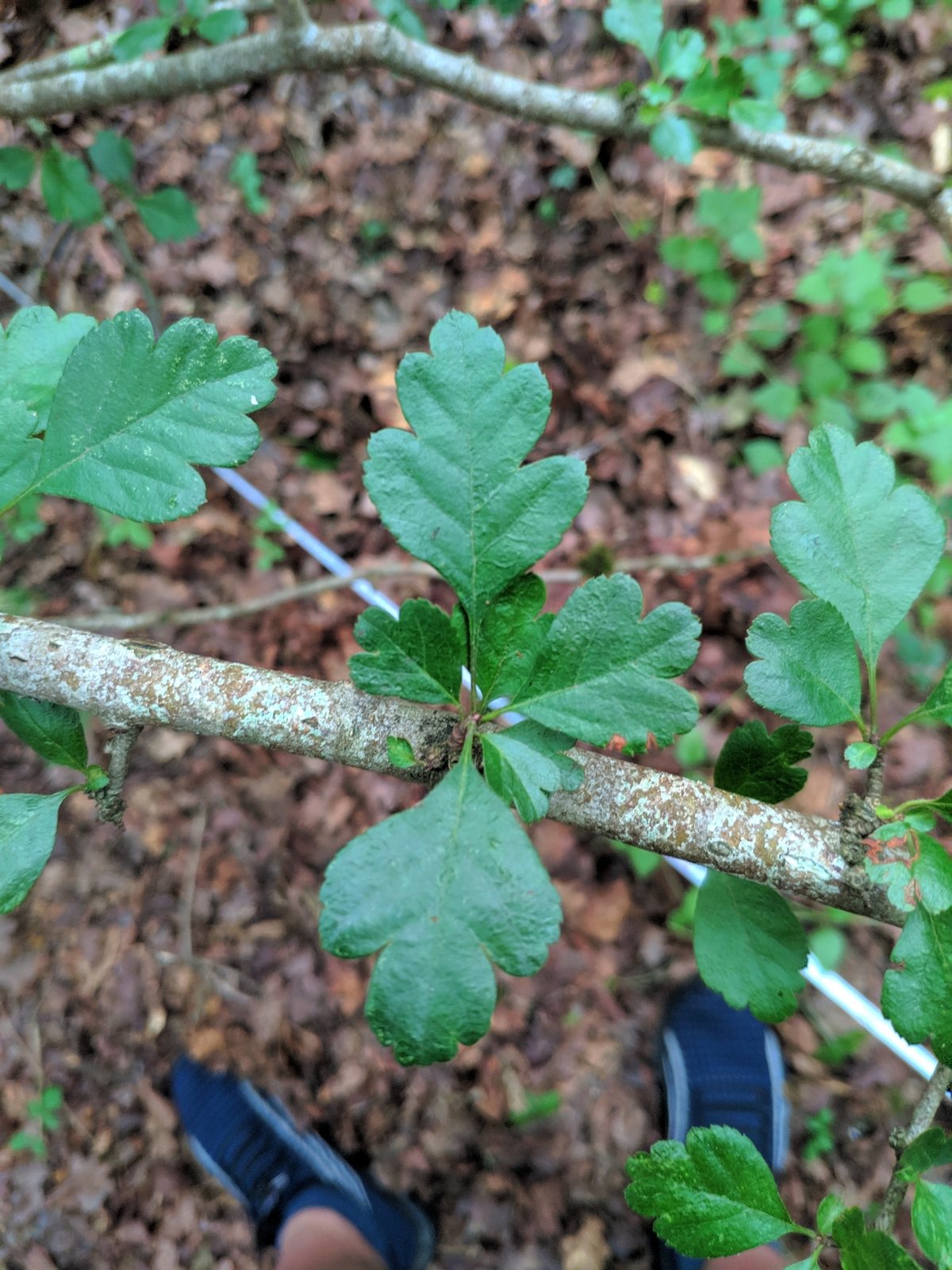
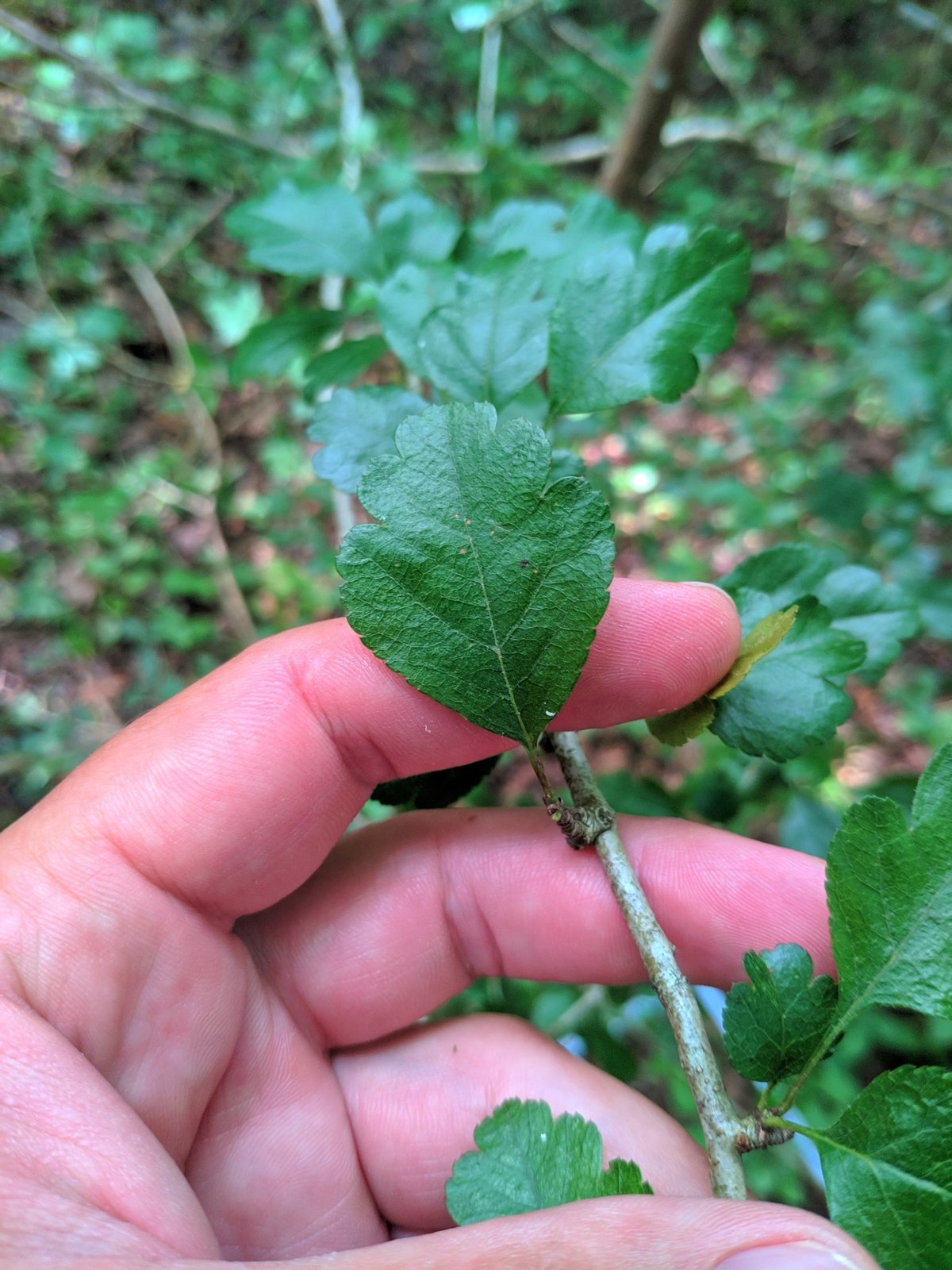
- Small, glossy, dark green leaves with shallow lobes; autumn colour is usually yellow and can be variable.
- Growth
- Moderate when young, slowing with age.
- Care needed
- Medium
The year at a glance
- Cold hardy
- Wildlife
- Low allergen
| J | F | M | A | M | J | J | A | S | O | N | D | |
|---|---|---|---|---|---|---|---|---|---|---|---|---|
| Flowers | ||||||||||||
| Plant |
Northern hemisphere months. In Australia, shift them by six.
- Difficulty
- Moderate
- Toughness
- Very tough
Will it suit your garden?
Pick your zone, country, light and whether you have pets.
Full sun is 6 or more hours of direct sun a day, part shade 3 to 6 hours, shade under 3.
How it grows
Planting day
7 ft (2 m)
After 1 year
7 ft (2.2 m)
After 2 years
8 ft (2.3 m)
After 3 years
8 ft (2.5 m)
After 5 years
9 ft (2.8 m)
About 26 years to full size.
From a typical nursery size, at an average rate for this kind of plant. A rule of thumb, not a forecast.
Good to know
- Cats and dogs
- Toxic
- Native to
- the UK
- Growth rate
- Slow
Care
Jobs through the year
- WaterApr–May, Sep–Oct, every 14 days
- Water established trees deeply when rainfall is insufficient and soil is dry; young trees need more frequent watering.
- WaterJun–Aug, every 7 days
- Soak the root area during dry spells, especially during the first two growing seasons.
- MulchMar
- Apply 5–8 cm of organic mulch over the root zone without covering the trunk or graft union.
- PruneFeb
- Remove dead, damaged and crossing branches in dry weather; avoid topping or heavy pruning.
- PruneApr–Nov, every 30 days
- Remove root suckers and shoots below the graft at their origin.
- ProtectMay–Aug, every 14 days
- Check for fire blight; cut well below infected growth in dry weather and disinfect tools between cuts.
- ProtectOct–Nov
- Collect diseased fallen leaves to reduce overwintering leaf-spot infection.
- Plant with the root flare at soil level and keep any graft union above the soil.
- Water deeply during dry weather for the first two growing seasons, moistening the whole root area.
- Spread 2-3 in (5-8 cm) of organic mulch over the root zone, keeping it clear of the trunk.
- Stake only if the root ball moves in wind; use flexible ties and remove the support once roots hold firmly.
- Remove shoots arising below the graft and suckers from the roots, tracing them back to their origin.
- Avoid routine high-nitrogen feeding, which encourages soft growth susceptible to fire blight.
Pruning. In late winter, during dry weather, remove dead, damaged or crossing branches and make only light structural cuts; avoid topping or hard annual pruning. If fire blight occurs, cut well below visible infection into healthy wood and disinfect tools between cuts.
Through the year
- Autumn
- Plant while the soil is workable, water thoroughly and mulch; in very cold regions, spring planting is also suitable.
- Late winter
- Make light structural pruning cuts in dry weather and check stakes and ties.
- Spring
- Refresh mulch, remove rootstock suckers and water newly planted trees if rainfall is low.
- Late spring
- Enjoy flowering and check for aphids, distorted shoots and sudden blackening that may indicate fire blight.
- Summer
- Water during prolonged dry spells and inspect foliage for rust or leaf spots.
- Late autumn
- Collect fallen diseased leaves and remove any remaining rootstock suckers.
In the garden
- Plant as a flowering specimen in a lawn, allowing room for its mature crown.
- Use behind a mixed border with hardy geraniums, lady's mantle and spring bulbs beneath.
- Repeat along a broad driveway or garden boundary for a coordinated late-spring display.
- Use as a small canopy tree in a traditional courtyard, keeping thorny branches away from paths and seating.
Garden styles it suits: English country, Traditional, Cottage garden, Romantic rose garden, Arts and Crafts and Grand estate.
Plant it with: Hardy geraniums, Lady's mantle, Daffodils, Snowdrops, Foxgloves and Hellebores.
Wildlife: The crown provides shelter and potential nesting sites for birds, and the foliage supports some moth caterpillars. Double flowers provide much less accessible pollen and nectar than single hawthorn flowers, and the usual lack of fruit limits its value to fruit-eating birds.
Problems to watch for
- Fire blight: flowers and shoots suddenly brown or blacken, sometimes with hooked tips. Remove affected growth well below symptoms in dry weather, disinfect tools between cuts and avoid excessive nitrogen.
- Hawthorn leaf spot: spotted leaves may yellow and fall early. Collect fallen leaves, avoid overhead watering and thin congested branches lightly to improve airflow.
- Rust: orange spots or swellings can affect leaves and shoots, especially near susceptible junipers. Remove badly affected shoots and seek local advice if damage recurs.
- Aphids: colonies curl young leaves and leave sticky honeydew. Wash off small infestations with water and preserve ladybirds and other natural predators.
Safety
The leaves, flowers and fruit flesh are not known to be toxic to people, cats, dogs or horses. Seeds contain cyanogenic compounds and should not be deliberately crushed or eaten; this cultivar usually bears little or no fruit. Sharp thorns can cause puncture wounds.
Easily confused with
Hawthorn 'Crimson Cloud' (Crataegus laevigata 'Crimson Cloud')
Has single red flowers with conspicuous white centres, rather than the densely double flowers of 'Paul's Scarlet'.
Hawthorn 'Rosea Flore Pleno' (Crataegus laevigata 'Rosea Flore Pleno')
Also has double flowers, but they are softer rose-pink rather than the deeper rose-red of 'Paul's Scarlet'.
Common hawthorn (Crataegus monogyna)
Usually has single white flowers, more deeply divided leaves and abundant red autumn fruit; 'Paul's Scarlet' has double red flowers and usually little or no fruit.
The name
Crataegus comes from a Greek word referring to strength, traditionally linked to its hard wood, while 'Paul's Scarlet' commemorates the nineteenth-century nurseryman William Paul.
Propagation. Usually propagated commercially by budding or grafting onto hawthorn rootstock. Seed will not reproduce the cultivar, and rootstock suckers will not have its double red flowers.
Checked against open data
- Accepted botanical name
- Crataegus laevigata
- In the US and Canada
- Introduced in Canada and the lower 48 states.
- Native range
- Austria, Baltic States, Belarus, Belgium, Central European Rus, Corse, Czechoslovakia, Denmark, France, Germany, Great Britain and Hungary.
- Measured
- Average height 800 cm.
Sources: GBIF (CC BY 4.0), USDA PLANTS and Trefle (CC BY 4.0). The care and design notes are LandscapeGPT's own.
See it in your own yard.
Upload a photo of your yard and see it redesigned with plants that suit your climate, each checked against your zone.