Hawthorn 'Prunifolia'
Crataegus persimilis 'Prunifolia'. Family Rosaceae. Tree.
Also called Broad-leaved cockspur thorn, Plum-leaved hawthorn, Crataegus prunifolia.
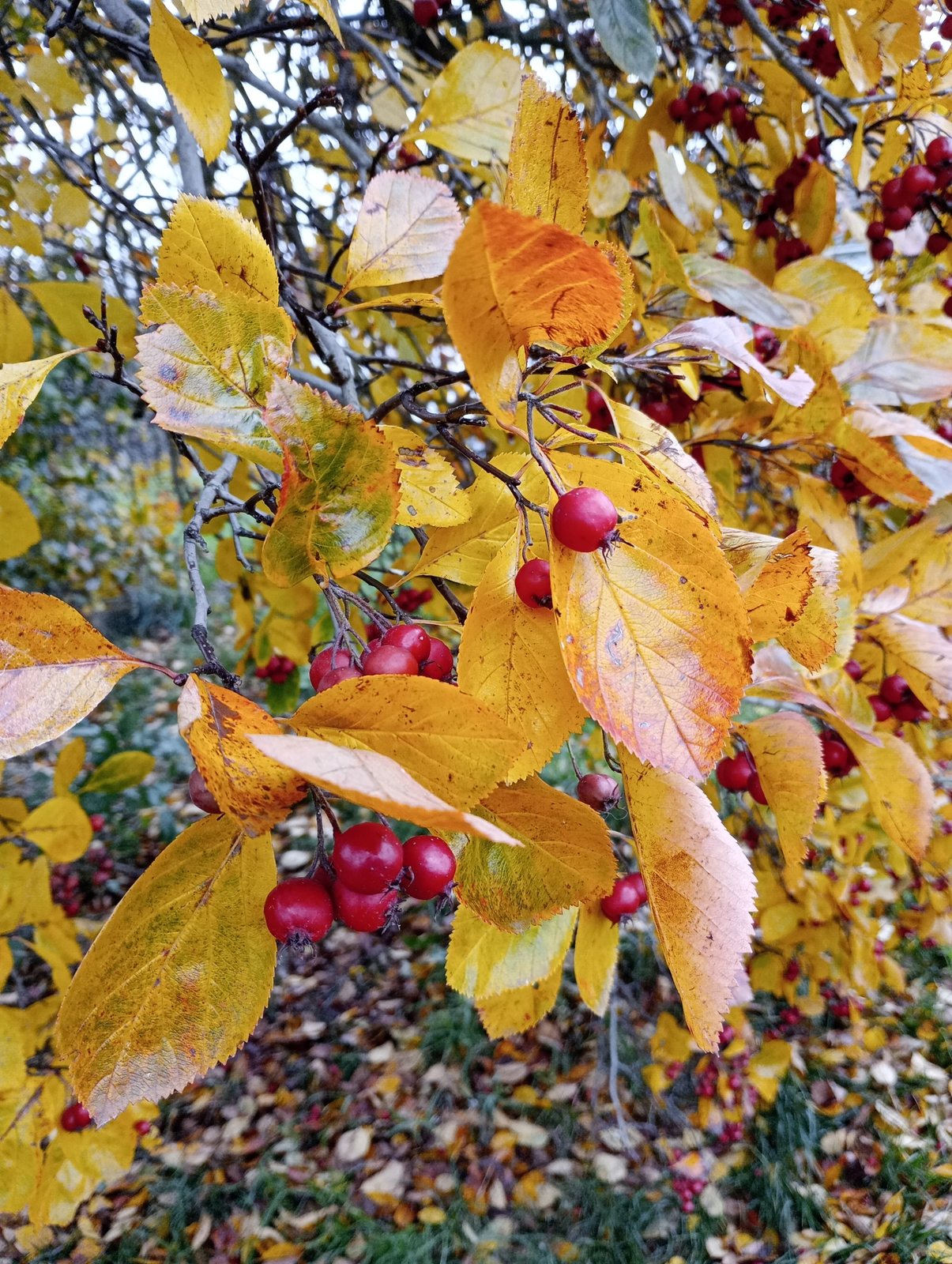
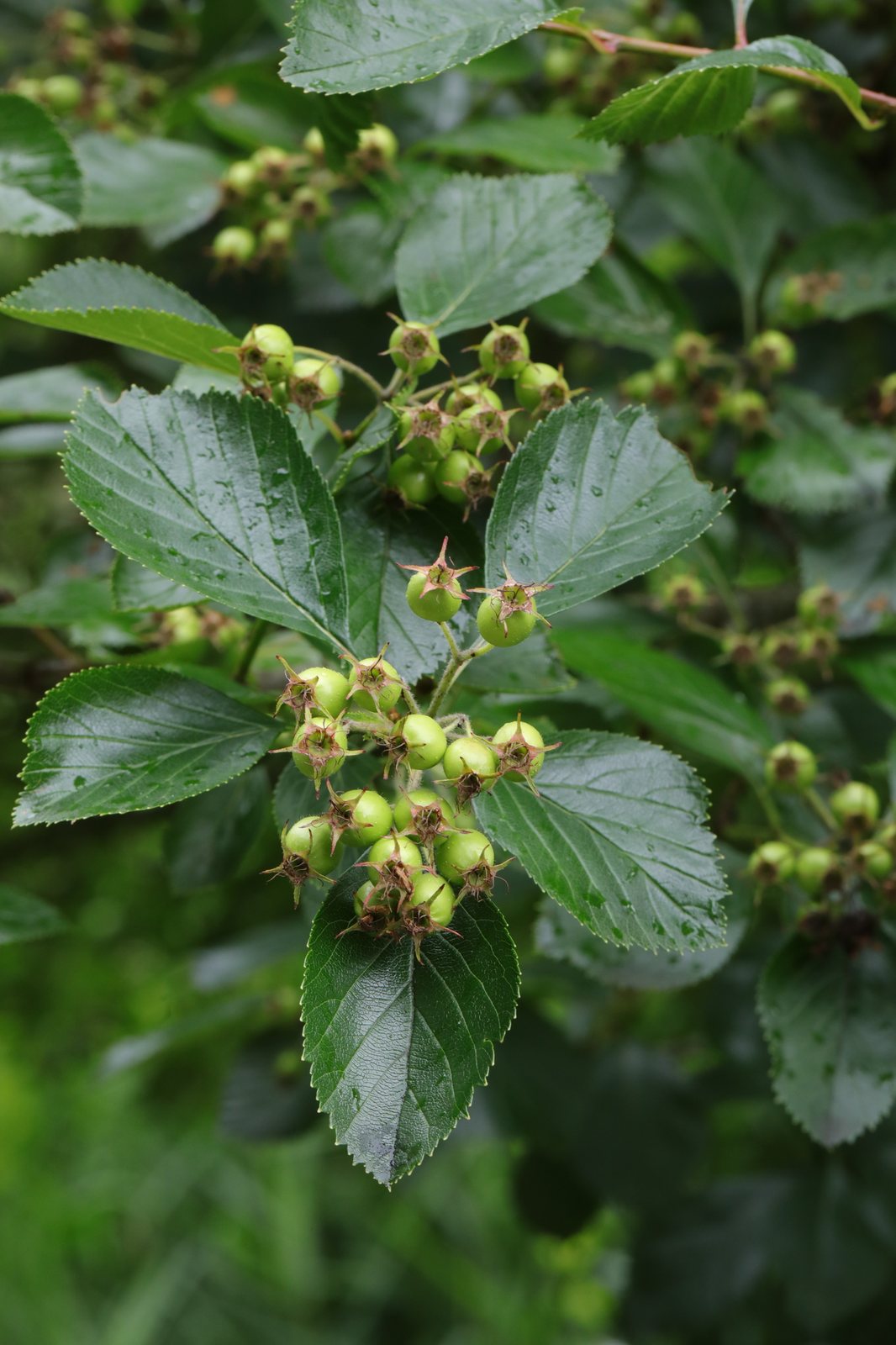
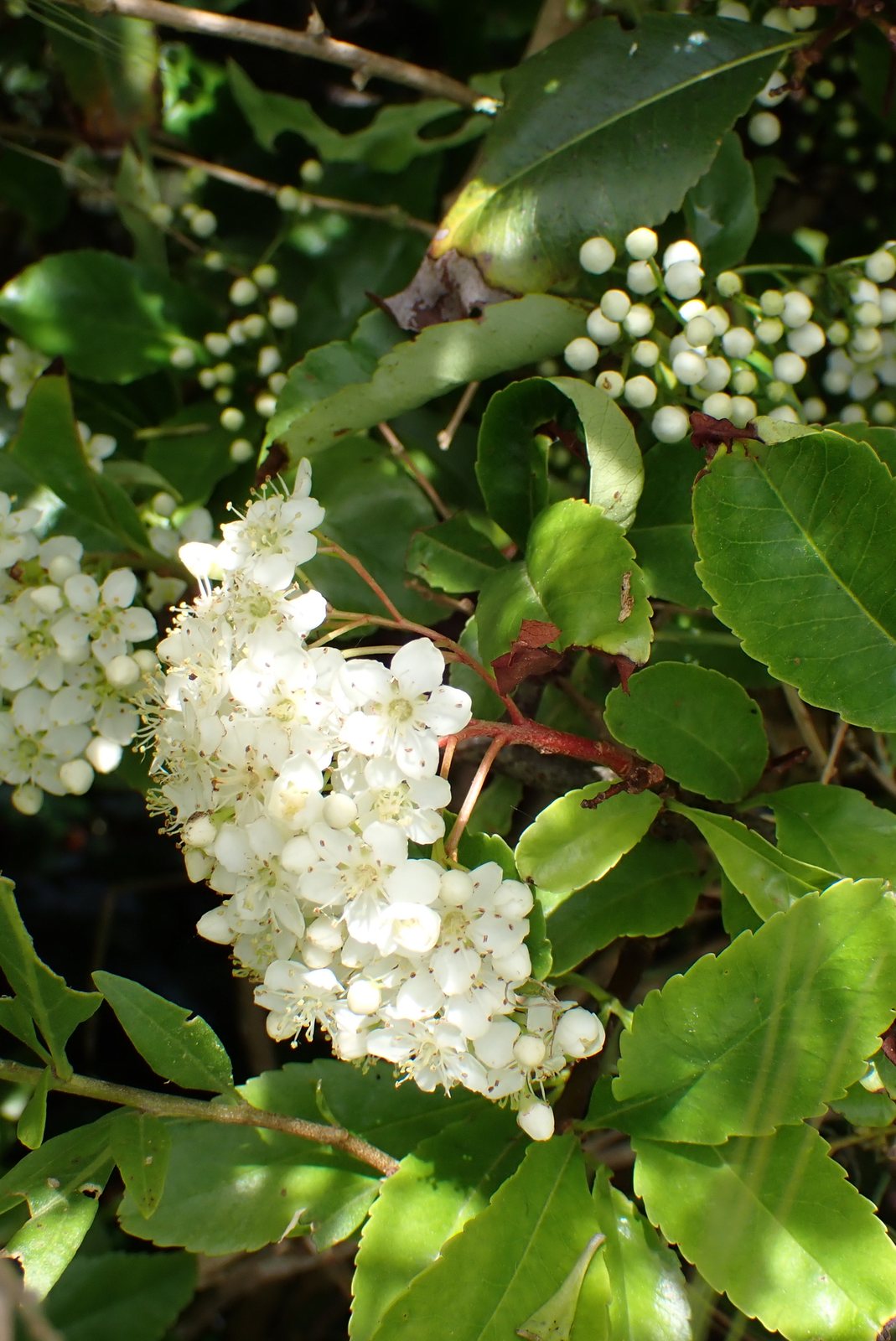
A small deciduous tree with a broad, rounded crown, glossy leaves and long, sharp thorns. Gardeners grow it for white spring flowers, orange-red autumn foliage and red fruits that often remain into winter.
At a glance
- Sun
- Full sun gives the best flowering and autumn colour; tolerates partial shade.
- Water
- Water regularly while establishing. Once established, it tolerates short dry spells but benefits from deep watering during prolonged drought.
- Soil
- Most well-drained soils, including clay and chalk; tolerates acidic, neutral and alkaline conditions. Avoid persistently waterlogged ground.
- Height
- 20-30 ft (6-9 m)
- Spread
- 20-30 ft (6-9 m)
- Flowers
- Clusters of white flowers in late spring to early summer; their strong scent can be unpleasant close to seating.
- Foliage
- Glossy, dark green, broadly oval leaves with toothed edges, turning orange, scarlet or red-purple in autumn.
- Growth
- Moderate
- Care needed
- Low
The year at a glance
- Pollinators
- Drought tolerant
- Cold hardy
- Wildlife
- Low allergen
| J | F | M | A | M | J | J | A | S | O | N | D | |
|---|---|---|---|---|---|---|---|---|---|---|---|---|
| Flowers | ||||||||||||
| Fruit | ||||||||||||
| Plant |
Northern hemisphere months. In Australia, shift them by six.
- Difficulty
- Easy
- Toughness
- Very tough
Will it suit your garden?
Pick your zone, country, light and whether you have pets.
Full sun is 6 or more hours of direct sun a day, part shade 3 to 6 hours, shade under 3.
How it grows
Planting day
7 ft (2 m)
After 1 year
7 ft (2.3 m)
After 2 years
8 ft (2.6 m)
After 3 years
9 ft (2.8 m)
After 5 years
11 ft (3.4 m)
About 20 years to full size.
From a typical nursery size, at an average rate for this kind of plant. A rule of thumb, not a forecast.
Good to know
- Cats and dogs
- Mildly toxic: may upset a stomach
- Native to
- the US and Canada
- Growth rate
- Moderate
Care
Jobs through the year
- WaterApr–May, Sep–Oct, every 14 days
- Water established trees only if soil is dry; young trees need regular deep watering.
- WaterJun–Aug, every 14 days
- Deep-water established trees during prolonged drought; water more often in the first two seasons.
- MulchMar–Apr
- Maintain 5–8 cm of organic mulch, leaving the trunk and root flare clear.
- FeedMar–Apr
- Feed only for weak growth or a confirmed deficiency; avoid excessive nitrogen.
- PruneFeb–Mar
- In dry weather remove damaged or crossing branches; mature trees need little pruning.
- ProtectMay–Jun, every 14 days
- Check shoots for aphids and fire-blight blackening; remove infected wood in dry weather.
- ProtectOct–Nov
- Collect diseased fallen leaves, but leave healthy fruits for birds.
- Plant with the root flare at ground level and allow room for the mature crown.
- Water deeply during dry spells for the first two growing seasons.
- Apply 2-3 in (5-8 cm) of organic mulch, keeping it clear of the trunk.
- Feed only if growth is weak or a soil test identifies a deficiency.
- Stake only if the root ball moves in wind; check ties regularly and remove the stake once the tree is stable.
- Wear thick gloves when working around the thorns, and keep thorny branches clear of paths.
Pruning. In late winter, during dry weather, remove dead, damaged or crossing branches and establish a clear framework while the tree is young. Mature trees need little pruning; avoid routine shearing, which removes flowering and fruiting wood.
Through the year
- Autumn
- Plant while the soil is workable, water thoroughly and mulch; in very cold regions, wait until spring.
- Late winter
- Remove damaged or crossing branches and check the young tree's framework.
- Spring
- Plant in cold regions, refresh mulch and check any stake ties.
- Late spring
- Inspect new shoots for aphids and sudden blackening that may indicate fire blight.
- Summer
- Water young trees deeply during dry weather and remove shoots arising below a graft union.
- Late autumn
- If leaf disease has been troublesome, collect fallen leaves; leave healthy fruits for birds.
In the garden
- Use as a specimen tree in a lawn where its spreading crown has room to develop.
- Plant in a mixed boundary with shrubs and grasses for blossom, autumn colour and winter fruit.
- Underplant with spring bulbs and hardy geraniums for a layered, informal planting.
- Use in a wildlife hedge or small tree group, set well back from paths and play areas.
Garden styles it suits: English country, Traditional, Cottage garden, Wildlife garden, Native hedgerow and Autumn colour.
Plant it with: Snowdrops, Daffodils, Hardy geraniums, Catmint, Red-twig dogwood and Tufted hair grass.
Wildlife: Flowers provide pollen and nectar for insects, and birds eat the fruits in autumn and winter. The dense, thorny crown offers shelter and nesting sites.
Problems to watch for
- Fire blight can blacken blossoms and shoots, particularly in warm, wet weather. Prune affected growth well below visible damage during dry weather, disinfect tools between cuts and avoid heavy nitrogen feeding.
- Hawthorn leaf spot can cause spotting and early leaf fall. Collect affected fallen leaves and maintain airflow through the crown.
- Rust can cause orange spots on leaves or distorted fruit, especially where susceptible junipers grow nearby. Remove affected material where practical and seek local advice if infection recurs.
- Aphids may curl young leaves and leave sticky honeydew. Encourage natural predators and wash small colonies off reachable shoots with water.
Safety
Not known to be toxic to cats, dogs or horses, and the fruit flesh is not generally considered poisonous to people. The seeds contain cyanogenic compounds, so do not deliberately chew or eat them; swallowing a few intact seeds is unlikely to cause serious poisoning. The sharp thorns are the main everyday hazard.
Easily confused with
Cockspur hawthorn (Crataegus crus-galli)
Usually has narrower, more elongated leaves; 'Prunifolia' has broader, plum-like leaves. Both have glossy foliage and long thorns.
Common hawthorn (Crataegus monogyna)
Has distinctly lobed leaves, unlike the broadly oval, unlobed leaves of 'Prunifolia'.
The name
The cultivar name 'Prunifolia' means plum-leaved, referring to its broad leaves resembling those of a plum.
Propagation. Usually propagated by grafting or budding onto a compatible hawthorn rootstock. Seed does not reliably reproduce the cultivar and may take a long time to germinate.
Checked against open data
- Accepted botanical name
- Crataegus persimilis
- In the US and Canada
- Native in Canada and the lower 48 states.
- Native range
- Kentucky, New York, Ohio, Ontario, Virginia and West Virginia.
Sources: GBIF (CC BY 4.0), USDA PLANTS and Trefle (CC BY 4.0). The care and design notes are LandscapeGPT's own.
See it in your own yard.
Upload a photo of your yard and see it redesigned with plants that suit your climate, each checked against your zone.